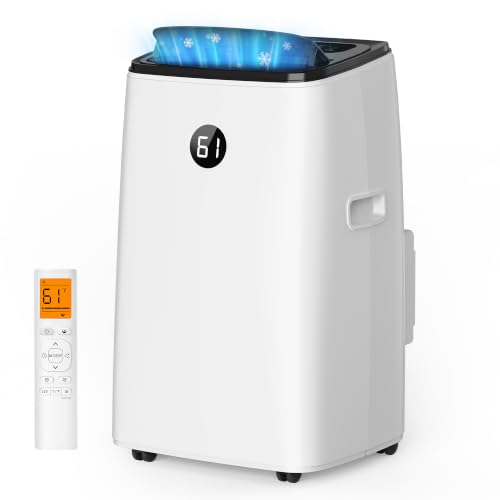
Portable Air Conditioner Without Drain Hose
Understand self-evaporating systems, when a drain-free portable AC actually works, and how to choose a unit that keeps maintenance minimal without compromising cooling.
Explore the GuideWhy this matters: Almost every portable AC produces condensate as it cools and dehumidifies the room. In a standard unit, that water collects in a tank or drains through a hose you have to manage. A "portable air conditioner without drain hose" relies on a self-evaporating system that recycles or expels the condensate automatically. This guide explains how those systems work, their limits, and what to look for so you avoid surprises after installation.
What "Without a Drain Hose" Really Means
Condensation is unavoidable in compressor-based cooling. As warm, humid room air passes over the cold evaporator coil, moisture condenses into water. The question is what happens to that water. There are three common approaches:
- Manual drain tank: Water collects in an internal tank that you empty periodically. Many entry-level units use this design.
- Continuous drain hose: A hose connects to the unit and relies on gravity to carry water to a floor drain or bucket. This is the classic portable AC without drain hose alternative that buyers often want to avoid.
- Self-evaporating system: The unit sprays condensate onto the hot condenser coil, where it evaporates and is expelled with the exhaust air. This is the true drain-free design.
A unit marketed as "without a drain hose" usually uses the third approach — a self-evaporating system. Some units combine self-evaporation with a small backup tank for very humid conditions, so "no hose" does not always mean "no tank ever."
How Self-Evaporating Systems Work
Inside a self-evaporating portable AC, condensate from the evaporator coil is collected in a small internal tray. A pump or splash mechanism then sprays that water onto the condenser coil, which is hot from compressing refrigerant. The water absorbs heat and evaporates, and the resulting vapor exits through the exhaust hose along with the hot air.
The result is that most of the condensate is disposed of automatically. In moderate humidity, the system keeps up with production and the tank never fills. In very humid conditions, the condenser may not be hot enough or the airflow may not be sufficient to evaporate all the water, so a backup tank fills more quickly. This is the key limitation to understand: self-evaporation is efficient, not infinite.
Dual-hose models tend to handle self-evaporation better than single-hose portable AC units, because they move more air across the condenser and have a more stable heat load. If you are choosing between hose configurations, that is worth factoring in.
Self-Evaporating vs Hose-Drain vs Manual Tank
The table below summarizes the practical differences between the three condensate management designs.
| Design | Best For | Maintenance | Humidity Limit |
|---|---|---|---|
| Self-evaporating (no hose) | Bedrooms, offices, moderate humidity | Low — occasional tank check | Best below roughly 60% RH |
| Continuous drain hose | Basements, garages, very humid rooms | Low once connected — needs a drain point | Handles high humidity |
| Manual drain tank | Occasional use, small rooms | Moderate — empty the tank regularly | Fills quickly in high humidity |
None of these designs is universally superior. A self-evaporating unit is a strong fit for a bedroom or home office in a moderate climate. In a very humid region, a continuous drain or a hybrid design is more reliable. Our guide on portable AC for high humidity covers the climate-specific trade-offs in more detail.
When a Drain-Free Unit Works Best
A portable AC without a drain hose is the right choice in several practical scenarios:
- Bedrooms and home offices: You want to set the unit and forget it. A portable air conditioning unit for bedroom use is the classic drain-free case.
- Rentals and temporary setups: No hose to route across a floor, no drain point to find, and nothing to uninstall at move-out.
- Rooms without a floor drain: If there is no convenient drain point, a self-evaporating unit avoids the bucket-and-hose workaround.
- Moderate humidity climates: In dry or moderately humid regions, self-evaporation keeps pace with condensate production.
- Rooftop or upper-floor rooms: Gravity drains are impractical without a lower floor, so self-evaporation is the practical option.
If you are cooling a basement, a continuous drain hose is often the better fit despite the extra setup — see the basement window venting guide for context on below-grade humidity.
Limitations You Should Know
Self-evaporating systems have real trade-offs. Being clear about them prevents disappointment:
- Not truly zero-maintenance. In very humid conditions, the backup tank still fills and needs emptying. Most manuals specify a humidity threshold above which a drain hose is recommended.
- Less effective in humid climates. The system relies on the condenser being hot enough to evaporate condensate. In a humid, high-load room, condensate production can outpace evaporation.
- Requires venting. A self-evaporating unit is still a compressor AC. It needs an exhaust hose to a window or vent. It is a portable AC without a window vent only in the sense of not needing a drain hose, not in the sense of needing no vent at all.
- Higher tier than manual tanks. Self-evaporating systems are typically a mid-range to premium feature, so expect a higher tier position than a basic manual-tank unit.
- Noise from the pump. Some units have a small pump that cycles periodically, which can be noticeable in a quiet bedroom.
If a drain-free unit runs but the room does not cool, the issue is usually venting or seal quality rather than the drain system. Our troubleshooting guide on portable AC not cooling enough covers the diagnostic sequence.
Features to Prioritize When Buying
Not every drain-free unit is equally capable. These specifications matter most:
Self-Evaporating System
Confirm the unit explicitly uses a self-evaporating system, not just a "no drain hose needed" marketing line with a hidden tank.
Dual-Hose Design
Dual-hose models move more air across the condenser, which improves self-evaporation performance and avoids negative pressure in the room.
Backup Tank Capacity
A larger backup tank gives you a buffer in humid weeks. Check the tank size and how the unit signals a full tank.
Inverter Compressor
An inverter compressor modulates speed instead of cycling, which is quieter and more efficient for long cooling sessions.
Wi-Fi Control
A portable AC with Wi-Fi control lets you schedule cooling and monitor the unit remotely, which is useful in rooms that heat up quickly.
Humidity Sensor
Some units adjust fan speed and evaporation based on room humidity, which helps the self-evaporating system keep up during humid spells.
Sizing a Drain-Free Unit for Your Room
Capacity is measured in BTU. Undersizing means the unit runs nonstop without reaching the set temperature, which also increases condensate production and stresses the self-evaporating system. Oversizing causes short cycling and poor dehumidification. Add 10–20% capacity for rooms with large windows, west-facing sun, or a kitchen nearby.
Small bedrooms and home offices typically fall in the entry-level capacity range. Open-plan living areas need mid-range or high-end capacity. For a precise starting point, see our guide on portable AC for a very small room, and scale up from there. A unit sized correctly will produce less condensate than an undersized one, which is a real advantage for a drain-free design.
If you are cooling a larger space, the portable AC for a 500 sq ft room guide covers capacity matching for both self-evaporating and drain-hose designs.
Maintenance for Self-Evaporating Units
Drain-free does not mean maintenance-free. A regular routine keeps the system working as intended:
- Check the backup tank monthly. Even if it rarely fills, inspect it for slime or mineral buildup.
- Clean the air filter every two weeks during peak season. A clogged filter reduces airflow across the evaporator and condenser, which hurts evaporation.
- Inspect the drain tray and pump. Mineral deposits can block the spray mechanism. A mild vinegar rinse clears most buildup.
- Switch to a drain hose in humid months. If the tank fills quickly during a humid stretch, attach the drain hose for that period and remove it later.
- Keep the exhaust hose short and straight. A kinked hose raises condenser temperature, which actually helps evaporation, but reduces overall cooling efficiency.
If you notice water pooling on the floor or a persistent full-tank warning, the pump or tray may need attention. Our guide on a portable AC with no drain required covers the difference between true self-evaporation and hybrid designs.
Alternatives When Drain-Free Is Not Enough
In very humid climates or large rooms, a drain-free design may struggle. Consider these alternatives:
- Continuous drain hose: The simplest fix. Route the hose to a floor drain, condensate pump, or bucket.
- Evaporative cooling: In dry climates, a portable AC with evaporative technology avoids condensate entirely, though it adds humidity and works only in dry air.
- Mini-split systems: A portable ductless mini-split handles condensate through a small line and is far more efficient for permanent installations.
- Dehumidifier and fan combo: In moderately humid rooms, a dedicated dehumidifier plus a portable cooling fan can be more effective than a struggling AC.
- Units without outdoor vent: For very specific cases, a portable indoor air conditioner with no exhaust may be an option, though cooling capacity is limited.
If your home has several rooms with different window types, a multi-zone mini-split is often the better long-term investment than multiple portable units with varying drain setups.
Common Buying Mistakes
- Assuming "no drain hose" means "no water management." Even self-evaporating units have a backup tank that may need attention in humid weather.
- Ignoring local humidity. Self-evaporation works best in moderate humidity. In very humid climates, a continuous drain hose is more reliable.
- Undersizing the unit. An undersized unit produces more condensate per hour of cooling and stresses the self-evaporating system.
- Blocking airflow around the unit. Keep at least 12–18 inches of clearance on all sides for intake and exhaust.
- Skipping filter maintenance. A dirty filter reduces evaporation efficiency and cooling performance together.
Frequently Asked Questions
Do portable air conditioners without a drain hose really never need draining?
Most self-evaporating units never need manual draining in moderate humidity. In very humid conditions, condensate can exceed the evaporation rate and a backup tank fills. Check the manual for the humidity threshold where a drain hose is recommended.
How do I know if a portable AC is self-evaporating?
Look for "self-evaporating system" or "auto-evaporation" in the product description, and check whether a drain hose is included as an optional accessory. A unit that includes a drain hose is not a pure drain-free design.
Can I use a drain-free portable AC in a humid climate?
Yes, but expect the backup tank to fill more often and be prepared to connect a drain hose during humid stretches. In a consistently humid climate, a continuous drain design is often more practical.
Does a drain-free unit still need venting?
Yes. Self-evaporating portable ACs are compressor units and need an exhaust hose to a window or vent. "Drain-free" refers only to condensate handling, not to venting.
Why is my self-evaporating unit still filling its tank?
High humidity, a dirty filter, or a low fan speed can all reduce evaporation efficiency. Clean the filter, increase fan speed, and consider connecting the drain hose temporarily. If the problem continues, the pump or spray mechanism may need servicing.
Quick Buying Checklist
- Confirm the unit uses a genuine self-evaporating system.
- Check the backup tank size and how the unit signals a full tank.
- Consider your local humidity before committing to drain-free.
- Match BTU capacity to room size and sun exposure.
- Look for dual-hose or inverter designs for better efficiency.
- Plan a biweekly filter-cleaning routine during peak season.
- Verify the included window kit fits your window type.