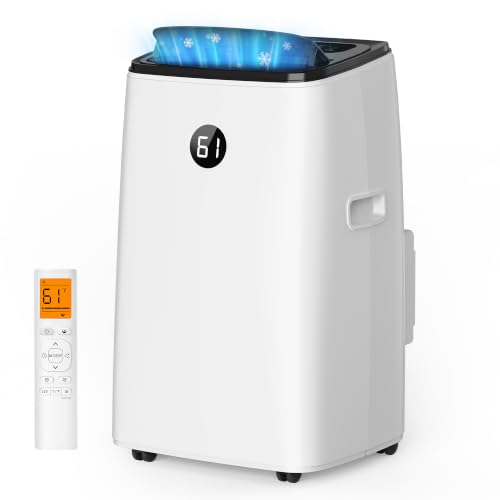
Quietest Small Room Portable Air Conditioner Guide
Noise is the top complaint about portable ACs in small rooms. This guide explains where the sound comes from, which design choices reduce it, and how to pick a quiet unit that actually fits a bedroom, nursery, or home office.
Start UnderstandingWhat Makes a Portable AC Quiet?
A portable air conditioner produces noise from several distinct sources, and they do not all respond the same way to design changes. Understanding them is the key to choosing the quietest option for a small room.
The main sources are:
- The compressor. This is the dominant noise in most compressor-based units. Inverter compressors run more smoothly and modulate speed rather than cycling fully on and off, which usually produces a steadier and less intrusive sound profile.
- The condenser fan. Moves air across the condenser coil and out the exhaust hose. Larger, slower-turning fans are quieter than small, fast ones for the same airflow.
- The evaporator fan. Blows cooled air into the room. Its noise depends on speed and blade design; multi-speed fans let you drop to a lower, quieter setting.
- Airflow through the hose and grilles. Turbulence at the exhaust and intake adds to the overall sound. A short, straight hose run reduces this noticeably.
- Vibration and resonance. A unit that sits on a hard floor can transmit vibration into the room; rubber feet or a padded base help.
The quietest small-room portable ACs combine a variable-speed inverter compressor, a multi-speed fan that can drop to a low setting, and a hose routing that keeps the exhaust path short. A unit with a powerful single-speed compressor will rarely be the quietest choice, no matter how well it is built.
For a broader view of the category, see our guide to portable indoor air conditioning units and the quietest most efficient portable air conditioner overview.
The Three Tiers of Quiet Small-Room Portable ACs
Portable air conditioners for small rooms fall into three broad tiers. The tiers below describe the position of the unit in the market, not a specific set of numeric figures.
Entry-Level Tier
- Single-speed compressor
- Basic fan settings
- Standard build quality
- Compact footprint
- Good value for its tier
- Best for: occasional use in a small room
Balanced Tier
- Inverter compressor
- Multi-speed fan with a low setting
- Sleep mode and scheduling
- Durable construction
- Well-specified for the category
- Best for: bedrooms and home offices used daily
Top-Tier
- Advanced inverter and variable-speed blower
- Dedicated quiet / sleep mode with low fan
- Premium materials and reinforced build
- App control and detailed diagnostics
- Feature-rich for its class
- Best for: nurseries, shared bedrooms, and quiet-critical spaces
Where the Noise Actually Comes From
If a portable AC feels louder than expected, the cause is usually one of the following. Addressing it can make a meaningful difference without changing the unit.
Compressor Cycling
A single-speed compressor switches on and off, and the start-up surge is often the most noticeable sound. Inverter compressors avoid this by running continuously at a lower speed, which is generally the single biggest factor in how quiet a portable AC feels in a small room.
Fan Speed
Higher fan speeds move more air but produce more noise. A unit with a genuine low-speed setting can drop noticeably in volume, which matters most in a bedroom at night. A multi-speed fan in the balanced or top tier is usually the practical answer.
Hose Length and Bends
A long, kinked, or sharply bent exhaust hose increases turbulence and the sound of rushing air. Keep the hose as short and straight as your window layout allows. If the window is far from where the unit must sit, plan the routing carefully before installation.
Placement and Vibration
A unit on a hard floor transmits vibration into the room. A padded base or rubber feet can reduce this. Avoid placing the unit against a wall or in a corner where sound reflects back at the listener.
Tier Comparison Table
The table below summarizes the three tiers across the factors that matter most for quiet operation. Tier labels are used instead of numeric figures so the comparison stays useful over time.
| Tier | Compressor Type | Best For | Key Consideration |
|---|---|---|---|
| Entry-Level | Single-speed | Occasional cooling in a small room | Solid choice for the tier when the unit will not run at night |
| Balanced | Inverter | Bedrooms and home offices used daily | Most buyers land here; quieter and more efficient in the long run |
| Top-Tier | Advanced inverter and variable-speed blower | Nurseries, shared bedrooms, quiet-critical spaces | Feature-rich for its class; best when quiet is a top priority |
If quiet operation is the priority, the balanced tier or above is usually the sensible starting point. A premium unit in the top tier is a worthwhile investment for a nursery or a shared bedroom where noise at night matters most.
Room Fit and Capacity
Quiet operation is only useful if the unit can actually cool the room. For small rooms, capacity matters as much as noise level, because an undersized unit will run on high speed continuously — which is exactly when it is loudest.
As a rough guide for small rooms:
- Rooms up to about 150 square feet are usually served by the entry-level compact capacity class.
- Rooms from 150 to 250 square feet typically fit the mid-tier capacity class, provided the unit is a true compressor model.
- Sun exposure and poor insulation push the requirement up rather than down.
Our guide to portable small air conditioning units walks through the sizing logic in more detail, and the 8,000–10,000 BTU category is a useful reference for small-to-medium rooms. For the smallest spaces, a portable miniature air conditioner may be the right scope instead of a full-size portable unit.
Other Quiet-Cooling Options Worth Knowing
A portable AC is not the only path to quiet cooling in a small room. Two adjacent options are worth considering:
- A portable mini-split moves the compressor outdoors, so the indoor portion is much quieter. Installation is more involved, but the noise benefit is significant.
- A quiet air conditioner in a window format may be a better fit if the room has a compatible window — window units typically keep part of the noise outdoors. Our comparison of portable vs window AC covers the trade-offs in detail.
If venting is the constraint rather than noise, a portable room air conditioner without an exhaust hose is worth understanding before committing to a compressor-based unit.
Features to Prioritize for Quiet Operation
Not every feature contributes to quiet operation. The ones that do are worth prioritizing when comparing models:
- Inverter compressor. The single most important factor in steady, low-noise operation.
- Multi-speed fan with a genuinely low setting. A fan that can drop to a low speed is what makes nighttime use tolerable.
- Sleep mode. Usually lowers fan speed and adjusts temperature gradually, reducing sudden noise changes.
- Rubber feet or a padded base. Reduces vibration transmitted into the floor.
- Short, straight hose routing. A design consideration rather than a feature, but it matters as much as anything on the unit itself.
Wi-Fi control and app features are convenient but do not change the noise level. If quiet operation is the priority, spend the tier budget on the compressor and fan rather than on connectivity. For a broader look at efficiency and scheduling, see our guides to inverter AC and the programmable thermostat for heating and cooling.
Maintenance That Keeps a Portable AC Quiet
A portable AC that was quiet when new can become noticeably louder if maintenance slips. The common causes are straightforward to address:
- A clogged filter. Restricts airflow, forcing the fan to work harder and louder. Clean the filter regularly during the cooling season.
- A full condensate tank. Some units run the fan harder or cycle oddly when the tank is full. Drain it promptly.
- A kinked or dusty hose. Check the exhaust hose each season for bends and dust buildup.
- Loose panels or feet. Vibration and rattling can develop over time; a quick check keeps the unit quiet.
Our preventive maintenance guide and seasonal AC checklist cover the routine. For a deeper clean of the surrounding space, the power vac reference is useful.
Common Buying Mistakes to Avoid
Most disappointment with portable AC noise traces back to a mismatch between the unit and the room, or to unrealistic expectations. The recurring mistakes:
- Buying for peak cooling only. A unit that cools well but runs loudly on high is not a good fit for a bedroom at night.
- Undersizing for the room. An undersized unit runs continuously at high speed, which is the loudest state.
- Ignoring hose routing. A long or kinked hose adds noise regardless of the unit's build quality.
- Overvaluing Wi-Fi features. Connectivity does not make a unit quieter; the compressor and fan do.
- Skipping filter cleaning. A clogged filter on a compact unit degrades airflow and increases noise quickly.
If the room needs cooling only during the day, an entry-level tier unit may be perfectly adequate. If it needs cooling at night in a bedroom or nursery, the balanced tier and above are the better fit for the room and the listener.
Frequently Asked Questions
What is the quietest type of portable air conditioner for a small room?
Inverter-driven compressor units in the balanced tier or above are generally the quietest option for small rooms. They run more smoothly than single-speed units and can drop to a low fan speed for nighttime use. A portable mini-split, which moves the compressor outdoors, is quieter still if installation complexity is acceptable.
Why is my portable AC so loud?
The most common causes are a single-speed compressor cycling on and off, a high fan setting, a kinked or long exhaust hose, or a clogged filter. Addressing the filter and hose routing is the first step before considering a different unit.
Can a portable AC be quiet enough for a bedroom at night?
Yes, if it has a low fan setting and an inverter compressor. A unit that only runs on high will rarely be tolerable at night. Sleep mode, which lowers fan speed and adjusts temperature gradually, is a helpful feature for nighttime use.
Does a larger portable AC run quieter?
Not automatically, but an adequately sized unit for the room will run at a lower fan setting than an undersized one, which is usually quieter in practice. Capacity and noise are connected through how hard the unit has to work to cool the space.
How can I reduce the noise of an existing portable AC?
Clean the filter, shorten and straighten the exhaust hose, place the unit on a padded base, and use the lowest fan setting that still keeps the room comfortable. These steps often make a noticeable difference without changing the unit.
Is a window AC quieter than a portable AC?
Generally yes, because part of the noise radiates outdoors. A window unit in a higher tier can be noticeably quieter indoors than a portable unit of the same cooling class. Our comparison of portable vs window AC covers the trade-offs in detail.
Does a portable AC need to be vented to be quiet?
Venting affects heat rejection, not noise directly, but a proper venting setup with a short, straight hose keeps airflow smooth and avoids the turbulence that a long or kinked hose creates. If venting is not possible, a portable room air conditioner without an exhaust hose may be an alternative, though performance and noise characteristics differ.
Should I prioritize quiet operation or efficiency?
They often overlap. Inverter compressors improve both quiet operation and efficiency, so a balanced-tier unit usually delivers both. If the room is used frequently, prioritizing both together is the sensible approach. Our guide to the quietest most efficient portable air conditioner is a useful follow-up.