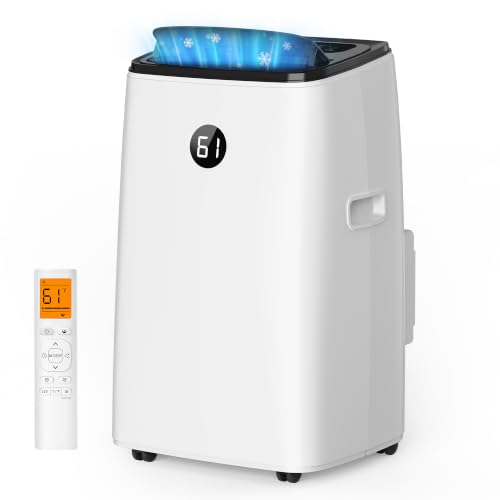
Quietest, Most Efficient Portable Air Conditioner: A Practical Guide
Quiet operation and strong efficiency rarely come from the same single feature. Learn which specifications actually matter, how decibel ratings are measured, and what separates a mid-tier portable AC from a true top-tier performer.
Explore the Buying PathWhy this page exists: Buyers searching for a quiet and efficient portable AC usually fall into two camps: those cooling a bedroom and those cooling a home office or small living space. Both groups need the same core answers — what counts as quiet, what counts as efficient, and how the two goals interact. This guide covers exactly that.
What “Quiet” Really Means for a Portable AC
Portable air conditioners produce noise from three sources: the compressor, the fan, and airflow through the hose. Quiet models reduce noise through better compressor insulation, larger fans running at lower RPM, and smoother airflow paths. The result is a unit that stays comfortable in the background rather than demanding attention.
Decibel ratings are usually measured at the highest fan speed, which is often far louder than the setting you would actually use at night. It pays to compare low-speed ratings when available, especially for bedroom use.
| Noise Level | Real-World Comparison | Best Fit |
|---|---|---|
| Around 40 dB or lower | Quiet library or soft whisper | Bedroom, nursery, home office |
| Around 45 to 50 dB | Normal conversation | Living room, study, guest room |
| Around 50 to 55 dB | Moderate background noise | Open living areas, short cooling sessions |
| Around 55 dB or higher | Noticeable, close to a running appliance | Utility spaces, temporary cooling |
If bedroom cooling is the priority, the quietest small room portable air conditioner overview narrows the field further. For buyers comparing quiet portable units with window-mounted options, the quietest air conditioner reference covers broader form factors.
What Makes a Portable AC Efficient
Efficiency for portable units is not just about the compressor. The hose configuration, the window seal, the room sizing, and the controls all influence how much cooling actually reaches the room versus how much energy is wasted.
- Dual-hose design: the single most impactful efficiency feature. A dual-hose unit uses outdoor air for both intake and exhaust, reducing negative pressure inside the room and improving overall cooling efficiency.
- Inverter or variable-speed compressor: modulates output to match the load instead of cycling on and off. Quieter and more efficient in part-load conditions.
- Sizing accuracy: an oversized unit short-cycles and cools inefficiently; an undersized unit runs continuously and never quite keeps up.
- Window sealing: a poorly sealed window kit allows hot outdoor air to leak in, which undermines efficiency regardless of the unit’s rating.
- Efficiency ratings: look for CEER or EER values where available, and confirm they are measured under realistic conditions.
- Programmable and smart controls: schedules and sensors prevent the unit from running when the room is already comfortable.
Portable AC Tiers and What to Expect
Quietness and efficiency both tend to improve as you move up the tier ladder. The framework below uses neutral descriptors that remain relevant regardless of year or region.
Essential Cooling
Single-hose design, standard compressor, and basic fan speeds. Louder and less efficient than higher tiers but simpler and lighter. Best for occasional cooling in utility spaces.
Balanced Performance
Often dual-hose with improved fan design and quieter compressors. A solid fit for bedrooms and home offices where both quiet and efficient operation matter.
Premium Comfort
Inverter-driven compressors, low-speed fan curves, and superior airflow design. The quietest and most efficient option in the category, with the most refined controls.
The differences between tiers show up most clearly at low fan speeds. A mid-range unit at low speed may be noticeably quieter than an entry-level unit at the same setting, and a high-end unit at low speed may barely be audible from a few feet away. The quietest and most efficient portable AC overview provides an alternative framing if you want a second comparison point.
Single-Hose vs Dual-Hose
| Feature | Single-Hose | Dual-Hose |
|---|---|---|
| Efficiency | Lower; creates negative pressure | Higher; balanced intake and exhaust |
| Quietness | Often louder at equivalent output | Typically quieter for the same cooling |
| Setup Complexity | Simple | Moderate; two hoses to route |
| Weight and Size | Lighter and more compact | Heavier; larger footprint |
| Best For | Temporary cooling in small spaces | Bedrooms, offices, longer cooling sessions |
If window space is limited, the portable windowless air conditioners overview explains which technologies avoid a window-mounted exhaust. Buyers who want the most efficient vented setup often settle on dual-hose portable units or ductless mini splits, depending on room size and installation tolerance.
Sizing for Quiet and Efficient Operation
Sizing has a direct impact on both quietness and efficiency. An oversized unit reaches the target temperature quickly and then cycles repeatedly, which is both noisy and inefficient. An undersized unit runs at full speed continuously, which is even louder.
| Room Size | Typical Capacity Range | Notes |
|---|---|---|
| Up to 150 sq ft | 5,000 to 6,000 BTU | Small bedroom, study, dorm room |
| 150 to 250 sq ft | 8,000 to 10,000 BTU | Standard bedroom or home office |
| 250 to 400 sq ft | 12,000 to 14,000 BTU | Primary bedroom or living area |
| 400 to 600 sq ft | 14,000 to 18,000 BTU | Open living area; consider two smaller units |
The sizing guide covers sun exposure, ceiling height, and insulation adjustments. Because portable units are less powerful than central systems, matching capacity closely matters even more.
Not sure which capacity fits your space?
Review the sizing fundamentals before comparing specific quiet and efficient models.
Review Sizing BasicsFeatures That Signal a Quiet, Efficient Unit
Inverter Compressor
Smoother operation and better part-load efficiency. Frequently paired with quieter fan curves in mid-range and high-end units.
Dual-Hose Configuration
The strongest efficiency signal in the portable AC category. Also reduces strain on the compressor, which improves noise behavior.
Sleep Mode and Dimmable Controls
Night-oriented modes lower fan speed, dim indicator lights, and sometimes adjust the thermostat in increments.
Adjustable Louvers and Airflow Direction
Directed airflow lets you cool the occupied area without running the fan at higher speeds.
Washable, Easy-Access Filters
Clean filters maintain airflow and keep the compressor from working harder than necessary.
Smart Controls and Scheduling
Programmable timers and app control prevent unnecessary runtime, which supports efficiency over time.
Setup Tips for Quieter, More Efficient Performance
- Seal the window kit thoroughly. Gaps let hot air in and force the unit to run harder and louder.
- Place the unit on a stable, level surface away from walls and furniture that could block airflow.
- Keep the exhaust hose as short and straight as possible. Long bends reduce efficiency and add noise.
- Shade the window during the hottest hours. Reducing solar gain lets the unit run at a lower speed.
- Pre-cool the room in the late afternoon before peak heat arrives.
- Use the sleep mode for overnight operation. It typically lowers fan speed and reduces noise.
- Clean or rinse filters every two to four weeks during heavy use.
- Drain the condensate tank before it fills to avoid shutdowns and re-starts.
Setup quality often matters more than small differences in the specification sheet. A mid-range unit installed carefully can outperform an entry-level unit that is fighting leaks and poor airflow.
Quiet and Efficient Portable AC vs Other Options
Portable units are convenient but not always the best fit for a permanent installation. The comparison below clarifies when a ductless mini split or a window unit may make more sense.
| Option | Best For | Quietness | Efficiency |
|---|---|---|---|
| Portable AC (dual-hose, inverter) | Bedrooms, offices, renters who need flexibility | Quiet on low speed; noticeable at high speed | Good when well sealed and correctly sized |
| Ductless mini split | Permanent installation, whole-room cooling | Very quiet indoors | Highest efficiency in the category |
| Window AC | Small rooms with an available window | Moderate; quieter inverter models exist | Moderate to high depending on model |
| Central AC | Whole-home cooling with existing ducts | Quiet at registers | High when ductwork is sealed and sized well |
For buyers comparing portable and window formats directly, the portable vs window AC comparison explains the trade-offs in more detail. For quietness alone in a smaller room, the quietest small room window air conditioner and quietest window AC for a small bedroom references provide useful comparison points.
Maintenance and Longevity
- Clean filters regularly to preserve airflow and reduce fan noise.
- Empty and dry the condensate tank after each cooling season.
- Inspect the exhaust hose for kinks or damage before each season.
- Keep the rear coil and intake grille free of dust.
- Store the unit upright in a dry place during the off-season.
A simple maintenance routine keeps noise low and efficiency stable. The seasonal AC checklist is a useful starting point for a pre-season inspection.
A Practical Buying Path
- Define the room. Confirm square footage, sun exposure, and whether the unit is for a bedroom or a living area.
- Set the capacity target. Use the sizing table and adjust for real conditions.
- Prioritize quiet at low speed. Check low-speed decibel ratings rather than headline highs.
- Prioritize efficiency at the design level. Dual-hose and inverter features matter more than marginal rating differences.
- Confirm the window setup. Choose a unit whose window kit fits your window type and can be well sealed.
- Compare features within a tier. Focus on sleep mode, dimmable controls, smart scheduling, and filter access.
- Plan the placement. Shade, airflow, and hose routing all matter for real-world performance.
Buyers considering a permanent installation may find that a mini split offers better long-term efficiency. The portable mini splits overview and the pros and cons of ductless air conditioning guide both cover that path. For rooms without a compatible window, the portable room AC without a hose and room AC without venting references describe alternative technologies.
Frequently Asked Questions
What decibel level counts as quiet for a portable AC?
Models marketed as quiet typically stay below 50 decibels on low or medium settings. For bedrooms, look for low-speed ratings in the low 40s and confirm the measurement distance.
What makes a portable air conditioner efficient?
Dual-hose design, inverter compressors, correct sizing, tight window sealing, and programmable controls are the main efficiency levers.
Can a quiet portable AC also be efficient?
Yes. Mid-range and high-end tier models often combine quieter fans and compressors with improved efficiency through better airflow and hose design.
Is a dual-hose portable AC better than a single-hose model?
Generally yes for efficiency and quietness at equivalent cooling output. Dual-hose models avoid creating negative pressure inside the room.
Do portable air conditioners work well in bedrooms?
They can, provided the unit is correctly sized, sealed at the window, and quiet enough on its low-speed setting. Sleep mode and dimmable controls help further.
Ready to compare specific quiet, efficient portable AC units?
The recommendation section below highlights portable air conditioners across tiers so you can match noise and efficiency to your room.
View Recommended Models