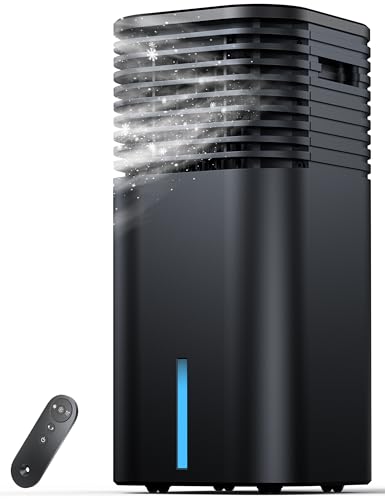
Portable Small Air Conditioning Unit: Compact Cooling Guide
Everything you need to know about compact portable AC units — sizing, placement, hose setup, efficiency, and how to choose the right tier for your space.
Why this guide matters: A portable small air conditioning unit is one of the most practical spot-cooling solutions for apartments, home offices, bedrooms, dorms, and rental units where permanent installation is not possible. This guide walks you through the key decisions — from BTU sizing to exhaust hose management — so you can buy with confidence.
What Is a Portable Small Air Conditioning Unit?
A portable small air conditioning unit is a freestanding, plug-in cooling appliance designed to condition a single room or a defined zone. Unlike window units or central systems, it requires no permanent mounting, no wall cutting, and no structural modification. Most compact models sit on casters, making them easy to reposition between rooms or storage areas.
These units draw indoor air across an evaporator coil, cool it, and discharge the conditioned air back into the room. The absorbed heat is expelled through an exhaust hose that must be vented out a window or other opening. This is why proper hose routing and window sealing are critical to performance — a detail many first-time buyers overlook.
Who Should Choose a Compact Portable AC?
Portable small units are not a universal replacement for central air. They shine in specific scenarios. Consider one if any of the following apply to you:
- You rent and cannot install a window or through-the-wall unit.
- Your room has casement, awning, or unusually shaped windows that block standard window ACs.
- You need cooling in a home office, bedroom, studio apartment, or converted attic where ductwork does not reach.
- You want spot cooling that can follow you from room to room.
- You need a temporary cooling solution during a remodel or a central system breakdown.
If your window configuration allows it, a window unit often delivers better efficiency for the same cooling output. Our comparison of portable vs window AC breaks down the trade-offs in detail. If you are dealing with a windowless space, explore portable windowless air conditioners and understand the limits of portable room air conditioners without a hose.
How to Size a Portable Small AC Unit (BTU Guide)
Sizing is the single most important decision. An undersized unit runs continuously and never reaches the setpoint. An oversized unit short-cycles, fails to dehumidify properly, and wastes energy. For small-space portable units, the practical range is roughly 5,000 to 14,000 BTU.
| Room Size (sq ft) | Recommended BTU | Typical Use Case | Portable Tier Fit |
|---|---|---|---|
| Up to 150 | 5,000 – 6,000 | Bedroom, dorm, small office | Entry-level / essential tier |
| 150 – 250 | 8,000 – 10,000 | Studio, living area, nursery | Mid-range / balanced tier |
| 250 – 400 | 12,000 – 14,000 | Open-plan studio, master bedroom | Premium / high-end tier |
Adjust upward for south- or west-facing rooms with large glazing, top-floor units with poor insulation, and kitchens where appliances add heat load. Adjust downward for shaded, well-insulated rooms. For a deeper walkthrough, see our guide on how to size an air conditioner.
Types of Compact Portable AC Configurations
Portable small units come in several configurations, each suited to different spaces and installation constraints.
Single-Hose Portable AC
The most common entry-level configuration. One hose expels hot air. Simple to set up, but creates negative pressure that pulls warm outside air back into the room through gaps. Acceptable for occasional use and very small rooms. If you are searching for an indoor portable air conditioning unit on a constrained setup, this is typically what you will encounter.
Dual-Hose Portable AC
Draws in outside air for condenser cooling and expels it separately, avoiding negative pressure. More efficient and consistent than single-hose designs. Recommended for mid-range and high-end tier purchases when the room has a suitable window for a two-hose window kit.
Portable Mini-Split and Split Systems
A hybrid category where the compressor sits outdoors and only a small indoor head or hose passes through the wall or window. Explore portable mini-splits if you want quiet operation and higher efficiency than a traditional single-body portable. For wall-mounted alternatives, see portable wall-mounted air conditioners.
Tent, Camping, and Off-Grid Variants
Compact battery and solar-compatible units are a separate niche. If you need cooling in a tent or off-grid cabin, start with portable tent AC and portable solar-powered air conditioner for camping. These are not direct substitutes for a room-cooling portable unit.
Pros and Cons of Portable Small AC Units
Advantages
- No permanent installation or landlord approval required.
- Moves between rooms on casters.
- Works with casement and unusual window shapes using a hose kit.
- Immediate setup — usually under 15 minutes.
- Can be stored away seasonally.
- Good fit for renters and temporary living situations.
Limitations
- Lower energy efficiency than window or mini-split units.
- Requires exhaust hose routing and window sealing.
- Noisier than split systems — compressor is in the room.
- Takes up floor space and needs clearance around the unit.
- Single-hose models can pull warm air back indoors.
- Condensate may require manual draining on some models.
Efficiency, Noise, and Daily Operation
Portable units are rated with a CEER (Combined Energy Efficiency Ratio) or, in newer listings, a SACC (Seasonal Adjusted Cooling Capacity) figure. Higher numbers indicate better efficiency within the category. Because the compressor and fan sit inside the room, noise is a genuine consideration — check the dB rating and place the unit away from sleeping and working areas when possible.
For buyers prioritizing low noise, see our roundup of the quietest small room portable air conditioner and the quietest most efficient portable air conditioner. If you are comparing against a window alternative, the quietest small room window air conditioner guide is a useful cross-reference.
- Do not route the exhaust hose into a wall cavity, attic, or another room — it must vent outdoors.
- Do not block the intake grille with furniture or curtains; maintain at least 12–18 inches of clearance.
- Do not use an extension cord with a high-BTU portable unit; plug directly into a dedicated outlet.
Choosing the Right Tier for Your Space
To keep the buying decision clear, we classify portable small AC units into three universal tiers rather than focusing on numerical figures. Use these descriptors to compare products consistently.
Entry-Level Compact Units
Best for occasional spot cooling in rooms under 150 sq ft. Typically single-hose, manual controls or basic digital controls, and simpler drainage. A solid choice for a dorm room, small bedroom, or temporary setup. Feature set is functional rather than refined.
Mid-Range Compact Units
Best for daily use in rooms of 150–250 sq ft. Usually dual-hose or improved single-hose designs, programmable timers, remote controls, and better noise isolation. This tier generally offers the strongest balance of capability and long-term usability for most households.
Premium Compact Units
Best for larger small rooms up to 400 sq ft, or for buyers who prioritize quiet operation and smart controls. Expect inverter-driven compressors, Wi-Fi app control, self-evaporative condensate systems, and refined build quality. A worthwhile long-term investment if the unit will run daily through the cooling season.
Pre-Purchase Checklist for Portable Small AC Units
Before you commit to a specific model, verify these points against your room and your building rules:
- Match BTU to your measured room size, adjusted for sun exposure and insulation.
- Confirm the window kit fits your window type (sliding, casement, awning).
- Check the noise rating if the unit will run during sleep or work hours.
- Verify whether condensate drains automatically or requires manual emptying.
- Check the electrical requirement — most compact units run on standard household outlets, but confirm amperage.
- Review the warranty terms and whether service is available in your region.
- Confirm the exhaust hose length and diameter are workable for your window position.
- Look for a washable or replaceable filter design for easy maintenance.
Routine upkeep matters as much as the initial purchase. Our guides on preventive maintenance of an air conditioning unit and the seasonal AC checklist cover the tasks that keep a portable unit running at its rated output.
Related Guides Worth Reading
If you are still narrowing down your options, these pages address adjacent scenarios that often come up during portable AC research:
Frequently Asked Questions
How many BTU does a small portable air conditioner need?
For a room up to 150 sq ft, 5,000–6,000 BTU is typically sufficient. Rooms between 150 and 250 sq ft generally need 8,000–10,000 BTU. Always adjust upward for sun exposure, top-floor heat gain, and poor insulation.
Can a portable small AC work without a window?
Not in the usual sense. The unit must exhaust hot air somewhere. Windowless configurations require an alternative vent path — a drop ceiling, a dryer vent, or a specialized ventless design. Read about portable windowless air conditioners to understand the constraints before purchasing.
Is a single-hose or dual-hose portable unit better?
Dual-hose units are generally more efficient and maintain steadier room pressure. Single-hose units are simpler and often more compact. For daily use in a bedroom or office, dual-hose is the better-balanced choice when your window setup allows it.
How noisy is a portable small air conditioning unit?
Most compact models fall in the 50–56 dB range at high fan speed, comparable to a quiet conversation. Premium units with inverter compressors can run notably quieter. If noise is a priority, review our quietest small room portable air conditioner guide.
Do portable AC units need to be drained?
Many models use self-evaporative technology that expels most condensate through the exhaust. In humid climates or during heavy use, manual draining may still be required. Check the drainage design before buying if you plan to run the unit continuously.
Can I move a portable AC between rooms?
Yes, that is one of the format's main advantages. Most compact units have casters and a handle. If you plan to cool two adjacent rooms, explore portable room-to-room air conditioners for configurations designed around that use case.
Disclaimer
Some of the content on this site uses AI assistance. Information is provided for educational purposes only. We are not responsible for any losses resulting from the use of this information. By using this site, you waive any right to bring legal claims against us arising from your use of the information provided. If you do not agree, please do not use this site. Read the full disclaimer.