Recommended Indoor Humidity Level: The Complete Guide
Discover the ideal indoor humidity range for your home, how your air conditioner influences moisture levels, and the practical steps that keep your living space comfortable, healthy, and efficient all year round.
EXPLORE THE GUIDEWhy this matters: Indoor humidity is one of the most overlooked factors in home comfort. It affects how cool your rooms feel, how hard your air conditioner works, and even your family's respiratory health. This guide explains the recommended indoor humidity level in plain language, so you can make an informed decision before choosing or upgrading your cooling system.
Well-informed homeowners make better choices. Read first, understand your climate and home, then select the right equipment.
What Is the Recommended Indoor Humidity Level?
The recommended indoor humidity level for most homes is between 30% and 50% relative humidity (RH), with 40% to 50% widely regarded as the ideal comfort range. Relative humidity describes how much moisture the air is holding compared to the maximum it could hold at a given temperature. When that number climbs too high or falls too low, both comfort and building health suffer.
This recommendation is not arbitrary. Major health and building organizations, including the U.S. Environmental Protection Agency and the American Society of Heating, Refrigerating and Air-Conditioning Engineers (ASHRAE), consistently point to the 30–50% band as the sweet spot. Within this range, mold growth is suppressed, dust mites struggle to thrive, and the air feels neither sticky nor dry.
It is important to understand that humidity and temperature work together. At 50% relative humidity, a room set to 78°F (26°C) can feel as comfortable as a drier room set several degrees lower. That is why controlling moisture is just as important as controlling temperature when you evaluate your cooling setup.
| Humidity Range | Category | Typical Effect on Home & Comfort |
|---|---|---|
| Below 30% RH | Too Dry | Dry skin, irritated eyes and throat, static electricity, cracks in wood furniture and flooring. |
| 30% – 50% RH | Recommended | Comfortable air, healthy indoor environment, low mold risk, efficient cooling. |
| 50% – 60% RH | Caution Zone | Air begins to feel clammy; dust mites and mold become more active in susceptible areas. |
| Above 60% RH | Too Humid | Mold growth, musty odors, condensation on windows, respiratory discomfort, reduced cooling efficiency. |
If you are still deciding which cooling system fits your home best, our recommendations section organizes options by room size, climate, and efficiency level. It is a useful companion to this humidity guide.
How Your Air Conditioner Controls Indoor Humidity
An air conditioner does more than chill the air. As warm, humid air passes over the cold evaporator coil, moisture condenses on the coil and drains away. This dehumidification is a natural byproduct of the cooling process. However, not every AC setup removes moisture equally well.
Proper Sizing Matters More Than You Think
A correctly sized air conditioner runs in longer, steady cycles. That extended runtime gives the system enough time to pull moisture out of the air. An oversized unit, on the other hand, cools the room quickly and then shuts off, leaving humidity largely untouched. The room feels cold and clammy at the same time. This is one of the most common reasons homeowners report that their air conditioner "runs but does not feel comfortable."
If you suspect your system is oversized, a professional load calculation and a review of your SEER rating expectations can help you plan a more efficient replacement.
Inverter and Variable-Speed Systems
Modern inverter-driven and variable-speed air conditioners adjust their output continuously rather than cycling on and off at full power. Because they run at lower speeds for longer periods, they tend to maintain both temperature and humidity more evenly. For humid climates, this steady operation is a meaningful advantage over single-stage equipment.
When Your AC Is Not Enough
In very humid regions, or in homes with tight envelopes and frequent cooking and showering, an air conditioner alone may not bring indoor humidity into the recommended range. In those cases, a dedicated dehumidifier, improved ventilation, or a whole-home humidity control strategy becomes part of the solution.
Signs Your Indoor Humidity Is Out of Range
Signs of Excess Humidity
- Condensation on windows, mirrors, and cold water pipes
- Musty or earthy odors in basements, closets, or bathrooms
- Visible mold or mildew on walls, grout, or window frames
- Air that feels sticky even when the thermostat is set low
- Peeling paint or bubbling wallpaper
- Frequent allergy symptoms and dust mite activity
Signs of Insufficient Humidity
- Dry, itchy skin and chapped lips
- Frequent static shocks when touching doorknobs or fabrics
- Wood floors, cabinets, or furniture developing small cracks
- Persistent dry throat or nose, especially in winter
- Houseplants with crispy leaf edges
Recommended Humidity by Room and Season
While the 30–50% band applies broadly, different spaces and seasons call for slightly different targets. The table below summarizes practical guidance you can act on right away.
| Space or Season | Suggested Range | Notes |
|---|---|---|
| Living room and bedrooms | 40% – 50% | Balanced comfort for daily living and sleep. See our bedroom humidity guide for sleep-focused details. |
| Basement | 30% – 45% | Lower targets reduce mold risk in cooler, below-grade spaces. |
| Bathroom | Under 55% after use | Run exhaust ventilation during and after showers to prevent lingering moisture. |
| Summer (cooling season) | 40% – 50% | Your AC does most of the work; avoid over-cooling to compensate for stickiness. |
| Winter (heating season) | 30% – 40% | Heated air is drier; a humidifier may be needed in cold climates. |
How to Maintain the Ideal Indoor Humidity Level
1. Start With Ventilation
Use bathroom and kitchen exhaust fans consistently. These targeted fans remove moisture at the source before it spreads through the home. Running them for 15 to 20 minutes after cooking or showering makes a measurable difference.
2. Keep Your AC in Good Condition
A clogged filter or dirty evaporator coil reduces both cooling capacity and dehumidification. Regular maintenance, including professional air duct cleaning when appropriate, helps your system perform as designed. If you notice persistent moisture problems, a professional duct cleaning service can also reveal leaks that let humid air into the system.
3. Seal Air Leaks
Gaps around windows, doors, and ductwork let humid outdoor air seep in. Sealing these openings reduces the load on your air conditioner and helps indoor humidity stay stable.
4. Use a Dehumidifier When Needed
In basements and in humid climates, a standalone or whole-home dehumidifier is often the most direct solution. Pair it with a programmable thermostat strategy so cooling and dehumidification work together rather than against each other.
5. Add Moisture in Dry Seasons
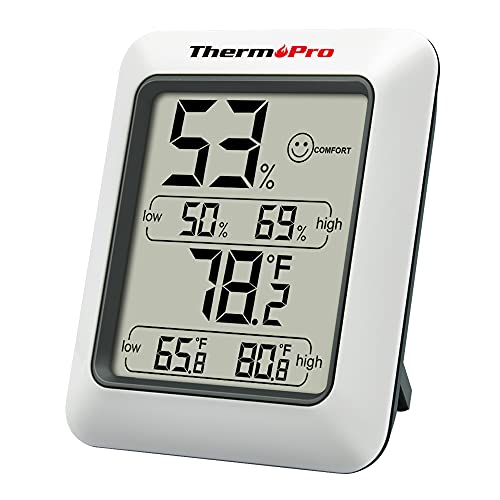
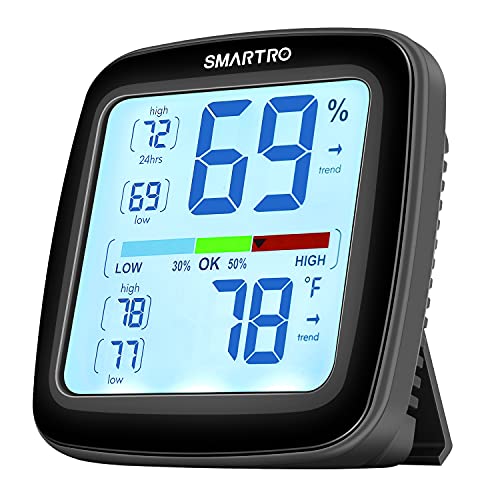
During winter, a portable or whole-home humidifier can lift indoor humidity back into the 30–40% range. Monitor with a hygrometer so you do not overshoot into the caution zone.
Choosing Equipment That Supports Healthy Humidity
When shopping for a new cooling system, humidity control should be part of your evaluation. Two features deserve particular attention:
- Variable-speed or inverter compressors — these maintain longer runtimes and more consistent moisture removal.
- Advanced thermostat control — a professional-grade HVAC thermostat can manage fan speed and humidity setpoints more precisely than a basic model.
For homes with existing ductwork, pairing a modern AC with a remote HVAC thermostat makes it easier to monitor conditions room by room. If you are upgrading a window unit instead, the quiet window air conditioner with remote control category is worth reviewing for comfort-focused options.
Homeowners in very humid climates sometimes explore ductless air conditioning pros and cons because mini-split systems can offer excellent dehumidification when properly sized. Others compare portable air conditioner pros and cons for temporary or rental situations.
Ready to Put This Knowledge to Work?
Understanding the recommended indoor humidity level is the first step. The next is choosing a cooling system that actually delivers it. Explore our curated recommendations to compare features, capacity, and efficiency tiers side by side.
Explore AC Recommendations