
Solar Powered Air Conditioner for Camping
Your complete guide to off-grid camping cooling — how solar air conditioners work, how to size your panel and battery setup, and expert recommendations for tents, RVs, and pop-up campers.
Why solar cooling for camping? Summer camping trips can turn uncomfortable when temperatures climb and airflow is limited. A solar powered air conditioner lets you stay cool without a generator, without hookups, and without engine idling. The right setup pairs a compact DC-powered unit with panels and a battery sized to your runtime needs. This guide explains exactly what to look for before you buy.
What Is a Solar Powered Air Conditioner for Camping?
A solar powered air conditioner for camping is a compact cooling unit designed to run from a solar panel and battery system rather than a wall outlet or generator. Most camping ACs fall into two categories: small DC-powered compressor units that run directly on 12V or 24V, and evaporative coolers that use far less power and work best in dry climates. Both can be powered from solar panels paired with a battery bank.
The appeal is self-sufficiency. A properly sized solar setup recharges during the day and runs the AC during the hottest hours, or continuously if the battery bank is large enough. This matters most for tent camping, pop-up campers, and boondocking in RVs where shore power is unavailable and generators are restricted or undesirable.
If you are exploring a broader off-grid cooling strategy, our guides to solar powered portable air conditioner and solar operated air conditioner cover related setups. For camper-specific options, see smallest portable air conditioner for camping and small portable air conditioner for pop-up camper.
Key Features to Evaluate
Power Type
DC-powered units (12V/24V) run directly from batteries with minimal losses. AC units need an inverter, which adds efficiency losses. DC is preferred for camping.
BTU Capacity
Camping ACs range from 2,000 to 5,000 BTU. Smaller units use less power and are easier to solar-charge. Match BTU to your tent or camper volume.
Power Draw (Watts)
Check the unit's running watts and startup surge. Small camping ACs may draw 200–500W running, with higher surge on startup. Size panels and battery accordingly.
Cooling Type
Compressor units cool effectively in humid or dry air. Evaporative coolers use less power but only work well in dry climates and need ventilation.
Portability & Weight
Camping units should be light enough to move easily and fit through tent or camper openings. Look for built-in handles and compact footprints.
Setup & Venting
Compressor units need exhaust venting to the outside. Check whether the unit includes a window kit, tent adapter, or exhaust hose.
Sizing Your Solar and Battery System
Sizing is the single most important factor for a successful solar camping AC setup. An undersized panel will not recharge the battery fast enough; an undersized battery will not run the AC through the night. Use the following framework as a starting point:
- Estimate daily AC runtime: Most campers run the AC 4–8 hours during the day, and sometimes 2–4 hours at night in hot climates.
- Calculate daily watt-hours: Multiply the AC's running watts by the hours of use. Example: 400W × 6 hours = 2,400 Wh.
- Add inverter losses (if AC-powered): Inverters typically lose 10–15%. DC units avoid this loss.
- Size the battery: Lithium batteries can be discharged to 80–90%; lead-acid should not go below 50%. A 100Ah 12V lithium battery provides about 1,000–1,200 Wh of usable capacity.
- Size the solar panels: Divide daily Wh by peak sun hours (typically 4–5 in summer) and add a 20–30% buffer. Example: 2,400 Wh ÷ 4 hours × 1.3 = about 780W of panels.
Use a solar calculator to fine-tune your numbers for your location, panel angle, and shade conditions. For a broader look at panel sizing, see solar panel that can power an air conditioner and solar panels that can run air conditioner.
Market Tiers: What to Expect at Each Level
Solar camping AC options fall into three broad tiers. The table below summarizes typical characteristics so you can align your expectations with your needs.
| Tier | Best For | Typical Characteristics | Solar Setup |
|---|---|---|---|
| Entry-Level | Small tents, occasional use, mild climates | Evaporative coolers or very small DC units, 2,000–3,000 BTU, limited features, basic venting | 200–400W panels, 50–100Ah battery |
| Mid-Range | Pop-up campers, small RVs, regular summer use | DC compressor units, 3,000–4,000 BTU, remote control, better venting kits, quieter operation | 400–800W panels, 100–200Ah battery |
| Premium | Larger RVs, off-grid cabins, extended trips | High-efficiency DC compressor, 4,000–5,000 BTU, integrated battery option, advanced venting and app control | 800–1,200W panels, 200–400Ah battery |
Mid-range systems typically offer the best balance for most campers: they cool effectively in real summer conditions, run from a manageable solar setup, and include the venting and remote features you will use daily. If you want the most capable option, explore our guide to the smallest portable air conditioner for camping.
Setup: What to Expect
Setting up a solar camping AC is a moderate project — most campers complete the initial setup in 1 to 2 hours. The process varies by unit type, but here is what to expect:
- Position the solar panels for maximum sun exposure (south-facing in most locations, adjustable for time of day)
- Connect panels to the solar charge controller, then to the battery
- Confirm the battery is charged before connecting the AC
- Set up the AC unit inside the tent or camper and route the exhaust vent outside
- Seal any gaps around the vent to prevent hot air from re-entering
- Connect the AC to the battery (directly for DC units, or via inverter for AC units)
- Run a short test cycle to confirm cooling and monitor power draw
- Check battery state at the end of the day and adjust runtime if needed
If your camper has a 12V system already, integrating a DC camping AC is simpler than starting from scratch. For a broader RV context, see our guides to solar powered air conditioner for camping and small portable air conditioner for one room.
Benefits and Limitations
Solar camping AC delivers real comfort, but realistic expectations help you plan better. Here is what to consider:
- Benefit — no generator noise: Solar runs silently, which matters for campground etiquette and quiet hours.
- Benefit — no fuel: Once the solar setup is in place, running the AC adds no fuel consumption or refueling trips.
- Benefit — compact and portable: Small camping ACs fit in tents, pop-up campers, and small RVs with minimal setup.
- Limitation — weather dependency: Cloudy days reduce solar output. A larger battery bank or a backup charging method is essential for multi-day trips.
- Limitation — cooling capacity: Camping ACs cool a small enclosed space effectively but cannot cool a large RV in direct sun.
- Limitation — venting requirements: Compressor units must vent exhaust outside; improper venting reduces efficiency and introduces hot air indoors.
For solar setups with larger cooling needs, see solar powered mini split air conditioning and solar panels for central air conditioning. If you are starting with a smaller system, the small evaporative air cooler guide may be useful.
Ready to Choose Your Solar Camping AC?
Browse our curated recommendations below. Each unit has been selected for its solar compatibility, portability, and suitability for camping and off-grid use.
View Recommended ModelsFrequently Asked Questions
Yes, but with realistic expectations. Small camping air conditioners in the 2,000 to 5,000 BTU range can run on a properly sized solar panel and battery setup. Larger units require significantly more solar capacity and battery storage, which becomes impractical for most campsites. Focus on small DC-powered units or evaporative coolers for best results.
A small 2,000 to 3,000 BTU camping AC typically needs 300 to 600 watts of solar panels plus a battery bank to handle startup surge and cloudy periods. Larger 5,000 BTU units may require 800 to 1,200 watts. Use a solar calculator to size your system based on runtime and daily sun hours for your specific location.
Portable camping air conditioners designed for 12V or 24V DC power are the most practical choice. These include evaporative coolers, small DC-powered compressor units, and battery-integrated camping ACs. Standard 115V window or portable units require an inverter, which adds efficiency losses and reduces runtime.
Runtime depends on battery capacity and AC power draw. A 100Ah lithium battery paired with a small 300W camping AC might provide 2 to 4 hours of runtime. Larger battery banks extend runtime proportionally. Most campers use solar panels to recharge during the day and run the AC during peak heat.
Yes, but it is inefficient. Standard window ACs draw too much power for most camping solar setups and require an inverter, which adds losses. A better approach is a dedicated DC camping AC or evaporative cooler. If you need to explore small window options for other spaces, see small window air conditioner energy star and small but powerful window air conditioner.
Final Thoughts
A solar powered air conditioner for camping is a practical upgrade for summer trips where heat and humidity are part of the experience. By choosing a DC-powered unit, sizing your panel and battery setup realistically, and planning for venting and weather variability, you can enjoy reliable cooling without a generator or hookups.
If you are exploring related setups, see our guides to solar powered air conditioning unit, solar powered heat pumps air conditioners, and solar powered split system air conditioner for broader off-grid cooling context. For smaller cooling options, our small evaporative air cooler guide may also be useful.
Once you have identified your requirements, browse the recommended models below to find the right fit for your camping trips.
Recommended Solar Powered Air Conditioners for Camping
⚠️ AFFILIATE DISCLOSURE: This website contains affiliate links. As an Amazon Associate, we earn from qualifying purchases. If you make a purchase through these links, we may receive a small commission at no additional cost to you. Read our full affiliate policy.

Portable Camping Air Conditioner 5200 BTU Tent AC Unit | 400W Low power 4-in-1 portable AC for indoor & outdoor,fast cooling for RV, truck,van,car,small warehouse and pet house
Check price on Amazon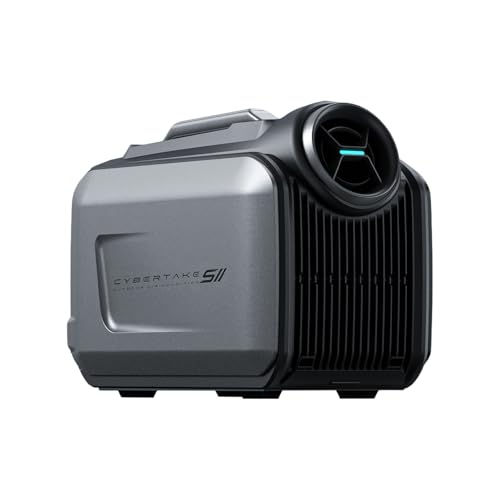
Cybertake S2 Pro Portable Camping Air Conditioner, Tent AC with 5100 BTU Cooling and 6100 BTU Heating, 8 Hours on 1kWh, 3-Way Power(48V DC, 12-24V Vehicle, 100V-240V Wall), Ideal for Tent, Camping, RV
Check price on Amazon
GETUHAND Portable Tent Air Conditioner for Camping, 5200BTU Fast Cooling Quiet Small Light Air conditoning 400W Low Power for RV, Truck, Van
Check price on Amazon
Portable Camping Air Conditioner, 5200 BTU 4-in-1 Portable AC Unit | 400W Low power compact portable AC with fast cooling,indoor and outdoor use,tent,RV,truck,small warehouse and pet house
Check price on Amazon
GETUHAND Portable Tent Air Conditioner for Camping 5200BTU 400W No Hot Air Discharge Drain-Free, for Tent Yacht/Truck/Bedroom/RVs
Check price on Amazon
USB Powered Portable Air Conditioner for Car, 1.2L Water Tank & 2 Ice Packs | Mini Air Conditioner for Camping, Personal Air Cooling Fan with remote, 7H Timer, for Tent Desktop, snow white no battery
Check price on Amazon
5000 BTU Portable Tent Air Conditioner with Heat, Low Power 490W for Camping & Outdoor/Indoor Use, Compact Cooling for RV, Truck, Van, Car, Small Room, Pet
Check price on Amazon