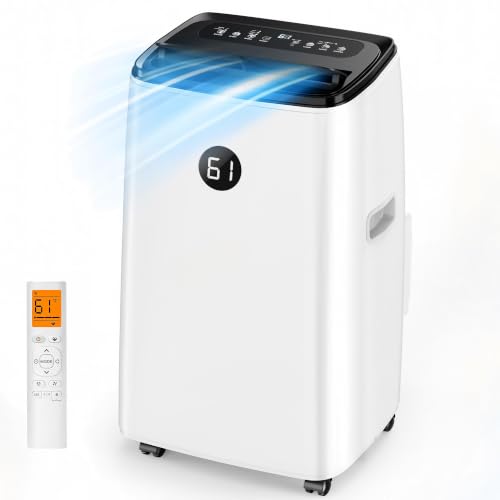
Stand Up Air Conditioning Unit: Complete Buying Guide
Everything you need to know about freestanding and portable air conditioning units — how they work, how to size them, which features matter, and how to pick the right model for your room, apartment, or office.
Start LearningAC Units Guide Philosophy: A stand up air conditioning unit is one of the most flexible cooling solutions available — no permanent installation, no ductwork, and full mobility between rooms. This guide walks you through every decision point so you can buy with confidence.
What Is a Stand Up Air Conditioning Unit?
A stand up air conditioning unit — also called a freestanding AC, floor-standing AC, or portable air conditioner — is a self-contained cooling appliance that rests on the floor and can be relocated from room to room. Unlike window units or central systems, it requires no permanent structural modification. Most models exhaust hot air through a flexible hose routed to a window or wall opening, while a few specialized designs use evaporative or ventless cooling.
These units are especially popular among renters, homeowners without ductwork, and anyone who needs targeted cooling in a single room. If you are comparing form factors, our overview of stand-alone air conditioner units explains how freestanding models differ from window and split systems. You can also explore the broader category of stand-up air conditioners to see how different designs stack up.
Stand up units are frequently confused with other cooling categories. For a closer look at naming conventions and product families, see our pages on standing air conditioners and standing air conditioning units.
How a Stand Up Air Conditioning Unit Works
Inside the unit, a compressor and refrigerant loop absorb heat from the room air and release it outdoors. A fan draws warm indoor air across evaporator coils, cools it, and blows it back into the room. The extracted heat is carried away through the exhaust hose. Condensation is either collected in a tank, drained continuously, or evaporated by the unit's self-evaporative system.
The efficiency of this process depends heavily on the hose configuration. Single-hose models pull some cooled indoor air out through the exhaust, creating negative pressure. Dual-hose models draw combustion-free outside air in for the condenser, which preserves indoor cooling and improves overall performance. Our guide to the most efficient portable air conditioner options explains this distinction in detail.
For spaces without a suitable window, specialized designs exist. Learn more about a stand-alone air conditioner without window vent, and compare with stand-alone portable air conditioning units that offer more traditional venting.
Types of Stand Up Air Conditioning Units
Stand up units fall into several design families, each suited to different rooms and use cases. The tiers below describe market positioning and build quality — not numeric figures.
Entry-Level Tier
Compact single-hose units for small bedrooms and home offices. Solid choice for occasional cooling and simple setup.
Mid-Range Tier
Dual-hose designs with digital controls, programmable timers, and improved airflow. Well-specified for daily use in medium rooms.
High-End Tier
Inverter compressors, smart controls, quieter operation, and higher efficiency ratings. Good value for its tier in long-term use.
Commercial-Grade
Heavy-duty construction for continuous operation in offices, server rooms, or temporary commercial spaces.
Related design families include tower air conditioners, which use a tall vertical form factor, and spot coolers for directional cooling. For larger temporary setups, see temporary commercial air conditioning units and tent AC units.
How to Size a Stand Up Air Conditioning Unit
Sizing is the single most important decision. An undersized unit runs constantly without reaching the set temperature; an oversized unit cools too quickly and cycles inefficiently. The industry baseline is roughly 20 BTU per square foot of floor area, adjusted for ceiling height, sun exposure, window area, and occupancy.
| Room Size | Typical Capacity | Best For |
|---|---|---|
| Up to 150 sq ft | 5,000 – 6,000 BTU | Bedrooms, small home offices |
| 150 – 250 sq ft | 8,000 – 10,000 BTU | Living rooms, studios |
| 250 – 400 sq ft | 12,000 – 14,000 BTU | Open-plan living areas |
| 400 – 600 sq ft | 14,000 – 18,000 BTU | Large rooms, lofts |
| 600+ sq ft | 18,000+ BTU | Commercial or multi-zone spaces |
For a deeper walkthrough of the calculation, review our how to size an air conditioner guide and the BTU calculator by room size. If you are evaluating specific capacities, the top-rated 8,000 BTU portable air conditioner and 10,000 BTU portable air conditioner roundups are useful references.
Key Features to Evaluate
Hose Configuration
Dual-hose models are generally more efficient than single-hose designs because they avoid pulling conditioned air out of the room. If efficiency is your priority, start with a top-rated dual-hose portable air conditioner.
Compressor Technology
Inverter compressors modulate speed instead of cycling on and off, which improves temperature stability, reduces noise, and lowers energy use over time. Compare this with fixed-speed designs in our inverter vs non-inverter article.
Noise Level
Portable units are louder than mini-splits. Look for models with quiet modes and low decibel ratings if the unit will run in a bedroom. Our top 10 quietest portable air conditioners list is a helpful starting point.
Drainage and Self-Evaporation
Self-evaporative systems reduce how often you need to empty the tank. In humid climates, continuous drain options are worth prioritizing.
Smart Controls
Wi-Fi, app control, and voice assistant compatibility are increasingly common in mid-range and high-end tier units. These features matter if you want scheduling and remote monitoring.
Portability
Check caster quality and unit weight. A heavy unit with sturdy casters is easier to move than a lighter unit with poor wheels. For an overview of units designed around mobility, see spot cooling solutions.
Installation and Placement
Setting up a stand up air conditioning unit is straightforward but requires attention to a few details:
- Choose the right location
Place the unit near the window or wall opening you will use for exhaust. Keep at least 12–18 inches of clearance around the unit for airflow.
- Seal the window kit
Use the included window panel and foam seals to prevent hot outside air from re-entering around the hose.
- Route the exhaust hose
Keep the hose as short and straight as possible. Long, kinked runs reduce efficiency significantly.
- Level the unit
Most units must sit level for the condensate system to work correctly. Use a stud finder if you plan to mount any supports or anchors.
- Test drainage
Run the unit for an hour and check the tank or drain line before relying on it overnight.
For wall-adjacent installations, review surface mount air conditioner options and the through-the-wall AC category if you are open to permanent modifications. If you are exploring alternatives, swamp cooler air conditioners and swamp fans are worth understanding for dry climates.
Efficiency, Operation, and Long-Term Value
Portable AC efficiency is expressed through CEER or SACC ratings. Higher ratings indicate more cooling per unit of electricity. Inverter models and dual-hose designs generally perform better in this category. If long-term operating efficiency is your main concern, explore the most energy-efficient portable air conditioner and most efficient portable air conditioner comparisons.
Smart thermostat behavior matters too. Pairing your unit with a compatible controller or scheduling system can reduce runtime. Our guides on thermostats for window AC units and thermostats for split systems explain the control ecosystem. If your unit is not cooling as expected, start with the AC in my house is not blowing cold air troubleshooting guide.
Maintenance is simple: clean or replace filters monthly during heavy use, empty the condensate tank, and inspect the exhaust hose for leaks. Seasonal checks are covered in our seasonal AC checklist.
How to Choose the Right Stand Up Air Conditioning Unit
Work through these decision points in order:
- Confirm your room size and match it to a BTU range. This is non-negotiable.
- Decide on hose type — single-hose for occasional use, dual-hose for daily cooling and better efficiency.
- Check the window situation — if you cannot vent through a window, review stand-alone units without window vent or consider a thermoelectric air conditioner for very small spaces.
- Prioritize noise if it is a bedroom unit — see the quietest portable AC list.
- Choose a tier that matches your usage — entry-level for occasional cooling, mid-range for daily use, high-end for efficiency and smart features.
- Verify warranty and support — longer compressor warranties signal confidence in build quality.
Where you buy also matters. Our guide on stores that sell portable air conditioners covers retail and online options. For a side-by-side view of product families, browse portable air conditioner and window air conditioner categories.
Frequently Asked Questions
What is a stand up air conditioning unit?
A stand up air conditioning unit is a freestanding, portable cooling appliance that sits on the floor and exhausts hot air through a hose to a window or wall opening. It requires no permanent installation and can be moved between rooms.
How many BTU do I need for a stand up air conditioning unit?
Plan for roughly 20 BTU per square foot. A 200 sq ft room typically needs about 8,000 BTU; a 400 sq ft space may need 12,000 BTU. Adjust upward for high ceilings, direct sun, and multiple occupants.
Do stand up air conditioning units need to be vented?
Yes — most models require exhaust ventilation through a window or wall. Dual-hose models vent both intake and exhaust for better efficiency. Ventless designs exist but are limited in cooling capacity.
Are stand up air conditioning units energy efficient?
Efficiency varies by model. Dual-hose and inverter designs are generally more efficient than single-hose fixed-speed units. Look for high CEER or SACC ratings and ENERGY STAR certification when comparing options.
Can a stand up air conditioning unit cool more than one room?
Only if the rooms are open to each other and the unit is sized for the combined area. For multi-room cooling, a ductless mini-split or a multi-zone system is usually a better fit. See three-zone mini-split options for whole-home coverage.
Ready to Choose Your Stand Up Air Conditioning Unit?
Compare top-rated models, verify sizing for your room, and explore features that match your daily routine. Our curated recommendations below make the final step easy.
View Recommended Models