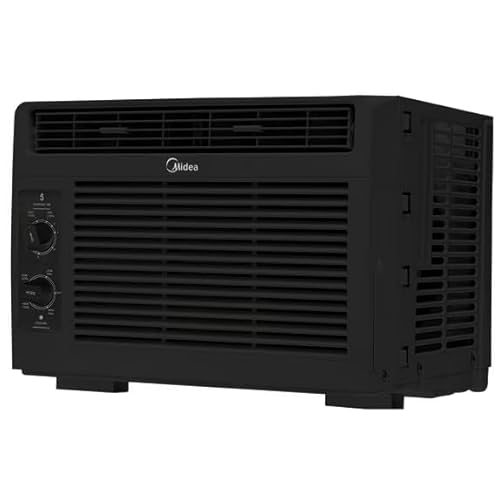
Window AC Unit for Bedroom: The Complete Guide
Everything you need to choose, install, and maintain a window air conditioner for quiet, efficient bedroom cooling
START READINGWhy a dedicated bedroom window AC? Bedrooms demand more than just cool air — they need quiet operation, consistent temperature, and efficient performance through the night. This guide walks you through every decision point so you can pick the right unit with confidence before you buy.
Why a Window AC Unit Works Well for Bedrooms
Window air conditioners are a practical cooling solution for bedrooms because they install directly in an existing window frame, require no ductwork, and cool a single room efficiently. For renters, homeowners without central air, or anyone who wants targeted cooling only where it matters, a window unit is often the most straightforward path to a comfortable night's sleep.
Unlike portable units that consume floor space and require venting kits, a window AC sits outside the room's footprint and exhausts heat directly outdoors. This makes them particularly well suited to bedrooms where space and quiet are at a premium. If you are still weighing form factors, our broader guide to the window air conditioner covers how these units compare against other cooling options.
Space-Saving Installation
Mounted in the window frame, the unit keeps your bedroom floor and wall space clear — no bulky appliance competing with furniture.
Targeted Single-Room Cooling
You cool only the bedroom, not the whole house. This is efficient for nighttime use when other rooms don't need conditioning.
Simple Setup
Most units install with a basic window kit in under an hour. No refrigerant lines, no professional ductwork, no major renovation.
Straightforward Maintenance
Washable filters and accessible coils make routine cleaning a quick DIY task that keeps performance steady season after season.
Sizing Your Bedroom Window AC Correctly
Getting the capacity right is the single most important decision. An undersized unit runs constantly and never quite reaches the set temperature. An oversized unit cools too quickly, cycles on and off, and leaves the room feeling clammy because it doesn't run long enough to remove humidity. Both scenarios waste energy and shorten the unit's life.
Capacity is measured in British Thermal Units (BTU). As a starting point, match BTU to bedroom square footage, then adjust for sun exposure, ceiling height, occupancy, and heat-generating electronics.
| Bedroom Size | Recommended BTU Range | Typical Use Case |
|---|---|---|
| Up to 150 sq ft | 5,000 – 6,000 BTU | Small bedroom, guest room, nursery |
| 150 – 250 sq ft | 8,000 – 10,000 BTU | Standard master bedroom |
| 250 – 400 sq ft | 12,000 – 14,000 BTU | Large master suite, bedroom with sitting area |
| 400 – 550 sq ft | 15,000 – 18,000 BTU | Oversized bedroom, converted loft |
Adjustments to the baseline:
- Add roughly 10% capacity for a room that receives strong afternoon sun.
- Add roughly 10% for ceilings taller than 8 feet.
- Add about 600 BTU per additional regular occupant beyond two people.
- Add 4,000 BTU if the bedroom contains a kitchenette or heavy heat-generating equipment.
- Reduce capacity slightly for heavily shaded rooms or basement bedrooms.
If you are unsure whether your bedroom falls into a small or medium category, the dedicated guide to a window air conditioner for a small room breaks down the lower end of the range in more detail. For rooms on the larger side, see our notes on a window AC unit for a 1,200 sq ft house to understand how single-room units scale across a home.
Noise Levels: The Bedroom Deal-Breaker
In a living room, a noisy AC is an annoyance. In a bedroom, it can ruin sleep. Sound output is measured in decibels (dB), and the difference between a quiet unit and a loud one is immediately noticeable at night.
| Sound Level | Decibel Range | Bedroom Suitability |
|---|---|---|
| Very quiet | Under 45 dB | Excellent for light sleepers |
| Quiet | 45 – 52 dB | Good for most sleepers |
| Moderate | 52 – 58 dB | Acceptable for deep sleepers |
| Loud | Above 58 dB | Noticeable at night; consider alternatives |
Several design choices influence how quiet a unit runs. Inverter-driven compressors modulate speed instead of switching fully on and off, which smooths out the sound profile. Higher-grade fan blades and insulated compressor blankets reduce mechanical noise. A unit with multiple fan speeds lets you run low at night and high during the day.
If silence is your top priority, consider a model with inverter technology, which tends to produce a steadier, less intrusive hum than a fixed-speed compressor. A remote control is also valuable in a bedroom — you can adjust settings without getting out of bed.
Energy Efficiency Ratings That Matter
Window AC efficiency is expressed through the Combined Energy Efficiency Ratio (CEER) and, for older stock, the Energy Efficiency Ratio (EER). Higher numbers mean more cooling per unit of electricity. For a bedroom unit that may run eight hours a night through the summer, efficiency has a real cumulative effect.
- CEER / EER: Look for a rating at or above the current ENERGY STAR threshold for your capacity class.
- Inverter compressors: These typically deliver better part-load efficiency, which is exactly how a bedroom unit operates overnight.
- Eco and sleep modes: These gradually raise the set temperature and reduce fan speed, trimming consumption during the hours you are asleep.
- Programmable timers: Schedule the unit to start before bedtime and stop near wake-up time.
A window air conditioner with a thermostat gives you precise control and prevents overcooling, which is one of the most common efficiency leaks in bedroom setups. If you want to go further, a remote thermostat lets you place the temperature sensor away from the unit's own warm exhaust area for more accurate readings.
Features Worth Prioritizing for a Bedroom
Sleep Mode
Gradually raises temperature and lowers fan speed over several hours, matching natural sleep cycles and reducing energy use.
Adjustable Louvers
Direct airflow away from the bed. Auto-swing distributes cool air evenly instead of blasting one spot.
Washable Filter
A removable, rinseable filter keeps airflow strong and indoor air cleaner — important in a room where you spend eight hours.
Auto-Restart
After a power interruption, the unit returns to its previous settings automatically — useful for overnight storms.
Wi-Fi and App Control
Pre-cool the bedroom before you head upstairs, or adjust settings from bed. See our notes on a Wi-Fi air con for how smart control integrates.
Heating Option
Some units include a heat pump or electric heater for shoulder-season use — see window air conditioners with heat.
Window Compatibility and Installation
Not every bedroom window accepts a standard window AC. Before shopping, measure your window opening and identify its type. Most units are designed for double-hung or vertical sliding windows and require a minimum width and height.
| Window Type | Standard AC Fit | Notes |
|---|---|---|
| Double-hung / vertical sliding | Direct fit | Most common; standard window kits work |
| Horizontal sliding | Requires adapter kit | See guides on window air conditioners for sliding windows |
| Casement / crank-out | Specialized unit needed | Covered in window AC for crank-out windows |
| Narrow opening | Compact unit needed | See window air conditioners for narrow windows |
Installation essentials for a bedroom:
- Use a proper window AC bracket support to bear the unit's weight safely and reduce vibration noise.
- Seal gaps with the included insulation panels or foam to stop outside air and insects from entering.
- Maintain a slight outward tilt so condensate drains outside rather than into the room.
- Check the unit's electrical requirements — most bedroom units run on 115V, but larger capacities may need a dedicated circuit.
- For a removable setup, consider a window air conditioner bracket with no drilling.
If your bedroom window is unusual, our guide to window AC in a casement window and the overview of window air conditioners for windows that open sideways cover the workarounds in detail. For a full installation checklist, see the window AC installation kit guide.
Pros and Cons of a Bedroom Window AC
Advantages
- Lower upfront investment than central or mini-split systems
- Simple installation and removal, ideal for renters
- Cool only the bedroom, avoiding wasted whole-home cooling
- No ductwork, no refrigerant lines, no major renovation
- Easy filter cleaning and straightforward maintenance
- Quiet inverter models now rival portable units on sound
Limitations
- Blocks part of the window, reducing natural light and view
- Requires a compatible window opening
- Can be a security consideration on ground-floor windows
- Less aesthetically integrated than a ductless mini-split
- Cooling is limited to one room
- Noise varies widely by model — research before buying
Keeping Your Bedroom Unit Running Quietly
Regular maintenance preserves cooling capacity and keeps noise low. A dusty filter forces the fan to work harder, which is both louder and less efficient.
- Rinse the washable filter every two to four weeks during heavy use.
- Check the exterior coils once a season and clear debris.
- Inspect the window seal each spring for gaps or degraded foam.
- Listen for new rattles or rattling louvers and tighten fittings as needed.
- Before the first cold snap, remove or cover the unit to prevent drafts.
If your unit stops cooling but the fan still runs, the troubleshooting guide for a window AC not cooling but fan is running walks through the likely causes. For water-related issues, see window air conditioner leaking water inside house.
Understanding Product Tiers Without the Guesswork
Window AC units for bedrooms fall into broad quality tiers. Knowing what each tier typically delivers helps you align expectations with needs, without anchoring on any specific figure.
| Tier | Typical Characteristics | Best For |
|---|---|---|
| Entry-level tier | Fixed-speed compressor, basic mechanical controls, straightforward window kit | Occasional use, guest rooms, short-term setups |
| Mid-range tier | Better insulation, electronic controls, sleep mode, quieter fan | Primary bedrooms with regular nightly use |
| Premium tier | Inverter compressor, multi-speed fan, app or remote control, enhanced filtration | Light sleepers and households wanting efficiency |
| Top-tier / flagship | Highest efficiency ratings, near-silent operation, advanced smart features, robust build | Long-term primary bedroom investment |
A mid-range model usually offers a meaningful step up in sound quality and control flexibility over an entry-level unit, while a premium or flagship tier focuses on efficiency and near-silent operation. Choose the tier that matches how often you will run the unit and how sensitive you are to noise.
Ready to Choose Your Bedroom Window AC?
Browse our curated picks for bedroom window air conditioners, selected for quiet operation, efficient cooling, and reliable build quality.
VIEW RECOMMENDATIONSFrequently Asked Questions
What size window AC do I need for a 200 sq ft bedroom?
A 200 sq ft bedroom typically falls into the 8,000–10,000 BTU range. Adjust upward if the room gets strong afternoon sun or has tall ceilings, and downward if it is heavily shaded.
How quiet should a bedroom window AC be?
Aim for a unit rated under 52 dB for comfortable sleep, and under 45 dB if you are a light sleeper. Inverter models tend to run more quietly and steadily than fixed-speed units.
Can I install a window AC in a sliding window?
Yes, but it typically requires an adapter kit. Standard window ACs are designed for double-hung windows. See our guide to window air conditioners for sliding windows for compatible models and kits.
Do I need a bracket to support a window AC?
A support bracket is strongly recommended. It bears the unit's weight safely, reduces vibration noise, and keeps the installation stable. Brackets range from simple no-drilling designs to reinforced outdoor mounts.
Should I run my bedroom window AC all night?
Running it all night is fine and often the point of a bedroom unit. Use sleep mode, a programmable timer, or a thermostat to avoid overcooling and to trim energy use in the early morning hours.
Can a window AC make my bedroom too cold?
Yes, if the capacity is oversized. Oversized units cool quickly but cycle on and off, which can leave the room feeling cold and humid. Correct sizing and a thermostat solve this.
What if my bedroom window opens sideways?
You will need a specialized unit or adapter. See our guides to window air conditioners for windows that open sideways and for side-sliding windows for compatible options.
More Bedroom Cooling Resources
If you are still researching, these related guides can help you finalize your decision:
- Window air conditioner overview — the full category guide
- Window AC for a small room — sizing and selection for compact bedrooms
- Window AC for a 1,200 sq ft house — how single-room units fit a larger home
- Window AC with inverter technology — quiet, efficient part-load operation
- Window AC with remote control — convenience for nighttime adjustments
- Window AC with thermostat — precise temperature control
- Window AC bracket support — safe, quiet installation
- Window AC installation kit — what you need for a clean fit
- Window AC for sliding windows — adapter kits and compatible units
- Window AC for crank-out windows — specialized solutions
- Window AC for narrow windows — compact-fit options
- Window AC leaking water inside — troubleshooting and fixes
- Window AC not cooling but fan running — diagnostic guide
- Wi-Fi air con — smart control integration