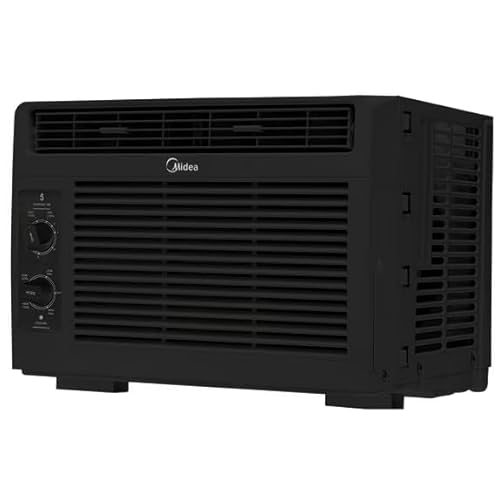
Window Air Conditioner for Small Room: The Complete Guide
Quick summary: A window air conditioner for a small room works best when it is correctly sized, efficiently rated, and installed in a compatible window. This guide explains how to match capacity to room size, what efficiency ratings to look for, how installation affects performance, and which product tiers suit different needs — so you can decide with confidence before you buy.
Small rooms — bedrooms, home offices, dorm rooms, and studio apartments — present a specific cooling challenge. They heat up quickly, often have limited window space, and can feel uncomfortable when an oversized unit cycles on and off too aggressively. A window air conditioner designed and sized for a small room solves these problems efficiently, but only if you choose it correctly. If you want the broader category context first, see our full window air conditioner guide.
Why a Window AC Is a Strong Fit for a Small Room
Window units are self-contained: the evaporator, compressor, and condenser live in a single chassis that mounts directly in a window frame. For a small room, this brings several practical advantages:
- No ductwork required. Nothing to modify inside the walls, which matters for renters and older homes.
- Low installation complexity. Most units can be fitted with basic tools and a support bracket.
- Direct cooling. The unit cools the air it draws from the room itself, so it works well in compact, enclosed spaces.
- Predictable efficiency. Because the unit sits outside the conditioned space, heat is expelled directly outdoors rather than recirculated.
The trade-off is that window units depend heavily on window compatibility. If your window opens sideways or is unusually narrow, review our guides on sliding window installations, windows that open sideways, and small window openings before committing to a model.
How to Size a Window AC for a Small Room
Sizing is the single most important decision. Undersized units run continuously and never reach the set temperature; oversized units short-cycle, which leaves the room humid and wastes energy. The industry baseline is a simple BTU-to-square-foot relationship, but small rooms need a few adjustments.
Baseline BTU Ranges for Small Spaces
| Room Size | Typical BTU Range | Best For |
|---|---|---|
| Up to 150 sq ft | 5,000 – 6,000 BTU | Bedrooms, dorms, home offices |
| 150 – 250 sq ft | 8,000 – 10,000 BTU | Studio apartments, larger bedrooms |
| 250 – 400 sq ft | 12,000 – 14,000 BTU | Small living rooms, open-plan studios |
Adjustments That Change the Calculation
- Sun exposure: A room with south- or west-facing windows gains more heat; size slightly upward within the range.
- Ceiling height: Rooms taller than eight feet hold more warm air volume — treat them as one size band larger.
- Occupancy: Each additional person adds roughly 600 BTU of sensible load.
- Kitchen adjacency: A small room next to a kitchen absorbs cooking heat; consider the upper end of the range.
- Poor insulation: Older windows and walls let heat back in — an inverter unit compensates better than a single-speed model.
Rule of thumb: For a small bedroom in a well-insulated home with average sun exposure, a 5,000–6,000 BTU unit is usually sufficient. For a studio that includes cooking and a sunny exposure, move up to the 8,000–10,000 BTU band. For very tight spaces, see our notes on units under 5,000 BTU.
Efficiency Ratings That Matter in a Small Room
Small rooms often run their AC for long stretches, especially overnight in summer. Efficiency therefore has a compounding effect on energy use over a season.
- CEER (Combined Energy Efficiency Ratio): The current standard for window units. Higher is better. Entry-level models typically sit near the minimum; mid-range and premium models climb noticeably higher.
- Inverter compressors: These modulate speed instead of cycling fully on and off, which improves comfort and efficiency in a small room where temperature swings are felt quickly. Learn more in our inverter window AC overview.
- ENERGY STAR certification: A useful shorthand for units that exceed baseline efficiency requirements.
If you are comparing compressor technologies more broadly, our inverter versus non-inverter comparison is a helpful companion read.
Window Compatibility and Installation
A window AC is only as good as its fit. Before ordering, measure the window opening width and height against the unit's minimum and maximum specifications. Most small-room units fit standard double-hung windows, but narrower frames and alternate window types need specific solutions.
Common Window Scenarios
- Standard double-hung window: The most straightforward fit. Use the manufacturer's included window kit and a support bracket for safety.
- Sliding windows: Require a dedicated kit or a unit designed for horizontal openings. See window AC for a sliding window and the sliding window kit guide.
- Narrow openings: Look for compact chassis designs. Our guide to narrow window units covers the dimensions to check.
- Casement or crank-out windows: These open outward and generally cannot host a standard window unit. See window AC in a casement window for alternatives.
- Vertical sliding windows: Covered in detail in our vertical sliding window guide.
Support and Safety
Always use a proper bracket or support system. A small unit is still heavy enough to strain a window frame over time. Our guides on no-drill brackets and window AC bracket support explain the options. If you want the installation hardware bundled, see the window AC installation kit overview.
Installation Checklist
- Measure window opening width and height precisely.
- Confirm the unit's minimum and maximum window dimensions.
- Check that the window frame can bear the unit's weight, or install a bracket.
- Ensure a nearby grounded outlet matches the unit's voltage requirement.
- Seal gaps with the included insulation panels to prevent air leaks.
- Angle the unit slightly outward so condensate drains correctly.
- Test cooling, fan speeds, and drainage before final positioning.
Product Tiers: What Changes as You Move Up
Rather than focusing on specific models, it helps to understand how window ACs for small rooms are positioned in the market. The descriptors below are used consistently across this guide.
Essential Tier
These units cover the basics: mechanical or simple electronic controls, fixed fan speeds, and standard cooling performance. They are a solid choice for a guest room, a rental, or a space used only part of the day. Build quality is functional rather than refined, and noise levels are typically higher than mid-range models.
Balanced Tier
Mid-tier models add digital thermostats, programmable timers, remote controls, and better sound insulation. Efficiency improves noticeably over entry-level units, and features like sleep mode and auto-restart make them comfortable for nightly use in a bedroom. For most small-room buyers, this is the sweet spot.
High-End Tier
Premium window units bring inverter compressors, Wi-Fi connectivity, app-based scheduling, and quieter operation. If you want precise temperature control and smart-home integration, look here. Our guides on Wi-Fi air conditioning and remote-control window units explain the feature differences.
Features Worth Prioritizing in a Small Room
- Adjustable louvers: Direct airflow away from the bed or desk — important in tight rooms.
- Sleep mode: Gradually raises the set temperature overnight to reduce overcooling.
- Remote thermostat: Useful when the unit is mounted high or behind furniture. See remote thermostat options.
- Quiet operation: Decibel ratings matter more in a bedroom than in a living room.
- Drain management: Some units are designed to reduce dripping. If that matters to you, see units that do not drip water.
- Heating function: If the room is used year-round, a unit with a heat mode may be a good fit — see window AC units with heat.
Maintenance That Keeps a Small Unit Performing
Small units work harder per square foot, so routine care pays off quickly.
- Clean or replace the filter every two to four weeks during heavy use.
- Inspect the outdoor side of the unit for debris and clear the condenser fins gently.
- Check the window seal each season; degraded foam lets warm air back in.
- Watch for water pooling indoors — see our guide if your window AC is leaking water inside.
- Listen for unusual noises or reduced cooling and address them early — our not cooling properly checklist covers the common causes.
Common Problems and Fast Checks
- Fan runs but air is warm: Often a compressor issue or dirty filter — see fan running but not cooling.
- Weak airflow: Check the filter and confirm the unit is not blocked by curtains or furniture.
- Unit does not cool at all: Start with our not blowing cold air troubleshooting guide.
- Persistent moisture: Confirm the unit is angled outward and the drain holes are clear.
- Room feels humid even when cool: The unit may be oversized and short-cycling; review the sizing section above.
Where to Place a Window AC in a Small Room
Placement affects comfort more in a small room than in a large one. Ideal placement:
- On the wall that gets the most direct sun, to counteract solar gain at the source.
- Away from heat-generating appliances such as lamps, TVs, or desktop computers.
- Where airflow can reach the occupied zone — the bed or desk — without blowing directly on occupants.
- Close enough to a grounded outlet to avoid extension cords, which are not recommended for high-draw appliances.
Frequently Asked Questions
What BTU window AC do I need for a small bedroom?
For a bedroom up to 150 square feet with average sun exposure, a 5,000–6,000 BTU unit is generally appropriate. If the room is sunny, has high ceilings, or is used by more than one person, consider moving to the 8,000 BTU range.
Can I use a regular window AC in a narrow window?
Yes, if the unit's minimum window width fits. Compact chassis models are available, and our guide to narrow window units covers what to measure.
Is an inverter window AC better for a small room?
Inverter units maintain a steadier temperature and are typically quieter, which suits small rooms well. They sit in the premium tier and are a worthwhile choice if you plan to run the unit frequently.
How do I stop my window AC from leaking inside?
Confirm the unit is tilted slightly outward, clean the drain channels, and check that the window kit is sealed. Our guide on window AC leaking water inside walks through the fixes.
Can a window AC cool a room with a sliding door?
Not directly — sliding glass doors need a dedicated kit or a portable unit. See window AC for sliding glass door for alternatives.
What if I do not have a window suitable for a window unit?
Explore portable and mini-split alternatives in our window AC without a window guide.
Final Decision Checklist
- Measured the room and confirmed a BTU range.
- Adjusted the range for sun exposure, ceiling height, and occupancy.
- Checked the window type and opening dimensions against the unit's specs.
- Decided between entry-level, mid-range, and premium tiers based on daily use and feature needs.
- Confirmed efficiency expectations (CEER, inverter, ENERGY STAR).
- Planned for a support bracket and a properly sealed window kit.
- Reviewed maintenance needs and common troubleshooting steps.