Window AC in a Casement Window: Complete Guide
Discover safe and effective ways to cool rooms with side-hinged windows using casement window air conditioner solutions, mounting kits, and smart alternatives.
EXPLORE SOLUTIONSQuick Summary: Standard window air conditioners are designed for double-hung (vertical sliding) windows. Casement windows open outward with a crank or hinge, so a traditional window AC cannot be mounted directly. However, you have several practical options: casement window AC kits, portable ACs with window vent kits, mini-split systems, or specialized brackets. This guide explains each method, its safety considerations, and how to choose the right approach for your home.
Why Casement Windows Are Different
Casement windows — also called crank-out, side-hinged, or side-opening windows — swing outward like a door. This design offers excellent ventilation and a tight seal when closed, but it creates a unique challenge for cooling. A standard window AC unit relies on a vertical sash that slides up and down, allowing the unit to rest on the window sill and be secured by closing the sash. With a casement window, there is no sash to hold the unit in place, and the window cannot close around an AC frame.
Understanding this difference is the first step. Many homeowners search for a window air conditioner for side opening window and are surprised to learn that a standard unit will not fit. The good news is that the market offers dedicated solutions. For related configurations, see our guides on a window air conditioner for crank out windows and a window air conditioner for vertical windows.
Types of Casement Window Configurations
Crank-Out Casement
Opens outward using a hand crank. Common in modern homes. The window screen and crank mechanism complicate direct AC mounting.
Side-Hinged Casement
Hinged on one side and swings open like a door. Similar challenges to crank-out models, but some kits accommodate the hinge side.
Awning Window
Hinged at the top and pushes outward at the bottom. Not a true casement but often grouped together. AC mounting is equally difficult.
Fixed Casement with Vent Panel
Some casement windows have a small operable section. If the opening is large enough, a compact AC may fit with a custom bracket.
Solutions for Installing a Window AC in a Casement Window
There is no universal drop-in solution, but the following approaches are proven to work. Each has trade-offs in installation effort, cooling capacity, and how much the window can still open.
1. Casement Window AC Kits
Dedicated casement window air conditioner kits exist for some window AC brands. These kits typically include a metal frame or panel that replaces the window screen and secures the AC unit while allowing the casement window to remain partially open. The kit bolts to the window frame and supports the AC from below. This is the most direct answer to "window AC in casement window" and works best with small to mid-capacity units. Look for a window air conditioner for side opening windows kit that matches your window's width and the AC's dimensions.
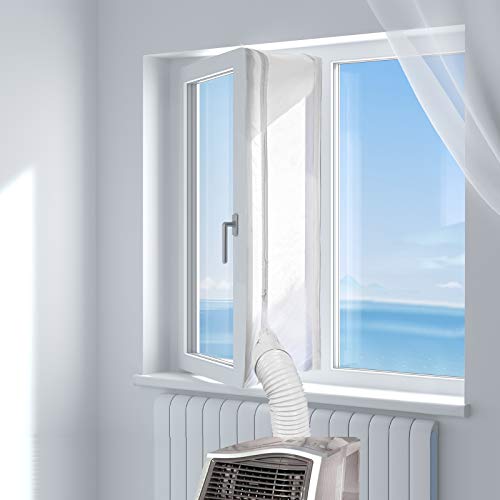
2. Portable AC with Window Vent Kit
A portable air conditioner with a casement window vent kit is the most flexible option. Instead of mounting the heavy unit in the window, you place the portable AC on the floor and run a flexible exhaust hose through a window panel. Casement-specific vent panels are available and seal the gap around the hose. This preserves your window's crank mechanism and requires no structural modification. For a room-by-room solution, see our guide on a window air conditioner for small room setups.
3. Through-the-Wall Installation
If you own your home and have an exterior wall near the casement window, a through-the-wall AC unit can be installed with a sleeve. This bypasses the window entirely and is a permanent solution. It requires cutting into the wall and may need a permit. This approach is often considered by homeowners who want a clean look and are not able to use the window opening.
4. Mini-Split System
A ductless mini-split is the premium solution for rooms with casement windows. The indoor air handler mounts on a wall or ceiling, and only a small refrigerant line passes through a small hole in the wall. No window space is used at all, and the system is far quieter and more efficient than a window unit. This is a top-tier investment but delivers the best comfort and preserves your window's function.
5. Specialized Brackets and Supports
Some brackets are designed to hold a window AC from the outside without resting on the sash. These are sometimes called window AC bracket support systems. For casement windows, a bracket that attaches to the exterior wall or window frame can support the unit while the window remains open. Safety is critical here — the bracket must be rated for the AC's weight and properly anchored. Explore options for a window air conditioner bracket no drilling if you rent or cannot modify the exterior.
Solution Comparison: Which Approach Fits Your Situation?
| Solution | Tier | Best For | Window Function Preserved | Installation Effort |
|---|---|---|---|---|
| Casement AC Kit | Essential Tier | Renters and DIYers with small rooms | Partially (window stays open) | Low to moderate |
| Portable AC + Vent Kit | Balanced Tier | Flexible room-to-room cooling | Yes | Low |
| Through-the-Wall AC | Premium Tier | Permanent installations in owned homes | Yes | High (professional) |
| Mini-Split System | Flagship Tier | Whole-room comfort and efficiency | Yes | High (professional) |
| Exterior Bracket | Balanced Tier | Medium windows with sturdy exterior walls | No (window stays open) | Moderate |
Pros and Cons of Casement Window AC Solutions
✔ Advantages
- Casement windows seal tightly when closed, improving energy efficiency when the AC is not in use.
- Portable ACs and mini-splits preserve the window's full function.
- Modern inverter window units are efficient in the long run.
- Casement kits are a solid choice for the tier and require no wall modification.
✘ Disadvantages
- Standard window ACs do not fit casement windows without adapters.
- Casement kits may limit the window opening and screen use.
- Exterior brackets require careful weight rating and anchoring.
- Through-the-wall and mini-split installations need professional help.
Safety, Sizing, and Installation Tips
- Measure the window opening first: Record the width and height of the clear opening. Casement kits and vent panels are sized to specific dimensions. If your opening is narrow, see options for a window air conditioner for small window opening.
- Match BTU to room size: An undersized unit runs constantly; an oversized unit short-cycles and dehumidifies poorly. Use a BTU calculator based on square footage, ceiling height, sun exposure, and occupancy.
- Check the weight rating: A window AC can weigh 40–80 lbs or more. Any bracket or kit must be rated for that weight and anchored into solid framing, not just drywall or siding.
- Never rely on the window crank alone: The crank mechanism is not designed to support the weight of an AC. Always use a dedicated support bracket or kit.
- Consider a drain option: Some window units drip water. If dripping is a concern, look for a window air conditioner that doesn't drip water or add a drain hose.
- Weatherproof the gap: Use foam insulation, weatherstripping, or the kit's sealing panels to prevent hot air from entering around the unit.
Related Window Types and Alternatives
If your window is not a true casement, the solution may differ. Homeowners with horizontally sliding windows should read about a window air conditioner for sliding windows or a window air conditioner for side sliding windows. For narrow frames, a window air conditioner for vertical sliding window may be the right fit. If your window opens sideways but is not a casement, see the guide on a window air conditioner for sideways windows. And if you have no suitable window at all, our article on a window air conditioner no window installation covers wall and portable alternatives.
For very narrow casement openings, explore a window air conditioner less than 14 inches wide and a window unit for small window. If you are considering a compact unit, see the window air conditioner less than 5000 BTU options for very small rooms.
Maintenance and Troubleshooting
Once your casement window cooling solution is installed, regular maintenance keeps it running efficiently. Clean or replace the filter every 2–4 weeks during peak season, and check the exterior coil for debris. If the unit stops cooling, review our guide on a window air conditioner not cooling properly. If the fan runs but the air is warm, see window AC not cooling but fan is running.
Water management matters too. If you notice moisture inside, read about a window air conditioner leaking water inside. For general repair topics, see window unit repair. If you need professional help with installation, learn about who sells and installs window air conditioners.
Frequently Asked Questions
Can I put a regular window AC in a casement window?
Not directly. A standard window AC is designed for a double-hung window with a vertical sash. Casement windows swing outward and have no sash to secure the unit. You need a casement-specific kit, a portable AC with a vent panel, or a different cooling solution.
What is the best way to cool a room with a casement window?
The best solution depends on your situation. For renters, a portable AC with a casement vent kit is flexible and requires no modification. For homeowners, a ductless mini-split offers the best efficiency and quiet operation. A casement window AC kit is a good middle ground for small rooms.
Can a window AC fit a side-opening window?
Only with an adapter or a specialized bracket. Explore our guide on a window air conditioner for side opening window for details. Never force a standard unit into a side-opening window without proper support.
Are casement window AC kits safe?
Yes, when installed correctly. The kit must be rated for the AC's weight and anchored into solid framing. Follow the manufacturer's instructions and never rely on the window crank for support.
Can I use a window AC bracket for a casement window?
Some exterior brackets are designed to support a window AC from the outside. They must be anchored to the wall or window frame and rated for the unit's weight. See our guide on window air conditioner supports for more information.
What if my casement window opening is very narrow?
If the clear opening is too narrow for a kit, a portable AC with a vent hose is the most practical option. You can also explore compact units like a window air conditioner for small window opening or a window air conditioner for narrow windows.
Ready to Choose the Right Cooling Solution?
Now that you understand how a window AC in a casement window can work, explore our recommended products and compare features before you decide.
VIEW RECOMMENDED PRODUCTS