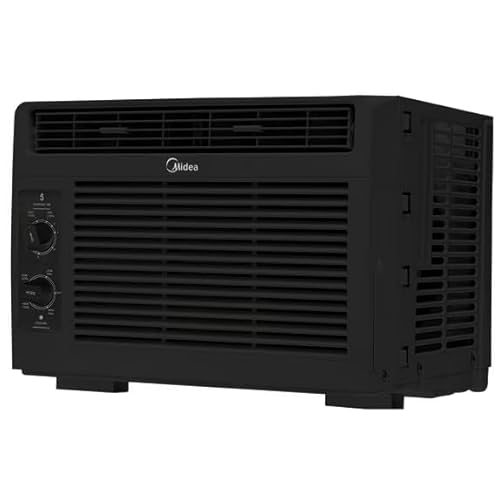
Window Air Conditioners for Narrow Windows
Discover slim-fit window AC units designed for tight window openings. Learn how to measure, choose the right BTU capacity, and install a compact air conditioner safely in narrow windows.
VIEW RECOMMENDED MODELSWhy narrow windows need special attention: Standard window air conditioners typically require a window opening at least 24 to 26 inches wide. If your window is narrower, a regular unit will not fit securely. Compact and slim-fit window AC models are engineered specifically for narrow openings, providing safe installation and reliable cooling without compromising your window structure.
What Is a Window AC for Narrow Windows?
A window air conditioner for narrow windows is a compact cooling unit designed to fit into window openings that are typically narrower than standard sizes. These units usually require a minimum window width of about 21 to 23 inches, compared to the 24 to 26 inches needed by conventional models.
These slim-fit AC units are ideal for older homes, apartments, and buildings with architectural windows that were not designed for modern cooling equipment. They are available in capacities ranging from 5,000 BTU for small bedrooms to 10,000 BTU for medium-sized living spaces.
Window Width Requirements: What to Measure
Before shopping for a narrow window AC, measure your window opening carefully. You need two key measurements:
| Measurement | What to Measure | Why It Matters |
|---|---|---|
| Window Width | The horizontal distance between the left and right window frame inside the opening | Determines whether the AC cabinet will fit between the frame sides |
| Window Height | The vertical distance from the bottom sill to the point where the window sash closes | Ensures the AC unit's height fits when the window is closed over it |
| Window Type | Single-hung, double-hung, sliding, or casement | Affects the type of installation kit and support bracket needed |
For narrow windows, pay special attention to the minimum window width listed in the product specifications. Most compact window AC units require at least 21 to 23 inches of width. If your window is narrower than 21 inches, you may need to consider alternative cooling solutions such as portable AC units or ductless mini-splits.
If your window opens sideways rather than up and down, you may need a specialized installation kit. Learn more about window AC units for windows that open sideways and window air conditioners for side-opening windows.
How to Choose the Right BTU Capacity
Choosing the correct cooling capacity is just as important as finding a unit that fits your window. An undersized AC will struggle to cool the room, while an oversized unit will cycle on and off too frequently, leading to poor humidity control and wasted energy.
| Room Size | Recommended BTU | Typical Use Case |
|---|---|---|
| Up to 150 sq ft | 5,000 – 6,000 BTU | Small bedroom, home office, studio apartment |
| 150 – 250 sq ft | 6,000 – 8,000 BTU | Medium bedroom, small living room |
| 250 – 350 sq ft | 8,000 – 10,000 BTU | Large bedroom, small open-plan space |
| 350 – 450 sq ft | 10,000 – 12,000 BTU | Living room, combined kitchen and dining area |
For a more precise calculation, use our guide on how to size an air conditioner or the BTU calculator by room size. Keep in mind that factors like ceiling height, sun exposure, and the number of occupants also affect the required capacity.
Narrow window AC units are most commonly available in the 5,000 to 10,000 BTU range, making them suitable for small to medium rooms. If you need to cool a larger space, you may need to consider a window air conditioner for a small room or explore alternative solutions like a ductless mini-split system.
Types of Window AC Units for Narrow Windows
There are several types of compact window AC units designed for narrow openings. Understanding the differences helps you choose the right one for your home.
| Tier | Key Features | Best For |
|---|---|---|
| Entry-level | Mechanical controls, basic cooling, fixed fan speed, no smart features | Basic cooling needs in small bedrooms or rental units |
| Mid-range | Digital controls, remote control, multiple fan speeds, programmable timer, energy-saving mode | Homeowners who want convenience and better energy management |
| Premium | Inverter compressor technology, Wi-Fi connectivity, smart home integration, quiet operation, high CEER rating | Users who prioritize energy efficiency, quietness, and smart control |
For narrow windows, mid-range and premium models often offer the best balance of fit, features, and energy performance. If you are interested in smart features, consider a window air conditioner with remote control or one that integrates with a Wi-Fi thermostat for air conditioner.
Installation Tips for Narrow Window AC Units
Installing a window AC in a narrow opening requires extra care to ensure safety and performance. Follow these guidelines:
- Always use a support bracket. A window air conditioner bracket with no drilling or a window AC bracket support provides stability and prevents the unit from falling. This is especially important for narrow windows where the unit may have less frame contact.
- Use the correct installation kit. Many narrow window AC units come with side panels or a window AC installation kit designed to seal gaps and secure the unit. For sliding windows, a window air conditioner sliding window kit may be necessary.
- Seal air gaps. Narrow windows often have irregular gaps around the AC unit. Use foam insulation or weatherstripping to prevent cool air from escaping and warm air from entering.
- Check the window type. If you have a casement window, standard window AC units may not work. Explore options for window AC in casement windows or consider a window air conditioner for crank-out windows.
- Consider professional installation. If you are unsure about the structural integrity of your window or the installation process, hire a professional. Learn more about who sells and installs window air conditioners.
Energy Efficiency Considerations
When choosing a window AC for a narrow window, energy efficiency should be a priority. Modern compact units are available with inverter technology and ENERGY STAR certification, which can significantly reduce electricity consumption over time.
Look for models with a high Combined Energy Efficiency Ratio (CEER) or Energy Efficiency Ratio (EER). Inverter-driven compressors, found in window air conditioners with inverter technology, adjust cooling output based on demand rather than cycling on and off at full power. This results in more stable temperatures, quieter operation, and lower energy use.
To further improve efficiency, pair your AC with a window air conditioner with thermostat control or a programmable schedule. You can also explore ENERGY STAR certified AC options for guaranteed efficiency standards.
Maintenance for Long-Term Performance
Proper maintenance keeps your narrow window AC running efficiently and extends its lifespan. Key maintenance tasks include:
- Clean or replace the air filter every 2 to 4 weeks. A clogged filter restricts airflow and reduces cooling efficiency. Learn how to clean an AC filter properly.
- Check the drain path. Some units may develop water issues. If you notice window air conditioner leaking water inside, inspect the drain pan and ensure proper tilt for drainage.
- Inspect the seal around the window. Over time, weatherstripping can degrade. Replace it to maintain an airtight fit.
- Schedule seasonal servicing. Before each cooling season, clean the coils and check the refrigerant levels. Follow a seasonal AC checklist for comprehensive maintenance.
Common Issues and Troubleshooting
If your narrow window AC is not performing as expected, check these common issues:
| Issue | Possible Cause | Solution |
|---|---|---|
| AC not cooling | Dirty filter, low refrigerant, blocked airflow | Clean the filter, check for obstructions, or call a technician |
| Water leaking inside | Improper tilt, clogged drain, damaged drain pan | Adjust the unit's tilt, clean the drain, or replace the pan |
| AC not blowing cold air | Thermostat setting, compressor issue, low refrigerant | Check settings, inspect the compressor, or schedule service |
| Unit vibrating or noisy | Loose installation, worn fan motor, debris inside | Secure the bracket, clean the unit, or replace worn parts |
For more detailed troubleshooting, see our guides on window air conditioner not cooling properly and window AC not cooling but fan is running.
Alternatives When a Window AC Won't Fit
If your window is exceptionally narrow (less than 21 inches) or an unusual style, window air conditioners may not be a viable option. Consider these alternatives:
- Portable air conditioner: A portable air conditioner requires only a small vent window and can be moved from room to room. Explore options for window fittings for portable air conditioners.
- Ductless mini-split system: A ductless mini-split AC requires only a small hole in the wall for refrigerant lines and offers efficient, quiet cooling.
- Through-the-wall AC: A through-the-wall air conditioner is installed in a wall sleeve rather than a window, making it suitable for rooms with no suitable window.
- Central air conditioning: If you are cooling multiple rooms, a central air conditioning system or a whole-house air conditioning system may be a more comprehensive solution.
Related Guides on Narrow and Small Window AC Units
- Window AC for Small Windows
- AC for Small Window Openings
- AC Less Than 14 Inches Wide
- Window Unit for Small Windows
- AC for Vertical Windows
- AC for Sliding Windows
- AC for Sideways Windows
- AC for Windows Opening Sideways
- AC for Side-Opening Windows
- AC for Vertical Sliding Windows
- Window AC Units for Small Windows
- Installation Kit for Sliding Windows
- Window AC Supports
- Window Mounted AC Units
- Window AC for Small Room
- Window AC Less Than 5,000 BTU
Ready to Choose Your Narrow Window AC?
Explore our curated selection of compact window air conditioners designed for tight window openings. Compare features, capacities, and efficiency ratings to find the perfect fit for your home.
VIEW RECOMMENDED MODELS