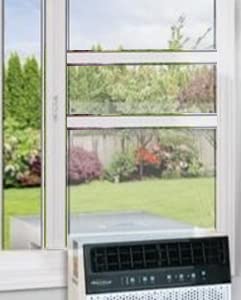
Window Air Conditioner for Side Sliding Windows: Complete Buying Guide
Side sliding windows open horizontally, which means standard window AC units often will not fit. This guide explains the units, brackets, and installation kits that actually work for horizontal windows.
Explore Window AC OptionsWhy this page matters: If you have a side sliding window (also called a horizontal sliding window), the sash moves left or right rather than up and down. That changes the way a window air conditioner must be mounted. Most units are designed for double-hung windows, so you need to confirm the unit fits the horizontal opening, that the frame can carry the load, and that the gap is sealed properly. This guide walks through all of that so you can buy with confidence.
What Makes a Side Sliding Window Different?
A side sliding window has one fixed panel and one panel that slides horizontally. When you open it, the gap is on the side rather than at the top. That creates three practical challenges for an air conditioner:
- Horizontal opening: The window AC must sit in the horizontal gap, so the unit needs a fit that matches the sliding sash width.
- Weight support: There is no lower sash pressing down on the unit, so you need a bracket or support that carries the load and prevents the unit from tipping.
- Sealing the gap: The open portion of the window must be closed off with a panel or kit so outside air and insects do not get in.
If your window opens sideways, you are not limited to portable units. Several window AC models and accessory kits are designed for horizontal openings, and this guide will help you identify them.
Types of Air Conditioners That Fit Side Sliding Windows
1. Window AC Units for Horizontal Windows
Some window air conditioners are built or marketed for horizontal sliding windows. These units typically come with a side panel kit or are narrow enough to fit the sliding opening. When shopping, look for models whose product description explicitly mentions horizontal or side sliding window compatibility. If you want a focused list, the guide on window air conditioner for side opening windows covers the specific fit considerations.
2. Standard Window AC with a Sliding Window Kit
A standard window unit can often be adapted with a window air conditioner sliding window kit. The kit provides a filler panel and support hardware so the unit can sit in a horizontal opening. This is the most common route for homeowners who already own a window AC and want to move it to a side sliding window.
3. Through-the-Wall and Portable Alternatives
If the window frame is too narrow or the installation is not practical, two alternatives are worth considering:
- Through-the-wall AC: Installed through the wall rather than the window, it avoids the sliding sash entirely. Learn more in the window AC in casement window guide for related window-type constraints.
- Portable AC: A portable unit vents through a window panel and does not need to rest in the window frame. See the window panel for portable air conditioner guide for venting options.
Quick tip: Measure the clear opening width and height of your sliding window before shopping. Compare those numbers to the unit's minimum and maximum window width. A unit that is even slightly too wide will not fit, and a unit that is too narrow will leave a sealing gap.
How to Size an AC for a Side Sliding Window
Sizing is about cooling capacity, not the window type. Use the room area as a starting point, then adjust for sun exposure, ceiling height, and occupancy. The following ranges are a practical starting reference:
| Room Area | Cooling Capacity Range | Best For |
|---|---|---|
| Up to 150 sq ft | 5,000 - 6,000 BTU | Bedrooms, home offices, small studios |
| 150 - 250 sq ft | 8,000 - 10,000 BTU | Medium bedrooms, small living rooms |
| 250 - 400 sq ft | 12,000 - 14,000 BTU | Large bedrooms, open living areas |
| 400 - 550 sq ft | 18,000 - 24,000 BTU | Open-plan rooms, small apartments |
Tier note: entry-level units often cover the smallest rooms, mid-range units cover medium spaces, and high-end tier units are built for larger areas or higher heat loads.
For a more detailed method, including ceiling height and sun exposure adjustments, see the guide on how to size an air conditioner. If the room is small and you are working with a narrow opening, the window air conditioner for small window opening guide covers compact options.
Installation: Step by Step for Side Sliding Windows
Installation for a horizontal sliding window differs from a double-hung window because the support and sealing approach changes. Follow these steps:
- Measure the opening. Record the clear width and height of the sliding section. Check the unit's minimum and maximum window width and height specifications.
- Inspect the frame. Confirm the window frame is solid and can support the unit's weight. A loose or damaged frame needs repair before installation.
- Choose a support method. For horizontal windows, a bracket is usually the safest option because there is no lower sash to hold the unit. The window AC bracket support guide explains bracket types and load ratings.
- Install the filler panel. Use a sliding window kit or a custom panel to close the open portion of the window. This keeps outside air out and keeps the unit in place.
- Seal the edges. Use weather stripping or foam insulation around the panel and unit edges to prevent air leaks and insect entry.
- Check the tilt. The unit should tilt slightly toward the outside so condensation drains properly. Verify this before finalizing the installation.
- Test the unit. Run the AC for at least 15 minutes and confirm cold air output, no unusual noise, and no water leaking inside.
If you prefer a professional installation, the who sells and installs window air conditioners guide explains how to find a qualified installer.
Common Problems and How to Fix Them
The Unit Does Not Fit the Horizontal Opening
This is the most common issue. If the unit is too wide, you need a narrower model or a different cooling solution. If the unit is too narrow, a filler panel kit closes the gap. The window air conditioners for narrow windows guide lists compact models for tight openings.
The Unit Is Not Stable
Without a lower sash, the unit can tip. A bracket or support is essential. Review the window air conditioner supports guide for options that fit horizontal windows.
Water Leaks Inside the Room
Water leaking inside usually means the unit is not tilted correctly or the drain is blocked. See the window air conditioner leaking water inside house guide for troubleshooting steps.
The Unit Runs but Does Not Cool
If the fan runs but the air is not cold, the issue may be the compressor, refrigerant, or airflow. The window AC not cooling but fan is running guide walks through the likely causes.
What to Look For When Buying
- Horizontal window compatibility: Confirm the product description mentions side sliding or horizontal windows, or that a sliding window kit is included.
- Window width range: The unit's minimum and maximum window width must match your opening.
- Support hardware: Check whether a bracket or support is included or must be purchased separately.
- Energy efficiency: A higher efficiency rating reduces long-term energy use. The window AC rate guide explains how efficiency ratings are measured.
- Noise level: If the unit is in a bedroom, check the decibel rating. The quiet air conditioner guide compares low-noise models.
- Smart features: Wi-Fi and remote control are useful if you want to manage cooling from your phone. See the WiFi air con guide for connected models.
- Inverter technology: Inverter units adjust compressor speed for steadier cooling and lower energy use. Learn more in the window air conditioner with inverter technology guide.
Tier Comparison for Side Sliding Window ACs
| Tier | Typical Characteristics | Best For |
|---|---|---|
| Entry-level | Basic mechanical controls, simple installation kit, standard efficiency | Occasional use in small rooms |
| Mid-range | Digital controls, remote, better sealing kit, improved efficiency | Daily use in bedrooms and living rooms |
| Premium | Inverter compressor, Wi-Fi control, quieter operation, stronger support hardware | Long-term primary cooling in main rooms |
| Professional-grade | Heavy-duty construction, higher capacity, commercial-duty components | Larger spaces or continuous operation |
Tier descriptors are relative market positions. They do not represent a specific figure or currency.
Maintenance Tips for Window ACs in Sliding Windows
- Clean the filter every two to four weeks during peak cooling season. A clogged filter reduces cooling performance and strains the unit.
- Check the seal around the filler panel each season. Weather stripping can compress or crack over time.
- Inspect the bracket or support for rust or loosening, especially if the unit stays installed year-round.
- Clean the outdoor coils at the start of the cooling season to maintain efficiency.
- Remove or cover the unit during the off-season if the window is exposed to heavy weather.
For a full seasonal checklist, see the AC maintenance guide.
Frequently Asked Questions
Can I put a regular window AC in a side sliding window?
Sometimes, but not always. A regular window AC is designed for a double-hung window where the lower sash holds the unit in place. In a side sliding window, you need a bracket or support and a filler panel to close the gap. Some units are specifically designed for horizontal windows and are the safer choice.
What is the best air conditioner for a horizontal sliding window?
The best option is a window AC rated for horizontal or side sliding windows, paired with a bracket and a sliding window kit. If the opening is very narrow, a portable AC with a window vent panel is a practical alternative.
How do I stop the unit from tipping in a sliding window?
Use a support bracket designed for window AC units. The bracket carries the weight and keeps the unit level. Do not rely on the window sash alone, because a sliding sash does not press down on the unit the way a double-hung sash does.
How do I seal the gap around the AC in a sliding window?
Use a sliding window AC kit with a filler panel sized to the opening, then seal the edges with weather stripping or foam insulation. This keeps outside air, insects, and moisture out.
Can I use a portable AC instead of a window unit?
Yes. A portable AC vents through a window panel and does not need to sit in the window frame. It is a good option when the window opening is too narrow for a window unit or when the frame cannot support the weight.
How do I know what size unit my room needs?
Start with the room area in square feet and match it to a BTU range. Then adjust upward for strong sun exposure, high ceilings, or multiple occupants. A detailed sizing guide is available on this site.
Final Checklist Before You Buy
- Measure the clear opening width and height of the sliding window.
- Confirm the unit's window width range matches your opening.
- Check that a sliding window kit or horizontal window compatibility is stated in the product details.
- Plan for a support bracket if one is not included.
- Match the BTU range to the room size and heat load.
- Decide whether you need smart controls, inverter technology, or a quieter model.
- Have weather stripping or foam insulation ready for sealing.