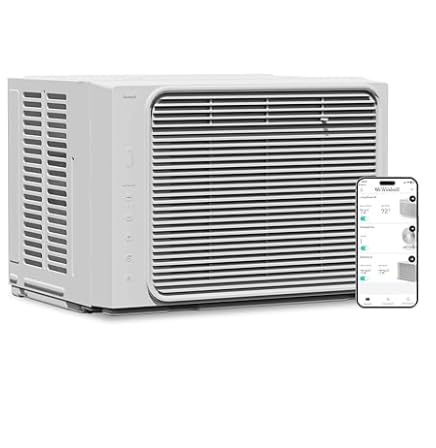
Window Air Conditioner for Small Window Opening
Everything you need to know about choosing, sizing, and installing a window AC unit when your window frame is narrow or compact
START WITH SIZINGWhy this guide matters: Not every home has large, wide windows. If you live in an apartment, a historic house, or a room with a narrow window frame, finding a window air conditioner that fits can feel challenging. This guide walks you through the exact measurements, unit types, and installation techniques that work for small window openings — so you can cool your space efficiently without structural modifications.
Understanding Small Window Openings
A "small window opening" generally refers to a window frame with a width of less than 24 inches or a height that limits the installation of standard window AC units. Common scenarios include:
- Narrow sash windows in older homes or historic buildings
- Casement or awning windows that crank outward instead of sliding up and down
- Side-sliding windows where the opening is vertical rather than horizontal
- Apartment windows with limited clearance or building restrictions
- Basement or attic windows with compact frames
Standard window AC units are designed for double-hung windows with a minimum width of about 23 to 26 inches. If your window is narrower, you have three main options: choose a compact unit specifically designed for narrow frames, use a through-the-wall installation, or consider a portable air conditioner with a window vent kit. This guide focuses on the first option — finding a window AC that fits a small opening — because it remains the most straightforward and energy-efficient solution for most homeowners and renters.
It is also important to understand that "small" can refer to either width or height. A window that is wide but short (such as a transom window) presents different challenges than a window that is tall but narrow. Most compact window AC units are designed to fit within a narrow width, but you must also ensure the window sash can open high enough to accommodate the unit's height. Always check both dimensions before purchasing.
How to Measure Your Window Correctly
Accurate measurements are the foundation of a successful installation. Before you shop for a window air conditioner for a small window opening, follow these steps:
Step 1: Measure the Width
Open the window sash and measure the clear width of the opening from jamb to jamb at the narrowest point. Record this measurement in inches. Most compact units require a minimum width of 21 to 23 inches, but specialty models can fit openings as narrow as 15 to 18 inches.
Step 2: Measure the Height
Measure the height of the lower sash opening from the sill to the bottom of the upper sash. The unit must fit within this vertical space, and you also need enough clearance for the window sash to rest on top of the unit (or for the unit to be secured properly).
Step 3: Check the Sill Depth
Measure the depth of the window sill from the interior wall to the exterior edge. Window AC units require a minimum sill depth (typically 3 to 6 inches) for stable support. If your sill is too shallow, you may need a support bracket.
Step 4: Note the Window Type
Identify whether your window is double-hung (slides up and down), single-hung, casement (cranks out), or sliding (moves side to side). Double-hung windows are the most compatible with standard window AC units. If you have a casement window or a side-sliding window, you will need a specialized installation kit or a different cooling solution.
Pro Tip: Measure twice and write down your numbers. Bring your measurements to the store or keep them handy when shopping online. A difference of even half an inch can mean the difference between a secure fit and a unit that does not install safely.
For a more detailed breakdown of window types and their compatibility, see our guide on window air conditioners for narrow windows.
Choosing the Right BTU for Your Room
Cooling capacity is measured in British Thermal Units (BTU). Choosing the correct BTU for your room size ensures efficient cooling without wasting energy. Here is a general guideline:
| Room Size (sq ft) | Recommended BTU | Typical Unit Tier |
|---|---|---|
| Up to 150 | 5,000 – 6,000 BTU | Entry-level / essential tier |
| 150 – 250 | 7,000 – 8,000 BTU | Mid-range |
| 250 – 350 | 9,000 – 10,000 BTU | Mid-range / balanced tier |
| 350 – 450 | 10,000 – 12,000 BTU | Premium tier |
Several factors can affect the ideal BTU beyond square footage:
- Ceiling height: Rooms with ceilings above 8 feet require slightly more capacity.
- Sun exposure: South-facing rooms with direct sunlight need 10–20% more BTU.
- Occupancy: Each additional person adds about 600 BTU of heat load.
- Kitchen areas: Add 4,000 BTU for rooms that include a kitchen.
- Insulation quality: Poorly insulated rooms may need a higher-capacity unit.
For compact units designed for small windows, the most common capacities are 5,000 to 8,000 BTU. These units are typically narrower and lighter, making them easier to install in tight frames. If your room is larger than 250 square feet, you may need to consider a different cooling solution or a window AC for a small room with higher capacity and a compact chassis.
Important: Do not oversize your AC unit. A unit that is too powerful for the room will cool the air quickly but will not remove humidity effectively, leaving the room feeling cold and clammy. It will also cycle on and off more frequently, which can shorten its lifespan.
Types of AC Units for Small Windows
When your window opening is narrow, not all window AC units are compatible. Here are the main types to consider:
1. Compact Window AC Units
These are standard window air conditioners designed with a narrow chassis. They typically range from 5,000 to 8,000 BTU and are the most common solution for small window openings. Look for models specifically labeled as "compact" or "narrow" and check the minimum window width requirement in the specifications.
2. Window Units for Sliding Windows
If you have a sliding window, the installation is different from a double-hung window. You will need a unit with a sliding window kit, which includes a filler panel and brackets designed for horizontal window openings. Some compact units are sold with both vertical and horizontal installation kits.
3. Through-the-Wall AC Units
If your window opening is too small for any window AC unit, a through-the-wall AC may be a viable alternative. These units are installed through an exterior wall and do not require window space. However, they require cutting into the wall, which may not be possible for renters or in certain building structures.
4. Portable Air Conditioners with Window Kits
Portable AC units sit on the floor and exhaust hot air through a window using a hose and window panel. They can work with very small window openings because the window panel can be customized to fit narrow frames. However, portable units are generally less energy-efficient than window units and take up floor space. If you are considering this option, read our guide on where to find a portable air conditioner.
5. Mini-Split Systems
For a permanent solution that does not require a window at all, a ductless mini-split AC is an excellent choice. These systems mount on the wall and require only a small hole for refrigerant lines. They are more of a long-term investment and require professional installation, but they offer superior efficiency and quiet operation.
For a comprehensive comparison of window AC units that fit small windows, see our article on window air conditioners for small windows.
Key Features to Look For
When selecting a window AC unit for a small opening, prioritize features that enhance convenience, efficiency, and fit:
Adjustable Side Panels
Most window AC units come with accordion-style side panels that expand to fill the gap between the unit and the window frame. For small openings, you may need to trim these panels or use additional insulation. Look for units with panels that can be adjusted or removed easily.
Remote Control and Thermostat
A window air conditioner with remote control allows you to adjust settings from across the room. Some models also include a window air conditioner with thermostat that maintains a consistent temperature more accurately than basic dial controls.
Energy Efficiency
Check the unit's EER (Energy Efficiency Ratio) or SEER rating. Higher ratings indicate better efficiency, which translates to lower energy consumption over time. For small units, an EER of 11 or higher is considered good. Learn more about efficiency ratings in our guide on what is a SEER rating.
Inverter Technology
A window air conditioner with inverter technology adjusts compressor speed continuously rather than cycling on and off. This provides more consistent cooling, quieter operation, and better energy efficiency — especially useful in smaller rooms where temperature fluctuations are more noticeable.
Installation Kit Included
Ensure the unit comes with a window AC installation kit that includes all necessary mounting hardware, side panels, and weather sealing. Some kits are designed specifically for narrow windows or sliding windows.
Noise Level
Compact units can be noisier due to their smaller chassis. Look for models with sound levels below 55 dB for bedroom use. A quiet air conditioner is particularly important if the unit will be installed in a bedroom or home office.
Installation Tips for Narrow Openings
Installing a window AC unit in a small opening requires care and attention to detail. Follow these tips for a secure and efficient installation:
1. Use a Support Bracket
A window AC bracket support is essential for safety, especially for units installed on upper floors or in windows with shallow sills. Brackets distribute the weight of the unit and prevent it from tipping outward. Some brackets are adjustable and can fit small window openings without drilling into the exterior wall. If you prefer not to drill, consider a window air conditioner bracket with no drilling required.
2. Seal Gaps Thoroughly
Small openings often leave gaps around the unit that can let in hot air, insects, and moisture. Use weatherstripping, foam insulation, or a window air conditioner installation kit for sliding windows to seal these gaps. Proper sealing improves cooling efficiency and prevents energy loss.
3. Ensure Proper Drainage
Window AC units produce condensation that must drain properly. The unit should be installed with a slight downward tilt toward the exterior so water can escape. If your window sill is level or tilted inward, use shims to create the correct slope. Some units feature a window AC unit that doesn't drip water design, which evaporates condensation internally.
4. Check Window Sash Security
For double-hung windows, the lower sash rests on top of the AC unit. Use the included sash lock or a security bracket to prevent the window from being opened from the outside. This is especially important for ground-floor installations.
5. Consider the Exterior Clearance
The back of the unit must have adequate clearance for airflow. Check that there are no obstructions such as shrubs, fences, or walls within 12 to 18 inches of the exterior grille. Poor airflow reduces cooling performance and can damage the compressor.
Pro Tip: If your window opens sideways or cranks out, standard window AC units will not work. Explore our guides on window AC in casement windows and window air conditioners for windows that open sideways for specialized solutions.
For more detailed installation instructions, including how to handle windows that are very narrow, see our article on window air conditioners for narrow windows.
Safety and Support Considerations
Safety should never be compromised when installing a window AC unit. Here are the key considerations for small window openings:
Weight Distribution
Compact window AC units typically weigh between 40 and 80 pounds. While this is manageable for most window frames, the weight must be properly supported. A window air conditioner support bracket is the safest option, as it transfers the weight to the exterior wall rather than relying solely on the window sill.
Electrical Safety
Most window AC units require a dedicated circuit. Check the amperage requirements and ensure your outlet can handle the load. If you are unsure, consult a licensed electrician. For more information, see our guide on amps and breaker size for AC units.
Secure Mounting
Ensure the unit is secured to the window frame according to the manufacturer's instructions. Most units include a top bracket or angle iron that secures the unit to the sash. Do not skip this step, as it prevents the unit from tipping or falling.
Building Regulations
Some apartment buildings and homeowners associations have restrictions on window AC installations. Check with your building management or HOA before installing a unit, especially if it protrudes from the exterior facade.
Safety Warning: Never install a window AC unit in a window that cannot be securely closed and locked. If the window does not close properly around the unit, the installation is not safe. Consider a different cooling solution or consult a professional installer.
Maintenance for Long-Term Performance
Regular maintenance keeps your window AC running efficiently and extends its lifespan. Here is a simple maintenance schedule:
Monthly
- Clean or replace the air filter. A clogged filter restricts airflow and reduces cooling efficiency. See our guide on how to clean an AC filter.
- Check for debris around the exterior grille and remove any leaves or obstructions.
Seasonally
- Inspect the unit for signs of wear, rust, or damage.
- Clean the condenser coils with a soft brush or coil cleaner. Refer to our article on cleaning condenser coils.
- Check the window seal and weatherstripping for gaps or deterioration, and replace if necessary.
Annually
- Before the cooling season, perform a thorough inspection and cleaning.
- Test the unit for proper operation, including cooling performance and drainage.
- If the unit is not cooling properly, refer to our troubleshooting guide on window air conditioner not cooling properly.
If you notice water leaking inside the house, it may be due to a blocked drain or improper installation angle. See our guide on window air conditioner leaking water inside for troubleshooting steps. For units that are not blowing cold air, check our article on window air conditioner not blowing cold air.
Frequently Asked Questions
Most compact window AC units require a minimum window opening width of 21 to 23 inches. There are specialized narrow models designed for openings as small as 15 to 18 inches, though these are less common and typically have lower cooling capacity. Always check the manufacturer's specifications for the exact minimum width requirement.
Yes, vertical sliding windows (double-hung and single-hung) are the most common type for window AC installation. You need to measure the width of the window opening and the height of the lower sash. Most units come with installation kits that include side panels to fill gaps, which is essential for smaller openings.
Compact window units typically range from 5,000 to 8,000 BTU. For a room up to 150 square feet, a 5,000 to 6,000 BTU unit is usually sufficient. For rooms between 150 and 250 square feet, an 8,000 BTU model may be more appropriate. Match the BTU to your room size for the best balance of cooling performance and energy efficiency.
A support bracket is highly recommended for safety and stability, especially for windows that are narrow or in upper floors. Many brackets are adjustable and can fit small window openings. Some units include basic mounting hardware, but a dedicated window air conditioner support provides better weight distribution and peace of mind.
Most window AC units come with accordion-style side panels that expand to fill the window width. For very small openings, you may need to trim these panels or use additional weatherstripping and foam insulation to ensure a tight seal and prevent air leaks. A window AC installation kit often includes the necessary sealing materials.
Related Guides and Resources
- Window Air Conditioner for Narrow Windows
- Window Air Conditioners for Small Windows
- Window Unit for Small Window
- Window Air Conditioner for Small Room
- Window Air Conditioner for Sliding Windows
- Window AC in Casement Window
- Window AC for Side Sliding Windows
- Window AC Installation Kit for Sliding Windows
- Window AC Bracket Support
- Window Air Conditioner Supports
- Window AC Bracket No Drilling
- Window AC with Inverter Technology
- Window AC with Remote Control
- Window AC with Thermostat
- Window AC Not Cooling Properly
- Window AC Leaking Water Inside
- Window AC Not Blowing Cold Air
- Window AC Unit That Doesn't Drip Water
- How to Size an Air Conditioner
- How to Clean AC Filter
Ready to find the right window air conditioner for your small window opening? Explore our curated selection of compact and narrow units designed for tight spaces.
View Recommended Units