
110 Volt Window Air Conditioner with Heat
Your complete guide to choosing, installing, and maintaining a 110-volt window AC unit with built-in heating capability — delivering year-round comfort from a standard household outlet.
Start ReadingTable of Contents
- What Is a 110V Window AC with Heat?
- How the Heating Function Works
- 110V vs 240V Electrical Requirements
- BTU Sizing for Your Room
- Key Benefits of a Combo Unit
- Limitations You Should Know
- Features That Matter
- Installation Guide
- Maintenance and Troubleshooting
- Buying Checklist
- Frequently Asked Questions
What Is a 110 Volt Window Air Conditioner with Heat?
A 110 volt window air conditioner with heat is a self-contained cooling and heating unit designed to fit into a standard double-hung window. It operates on a standard 110–120 volt household circuit, which means it can plug into a conventional wall outlet without requiring a dedicated 240-volt line or special wiring.
Unlike a cooling-only window unit, a combo model includes a heating element or a reverse-cycle heat pump that can warm the room during cooler months. This dual-purpose design makes it an attractive option for homeowners, renters, and anyone who wants year-round comfort from a single appliance.
These units are especially popular in older homes, apartments, and additions where extending ductwork is impractical. If you are exploring alternatives to ducted systems, you may also want to read our guide on windowless air conditioner options and the broader comparison of 110V vs 240V air conditioners to understand the electrical trade-offs.
Quick definition: A 110V window AC with heat combines a compressor-based cooling system with either an electric resistance heater or a reverse-cycle heat pump, all powered by a standard 110–120V circuit. It is a plug-and-play solution for single-room climate control.
How the Heating Function Works
Not all heating functions are created equal. Understanding the two main heating technologies will help you choose the right unit for your climate and energy goals.
Electric Resistance Heating
Most 110V window AC units with heat use an electric resistance heating element, similar to the coil inside a space heater. Electricity passes through a resistive wire, which generates heat that is then blown into the room by the unit's fan. This method is simple, reliable, and produces instant warmth, but it consumes a relatively high amount of electricity for the heat it delivers.
Reverse-Cycle Heat Pump
Some higher-tier models use a reverse-cycle heat pump. In cooling mode, the unit moves heat from indoors to outdoors. In heating mode, the refrigerant flow is reversed, and the unit extracts ambient heat from the outdoor air and transfers it indoors. Heat pumps are significantly more energy-efficient in mild to moderate climates because they move heat rather than generate it from scratch.
If you are considering a heat pump window unit, our article on window and wall AC units with heat explores the differences between these technologies in more detail.
Important: Electric resistance heating in a 110V window unit typically draws 10–15 amps on its own. Verify that the combined cooling and heating load does not exceed the circuit's capacity. For a deeper electrical primer, see our guide on 110V vs 240V air conditioner circuits.
110V vs 240V Electrical Requirements
The voltage rating is one of the most important factors to confirm before purchasing. A 110V (also called 115V or 120V) unit is designed for standard household outlets, while a 240V unit requires a dedicated circuit and often a special plug.
| Factor | 110V / 115V / 120V Window AC with Heat | 240V Window AC with Heat |
|---|---|---|
| Typical outlet | Standard NEMA 5-15 or 5-20 | NEMA 6-15 or 6-20 |
| Circuit requirement | Dedicated 15–20 amp circuit recommended | Dedicated 20–30 amp circuit |
| Cooling capacity range | 5,000–12,000 BTU | 12,000–24,000 BTU |
| Heating capacity | Moderate (supplemental) | Higher (primary or supplemental) |
| Installation complexity | Low (plug-in) | Moderate to high (electrician) |
| Best for | Single rooms, apartments, renters | Large rooms, whole-floor coverage |
If you need a unit that fits a through-the-wall sleeve rather than a window, our guide on 110 volt through-the-wall air conditioners covers the installation differences and sleeve sizing.
BTU Sizing for Your Room
Choosing the correct BTU rating is critical for both cooling comfort and heating effectiveness. An undersized unit will run continuously and fail to maintain the desired temperature, while an oversized unit will short-cycle, leading to poor humidity control and unnecessary wear.
| Room Size | Recommended Cooling BTU | Best For | Typical Tier |
|---|---|---|---|
| Up to 150 sq ft | 5,000–6,000 BTU | Bedroom, small office | Entry-level |
| 150–250 sq ft | 8,000–10,000 BTU | Living room, master bedroom | Mid-range |
| 250–400 sq ft | 12,000–14,000 BTU | Large bedroom, open-plan space | Premium |
| 400–600 sq ft | 15,000–18,000 BTU | Studio apartment, large living area | Top-tier |
Adjustments to the baseline calculation:
- Sunny room: Add 10% to the BTU requirement.
- Shaded room: Subtract 10%.
- Kitchen: Add 4,000 BTU to account for appliance heat.
- Ceiling height above 8 ft: Multiply BTU by (ceiling height / 8).
- Multiple occupants: Add 600 BTU per person beyond the first two.
For a detailed walkthrough of room-by-room sizing, see our article on energy-efficient 5,000 BTU window air conditioners or the broader guide on 15,000 BTU 115-volt window air conditioners if you have a larger space.
Key Benefits of a 110V Window AC with Heat
Advantages
- Year-round comfort from a single unit
- No special wiring or 240V circuit required
- Easy installation in a standard window
- Renter-friendly — can be removed and reinstalled
- Lower upfront investment than central systems
- Independent zone control for a single room
- Ideal for older homes without ductwork
Limitations
- Heating output is supplemental, not whole-home
- Electric resistance heat draws high amperage
- Less efficient than a dedicated heat pump system
- Window blockage reduces natural light
- Noise levels can be noticeable at high fan speeds
- Not suitable for rooms with non-standard windows
The convenience of a combo unit is hard to overstate for anyone who has dealt with the seasonal ritual of installing and removing separate cooling and heating appliances. A single 110V window unit with heat stays in place year-round, eliminating storage hassles and repeated installation work.
For spaces where a window is not available, our article on windowless portable air conditioner reviews covers alternative approaches that still deliver both cooling and heating.
Limitations You Should Know
While 110V window AC units with heat are versatile, they are not a universal solution. Understanding their limitations will help you set realistic expectations.
Supplemental Heating Capacity
Most 110V units produce between 3,500 and 12,000 BTU of heating output. That is enough to take the chill off a single room, but it will not replace a central furnace in freezing climates. If outdoor temperatures routinely drop below 30°F, the heating element will struggle to maintain indoor comfort, and a reverse-cycle heat pump may lose efficiency.
Electrical Circuit Load
Heating mode often draws more current than cooling mode. A unit that uses 8 amps for cooling might draw 12–15 amps for heating. If the circuit is shared with other appliances, you may trip the breaker. Always check the nameplate rating and, if possible, use a dedicated circuit.
Window Compatibility
These units are designed for double-hung windows with a minimum width and height specified by the manufacturer. Casement windows, slider windows, and unusually shaped windows may require an adapter kit or a different product category altogether.
Tip: Before buying, measure your window opening precisely and compare it to the unit's minimum and maximum window width and height requirements. Also confirm the window sill's weight capacity and the unit's outdoor clearance needs.
Features That Matter
When comparing 110V window AC units with heat, focus on features that directly affect comfort, efficiency, and durability.
Energy Efficiency Ratio (EER) and CEER
EER measures cooling efficiency, while CEER (Combined Energy Efficiency Ratio) factors in standby power and other modes. Higher ratings indicate more efficient operation. Look for units that meet or exceed ENERGY STAR thresholds for their capacity class.
Heating Technology
Choose electric resistance heating if you need instant, reliable warmth and do not mind higher electrical draw. Choose a reverse-cycle heat pump if you prioritize efficiency and live in a mild climate. Some premium models include both, offering a backup element for very cold days.
Thermostat and Remote Control
A programmable thermostat allows you to set schedules for cooling and heating, reducing energy use when the room is unoccupied. Remote controls and smart-home compatibility add convenience, especially for wall-mounted or high-window installations. For related reading, see our article on a wireless air conditioner thermostat.
Noise Level
Noise is measured in decibels (dB). Lower dB ratings are preferable for bedrooms and home offices. Inverter-driven compressors and multi-speed fans generally produce less noise than single-speed designs.
Air Filter and Filtration
A washable, easily accessible filter simplifies maintenance. Some units include additional filtration stages for dust, pollen, or odors. If indoor air quality is a priority, look for models with enhanced filtration and check our guide on AC unit filters.
Build Quality and Warranty
Durable construction with rust-resistant coatings extends the unit's lifespan, especially in humid or coastal environments. A solid warranty on the sealed system (compressor and refrigerant circuit) is a strong indicator of manufacturer confidence. Our article on AC warranty explained breaks down typical coverage terms.
Installation Guide
Installing a 110V window AC with heat is a manageable DIY project for most homeowners, provided you follow safety guidelines and the manufacturer's instructions.
Step-by-Step Overview
- Choose the right window: Select a double-hung window that meets the unit's size and weight requirements. Avoid windows near heat sources or direct obstructions.
- Check the electrical circuit: Confirm the outlet is on a circuit that can handle the unit's amperage. Ideally, use a dedicated circuit. If you are unsure, consult a licensed electrician.
- Prepare the window: Clean the sill, check for rot or damage, and ensure the window opens and closes smoothly.
- Install the support bracket: Many units require an outdoor support bracket for safety and stability. Follow the manufacturer's specifications for placement and fastening.
- Seat the unit: With a helper, lift the unit into the window opening and slide it into place. Ensure a slight downward tilt toward the outdoors for proper condensate drainage.
- Secure the unit: Install the included side panels, sash locks, and any foam seals to prevent air leaks and secure the unit in place.
- Plug in and test: Plug the unit into a grounded outlet and test both cooling and heating modes. Verify that airflow is unobstructed and that the unit does not vibrate excessively.
Safety first: Window AC units can be heavy, and improper installation can lead to injury or property damage. If you are not comfortable lifting the unit or securing a bracket, hire a professional installer. For through-the-wall alternatives, see our guide on 115-volt through-the-wall air conditioners.
If your window configuration is unusual, or if you prefer a permanent wall installation, our article on 110-volt air conditioner heater window units covers additional mounting scenarios.
Maintenance and Troubleshooting
Regular maintenance keeps your 110V window AC with heat running efficiently and extends its service life. Most tasks require only basic tools and a few minutes per month.
Routine Maintenance Tasks
- Clean or replace the air filter every 2–4 weeks during heavy use. A clogged filter reduces airflow and forces the unit to work harder.
- Inspect and clean the outdoor coils at the start of each season. Remove debris, leaves, and dirt with a soft brush or coil cleaner.
- Check the condensate drain for clogs. Standing water can lead to mold growth and water damage.
- Tighten mounting hardware and inspect the support bracket annually for rust or loosening.
- Test the heating element before the cold season. If the unit blows cold air in heating mode, consult the troubleshooting section of the manual.
Common Issues and Fixes
| Symptom | Possible Cause | Suggested Action |
|---|---|---|
| Unit does not cool | Dirty filter, low refrigerant, or thermostat setting | Clean filter, check settings, call a technician if refrigerant is low |
| Unit does not heat | Tripped breaker, faulty heating element, or thermostat issue | Reset breaker, test element continuity, verify thermostat mode |
| Water dripping indoors | Improper tilt, clogged drain, or frozen coils | Adjust tilt, clear drain, defrost unit and check airflow |
| Excessive noise | Loose mounting, fan obstruction, or worn bearings | Tighten hardware, remove obstructions, schedule service |
| Foul odor | Mold or mildew in filter or evaporator coil | Clean filter, clean coils with appropriate cleaner, ensure drainage |
For more in-depth troubleshooting, refer to our guides on AC not cooling solutions, AC not blowing hot air, and AC leaking water.
Buying Checklist
Use this checklist to narrow your options and ensure you select a unit that fits your room, electrical system, and climate.
| Checkpoint | What to Verify | Why It Matters |
|---|---|---|
| Voltage | 110–120V plug type (NEMA 5-15 or 5-20) | Ensures compatibility with standard outlets |
| BTU capacity | Matches room size and heat load | Prevents short-cycling or insufficient cooling/heating |
| Heating type | Electric resistance or reverse-cycle heat pump | Affects efficiency and cold-weather performance |
| Amperage draw | Cooling and heating amps within circuit capacity | Prevents breaker trips and electrical hazards |
| Window dimensions | Unit fits window width and height range | Ensures safe, stable installation |
| Efficiency rating | EER/CEER meets or exceeds ENERGY STAR | Reduces long-term energy consumption |
| Noise level | dB rating suitable for the room's use | Comfort, especially for bedrooms and offices |
| Warranty | Sealed system and parts coverage | Protects your investment and indicates quality |
| Smart features | Remote, programmable thermostat, Wi-Fi | Convenience and energy scheduling |
| Filter access | Tool-free removable filter | Encourages regular maintenance |
For a broader view of how window units with heat compare to other room solutions, see our article on window and wall AC units with heat. If you are considering a unit for a space without a window, the air conditioner for apartment with no windows guide may be helpful.
Frequently Asked Questions
Ready to Choose Your 110V Window AC with Heat?
Browse our recommended models below, compare features, and find the right unit for your room and climate.
Top Recommended 110V Window Air Conditioners with Heat
⚠️ AFFILIATE DISCLOSURE: This website contains affiliate links. As an Amazon Associate, we earn from qualifying purchases. If you make a purchase through these links, we may receive a small commission at no additional cost to you. Read our full affiliate policy.

Midea 8,000 BTU Smart Inverter Air Conditioner Window Unit with Heat and Dehumidifier – Cools up to 350 Sq. Ft., Energy Star Rated, Quiet Operation, Electronic Controls, Remote Control, White
Check price on Amazon
ROVSUN 8000 BTU Air Conditioner Window Unit with Heat, 4-in-1 Window AC Unit Cooler, Heater, Dehumidifier & Fan with Timer, Remote Control & Installation Kit for Rooms up to 350 Sq. Ft, 115V/60Hz
Check price on Amazon
ROVSUN 12000 BTU Air Conditioner Window Unit with Heat, 4-in-1 Window AC Unit Cooler, Heater, Dehumidifier & Fan with Timer, Remote Control & Installation Kit for Rooms up to 550 Sq. Ft, 208/230V
Check price on Amazon
Soleus Air 12,000 BTU Window Air Conditioner with 10,000 BTU Heater, Cooling, 115 Volts, 12.5" Extra Thick Wall Compatible, Wi-Fi Enabled, Saddle Mount, and Quiet Operation in White
Check price on Amazon
LG 7,600 BTU Window Air Conditioner with Heat, 115V, Cools 330 Sq.Ft. for Bedroom, Living Room, Apartment, with Remote, 2 Speeds, Slide In-Out Chassis, 24-hour Timer, White
Check price on Amazon
ROVSUN 12000 BTU Window Air Conditioner with Heat, AC Unit for Window, 230V | 4-in-1 Cool, Heat, Dehumidify & Fan, APP & Voice Control, Compatible with Alexa/Google, Timer & ECO Mode, 550 Sq Ft
Check price on Amazon
ROVSUN 8000 BTU Inverter Window Air Conditioner with Heater & WiFi, Window AC Unit with Remote & App Control, Ultra Quiet Design & Easy Install Kit, Compatible with Alexa/Google Assistant, 115V/60Hz
Check price on Amazon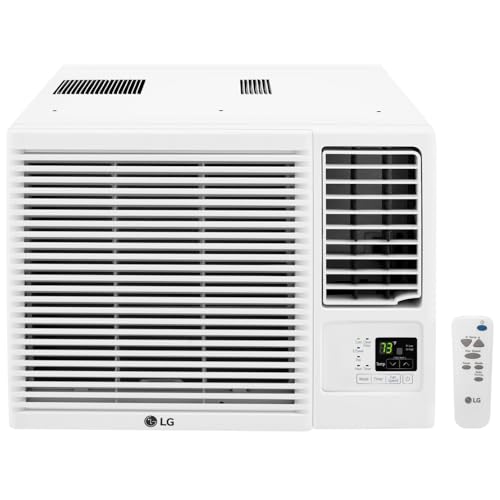
LG 18,000 BTU Window Air Conditioner with Heat, 230/208V, Cools 1,000 Sq.Ft. for Bedroom, Living Room, Basement, Apartment, with Remote, 2 Speeds, 24-Hour Timer, White
Check price on AmazonDisclaimer
Some of the content on this site uses AI assistance. Information is provided for educational purposes only. We are not responsible for any losses resulting from the use of this information. By using this site, you waive any right to bring legal claims against us arising from your use of the information provided. If you do not agree, please do not use this site. Read the full disclaimer.