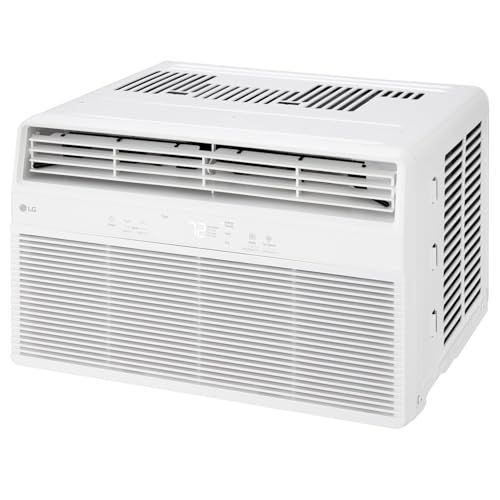
8000 BTU 115V Window Mounted Mini Compact Air Conditioner: The Complete Buyer Guide
Everything you need to know about compact 8000 BTU window air conditioners — cooling coverage, 115V electrical requirements, mini chassis design, efficiency, installation, and the features that separate a solid unit from a compromise.
Start ReadingWhy This Specific AC Format Matters
Window air conditioners remain one of the most practical cooling solutions for apartments, older homes without ductwork, bedrooms, home offices, and rental properties. Within that category, the 8000 BTU 115V window mounted mini compact air conditioner occupies a very specific and useful position: it delivers enough cooling for a medium room while staying within the electrical limits of a standard household circuit and fitting into window openings that larger chassis units cannot handle.
Buyers who search for this exact configuration usually already know they want a window unit. What they need is confirmation that 8000 BTU is the right capacity, that 115V will work on their existing wiring, and that a mini compact body will not compromise performance. This guide answers those questions in detail so you can move from research to a confident decision.
What "8000 BTU 115V Mini Compact" Really Means
Each part of the product description carries a specific technical meaning. Understanding them separately makes it much easier to judge whether a particular model fits your situation.
8000 BTU — Cooling Capacity
BTU, or British Thermal Unit, measures how much heat an air conditioner can remove from a space in one hour. An 8000 BTU unit removes 8,000 BTUs of heat per hour under rated test conditions. In practical terms, this sits between the small 5,000–6,000 BTU class covered in our 5000 BTU window mounted room air conditioner guide and the larger 12,000 BTU class. It is the capacity most commonly recommended for a primary bedroom, a living area in an apartment, or a combined bedroom-and-office space.
115V — Electrical Standard
115V (often written as 115/120V) is the standard voltage for general-purpose household outlets in the United States and Canada. A 115V window AC plugs into a normal wall outlet rather than requiring a dedicated 230/240V circuit. This is a major practical advantage for renters and for older homes where adding a high-voltage circuit would be disruptive.
Window Mounted — Installation Format
A window-mounted unit sits in the window frame, with the evaporator side facing the room and the condenser side facing outdoors. This arrangement is efficient because heat is rejected directly outside, and it requires no ductwork or permanent structural modification. For a broader comparison of formats, see our 8000 BTU window air conditioner room size reference.
Mini Compact — Chassis Design
Mini compact refers to the physical enclosure. These units use a tighter internal layout, a shallower cabinet, and often a narrower profile than conventional window ACs of the same capacity. The result is a unit that fits smaller window openings, protrudes less outside the building, and is easier to handle during installation and seasonal removal.
Room Sizing: How Much Space an 8000 BTU Unit Cools
The standard rule of thumb places an 8000 BTU air conditioner in the 300 to 350 square foot range. That guideline assumes an 8-foot ceiling, average insulation, moderate sun exposure, and two occupants. Real rooms vary, so treat the range as a starting point and adjust for the conditions below.
| Room Condition | Effect on Required Capacity | Practical Adjustment |
|---|---|---|
| Shaded room, good insulation | Lower cooling load | 300 sq ft or slightly above is comfortable |
| Average bedroom or living area | Standard load | 300–350 sq ft is the design target |
| West- or south-facing with large windows | Higher solar gain | Plan for the lower end of the range or step up capacity |
| Kitchen or open-plan space | Appliance and occupancy heat | Consider a larger class or a second unit |
| High ceiling (above 9 ft) | More air volume to condition | Reduce effective coverage or increase capacity |
| Top floor or poorly insulated attic room | Increased heat gain | Step up to the next capacity class |
If your room is significantly smaller — for example a compact bedroom around 150 to 250 square feet — a lower-capacity unit may be the more balanced choice. Our 6000 BTU window air conditioner room size guide explains that range in detail. If your space is larger or you need heating as well, the 8000 BTU window air conditioner with heat option is worth reviewing.
115V Electrical Requirements
A 115V window air conditioner is designed for a standard North American household outlet. That does not mean any outlet will do. Window ACs are continuous-draw appliances, and the circuit they share must be able to carry that load safely.
Circuit and Breaker Considerations
- Dedicated circuit is strongly preferred. Most 8000 BTU 115V units draw roughly 6 to 8 amps in normal cooling mode. A dedicated 15-amp circuit provides adequate headroom and avoids nuisance breaker trips.
- Check the nameplate. The rating label on the unit lists running amps and sometimes a higher starting current. Use that figure, not a generic estimate, when evaluating your circuit.
- Avoid sharing with high-draw appliances. Microwaves, space heaters, hair dryers, and kitchen appliances on the same circuit can push a shared 15-amp circuit over its limit.
- Use a grounded outlet. Never use a two-prong adapter or remove the grounding pin. Window ACs are metal-bodied appliances and grounding is a safety requirement.
When 115V Is Not Enough
If your home only has access to a circuit that is already heavily loaded, or if you are planning a larger-capacity unit, a 230/240V model may be necessary. For most medium bedrooms and apartments, however, 115V is the practical choice because it avoids the need for an electrician or a new circuit.
If you are unsure about your panel capacity, the guide on checking your electrical panel before installation is a useful next step. Buyers comparing formats should also note that portable units of similar capacity have different venting and electrical considerations, as explained in our 8000 BTU portable air conditioner overview.
Mini Compact Chassis: Space and Window Fit
The compact form factor is often the deciding factor for buyers who have already settled on 8000 BTU and 115V. A standard window AC of this capacity can be wide and deep; a mini compact model is engineered to reduce both dimensions without sacrificing the cooling core.
What Changes in a Compact Design
- Shallower cabinet depth. Less of the unit extends into the room and less protrudes outside, which matters for apartment buildings with facade restrictions.
- Narrower width. Fits window openings that would be too tight for a conventional chassis.
- Tighter internal layout. Coils, fan, and compressor are arranged more densely, which places more importance on clean filters and unobstructed airflow.
- Lower weight. Easier to lift into the window and remove at the end of the season, which reduces the risk of installation injury.
Window Fit Checklist
Before choosing a compact model, measure the actual clear opening of your window — not the glass pane, but the space available once the sash is raised. Also confirm the window type. Double-hung windows are the most common match for window ACs; casement and slider windows typically require a different mounting approach or a specialized bracket. The 8000 BTU air conditioner for small window guide covers narrow-opening scenarios in more depth.
Compact units are also a good match for rooms where the window sill is shallow or where an exterior ledge limits how far the unit can extend. If your window configuration is unusual, a through-the-wall format may be more appropriate; our 8000 BTU through the wall air conditioner with heat page explains that alternative.
Efficiency Ratings and Long-Term Operation
Two units with the same 8000 BTU capacity can differ substantially in how much electricity they consume to deliver that cooling. Efficiency is expressed through CEER (Combined Energy Efficiency Ratio) for window units, and the rating directly affects long-term operating expense.
Reading the Rating
CEER combines full-load and part-load efficiency into a single number. A higher CEER means more cooling per unit of electricity. Models that qualify for ENERGY STAR certification meet a threshold set above the federal minimum, and those models are generally the better long-term investment for anyone who runs the unit for multiple hours a day through a full cooling season.
Inverter-driven compressors are increasingly common in this class. Instead of switching fully on and off, an inverter compressor modulates its speed to match the load. That behavior improves part-load efficiency and produces steadier temperatures and quieter operation. For buyers comparing technologies, the inverter versus non-inverter comparison is a useful primer.
What Raises or Lowers Real-World Efficiency
- Filter condition: A clogged filter restricts airflow and forces the compressor to work harder.
- Window seal: Gaps around the installation let hot outdoor air in and undermine the unit's work.
- Direct sun: West-facing windows add solar load that the unit must overcome.
- Thermostat strategy: Setting the unit to a moderate temperature and letting it run steadily is more efficient than aggressive on-off cycling.
If efficiency is your primary criterion, the 8000 BTU air conditioner ENERGY STAR overview explains how certification thresholds work in this capacity class.
Features That Actually Matter
Marketing pages list dozens of features. In practice, a handful of them determine whether you will be satisfied with a compact 8000 BTU window unit over several years.
Cooling Modes and Fan Speeds
At minimum, look for cool mode, fan-only mode, and at least three fan speeds. Fan-only mode is useful for air circulation on mild days without running the compressor. Multiple fan speeds let you balance noise against cooling speed.
Dehumidification
Window ACs remove moisture as a byproduct of cooling. A dedicated dry mode, where available, prioritizes moisture removal at a lower fan speed. In humid climates this is a meaningful comfort feature, not a gimmick.
Remote Control and Programmability
A remote control is convenient for a bedroom unit mounted high in the window. A 24-hour timer or programmable schedule lets you pre-cool a room before you arrive and shut the unit down automatically. Models with these features are covered in our 8000 BTU window air conditioner with remote guide.
Noise Level
Compact chassis designs can be louder than larger units if airflow is restricted. Check the decibel rating and read owner reports on low-fan and high-fan noise. For a bedroom, a unit that stays under roughly 55 dB on low is a reasonable target.
Smart Controls
Wi-Fi and app control allow scheduling, remote adjustment, and sometimes energy monitoring. These features add convenience but are not essential to core cooling performance. Buyers who value them should compare them against simpler programmable units rather than assuming smart control implies better efficiency.
Filter Access
A washable filter that slides out from the front without removing the unit is a small design detail with a large maintenance impact. Easy access encourages regular cleaning, which preserves efficiency and airflow in a compact body.
Installation and Window Compatibility
Window AC installation is a DIY-friendly project for most homeowners and renters, but the compact format adds a few specific considerations.
Preparation Steps
- Measure the window opening width and the available height clearance.
- Confirm the window sill is level and structurally sound.
- Check the unit's weight and have a second person available for lifting.
- Verify the outdoor side has unobstructed airflow and is not recessed into a wall cavity.
- Inspect the electrical outlet and confirm it is grounded and on an appropriately rated circuit.
Support and Sealing
Compact units are lighter, but they still require proper support. Use the manufacturer's included bracket or a compatible support bracket so the unit's weight is carried by the frame rather than the window sash alone. Seal the gap above and around the unit with the included insulation panels or foam. A poor seal is one of the most common causes of disappointing cooling performance, because it allows hot air to enter directly around the unit.
Seasonal Removal
If you remove the unit for winter, store it upright and cover it to keep dust out of the coils. Leaving a window unit installed year-round in cold climates is possible with a cover, but the seal should be inspected each season. For homes where the window format is not viable, the mini-split alternative is explained in the 6000 BTU mini split guide.
Maintenance for Compact Units
Compact designs pack the same cooling components into less space, so airflow maintenance is more critical than in a larger cabinet. The routine is simple but should be consistent.
Filter Cleaning
Remove and rinse the washable filter every two to four weeks during heavy use, and more often in dusty environments or homes with pets. Let it dry completely before reinstalling. A clean filter is the single highest-impact maintenance task for preserving cooling performance.
Coil Cleaning
Once per season, inspect the evaporator coil behind the filter and the condenser coil on the outdoor side. Dust and debris on either coil reduce heat transfer. Follow the manufacturer's instructions for coil cleaning, and avoid bending the delicate fins.
Drain Path
Window units typically drain condensate to the exterior through a sloped base pan. Check that the drain holes are clear and that the unit is tilted slightly outward per the installation instructions so water does not pool inside the cabinet.
End-of-Season Check
Before storage, clean the filter, wipe the cabinet, and inspect the power cord for damage. If the unit will remain installed, verify the seal and remove any debris from the outdoor side. The seasonal AC checklist is a useful annual reference.
Market Tiers: Entry-Level to Premium
Rather than focusing on transient figures, it is more useful to understand how 8000 BTU 115V compact window units are positioned in the market. The tiers below describe relative capability and build quality, not any specific monetary amount.
| Tier | Typical Characteristics | Best For |
|---|---|---|
| Entry-level | Mechanical controls, basic fan speeds, standard efficiency, simpler chassis finish | Occasional use, guest rooms, seasonal cooling where advanced features are unnecessary |
| Mid-range | Electronic controls, remote, programmable timer, improved insulation, higher efficiency ratings | Primary bedrooms, home offices, daily summer use with a balance of features and efficiency |
| High-end tier | Inverter compressor, quieter operation, smart controls, higher CEER, premium fit and finish | Long cooling seasons, bedrooms where noise matters, buyers who value steady temperatures |
| Premium / flagship tier | Top efficiency within the class, advanced airflow design, app integration, extended feature set | Whole-season daily operation, smart-home integration, maximum long-term efficiency |
Mid-range models generally offer the most balanced combination for typical households. Entry-level units are a reasonable fit when cooling demand is intermittent. High-end and premium tiers make more sense when the unit will run for many hours per day across a long season, because improved efficiency and quieter operation compound in value over time. A unit with strong efficiency is a long-term investment rather than a one-season purchase.
Advantages and Trade-Offs
Strengths
- Runs on a standard 115V household outlet, avoiding high-voltage circuit work
- Compact chassis fits smaller windows and protrudes less indoors and outdoors
- Appropriate capacity for medium bedrooms, apartments, and home offices
- No ductwork or permanent structural modification required
- Lighter weight makes seasonal installation and removal easier
- Wide model selection across entry-level to premium tiers
Trade-Offs
- Compact internal layout demands more consistent filter maintenance
- Cooling is concentrated in one room rather than distributed through a home
- Requires a compatible window type and a sound window frame
- Noise can be noticeable in small rooms, especially on high fan
- Not a substitute for a central system in large or multi-room homes
- Efficiency varies widely between models, so the rating matters
Who Should Choose an 8000 BTU 115V Mini Compact Window AC
This format is a strong match for several specific situations:
- Apartment and condo residents who need effective cooling without altering the building's structure or wiring.
- Bedroom cooling where the room is roughly 300 to 350 square feet and noise control is a priority.
- Home offices that need steady cooling during work hours and a programmable schedule.
- Renters who want a removable, portable-format cooling solution that does not require landlord approval for major work.
- Older homes without ductwork where a central system is impractical or would require extensive renovation.
- Window openings that are too narrow or shallow for a conventional full-size window chassis.
It is less suitable for open-plan living areas above roughly 400 square feet, for multi-room cooling, or for homes where a central or mini-split system is already the better long-term architecture. Buyers cooling a very small room should also compare the smaller capacity classes before committing, since an oversized unit in a small room cycles inefficiently.
Frequently Asked Questions
What size room does an 8000 BTU window air conditioner cool?
An 8000 BTU window air conditioner typically cools a room between 300 and 350 square feet under standard conditions. Ceiling height, sun exposure, insulation quality, and occupancy can shift that range. A sunny, poorly insulated room may need a slightly larger capacity, while a shaded, well-insulated room can perform comfortably at the lower end.
Can an 8000 BTU 115V window AC run on a standard household outlet?
Yes. A 115V window air conditioner is designed to run on a standard North American 115/120V household circuit. Most 8000 BTU units draw roughly 6 to 8 amps during normal cooling operation, which typically requires a dedicated 15-amp circuit. Always check the unit's nameplate rating and avoid sharing the circuit with other high-draw appliances.
What does "mini compact" mean for a window air conditioner?
Mini compact refers to a chassis design that reduces the overall footprint and depth of the unit compared with conventional window air conditioners. These models are built for smaller window openings, tighter wall clearances, and rooms where the exterior of the unit should protrude less. They still deliver full cooling capacity but use a more space-efficient internal layout.
Is an 8000 BTU window AC energy efficient?
Efficiency depends on the model's CEER or EER rating, not the BTU alone. Many modern 8000 BTU window units achieve CEER ratings in the range that qualifies for ENERGY STAR certification. Inverter-driven compressors and variable-speed fans further improve part-load efficiency, which matters most during long cooling seasons.
How much maintenance does a compact window AC need?
A compact window AC needs the same basic maintenance as any window unit: clean or replace the air filter every two to four weeks during heavy use, clean the evaporator and condenser coils annually, check the drain path for clogs, and inspect the window seal each season. Because compact units have tighter internal spacing, keeping the filter clean is especially important for airflow.
Can I install a compact window AC myself?
In most cases, yes. Window units in this class are designed for DIY installation with the included mounting hardware. The key requirements are a sound window frame, a level sill, proper support for the unit's weight, and a grounded 115V outlet on an appropriately rated circuit. Follow the manufacturer's installation instructions and use a second person for lifting.
Is a mini compact unit louder than a regular window AC?
Not necessarily, but the compact chassis leaves less room for sound isolation. Noise level depends on the specific model's fan design, compressor mounting, and insulation. Check decibel ratings and owner reports, and favor units with multiple low fan speeds if quiet operation in a bedroom is important.
Ready to Compare 8000 BTU 115V Compact Window ACs?
Review the recommended models below, compare their features and tiers, and choose the unit that matches your room size, window opening, and efficiency priorities.
View Recommended Models