
8,000 BTU Window Air Conditioner with Remote: The Complete Buyer’s Guide
Everything you need to know about choosing an 8,000 BTU window air conditioner with remote control — from room sizing and efficiency ratings to installation, maintenance, and the features that actually matter.
Explore RecommendationsWhy this guide matters: An 8,000 BTU window air conditioner with a remote is one of the most practical cooling solutions for bedrooms, home offices, and small living rooms. It balances cooling power, energy use, and convenience — but only if you choose the right unit for your space. This guide walks you through every decision point so you can buy with confidence.
What Is an 8,000 BTU Window Air Conditioner with Remote?
An 8,000 BTU window air conditioner is a self-contained cooling unit that mounts directly into a window frame. The “8,000 BTU” rating refers to its cooling capacity — British Thermal Units per hour — which places it in the mid-range segment of the window AC market. A remote control adds convenience by letting you change temperature, fan speed, mode, and timer settings from across the room.
Units in this capacity class are typically designed for rooms between 300 and 350 square feet. That covers most bedrooms, home offices, dorm rooms, and small studio apartments. Compared to smaller 5,000–6,000 BTU models, an 8,000 BTU unit cools a larger area and recovers temperature faster after doors open or the sun hits the window. Compared to 10,000–12,000 BTU units, it draws less power and fits more window openings.
Modern 8,000 BTU window ACs with remote control often include features that were once limited to premium models: programmable timers, sleep mode, auto-restart after power outages, washable filters, and in some cases Wi-Fi or app-based control. These conveniences matter more than most buyers expect, especially in bedrooms where you want to adjust settings without getting out of bed.
How to Know If 8,000 BTU Is Right for Your Room
Cooling capacity is the single most important decision in window AC shopping. A unit that is too small will run constantly and never reach the set temperature. A unit that is too large will cool the air quickly but leave the room feeling clammy, because it short-cycles and does not run long enough to remove humidity.
The standard rule of thumb is about 20 BTU per square foot for a room with average ceiling height and moderate sun exposure. That puts 8,000 BTU in the 300–350 square foot range. But several factors can shift the calculation:
| Room Condition | Effect on Capacity Need | Recommended Adjustment |
|---|---|---|
| Heavy sun exposure (west/south-facing windows) | Increases heat load | Add 10–20% capacity |
| Poor insulation or older windows | Increases heat gain and loss | Add 10–15% capacity |
| Kitchen area (appliances generate heat) | Increases heat load | Add 10% capacity |
| Ceiling height above 9 feet | More air volume to cool | Add 10–20% capacity |
| Shaded room, good insulation | Lower heat load | 8,000 BTU may be sufficient even up to 380 sq ft |
| Multiple occupants or heat-generating electronics | Increases heat load | Add roughly 400–600 BTU per person |
If your room is near the upper limit of the 8,000 BTU range, review the 8,000 BTU window air conditioner room size guide for a more detailed breakdown. If you are comparing against a slightly smaller room, the 6,000 BTU window air conditioner room size guide can help you understand where the boundary lies. And if you are still deciding between window, portable, and mini-split formats, the 8,000 BTU portable air conditioner room size guide provides a useful parallel for portable units.
Key Features to Look For in an 8,000 BTU Window AC with Remote
Not all 8,000 BTU window air conditioners are built the same. The capacity is identical, but the experience can differ significantly depending on the feature set. Here are the features that matter most in this category.
Remote Control Quality
A good remote includes temperature adjustment, fan speed, mode selection, timer, and a display backlight. Some remotes are infrared line-of-sight only, while others work from any angle. Check whether the remote can be stored on the unit or mounted to the wall.
Energy Efficiency (SEER / CEER)
Window AC efficiency is rated by CEER (Combined Energy Efficiency Ratio). Entry-level models typically sit around 11–12 CEER, mid-range units reach 13–14, and premium units can exceed 15. Higher efficiency pays off most when the unit runs daily through the summer.
Cooling Modes and Fan Speeds
Look for at least three fan speeds plus cool, fan-only, dry (dehumidify), and auto modes. Auto mode adjusts fan speed based on how close the room is to the target temperature — a small feature that improves comfort noticeably.
Programmable Timer and Sleep Mode
A 24-hour timer lets you schedule start and stop times. Sleep mode gradually raises the temperature overnight and lowers fan noise — important in bedrooms. These features are common on mid-range and premium 8,000 BTU units.
Noise Level
Window ACs are inherently louder than mini-splits. Entry-level units often run in the low-to-mid 50s dB range on high, while premium models can drop into the 40s dB range on low. If the unit is in a bedroom, noise rating deserves careful attention.
Installation Kit and Window Fit
Most 8,000 BTU units fit standard double-hung windows 23–36 inches wide. Check the included mounting kit: some units ship with accordion side panels and a support bracket, while others require a separate bracket for safe installation.
Filter Accessibility
The filter should slide out from the front without removing the unit from the window. Washable filters are standard, but mesh quality varies. Easy filter access encourages regular cleaning, which preserves cooling performance.
Smart and Wi-Fi Control
Some 8,000 BTU window ACs with remote control also support app-based operation, voice assistants, and scheduling. This is a premium-tier feature, but it is useful if you want to pre-cool a room before arriving home.
Pros and Cons of 8,000 BTU Window ACs with Remote
Understanding the trade-offs helps you set realistic expectations. Here is a balanced look at what this category offers.
Advantages
- Practical capacity: Cools 300–350 sq ft effectively, covering most single rooms.
- Lower energy draw than larger units: Typically runs on a standard 115V circuit at around 7–8 amps.
- Remote convenience: Adjust settings without reaching the unit, especially useful for high window mounts.
- Simple installation: Fits most standard double-hung windows with the included kit.
- No ductwork or professional installation: A significant advantage over central and mini-split systems.
- Wide feature range: From essential-tier basics to premium models with Wi-Fi, sleep mode, and inverter compressors.
- Immediate cooling: Window units cool the room they are installed in faster than most portable units.
Limitations
- Window space required: Blocks part of the window and may not fit sliding or casement windows.
- Noise: Compressor and fan noise is noticeable, especially on high settings.
- Single-room cooling only: Does not distribute air to adjacent rooms.
- Security and weather sealing: Window installation requires careful sealing to prevent drafts and moisture intrusion.
- Aesthetic impact: The unit protrudes outside and is visible from the exterior.
- Seasonal removal: Many users remove the unit in winter, which means storage and reinstallation each year.
Understanding Efficiency Ratings for 8,000 BTU Window ACs
Efficiency is where 8,000 BTU window air conditioners differ most across tiers. The key metric for window units is CEER, which combines cooling output and electrical input across a representative season. A higher CEER means more cooling per unit of electricity.
Entry-level 8,000 BTU units generally land around 11–12 CEER. Mid-range models reach 13–14 CEER and often add features like auto fan speed and sleep mode. Premium and top-tier units can exceed 15 CEER, sometimes using inverter compressors that modulate speed instead of cycling on and off. Inverter technology is more common in mini-splits, but it has started appearing in higher-end window units as well.
Also consider the unit's voltage and amperage. Most 8,000 BTU window ACs run on 115V and draw around 7–8 amps. If your room only has shared outlets, verify that the circuit can handle the load alongside other devices. Units with heat pumps — covered in the 8,000 BTU window air conditioner with heat guide — draw more and may require a dedicated circuit.
Why a Remote Control Makes a Difference
The remote control is the feature most buyers underestimate before purchase and appreciate most after. Window air conditioners are often mounted high in the window, sometimes behind curtains or furniture. Reaching the control panel every time you want to adjust the temperature is inconvenient, especially at night.
A remote lets you:
- Adjust temperature from bed or across the room
- Change fan speed without climbing or reaching
- Set or cancel the timer without disturbing the unit
- Switch between cool, fan, and dry modes quickly
- Activate sleep mode before getting into bed
- Turn the unit off remotely if you forget
Remote quality varies. Basic remotes are infrared and require line of sight. Better remotes have a wider beam angle and a display that shows the current setting. Premium units may pair the remote with a wall-mountable cradle or include app control that replicates every function. If remote convenience is a priority, look for units that explicitly advertise a full-function remote rather than a basic on/off controller.
Installation Essentials for an 8,000 BTU Window AC
Window AC installation is manageable for most homeowners, but a few details determine whether the unit performs well and stays safe.
| Installation Step | What to Check |
|---|---|
| Window type and size | Standard double-hung windows are ideal. Measure the opening width and height against the unit's minimum and maximum dimensions. |
| Window support | Use the included support bracket or a separate AC bracket. The unit must not rely on the window sash alone for support. |
| Sealing | Install accordion side panels and foam insulation to prevent air leaks. Seal gaps around the frame with weather stripping. |
| Drainage | Ensure a slight downward tilt toward the outside so condensation drains properly. Check that the drain holes are not blocked. |
| Electrical safety | Use a grounded outlet on a circuit that can handle the unit's amperage. Avoid extension cords; if one is unavoidable, use a heavy-duty grounded cord rated for the load. |
| Security | Use window locks or a security bracket to prevent the window from being opened from outside. |
If your window opening is smaller than standard, the 8,000 BTU air conditioner for small windows guide covers compact-frame options. If you are weighing a window unit against a through-the-wall model, the 8,000 BTU through-the-wall air conditioner with heat guide explains the differences in installation and performance.
Maintenance That Keeps Your 8,000 BTU Window AC Running Well
Window ACs are durable, but they degrade quietly if neglected. A few routine tasks keep cooling performance stable and extend the unit's service life.
- Clean or rinse the air filter every 2–4 weeks during heavy use
- Inspect the outdoor coil for leaves, pollen, and debris each month
- Check the drain holes for clogs that can cause water backup
- Wipe the front grille and control panel with a damp cloth
- Remove the unit or cover it during the off-season
- Listen for unusual compressor or fan noise and address it early
If the unit stops cooling effectively despite a clean filter, the issue may be refrigerant, a failing capacitor, or a dirty evaporator coil. Some problems are DIY-friendly, but refrigerant work requires a licensed technician. For a broader maintenance reference, see the guide to air conditioner repair basics.
8,000 BTU Window AC vs Other Cooling Options
Buyers researching 8,000 BTU window air conditioners with remote often compare them against portable units and mini-splits. Each format has a distinct set of strengths.
| Feature | 8,000 BTU Window AC | 8,000 BTU Portable AC | 8,000–9,000 BTU Mini-Split |
|---|---|---|---|
| Installation | DIY, window kit included | DIY, window vent kit required | Professional installation |
| Cooling efficiency | High for the format | Lower due to single-hose heat exhaust | Highest of the three |
| Noise | Moderate to loud | Moderate to loud | Quietest |
| Room coverage | 300–350 sq ft | 250–300 sq ft | 300–400 sq ft |
| Portability | Fixed in window | Moves between rooms on casters | Fixed wall mount |
| Best for | Permanent single-room cooling | Renters and rooms without suitable windows | Long-term efficiency and quiet operation |
If you are considering a portable unit instead, the 8,000 BTU portable air conditioner guide and the 8,000 BTU portable air conditioner dual hose guide cover the trade-offs in detail. If you want the quietest and most efficient option and are willing to invest in professional installation, the 9,000 BTU mini-split guide is a natural next step.
Final Checklist Before Buying an 8,000 BTU Window AC with Remote
Before you choose a model, run through this list to make sure the unit matches your room and your habits.
- Measure your room and confirm it falls within 300–350 sq ft
- Measure your window opening and compare it to the unit's dimensions
- Check the CEER rating and decide whether entry-level or premium efficiency fits your use
- Confirm the remote includes temperature, fan, mode, and timer controls
- Review the noise level if the unit will be in a bedroom
- Verify the electrical requirements and available outlet
- Check whether a support bracket is included or sold separately
- Read the warranty terms for the compressor and sealed system
Top-Rated 8,000 BTU Window Air Conditioners with Remote
⚠️ AFFILIATE DISCLOSURE: This website contains affiliate links. As an Amazon Associate, we earn from qualifying purchases. If you make a purchase through these links, we may receive a small commission at no additional cost to you. Read our full affiliate policy.
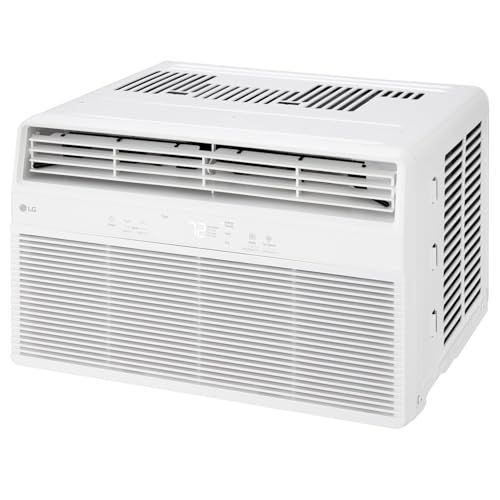
LG 8,000 BTU Window Air Conditioner with Dehumidifier, 115V | 115V, Dehumidifier, Remote Control, 24H Timer, Auto-Restart, for Rooms up to 350 Sq.Ft.
Check price on Amazon
Midea 10,000 BTU U Shaped Window Air Conditioner, Cools up to 450 Sq Ft | Ultra Quiet U-Shaped Design, Inverter Control, Open Window Flexibility, Alexa/Google Assistant, 37% Energy Savings, 2026 New
Check price on Amazon
TCL 8000 BTU Smart Window Air Conditioner with Dehumidifier, Remote Control | Dehumidifier, Remote Control, TCL Home App, Works with Alexa and Google Assistant, Rooms up to 350 Sq.Ft.
Check price on Amazon
Midea 8,000 BTU Smart Inverter Air Conditioner Window Unit with Heat and Dehumidifier – Cools up to 350 Sq. Ft., Energy Star Rated, Quiet Operation, Electronic Controls, Remote Control, White
Check price on Amazon
Midea 5,000 BTU Window Air Conditioner, Cools up to 150 Sq. Ft. with Easy-to-Use Reusable Filter, Remote, Perfect AC for Bedroom, Living Room, Home Office, Electronic Control
Check price on Amazon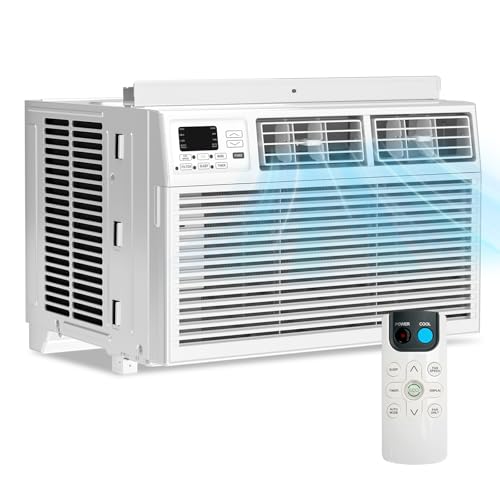
Electactic 8000 Btu Window Air Conditioner,AC Window Unit Up to 350 Sq.Ft,24H Timer,Remote Control,Easy Install,Air Conditioner for Bedroom,Living Room,Office
Check price on Amazon
GarveeLife Portable Air Conditioner,8,000 BTU for Rooms up to 350 Sq.Ft., Smart Compact AC Unit with Cooling, Dehumidifier, Fan, Remote Control and Window Kit, White
Check price on AmazonRelated Guides and Resources
Explore more detailed resources to refine your decision. These guides cover adjacent capacity classes, alternative formats, and specific use cases.
Frequently Asked Questions
What size room does an 8,000 BTU window air conditioner cool?
An 8,000 BTU window air conditioner typically cools a room between 300 and 350 square feet. The exact coverage depends on ceiling height, insulation, window orientation, and local climate. Rooms with strong sun exposure or poor insulation may require more capacity.
Is a remote control important on a window air conditioner?
A remote control lets you adjust temperature, fan speed, mode, and timers without reaching the unit. This is especially useful when the AC is mounted high in a window or behind furniture. Many modern 8,000 BTU units also offer remote scheduling and smart app control.
What SEER rating should I look for in an 8,000 BTU window AC?
Look for a CEER rating of at least 11 for entry-level models and 13 or higher for mid-range and premium units. Higher CEER ratings mean better energy efficiency over the cooling season, which matters most if you run the unit daily.
Can an 8,000 BTU window air conditioner run on a standard 115V outlet?
Most 8,000 BTU window air conditioners are designed for 115V household circuits and draw around 7 to 8 amps. Check the unit's electrical requirements and ensure the outlet is on a dedicated circuit or one that is not shared with other high-draw appliances.
How often should I clean the filter on my window AC?
Clean the filter every two to four weeks during heavy use, and at least once a month during moderate use. A clogged filter reduces airflow, lowers cooling performance, and forces the compressor to work harder, which shortens the unit's lifespan.
Can an 8,000 BTU window AC cool more than one room?
Not effectively. Window air conditioners are designed for single-room cooling. Cool air does not travel far through doorways, and the unit's thermostat reads the temperature near the unit itself. For multi-room cooling, a mini-split or central system is more appropriate.