
Mini Split Air Conditioner for Whole House
A complete guide to planning, sizing and choosing a ductless mini split system that can cool an entire home efficiently, zone by zone, without relying on traditional ductwork.
Explore the GuideA mini split air conditioner for whole house use has moved from a niche retrofit option to a mainstream cooling strategy across the United States. Instead of pushing cooled air through a network of ducts, a ductless system places a compact indoor air handler in each living zone and connects it to an outdoor condenser through a narrow refrigerant line set. The result is room-by-room control, minimal structural work and efficiency that is often easier to preserve because there is no duct network to leak conditioned air.
This guide is written for homeowners who already know they want ductless cooling and now need a clear, practical framework before committing to a system. It covers how whole house mini splits are configured, how to size and zone them, what efficiency ratings actually mean in daily use, and how to compare entry-level, mid-range and premium systems without relying on guesswork. By the end you should be able to walk into a contractor conversation with a precise brief rather than a vague idea.
If you are still mapping out your overall cooling plan, the broader whole house air conditioning overview is a useful starting point before narrowing down to a ductless approach. For readers comparing technologies, the split systems page explains how conventional split systems differ from ductless configurations.
How a Whole House Mini Split Works
A whole house mini split is not a single oversized unit. It is a coordinated system built around two layers: one or more outdoor condensers and a set of indoor air handlers distributed across the home. In a multi-zone configuration, a single outdoor unit supports several indoor heads, each with its own thermostat or remote. In a multi-system configuration, a home may use two or more outdoor condensers, each serving a group of rooms.
Each indoor unit draws in room air, passes it over a coil, and returns cooled air directly to the space. Because the air never travels through ducts, there are no duct leakage losses and no long runs where conditioned air can pick up heat from an attic or crawlspace. The outdoor condenser rejects heat collected from the indoor coils, and the refrigerant line set circulates between the two components.
The practical consequence for a whole house layout is that cooling capacity is delivered exactly where it is needed. A bedroom can be cooled at night while the rest of the house idles, and a home office can run during the day while bedrooms stay off. That granular control is the defining advantage of the mini split system air conditioning approach.
Key idea: A whole house mini split succeeds or fails on zoning and sizing, not on the number of indoor heads alone. A carefully planned three-zone system usually outperforms a hastily planned five-zone system.
Why Homeowners Choose Mini Splits for Whole Home Cooling
The appeal of ductless cooling is usually a combination of practical constraints and long-term performance goals. The most common reasons homeowners move toward a whole house mini split include:
- No ductwork required. Older homes, additions and homes with no existing ducts can be cooled without a major structural project. This is especially relevant for homes that were previously heated by radiators or baseboards.
- Room-by-room control. Each zone has its own setpoint, which reduces wasted cooling in unoccupied rooms and supports a more comfortable nighttime routine.
- Preserved efficiency. Because there is no duct network, the system avoids the typical duct losses that can erode central air performance over time.
- Quiet operation. Indoor air handlers are compact and generally quieter than a central air handler running through a whole-house duct system.
- Heating capability. Many systems are heat pumps, so the same hardware can provide efficient heating in cooler months. The mini split air and heat guide explains how that dual role works in practice.
- Flexible installation. Line sets require only a small wall penetration, which keeps disruption to a minimum compared with running new duct trunks.
Homeowners who want to compare the ductless approach against a full central system should read the residential air conditioning overview alongside the ductless material. For homes evaluating long-term operating efficiency, the most efficient home air conditioning system comparison adds useful context.
Single-Zone vs Multi-Zone Systems
Before selecting hardware, it helps to be clear about system architecture. Two broad configurations matter for whole house planning:
Single-Zone Systems
A single-zone mini split pairs one outdoor condenser with one indoor air handler. It is the standard choice for a single room, a converted garage, an addition or a sunroom. In a whole house plan, single-zone systems are sometimes used as targeted supplements rather than the primary cooling strategy. The one ton mini split guide is a useful reference for smaller, focused installations.
Multi-Zone Systems
A multi-zone mini split connects several indoor air handlers to a single outdoor condenser. This is the architecture most often used for a whole house mini split. The condenser is selected to handle the combined load of all connected indoor units, while each indoor head is sized individually for its room.
Multi-zone systems introduce one important planning rule: the outdoor condenser should not be dramatically oversized relative to the typical simultaneous load. If the condenser is far larger than the zones that usually run at the same time, efficiency and dehumidification can suffer. Contractors manage this by choosing condensers with a suitable turndown ratio and by grouping zones that are likely to run together.
Sizing a Whole House Mini Split
Sizing is the single most consequential decision in a whole house mini split project. Undersizing leaves rooms warm on peak days; oversizing causes short cycling, uneven humidity control and unnecessary energy use. The correct approach is a room-by-room load calculation rather than a rough square-footage rule.
The load calculation should account for:
- Floor area and ceiling height of each zone
- Window count, orientation and glazing type
- Wall, floor and ceiling insulation levels
- Air infiltration and the home's general airtightness
- Internal heat sources such as appliances, electronics and occupants
- Local climate design conditions for the cooling season
Room-level BTU estimates are a useful early planning tool. The sizing an air conditioner guide walks through the calculation logic, and the broader most energy efficient whole house air conditioner discussion explains why right-sizing matters for efficiency. For homes that also need heating, the three ton heat pump reference illustrates how capacity scales in larger applications.
| Home Profile | Typical Zone Count | Planning Consideration |
|---|---|---|
| Compact single-story home | 2–3 zones | Group open-plan living areas; keep bedrooms on separate heads |
| Mid-size single-story home | 3–4 zones | Separate living, master suite and secondary bedrooms |
| Two-story home | 4–6 zones | Plan separate condensers per floor if line runs become long |
| Large or multi-wing home | 5+ zones | Evaluate multiple outdoor units for redundancy and shorter line sets |
Zoning Strategy for Whole Home Comfort
Zoning is where a whole house mini split proves its value. The goal is to group rooms that share similar occupancy patterns and thermal behavior, then give each group independent control. A practical zoning plan usually separates:
- Daytime living zones such as living rooms, kitchens and open-plan areas that run during the day
- Nighttime sleeping zones such as bedrooms that run mainly in the evening and overnight
- Occasional-use zones such as guest rooms, home offices or bonus rooms that benefit from independent on/off control
- High-load zones such as sunrooms or rooms with large west-facing glazing, which may need extra capacity
Placement of indoor heads matters as much as zone count. Heads should be positioned to throw air along the room's long axis, avoid direct blow on seating or sleeping positions, and keep the line set run reasonable. The in-room air conditioning units overview covers placement fundamentals that apply to ductless heads as well.
For homes with unusual layouts or sunrooms, the AC for sunroom guide explains how glazing and solar gain affect zone sizing. Homes that also need consistent heating can read the mini splits systems overview for a full-system perspective.
Efficiency and SEER2 Ratings
Efficiency ratings are the clearest way to compare mini split systems on paper, but they need context. Modern systems are rated under the SEER2 framework, which applies updated testing conditions and generally produces slightly different numbers than the older SEER scale. The what does SEER stand for in air conditioning explainer is a good primer if you are new to the terminology.
In practical terms, higher-tier inverter systems tend to deliver higher SEER2 ratings and better part-load performance, which matters in a whole house setup where the system rarely runs at full capacity. Entry-level systems are typically fixed-speed or simple inverter designs, mid-range systems add finer modulation and better controls, and premium systems combine high efficiency with advanced features such as improved low-ambient heating performance and quieter indoor operation.
For a deeper comparison of compressor behavior, the inverter electric guide and the is inverter AC worth it discussion cover the trade-offs in plain language. Homeowners focused on efficiency ceilings can also review the most efficient mini split air conditioner breakdown.
Practical note: In a whole house mini split, the outdoor condenser's minimum modulation matters more than the headline SEER2 number. A system that can throttle down smoothly will hold temperature and humidity better during mild weather.
System Tiers and Feature Levels
To compare systems without relying on transient figures, it helps to classify them by tier. The tiers below describe relative market position and feature depth, not any specific figure.
Essential Tier
Solid baseline cooling with straightforward controls. Best suited to budget-conscious whole house plans where zones are simple and simultaneous load is predictable.
Balanced Tier
Improved modulation, quieter indoor heads and better control options. A strong default for most whole house installations that need reliable year-round performance.
High-End Tier
Top-tier efficiency, refined low-ambient heating and advanced zoning controls. Well matched to large homes, multi-story layouts and owners planning a long-term investment.
The gap between tiers is most visible in three areas: compressor modulation range, indoor unit noise levels and control sophistication. Entry-level systems often use simpler fixed or stepped modulation, while mid-range and high-end systems modulate more finely. That difference shows up as steadier temperatures and better humidity control in a whole house setting, where the system spends most of its time at part load.
For a structured comparison framework, the recommendations hub organizes systems by use case and tier. Readers planning a long-term installation may also find the investment AC for long term perspective useful when weighing tier choices.
Installation Considerations
Whole house mini split installation involves more coordination than a single-room unit. The main planning items are:
- Outdoor condenser placement. The condenser needs adequate clearance, good airflow and a location that minimizes line set length to the indoor heads. The outside air conditioner unit guide covers placement principles.
- Line set routing. Line sets should be kept as short and direct as practical. The AC refrigerant line set reference explains the variables that affect routing decisions.
- Condensate management. Each indoor head produces condensate, which must drain reliably. Where gravity drainage is not possible, a condensate pump is used. The installing a condensate pump on a mini split guide covers the setup.
- Electrical capacity. Multi-zone systems may require dedicated circuits. A licensed contractor should confirm panel capacity before installation.
- Permits and code. Local permitting requirements vary. Working with a licensed HVAC professional helps ensure the installation meets local code.
Homeowners gathering contractor input can use the mini split estimate guide to structure the conversation, and the questions to ask installer checklist helps surface important details before work begins. For homes with existing ductwork that may need sealing or repair, the insulated air conditioning ducting reference is relevant if a hybrid approach is being considered.
Maintenance for Long-Term Performance
A whole house mini split is a long-term investment, and regular maintenance protects both efficiency and equipment life. The core routine includes:
- Cleaning or replacing indoor unit filters every few weeks during heavy use
- Keeping the outdoor condenser coil clear of debris and vegetation
- Checking condensate drainage for clogs, especially before peak season
- Scheduling professional service to inspect refrigerant charge, electrical connections and coil condition
The tips and maintenance hub and the maintenance of HVAC system overview provide detailed routines. If a system develops performance issues, the mini split air conditioner repair guide helps distinguish between simple maintenance items and issues that require a technician. Homeowners tracking efficiency over time may also benefit from the reduce AC electricity bill checklist, since small behavioral changes compound in a zoned system.
How to Choose the Right Whole House Mini Split
With the technical groundwork covered, the selection process becomes a structured comparison rather than a search for a single "best" model. Use the following sequence:
- Confirm the load calculation. Room-by-room sizing is the foundation. Without it, tier and feature comparisons are premature.
- Map the zones. Decide which rooms will share a head and which need independent control. This determines indoor unit count and condenser capacity.
- Set the efficiency target. Decide whether a mid-range or high-end tier fits the home's long-term goals. The most energy efficient AC overview is a useful reference for the upper end of the market.
- Compare features that matter in daily use. Prioritize noise levels, control options and heating performance over features that will rarely be used.
- Verify installer qualifications. A well-specified system underperforms if installation is rushed. The HVAC quotes guide and the local HVAC directory help with contractor selection.
- Check available incentives. Federal and local programs may apply to high-efficiency systems. The HVAC tax credits and rebates page summarizes the categories.
Readers who want to explore specific configurations can browse the most efficient heating and air conditioning systems comparison or the most economical heating and cooling system discussion for a broader view of operating priorities.
Recommended next step: Read the mini split air conditioner for whole house planning checklist and compare it against your room-by-room load calculation before requesting quotes.
Frequently Asked Questions
Can a mini split air conditioner cool an entire house?
Yes. A multi-zone mini split with one outdoor condenser and several indoor air handlers can cool a whole house when the system is correctly sized and the zones are planned around the floor plan, insulation and occupancy patterns. Larger or multi-story homes often use two or more outdoor condensers for better line set management and redundancy.
How many indoor units do I need for a whole house mini split?
Most homes need one indoor unit per primary living zone, commonly three to five heads for a typical single-family home. Each head is sized individually, while the outdoor condenser is rated for the combined load of the connected indoor units. Open-plan areas can often share a single larger head.
Is a whole house mini split more efficient than central air?
In many cases yes, because ductless systems avoid duct losses and allow room-by-room control. High-end tier inverter models often reach very high SEER2 ratings, though the real-world advantage depends on home layout, insulation and how the zones are used. Homes with well-sealed existing ducts can narrow the gap.
Do mini splits require ductwork?
No. Standard mini splits are ductless: each indoor unit connects to the outdoor condenser through a small refrigerant line set. Ducted mini split variants exist but are optional and are chosen mainly for hidden installations or when a homeowner prefers a fully concealed system.
Can a mini split system also heat the house?
Many mini split systems are heat pumps and provide both cooling and heating. Heating performance in cooler weather depends on the model's low-ambient rating and the local climate. The mini split air and heat guide explains how dual-purpose operation works in practice.
Top-Rated Mini Split Air Conditioners for Whole House
⚠️ AFFILIATE DISCLOSURE: This website contains affiliate links. As an Amazon Associate, we earn from qualifying purchases. If you make a purchase through these links, we may receive a small commission at no additional cost to you. Read our full affiliate policy.
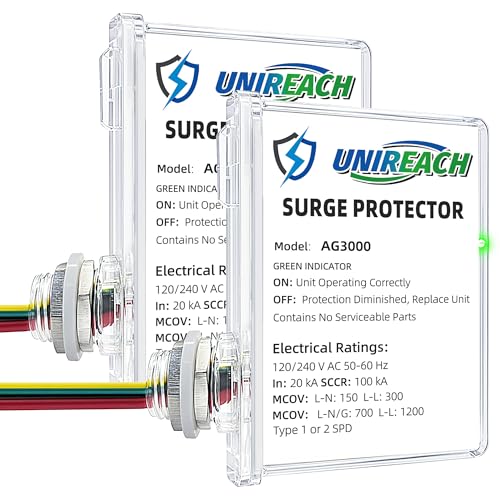
AG3000 HVAC Surge Protector, 120/240V AC, TPMOV Whole House Protection | Protects HVAC and home appliances with TPMOV surge protection, LED status indicator, and durable indoor/outdoor housing.
Check price on Amazon
AG3000 HVAC Surge Protector, 120/240V AC, TPMOV Whole House Protection | Protects HVAC and home appliances with TPMOV surge protection, LED status indicator, and durable indoor/outdoor housing.
Check price on Amazon
Senville Central Air Conditioning System, Heat Pump, Inverter, 3 Ton | 36000 BTU Air Handler and Condenser Included, 208/230V, Whole House Air Conditioner
Check price on Amazon
Senville Central Air Conditioning System, Heat Pump, 3 Ton, 20kW Aux | 36000 BTU Air Handler and Condenser Included, 208/230V, Whole House Air Conditioner
Check price on Amazon
COSTWAY 12000BTU Mini Split Air Conditioner& Heater | 20 SEER2 115V Wall-Mounted Ductless AC Cools up to 750 Sq. Ft, Energy Efficient Inverter AC with Heat Pump
Check price on Amazon
ROVSUN 9000 BTU Wifi Enabled Mini Split Air Conditioner & Heater with Inverter, 20 SEER2 Energy Saving 115V Ductless Split AC Unit with Pre-Charged Condenser, Heat Pump & Installation Kit
Check price on Amazon
Rellytech Mini Split AC/Heating System, 12000 BTU, 19 SEER2 115V/110V | Ductless air conditioner, energy efficient, pre-charged system, up to 750sq.ft coverage, inverter heating and cooling
Check price on Amazon