Cost to Add Air Conditioning to a House
Understand the full picture behind adding air conditioning to a house — from system type and ductwork to efficiency ratings and installation factors — so you can plan with confidence.
Start ReadingAC Units Guide Philosophy: A well-informed homeowner makes the right decision. Before you commit to any installation, learn how the figures are built, what affects them, and which system truly fits your home. This page gives you the full picture.
Understanding the Investment Behind Home Air Conditioning
Adding air conditioning to a house is not a single line item — it is a project built from several moving parts. The final figure reflects the system type you choose, the condition of your existing ductwork, the size of your home, the climate zone you live in, and the efficiency tier of the equipment. Homeowners who research these factors in advance consistently make better decisions than those who simply accept the first quote they receive.
This guide breaks the project into understandable components. You will learn what drives the total, how each system category compares, what ongoing operational considerations look like, and how to evaluate a contractor's proposal. When you finish reading, you will be prepared to compare quotes intelligently and choose the right system for your home and lifestyle.
The Main Factors That Shape the Total
No two homes are identical, which is why a single blanket figure rarely applies. Instead, the total is shaped by a set of predictable variables. Understanding each one lets you anticipate where your project will sit on the spectrum.
1. Home Size and Layout
Square footage is the starting point for sizing any system. A larger home needs more cooling capacity, which generally means larger equipment and more distribution components. Layout matters too — a multi-story home or a floor plan with many separate rooms often requires more zoning and ductwork than an open-plan single level of the same size. If you want to understand how capacity is calculated, our guide on how to size an air conditioner explains the underlying method.
2. System Type
Different systems carry different structural requirements. A central system needs ductwork throughout the home. A ductless mini-split needs only a small wall penetration per indoor head. A window or portable unit needs almost no permanent modification. Each approach has its own trade-offs in comfort, aesthetics, and installation complexity.
3. Ductwork Condition
If your home already has forced-air ductwork in good condition, a central system becomes far simpler to integrate. If ductwork is missing, damaged, or undersized, it becomes a significant part of the project. Homes with existing forced-air heating are in the strongest position, as covered in our guide to adding AC to a house with forced air.
4. Efficiency Tier of the Equipment
Equipment is generally grouped into tiers — entry-level, mid-range, and premium. Higher tiers deliver greater efficiency and often quieter operation and better humidity control. The trade-off is a higher upfront position in the market, offset over time by lower energy use. Our overview of energy efficiency of an air conditioner explains how to weigh that balance.
5. Climate and Local Requirements
Hotter climates demand more capacity and often higher efficiency to keep operating demands reasonable. Colder climates may favor heat pump systems that provide both heating and cooling. Local permits and code requirements also vary — our guide on whether you need a permit for AC covers the general landscape.
6. Labor and Site Access
Installation labor reflects the difficulty of the job. Easy attic or crawlspace access, a clear path for line sets, and available electrical capacity all simplify the work. Difficult access, long refrigerant runs, or an electrical panel upgrade add complexity. Choosing a qualified contractor is covered in how to choose an HVAC contractor.
Comparing System Categories at a Glance
The table below summarizes how the major system categories differ in structural requirements and typical project scope. Use the "Tier" column as a relative positioning guide rather than an absolute figure.
| System Type | Ductwork Needed | Typical Project Scope | Relative Tier | Best For |
|---|---|---|---|---|
| Window AC | None | Single room, minimal modification | Entry-level | Renters, single rooms, temporary needs |
| Portable AC | None | Single room, vent kit only | Entry-level | Flexible placement, rooms without window mounting |
| Ductless Mini-Split | None (small wall penetration) | One or more zones, no ductwork | Mid-range to premium | Homes without ducts, zoned comfort |
| Central AC (new ducts) | Full duct system required | Whole-home, extensive structural work | Mid-range to premium | Whole-home cooling, new construction |
| Central AC (existing ducts) | Uses existing ducts | Whole-home, simpler integration | Mid-range | Homes with forced-air heating |
| Heat Pump System | Ducted or ductless options | Heating and cooling combined | Mid-range to premium | Year-round comfort, efficiency-focused homes |
For a deeper comparison of central systems specifically, see different types of central air conditioning systems. If you are weighing a mini-split against central, mini-split system considerations for 1,000 sq ft offers useful context.
What Makes Up the Project: A Component Breakdown
Whether you choose central or ductless, the project generally consists of the following components. Understanding each one helps you read a quote with clarity.
Equipment
This includes the outdoor condenser, the indoor air handler or evaporator coil, and the refrigerant lines that connect them. Equipment tier drives a meaningful share of the total. Entry-level systems are functional and reliable; mid-range systems add efficiency and quieter operation; premium systems often include advanced controls and superior humidity management.
Ductwork (if applicable)
For central systems, ductwork is often the largest variable. New duct runs, insulation, sealing, and registers all contribute. Homes with existing ducts may need only inspection and minor sealing, as covered in our guide to HVAC duct cleaning and maintenance.
Electrical Work
Modern air conditioners require a dedicated circuit. If your electrical panel has available capacity, the work is straightforward. If an upgrade is needed, that becomes a separate line item. Our guide on electric air conditioners explains the electrical considerations in more detail.
Labor and Installation
Labor reflects the skill and time required to install the system correctly. Proper installation — including evacuation of the refrigerant lines, correct charge, and thorough testing — is essential to long-term performance. Never treat installation as a commodity.
Permits and Inspection
Most jurisdictions require a permit for HVAC installation. The permit itself is modest, but it ensures the work is inspected and code-compliant. Skipping it can create problems at resale.
Thermostat and Controls
A modern thermostat improves comfort and efficiency. A digital air conditioner thermostat is a worthwhile addition that pairs well with any new system.
Efficiency Ratings and Long-Term Operating Considerations
The efficiency tier of your equipment influences both upfront positioning and ongoing energy use. Higher-tier systems use less electricity to deliver the same cooling, which matters most in hot climates and large homes. If you are comparing efficiency classes, our resources on ENERGY STAR air conditioner units and ENERGY STAR central air conditioners explain the certification thresholds.
It is also worth planning for maintenance. A well-maintained system retains its efficiency and lasts longer. Our overview of energy-efficient AC options covers both equipment selection and operational habits.
Adding AC to an Existing Home vs. New Construction
New construction is the easiest scenario: ductwork and electrical runs can be planned from the start. Retrofitting an existing home introduces variables such as wall access, attic space, and the condition of the electrical panel. Homes with existing forced-air heating are the most straightforward retrofit, since the distribution infrastructure is already in place. Homes without ducts typically turn to ductless mini-splits as the most practical whole-home solution.
For a broader look at the retrofit landscape, see installing air conditioning in a house and adding air conditioning to a house. If your home already has forced-air heating, adding AC to a house with forced air is the most directly relevant guide.
Why Sizing and Load Calculation Matter More Than You Think
An undersized system struggles to keep up on hot days. An oversized system cools too quickly, cycling on and off and leaving humidity uncontrolled. Both outcomes undermine comfort and efficiency. A proper load calculation accounts for insulation, window area, orientation, occupancy, and local climate. Our guide to sizing an air conditioner explains the process in detail.
If you are considering a central system for a specific home size, these resources provide useful context: central air for a 1,200 sq ft house, central air for a 1,500 sq ft house, and HVAC system for a 1,500 sq ft home.
Evaluating Contractors and Getting Comparable Quotes
The quality of installation has a direct effect on how well your system performs for years. When comparing proposals, look beyond the headline figure. Ask each contractor to explain their load calculation, the equipment tier they recommend, the scope of ductwork or electrical work, and the warranty terms. A well-prepared proposal is detailed and specific.
- Ask for a written load calculation. This is the foundation of a correct recommendation.
- Compare equipment tiers fairly. Entry-level and premium systems are not equivalent, so compare within the same tier.
- Confirm licensing and insurance. Our guide on choosing an HVAC contractor covers the key checks.
- Review the warranty. Labor warranties vary and matter as much as equipment warranties.
- Ask about post-installation support. A good contractor stands behind the work.
You can also explore finding an HVAC contractor near you for practical next steps.
Ready to Explore System Options?
Review our recommended air conditioning units below and compare features within your preferred tier.
View RecommendationsFrequently Asked Questions
What is the single biggest factor in the total for adding AC to a house?
Ductwork is typically the largest variable. Homes that already have suitable forced-air ductwork require far less structural work than homes that need a full duct system installed. The second largest factor is the equipment tier you select.
Can I add central air conditioning without existing ductwork?
Yes, but it requires installing a full duct system, which adds significant scope. Many homeowners in this situation choose ductless mini-splits instead, which deliver zoned comfort without ductwork. See ductless heat and air conditioners for more context.
Does a higher-efficiency system always make sense?
Not always. Higher-efficiency systems use less energy, which matters most in hot climates and larger homes with long cooling seasons. In milder climates or smaller homes, a mid-range system may be the more balanced choice. The decision should reflect your climate and usage patterns.
How long does installation take?
A straightforward replacement or ductless installation often takes one to two days. A whole-home central system with new ductwork can take several days to a week or more, depending on the home's complexity and access.
Is a heat pump a better choice than a traditional AC?
In climates with meaningful heating seasons, a heat pump provides both heating and cooling from one system, which can be a strong long-term investment. In consistently hot climates, a traditional air conditioner remains a focused and effective choice.
What maintenance does a new system need?
Regular filter changes, annual coil cleaning, and periodic professional inspection keep the system efficient and extend its lifespan. Our guide on energy-saving air conditioners includes maintenance habits that help.
Related Reading
Continue your research with these closely related guides:
Recommended Air Conditioning Units for Your Home
⚠️ AFFILIATE DISCLOSURE: This website contains affiliate links. As an Amazon Associate, we earn from qualifying purchases. If you make a purchase through these links, we may receive a small commission at no additional cost to you. Read our full affiliate policy.

AprilAire 213 Replacement Filter, MERV 13, 20x25x4 Whole-House Air Filter | AC & HVAC System Media, Self-Seal Technology, Allergen Reduction, 12-Month Life, Made in USA
Check price on Amazon
Centric Air 3.4 Whole House Fan, R-5 Insulated Damper, 2 Speed | Remote Control With Temperature & Timer, HVI-916, For Homes Up To 2800 Sqft, 15 Year Warranty, Attic Ceiling Mount Fan
Check price on Amazon
AprilAire 213 Replacement Filter, MERV 13, 20x25x4 Whole-House Air Filter | AC & HVAC System Media, Self-Seal Technology, Allergen Reduction, 12-Month Life, Made in USA
Check price on Amazon
ROVSUN 2 Zone 42000 BTU (24K/24K) Mini Split AC/Heating System, 20 SEER2 Dual Zone Ductless Wall Mounted Air Conditioner with Pre-Charged Condenser, Heat Pump & 25Ft Line Set, 208-230V
Check price on Amazon
Cabin Air Filter Retrofit Kit for 2009-2014 Ford F-150 & SVT Raptor – Direct Fit Upgrade Adds Cabin Air Filtration – Includes Filter, Housing, Cover & Install
Check price on Amazon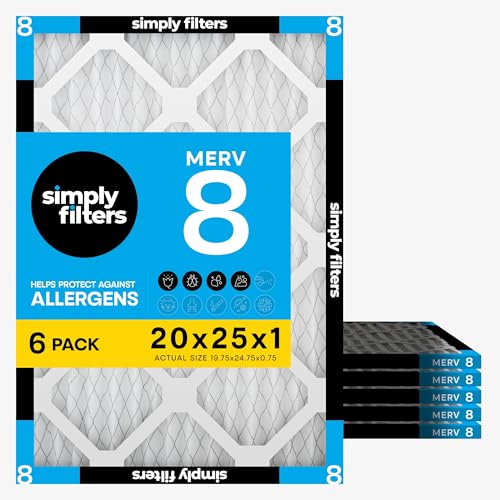
Simply 20x25x1 Air Filter, Merv 8, 6 Pack, For Home AC Furnace & HVAC (Actual Size: 19.75"x24.75"x0.75") DUST, Pet, & Allergy Control
Check price on Amazon