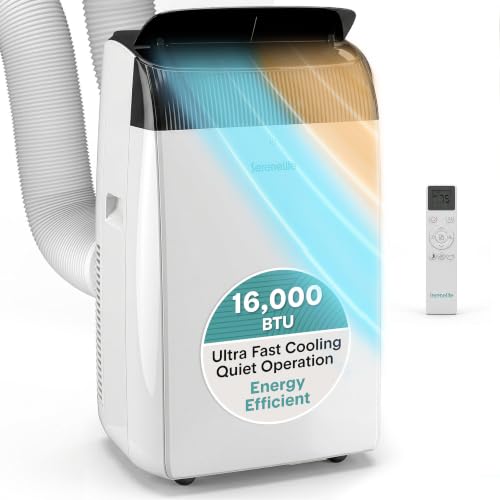
Dual Hose Portable Air Conditioner for Sale: The Complete Buyer's Guide
Everything you need to know about dual hose portable AC units — how they work, why they outperform single-hose models, and how to choose the right one for your space before you buy.
EXPLORE TOP MODELSWhy dual hose? If you are shopping for a portable air conditioner for sale, the hose configuration is one of the most important decisions you will make. A dual hose portable air conditioner delivers more consistent cooling, better energy efficiency, and fewer pressure imbalances than a single hose unit. This guide walks you through everything you need to know before you choose.
What Is a Dual Hose Portable Air Conditioner?
A dual hose portable air conditioner is a freestanding cooling unit that uses two separate hoses to manage airflow. One hose draws in outside air to cool the condenser coil, while the second hose exhausts hot air back outside. This closed-loop design is fundamentally different from a single hose unit, which uses conditioned indoor air to cool the condenser and then dumps that air outside.
The result? A dual hose system maintains neutral room pressure, prevents warm outside air from being pulled back in through gaps and cracks, and delivers more stable cooling performance. For anyone comparing portable AC types, the dual hose design is widely considered the superior configuration for rooms that need consistent comfort.
If you are still exploring the broader category, our guide to different types of portable air conditioners breaks down every configuration available today.
How Dual Hose Portable Air Conditioners Work
Understanding the mechanics helps you make a smarter purchase. Here is the step-by-step process:
- Intake hose: Outside air is drawn in through the first hose and passed over the condenser coil to absorb heat.
- Compressor cycle: The refrigerant circulates through the evaporator coil, absorbing heat and moisture from the indoor air.
- Exhaust hose: The heated air from the condenser is expelled through the second hose, back outside.
- Cooled air delivery: The cooled, dehumidified air is blown back into the room through the front vent.
Because the intake and exhaust airstreams are separated, the unit does not depressurize the room. This is the key advantage that makes dual hose models more efficient in the long run. For a deeper dive into the cooling cycle itself, see our explanation of how an air conditioner works.
Dual Hose vs. Single Hose: Key Differences
The table below summarizes the most important differences so you can decide which configuration fits your space and habits.
| Feature | Single Hose | Dual Hose |
|---|---|---|
| Room pressure | Creates negative pressure; pulls in warm outside air | Maintains neutral pressure; no warm air infiltration |
| Cooling efficiency | Lower — some cooled air is lost to exhaust | Higher — all cooled air stays in the room |
| Temperature consistency | Fluctuates as outside air enters | More stable and predictable |
| Installation complexity | One hose; simpler window kit | Two hoses; slightly larger window kit |
| Best for | Small rooms, occasional use, tight spaces | Medium to large rooms, extended use, humid climates |
| Energy efficiency tier | Essential tier | Balanced tier to Top-tier |
Pros and Cons of Dual Hose Portable AC Units
✔ Advantages
- More efficient cooling with no pressure imbalance
- Stable room temperature during extended operation
- Better for humid climates when paired with dehumidification mode
- No warm air being pulled in through gaps
- Often available with inverter compressors for quiet, efficient operation
- Ideal for rooms where the AC runs for many hours
✘ Considerations
- Two hoses require a slightly larger window or wall opening
- Bulkier setup compared to single hose units
- Typically positioned in a higher tier than single hose models
- Window kit compatibility must be verified for non-standard windows
- Slightly heavier units overall
Sizing Your Dual Hose Portable AC: BTU and Room Size
Choosing the right cooling capacity is the single most important decision when buying any air conditioner. An undersized unit runs constantly and never reaches the set temperature; an oversized unit short-cycles, which wastes energy and fails to remove humidity properly. Our guide on what happens if your AC is too big or too small explains the consequences in detail.
As a starting point, use the 20 BTU per square foot rule:
- Up to 150 sq ft: 5,000 – 6,000 BTU
- 150 – 250 sq ft: 8,000 – 10,000 BTU
- 250 – 400 sq ft: 12,000 – 14,000 BTU
- 400 – 600 sq ft: 14,000 – 18,000 BTU
Adjust upward for sun-exposed rooms, high ceilings, kitchens, or rooms with multiple occupants. For a precise figure, use our BTU calculator by room size or read the full guide on how to size an air conditioner.
Key Features to Look For Before You Buy
Not all dual hose portable AC units are created equal. The following features separate a solid choice from a mediocre one:
- Inverter compressor: Variable-speed operation delivers quieter, more efficient cooling. See our comparison of inverter vs. non-inverter systems for context, and explore dedicated dual hose portable air conditioner inverter options.
- Dehumidification mode: Essential for humid climates. A dual hose portable air conditioner dehumidifier combo removes moisture while cooling.
- Heating capability: If you need year-round comfort, a dual hose portable air conditioner with heater adds a heat pump function.
- Self-evaporating technology: Reduces manual draining. Learn about dual hose self-evaporating portable air conditioners.
- Window kit compatibility: Verify that the included kit fits your window type. For casement or crank-out windows, you may need a crank-out window kit for portable air conditioners.
- ENERGY STAR certification: A reliable indicator of efficiency. Read our overview of ENERGY STAR certified AC units and the DOE efficiency standards.
- Smart controls and Wi-Fi: Useful for scheduling and remote operation, especially in rooms used intermittently.
Installation Requirements and Window Compatibility
Dual hose portable air conditioners require access to a window or a wall vent for both hoses. Most units ship with an adjustable window kit that fits standard sliding and hung windows. Before you buy, measure your window opening and confirm the kit's minimum and maximum width.
For non-standard window types, specialized solutions exist. If you have a crank-out or casement window, you may need a crank-out window portable air conditioner setup or a dedicated adapter kit. If you are unsure whether a portable unit can work in your space, our guide on whether portable air conditioners need a window answers the most common questions.
Installation is generally straightforward: connect the hoses, seal the window kit, and plug the unit into a dedicated circuit. For electrical considerations, see do I need an electrician for AC and our breakdown of 110V vs. 240V AC units.
Where Dual Hose Portable AC Units Work Best
Dual hose units excel in spaces where a permanent installation is not practical and where cooling needs to be consistent:
- Renters and temporary spaces: No permanent modification required. See our recommendations for AC for renters and temporary solutions.
- Older homes without ductwork: A ductless solution that does not require major renovation. Read about AC for older homes with no ductwork and ductless air conditioning for older homes.
- Home offices and bedrooms: Quiet operation and stable temperatures improve comfort and sleep. Explore home office AC and bedroom AC guides.
- Basements and garages: Often lack ductwork and benefit from dehumidification. See basement AC and garage AC guidance.
- Humid climates: The dehumidification mode is a major advantage. Learn more in our guide on decreasing humidity in your house and dehumidifier vs. AC.
Maintenance Tips for Long-Term Performance
A dual hose portable AC is a long-term investment. Simple maintenance keeps it running efficiently for years:
- Clean or replace the air filter every two to four weeks during heavy use. A clogged filter reduces airflow and strains the compressor. See our guide on when to replace your AC filter and how to clean an AC filter.
- Drain the condensate tank regularly unless the unit is self-evaporating. For units with a drain pump, check the drain pump for AC unit guide.
- Inspect the hoses for kinks, tears, or blockages. A damaged hose reduces efficiency and can cause the unit to overheat.
- Clean the condenser coil seasonally. Refer to our instructions on cleaning condenser coils.
- Store the unit properly during the off-season: drain all water, clean the filter, and cover the unit to prevent dust accumulation.
- Follow the seasonal checklist to prepare for summer and winter. See our seasonal AC checklist.
Common Issues and Troubleshooting
Even well-built units can develop problems. Here are the most common issues and where to find solutions:
- Not cooling effectively: Check the filter, hose connections, and window seal. See AC not cooling solutions.
- Leaking water: Often a full drain tank or a clogged drain line. Read AC leaking water solutions.
- Blowing warm air: Could be a compressor issue or a disconnected exhaust hose. See AC blowing warm air.
- Noise: Loose panels, fan obstructions, or compressor vibration. Read AC making noise.
- Unpleasant odors: Usually mold or mildew in the evaporator or drain pan. See AC smells bad.
- Frozen coils: Low refrigerant or restricted airflow. Read AC frozen coils.
When in doubt, consult a professional. Our guide on when to call an HVAC technician helps you decide whether a DIY fix is appropriate.
Dual Hose Portable AC Buying Checklist
Before you finalize your purchase, run through this checklist:
- Room size and BTU: Confirm the unit's cooling capacity matches your square footage and heat load.
- Hose configuration: Verify it is a true dual hose design, not a single hose unit with an accessory.
- Window compatibility: Measure your window and confirm the included kit fits, or budget for an adapter.
- Efficiency rating: Check the CEER or SACC rating and prefer ENERGY STAR certified models.
- Noise level: Look for decibel ratings; quieter units are better for bedrooms and offices.
- Dehumidification capacity: Important in humid climates; check pints per day.
- Drainage method: Self-evaporating, manual drain, or drain pump.
- Smart features: Wi-Fi, programmable timer, remote control.
- Warranty: Understand the AC warranty terms and register the product after purchase.
- Placement: Ensure the unit fits your intended location and that both hoses can reach the window.
Ready to Choose Your Dual Hose Portable AC?
You now have the knowledge to evaluate dual hose portable air conditioners with confidence. Explore our curated selection of models below, each chosen for reliability, efficiency, and real-world performance.
VIEW RECOMMENDED MODELSFrequently Asked Questions
What is the difference between a single hose and a dual hose portable air conditioner?
A dual hose unit uses one hose to draw in outside air for the condenser and a second hose to exhaust hot air outside. This maintains neutral room pressure. A single hose unit uses conditioned indoor air for the condenser and exhausts it outside, creating negative pressure that pulls warm outside air back into the room. Dual hose models are more efficient and maintain more stable temperatures.
Do dual hose portable air conditioners need a window for installation?
Yes, they require access to a window or wall opening for both hoses. Most models include a window kit for standard sliding or hung windows. For non-standard windows, specialized kits are available, such as a crank-out window kit for portable air conditioners.
How many BTUs do I need for a dual hose portable air conditioner?
Use approximately 20 BTU per square foot as a starting point. A 300 sq ft room typically needs 6,000 BTU, while a 500 sq ft space may need 10,000 to 12,000 BTU. Adjust for ceiling height, sun exposure, and occupancy. Use a BTU calculator by room size for precision.
Are dual hose portable air conditioners energy efficient?
Yes, they are generally more efficient than single hose units because they avoid negative pressure and do not waste cooled air. Models with inverter compressors and higher CEER or SACC ratings offer the best efficiency. Look for ENERGY STAR certification and check DOE efficiency standards.
Can a dual hose portable air conditioner also dehumidify?
Yes, most dual hose units include a dehumidification mode. Some models are explicitly designed as dual hose portable air conditioner dehumidifier combos, capable of removing several pints of moisture per day. This is especially useful in humid climates or basements.
How often should I clean the filter on my dual hose portable AC?
Clean or replace the filter every two to four weeks during periods of heavy use. A clogged filter reduces airflow, strains the compressor, and lowers cooling efficiency. Regular filter maintenance is the single easiest way to extend the life of your unit.
Can I use a dual hose portable AC in a room without a traditional window?
You need some form of venting for the two hoses. If you do not have a standard window, options include a wall vent kit, a sliding door kit, or a specialized adapter for casement windows. Without proper venting, the unit cannot function efficiently.