Free Standing Air Conditioner Units: The Complete Guide
Everything you need to know about self-contained, floor-standing cooling systems — how they work, how to size them, venting options, and how to choose the right unit for your space.
Quick summary: Free standing air conditioner units are self-contained cooling systems that rest on the floor and require no permanent installation. They are an excellent choice for renters, older homes without ductwork, and rooms where a window unit is not practical. This guide covers every decision point before you choose a model.
What Is a Free Standing Air Conditioner Unit?
A free standing air conditioner unit — sometimes called a freestanding AC or floor standing air conditioner — is a cooling system that is fully self-contained and stands on the floor rather than being mounted in a window or attached to a wall. Unlike central systems, no ductwork is required. Unlike window units, no structural modification is needed.
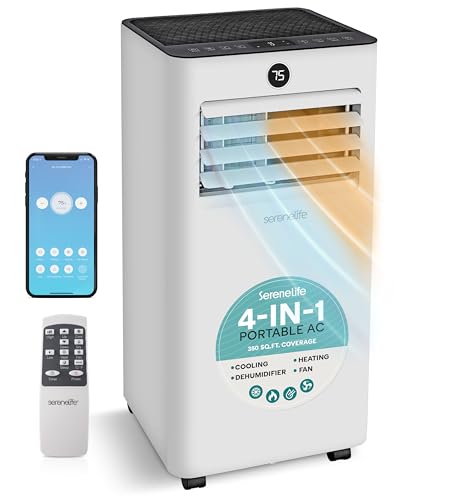
Most free standing units are portable air conditioners, meaning they can be rolled from room to room on casters. A smaller segment consists of floor-mounted mini-split air handlers, which are permanently installed but still stand on the floor. Both categories are covered in this guide because buyers often compare them side by side.
The key mechanical difference from a window unit is that a free standing unit discharges hot air through a flexible exhaust hose rather than directly out the back of the chassis. This gives you placement flexibility but also introduces venting considerations that affect performance. For a deeper comparison of cooling categories, see our overview of free standing air conditioning units.
Types of Free Standing Air Conditioner Units
Not all free standing units work the same way. Understanding the three main categories will help you avoid a model that underperforms for your room.
Single-Hose Portable Units
The most common and entry-level design. One hose exhausts hot air out a window. Simple to set up, but pulls some conditioned air from the room to cool the compressor, which slightly reduces efficiency.
Dual-Hose Portable Units
A mid-tier and premium design with separate intake and exhaust hoses. The compressor draws outside air for cooling, so room air stays inside. Noticeably more efficient and better suited to larger rooms.
Floor-Mounted Mini-Split
A high-end tier, permanently installed system where the indoor air handler sits low on the wall or floor. Quiet, efficient, and ideal for rooms where a wall-mounted head is not practical.
There is also a fourth category worth knowing: ventless evaporative coolers. These do not use a compressor and do not require a window. They work by evaporating water and are effective only in dry climates. If you are considering this route, read our guide to free standing air conditioners with no window needed and the dedicated comparison of units without an exhaust hose.
How Free Standing Units Work
A compressor-based free standing unit works on the same refrigeration cycle as any air conditioner. Refrigerant absorbs heat from the room air as it passes over the evaporator coil, then releases that heat outdoors through the condenser coil. The exhaust hose carries the hot air out of the room.
The practical implication is simple: the exhaust hose is not optional. If the hot air cannot leave the room, the unit will run continuously without lowering the temperature. This is why proper venting setup matters more than almost any other factor.
Dual-hose models separate the intake and exhaust paths, which prevents negative pressure inside the room. Single-hose models create a slight vacuum that pulls warm air in through gaps around doors and windows. In a well-sealed room, the difference in real-world cooling is significant.
How to Size a Free Standing Air Conditioner
Sizing follows the same logic as any room air conditioner: roughly 20 BTU per square foot of floor area. The table below gives practical starting points. Always round up slightly rather than down.
| Room Size | Recommended Capacity | Typical Use Case |
|---|---|---|
| Up to 150 sq ft | 5,000 – 6,000 BTU | Bedroom, small office, nursery |
| 150 – 250 sq ft | 8,000 – 10,000 BTU | Studio apartment, medium bedroom |
| 250 – 400 sq ft | 12,000 – 14,000 BTU | Living room, open-plan kitchen |
| 400 – 600 sq ft | 14,000 – 18,000 BTU | Large living area, loft |
| 600+ sq ft | 18,000 BTU and above | Open-plan spaces, consider dual units |
Adjust upward by about 10 percent for a sunny room, a room with large windows, a kitchen, or a room regularly occupied by more than two people. Adjust downward slightly for a heavily shaded or well-insulated room. For a small-space specific breakdown, see our guide to a free standing air conditioner for a small room.
Venting Options and Installation Reality
Venting is the single most misunderstood part of owning a free standing unit. Here is what actually matters.
Window Venting
Most units ship with a window slider kit that fits a standard double-hung or sliding window. Installation takes minutes and requires no tools beyond a screwdriver. The hose is short — typically 5 to 7 feet — so the unit must sit close to the window. Extending the hose beyond its rated length reduces efficiency.
Wall Venting
Some owners install a permanent wall vent, which allows the unit to sit anywhere in the room. This is a more involved project and may require a contractor. It is worth considering if you plan to use the unit in the same spot year after year.
Ventless Operation
Only evaporative coolers operate without any vent. Compressor-based units cannot. If you see a product marketed as a "ventless portable air conditioner," verify carefully whether it is an evaporative cooler or a dehumidifier. Our article on freestanding air conditioners without a vent hose explains how to tell the difference.
Advantages and Limitations
What They Do Well
- No permanent installation or structural modification
- Renter-friendly and easy to relocate
- Works in rooms without ductwork
- No window required for floor-mounted mini-splits
- Simple setup for portable models
- Can be moved between rooms seasonally
What to Watch For
- Single-hose models are less efficient than window units
- Exhaust hose limits placement options
- Portable units produce noticeable compressor noise
- Requires regular water tank draining in humid climates
- Floor space is occupied permanently during use
- Floor-mounted mini-splits require professional installation
Efficiency, Refrigerants, and Long-Term Operation
Efficiency for portable units is expressed as CEER rather than SEER. Values in the 8 to 11 range are typical. Higher is better. Dual-hose models generally score higher than single-hose models of the same capacity.
Modern units use R32 or R454B refrigerant, both of which have a lower global warming potential than the older R410A. If environmental impact matters to you, check the refrigerant type on the specification sheet and review our overview of environmentally friendly heating and cooling systems. Proper handling and disposal of refrigerant is regulated — see the EPA refrigerant handling rules for details.
Energy Star certification is available for portable air conditioners, though fewer models qualify than in the window category. If efficiency is a priority, compare against our list of Energy Star portable air conditioners and the broader roundup of Energy Star qualified air conditioners.
Maintenance That Keeps Performance Stable
A free standing unit loses cooling capacity faster than most owners expect when maintenance is skipped. The essentials:
- Clean or replace the filter every two weeks during peak season. A clogged filter is the most common cause of weak airflow.
- Drain the water tank regularly. Portable units collect condensate. Some self-evaporate most of it, but humid climates still require manual draining.
- Inspect the exhaust hose for kinks and leaks. A loose window seal lets hot air back into the room.
- Clean the condenser coil annually. Dust buildup on the coil reduces heat rejection and raises energy use.
- Store the unit upright during the off-season. Laying a compressor unit on its side can displace lubricant.
Free Standing vs. Other Cooling Options
The right choice depends on your constraints. Here is a fair comparison.
| Option | Installation | Efficiency | Best For |
|---|---|---|---|
| Free standing portable AC | Minimal, window vent needed | Moderate | Renters, temporary cooling, rooms without ducts |
| Window AC | Moderate, window mount required | Good | Standard double-hung windows, permanent single-room cooling |
| Ductless mini-split | Professional installation | High | Long-term whole-room or multi-zone cooling |
| Central AC | Professional installation, ductwork | High | Whole-home cooling where ducts exist |
| Evaporative cooler | Minimal | Low in humid climates | Dry climates only |
If you are weighing a permanent floor-mounted system, our guide to floor standing mini-split air conditioners covers the installation path in detail. For a broader view of floor-based cooling, see floor air conditioning units.
Buying Checklist: What to Verify Before You Choose
- Capacity: Match BTU to room size, then round up.
- Hose configuration: Dual-hose for serious cooling; single-hose for occasional use.
- Window compatibility: Confirm the slider kit fits your window type and width.
- Noise level: Check the decibel rating. Portable units typically run 50 to 56 dB on high.
- Drainage: Decide between manual drain and self-evaporative designs.
- Controls: Remote, programmable timer, and Wi-Fi are common on mid-range and premium models.
- Warranty: Compressor coverage is the number that matters.
- Refrigerant type: R32 or R454B is preferable to older formulations.
Ready to compare specific models? Browse our curated selection of free standing air conditioner units below, filtered for the categories that matter most.
Explore Recommended UnitsFrequently Asked Questions
Final Thoughts
Free standing air conditioner units solve a real problem: cooling a space without committing to structural changes. The trade-off is that performance depends heavily on correct sizing and proper venting. Buy the right capacity, choose a dual-hose design if you need serious cooling, and keep the filter clean. Do those three things and a free standing unit will serve you well for years.
If you are still deciding between a portable free standing unit and a permanent solution, explore our guides on ventless free standing air conditioning and floor mounted mini-split systems to see which path fits your home.