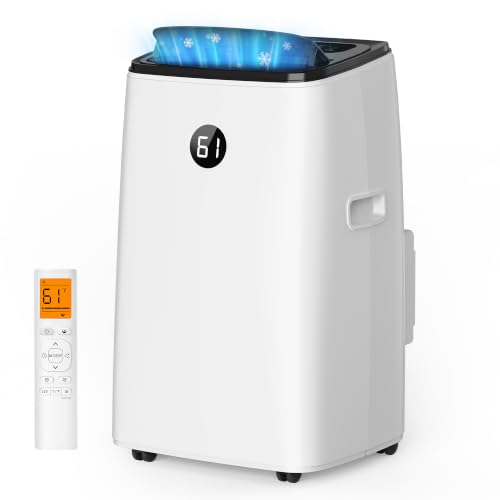
Portable Air Conditioner for 1000 Square Feet: How to Choose the Right Setup
Cooling a 1000 square foot space with portable air conditioners is possible, but it requires the right capacity, placement, and expectations. This guide explains BTU sizing, single vs multi-unit approaches, and the features that matter most for large-room cooling.
Table of Contents
- Can One Portable AC Cool 1000 Square Feet?
- BTU Sizing for 1000 Square Feet
- Single High-Capacity Unit vs Multi-Unit Setup
- Why Dual-Hose Portable ACs Matter for Large Rooms
- Placement and Airflow Strategy
- Features to Prioritize
- Portable AC Tiers for Large-Room Cooling
- When to Consider Other AC Types
- Frequently Asked Questions
Can One Portable AC Cool 1000 Square Feet?
The short answer is yes, but with caveats. Most portable air conditioners sold for residential use are rated for 300 to 700 square feet. A smaller number of high-capacity models are rated for up to around 1000 square feet, and these are the units you should focus on if you want to cool the space with a single appliance.
Whether a single unit actually delivers comfortable cooling across 1000 square feet depends on several factors beyond the manufacturer's coverage rating:
- Layout and openness: An open-plan space allows cool air to circulate more evenly. A space divided by walls and doorways will develop hot spots unless air is actively moved between zones.
- Insulation and window area: Poorly insulated spaces with large sun-facing windows carry a higher cooling load, reducing effective coverage.
- Ceiling height: Higher ceilings increase the volume of air that must be cooled.
- Climate: Hotter, more humid climates place greater demand on the unit.
- Occupancy and heat sources: Kitchens, home offices with electronics, and rooms with many occupants add to the load.
Realistic expectation: A single high-capacity portable AC can make a 1000 square foot open space noticeably cooler, but it may not bring every corner to the same temperature. For partitioned layouts or very hot climates, a two-unit strategy is often more effective.
BTU Sizing for 1000 Square Feet
BTU (British Thermal Units) per hour is the standard measure of cooling capacity. As a rough baseline, plan for about 20 BTU per square foot. For 1000 square feet, that suggests roughly 20,000 BTU. However, this baseline should be adjusted based on real-world conditions.
Adjustments to the Baseline
- Add capacity for large or unshaded windows, high ceilings, kitchens, and rooms with multiple occupants or heat-generating electronics.
- Reduce capacity for well-insulated, shaded spaces, and for rooms in mild climates.
- Consider humidity: In humid climates, effective cooling requires more capacity because the unit must also remove moisture from the air.
Keep in mind that BTU ratings alone do not tell the whole story. A unit with a high BTU rating but poor airflow design may underperform in a large space. Look for the manufacturer's stated square-footage coverage alongside the BTU figure, and read reviews from users with similar room sizes. For more on sizing fundamentals, see our guide on how to size an air conditioner and our BTU calculator by room size.
| Space Type | Suggested Capacity Range | Notes |
|---|---|---|
| Open-plan living area (well insulated) | ~18,000 – 20,000 BTU | One high-capacity unit may suffice if airflow is good. |
| Open-plan living area (sunny, poorly insulated) | ~22,000 – 24,000 BTU+ | Consider two units or a higher-capacity model. |
| Partitioned layout (multiple rooms) | Two mid-range units | Distribute cooling across zones rather than forcing air through doorways. |
| Kitchen-adjacent great room | ~22,000 BTU+ | Kitchen appliances add significant heat load. |
Single High-Capacity Unit vs Multi-Unit Setup
Both approaches have merit, and the right choice depends on your layout, budget considerations (expressed here in tier terms), and how you use the space.
Single High-Capacity Unit
A single top-tier portable AC rated for 1000 square feet is the simplest solution. It requires one window for venting, one power outlet, and one setup. Advantages include simplicity, less clutter, and a single point of control. Disadvantages include uneven cooling in partitioned spaces and the risk that a single unit failure leaves the whole space without cooling.
Multi-Unit Setup
Two mid-range portable ACs placed in different zones can deliver more even cooling and greater flexibility. You can run only the unit serving the occupied zone, which can be more efficient in practice. This approach requires two windows or venting points, two outlets, and more floor space. It also costs more upfront in tier terms and involves more maintenance.
Practical guidance: For an open-plan 1000 square foot great room, a single high-capacity dual-hose unit is often the better fit. For a layout with distinct rooms or a long, narrow floor plan, two mid-range units typically deliver better comfort.
If you are cooling a smaller space, our guide to the portable air conditioner for a 500 sq ft room covers sizing in more detail. And for a broader look at portable options, see our portable AC units overview.
Why Dual-Hose Portable ACs Matter for Large Rooms
Portable air conditioners come in two venting configurations: single-hose and dual-hose. For large spaces, dual-hose models are generally the better choice, and here is why.
A single-hose portable AC draws air from inside the room to cool the condenser and then exhausts that air outside. This creates negative pressure in the room, which pulls in warm outdoor air through gaps and cracks, reducing efficiency. In a large room with a heavy cooling load, this effect is more pronounced.
A dual-hose unit uses one hose to draw outdoor air in for the condenser and a second hose to exhaust hot air outside. This avoids the negative-pressure problem and allows the unit to cool the room air more effectively. Dual-hose models are typically more efficient and better suited to larger spaces. For a detailed look at hose configurations, see our guide on single-hose portable air conditioners.
If your window situation is unusual, you may need a specialized window kit. Our guides to the portable air conditioner for casement windows and the portable AC window kit for casement windows cover common scenarios. For sliding windows, see the sliding window kit guide.
Placement and Airflow Strategy
Placement has a major impact on how well a portable AC performs in a large space. The goal is to create a circular airflow pattern that distributes cool air throughout the room rather than letting it pool near the unit.
Placement Best Practices
- Position near the hottest area: Place the unit where the heat load is greatest, but ensure it has room to draw in air.
- Keep clearance around the unit: Leave at least 12 to 18 inches of clearance on all sides for proper airflow.
- Aim the louvers thoughtfully: Direct cool air along the floor or toward the center of the room rather than at a wall.
- Use fans to assist circulation: A box fan or ceiling fan can help move cool air into adjacent zones. Our guide to the use of a ceiling fan with AC explains the strategy.
- Minimize heat gain: Close blinds on sun-facing windows during peak hours to reduce the load on the unit.
For partitioned layouts, consider placing one unit in the primary living zone and another in the secondary zone, or use a fan to push cool air through doorways. If the space has no windows, our guide to the portable air conditioner for a room with no window covers alternative approaches.
Features to Prioritize for Large-Room Cooling
When comparing portable ACs for a 1000 square foot space, the following features matter most:
1. Dual-Hose Design
As discussed, dual-hose models are more efficient and better suited to large spaces. Prioritize this if you are cooling the whole area with one unit.
2. High BTU Rating and Stated Coverage
Look for a unit rated for at least 1000 square feet. Verify the manufacturer's stated coverage rather than relying on BTU alone.
3. Inverter Compressor Technology
Inverter-driven portable ACs modulate compressor speed to maintain consistent temperatures and improve efficiency. Our guide to the portable air conditioner with inverter technology explains how these units work.
4. Strong Airflow and Adjustable Louvers
High airflow and adjustable louvers help distribute cool air across a larger area. Look for multi-speed fans and wide-angle oscillation.
5. Large Water Tank or Self-Evaporating System
In humid climates, portable ACs collect condensate. A larger tank or a self-evaporating system reduces the frequency of draining. Our guide to the portable air conditioner with self-evaporating system explains the technology.
6. Smart Controls
Wi-Fi controls and programmable schedules help manage runtime and improve efficiency. See our overview of the portable air conditioner with Wi-Fi control for feature details.
Portable AC Tiers for Large-Room Cooling
To help you navigate the market without relying on prices, we categorize portable ACs into tiers based on their relative position and capability. These tiers reflect performance, build quality, and feature sets, not numerical figures.
Essential Tier
Essential-tier portable ACs cover the basics: single-hose venting, straightforward controls, and standard coverage of around 300 to 500 square feet. They are a solid choice for secondary spaces or for cooling a portion of a larger room where comfort needs are modest. If you are cooling a very small space, see our guide to the portable air conditioner for a very small room.
Balanced Tier
Balanced-tier portable ACs step up to larger tanks, higher airflow, and often dual-hose or inverter options. Many units in this tier are rated for 500 to 700 square feet and represent a well-rounded choice for daily use in larger rooms. In a two-unit setup for a 1000 square foot space, balanced-tier units are often the sweet spot.
Top-Tier
Top-tier portable ACs deliver the highest capacity, dual-hose design, inverter compressors, and comprehensive smart features. Units in this tier are the ones to consider if you want a single portable AC to handle a 1000 square foot space. They typically offer the best performance for the most demanding loads. For a look at the broader category, see our guide to the most energy efficient room air conditioner and the most reliable air conditioner options.
Long-term investment: If large-room cooling is a recurring need, a top-tier portable AC or a two-unit balanced-tier setup is typically a worthwhile investment compared with repeatedly relying on undersized units. Weigh the trade-offs in comfort, reliability, and efficiency.
When to Consider Other AC Types
Portable ACs are convenient and flexible, but they are not always the best solution for cooling 1000 square feet. Consider these alternatives:
- Window air conditioners: For rooms with compatible windows, window units can deliver strong cooling and are generally more efficient than portable units. Our window air conditioner guide covers sizing and installation.
- Ductless mini-splits: For permanent whole-space cooling, a ductless mini-split AC delivers superior efficiency and comfort. For multi-zone needs, explore multi-zone mini-splits.
- Central air: If the home is ducted and the goal is whole-home comfort, a most energy efficient central air conditioner is the long-term solution. For efficiency guidance across systems, see our most energy efficient room air conditioner overview.
- Off-grid cooling: If the space is off-grid or you need battery-powered options, explore off-grid cooling and battery-powered portable ACs.
If you are uncertain whether your existing system is performing correctly, troubleshooting resources such as AC not blowing cold air and AC turning on but not blowing air can help diagnose issues before you replace equipment.
Frequently Asked Questions
Can a single portable air conditioner cool 1000 square feet?
A single portable air conditioner can cool 1000 square feet only if it is a high-capacity model rated for that coverage and the space is relatively open with good airflow. Most standard portable ACs are designed for 300 to 700 square feet, so covering 1000 square feet with one unit typically requires a top-tier high-BTU model or a multi-unit setup.
How many BTU do I need for a 1000 square foot room?
As a general baseline, plan for roughly 20 BTU per square foot, which suggests around 20,000 BTU for 1000 square feet. Adjust upward for sunny windows, high ceilings, kitchens, or multiple occupants, and downward for well-insulated, shaded spaces. Always verify the manufacturer's rated coverage rather than relying on BTU alone.
Is it better to use two portable ACs for 1000 square feet?
In many cases, yes. Two mid-range portable ACs placed strategically can distribute cooling more evenly and reduce hot spots compared to a single high-capacity unit. This approach also provides redundancy and lets you cool only the zones in use, which can be more practical for partitioned spaces.
What type of portable AC works best for a large room?
Dual-hose portable ACs are generally the better choice for large rooms because they draw in outdoor air for cooling the condenser and exhaust heat more efficiently than single-hose models. Inverter-driven portable units also help maintain consistent temperatures and improve energy efficiency.
How do I handle draining a portable AC in a large room?
In humid conditions, portable ACs produce condensate that must be managed. Look for a self-evaporating system or a large tank, and consider a continuous drain hose if the unit supports it. Our guides to the portable air conditioner with no drain required and the portable air conditioner without drain hose cover the options.
What if my large room has no suitable window for venting?
If the space lacks a standard window, you may need a specialized venting solution. Our guides on the portable air conditioner without window vent and the portable air conditioner for room with no window discuss alternatives, including venting through a wall or door.
Explore High-Capacity Portable AC Options
Compare top-tier portable air conditioners rated for large spaces, along with balanced-tier options for a two-unit setup.
Explore OptionsCooling 1000 square feet with a portable air conditioner is achievable with the right approach. Focus on high-capacity dual-hose models or a well-placed two-unit setup, size the system to your actual heat load rather than the square footage alone, and pay attention to airflow and placement. With realistic expectations and the right equipment, a portable AC can meaningfully improve comfort in a large room without the complexity of a ducted system. Explore the recommended models above to find the right fit for your space.