Portable Cooling Devices: Complete Buyer and Comparison Guide
Understand the differences between portable air conditioners, evaporative coolers, personal cooling devices, and fans — and choose the right one for your room, climate, and power setup.
Explore Top PicksQuick Answer: "Portable cooling devices" is an umbrella term covering several product types. Refrigerated portable ACs provide the strongest cooling but require venting. Evaporative coolers are vent-free but only work in dry climates. Personal cooling devices and fans consume minimal power and provide localized comfort. The right choice depends on your climate, room size, and whether venting is possible.
The Four Main Categories of Portable Cooling Devices
The market groups many products under "portable cooling," but they use very different mechanisms. Understanding the category is the fastest way to narrow your search.
Portable Air Conditioner
Uses a compressor and refrigerant to cool air. Strongest cooling power, but requires an exhaust path for hot air through a window, wall, or door kit.
Evaporative Air Cooler
Uses water evaporation to cool air. No exhaust needed, but only effective in dry climates. Adds humidity to the room.
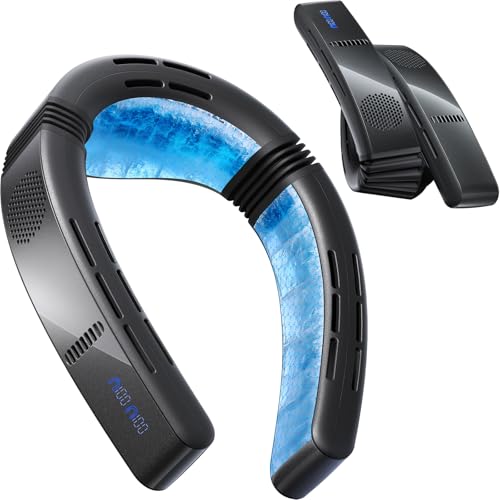
Personal Cooling Device
Wearable or desk-mounted unit that cools a small area around the user. Very low power draw and highly portable.
High-Velocity Fan
Improves air circulation and perceived comfort. No temperature reduction, but effective in mild climates and well-ventilated rooms.
Each category has a dedicated guide. For a deep look at compressor-based options, see portable air conditioner. For the evaporative route, see portable evaporative air cooler. For airflow-only options, see portable cooling fan, and for wearable or small-scale devices, see personal wearable portable air conditioner.
Side-by-Side Comparison
| Device Type | Cooling Method | Needs Venting | Power Draw | Best For |
|---|---|---|---|---|
| Portable air conditioner | Compressor + refrigerant | Yes | Moderate to high | Whole-room cooling in any climate |
| Evaporative air cooler | Water evaporation | No | Low to moderate | Dry climates, open rooms |
| Personal cooling device | Small fan or thermoelectric | No | Very low | Spot cooling at desk or bed |
| High-velocity fan | Air circulation | No | Very low | Mild climates, ventilated rooms |
If you are exploring non-compressor alternatives because venting is not possible, the portable air conditioners that do not need to be vented guide explains what is genuinely vent-free. For a broader look at cooling systems that work in apartments and small spaces, see portable cooling systems.
Choosing by Climate
In dry climates, evaporative coolers are efficient and vent-free. In humid climates, evaporative cooling adds moisture and underperforms — a refrigerated portable AC or a fan-based solution is more practical. See portable air conditioner for humid climates and portable air conditioner for high humidity for climate-specific guidance.
Matching Devices to Rooms and Situations
Bedrooms
Bedrooms prioritize quiet operation and stable temperature. A fan or personal cooling device is often enough for comfort. If the room runs warm and has a vent path, a portable AC delivers stronger cooling. The portable air conditioning unit for bedroom guide covers noise, placement, and sleep modes.
Small Apartments and Studios
Small spaces heat up quickly and often have limited venting. A compact fan or personal cooling device provides immediate relief, while a portable AC with a door kit handles larger heat loads. The portable air conditioners for small rooms and portable air conditioner for 500 sq ft room pages cover sizing in detail.
Rentals
Renters often cannot modify walls or install permanent vents. A removable vent panel or a fan-based solution is the practical choice. The portable air conditioning units for rent guide covers setups that leave no permanent marks.
Camping and Off-Grid
In tents and RVs, power and venting are limited. A battery-powered personal cooler or an evaporative unit is more realistic than a compressor-based AC. The portable air conditioning unit for camping and off-grid cooling guides cover the practical options. For solar setups, see off-grid solar AC.
Open Rooms and Commercial Spaces
Large or open spaces benefit from high-velocity fans for air circulation and portable ACs for targeted cooling. The portable air conditioner for commercial use and portable commercial air conditioning units guides cover capacity and placement.
Key Features to Evaluate Across All Types
1. Cooling Power and Airflow
For portable ACs, capacity is rated in BTU. For fans and evaporative coolers, airflow is rated in CFM (cubic feet per minute). Match the rating to the room size and heat load. An oversized fan wastes energy; an undersized AC underperforms.
2. Noise Level
Fans and personal coolers are usually quieter than compressor-based ACs, but high-velocity fans can be loud. If the unit is for a bedroom, prioritize models with a low noise rating and a sleep mode.
3. Power Source
Most devices run on standard 120V power. For camping and off-grid use, battery-powered or 12V units are more practical. The portable air conditioner that uses batteries and portable air conditioner without electricity guides explain the limits.
4. Portability
Weigh the trade-off between mobility and cooling power. A fan is easy to move from room to room; a portable AC is heavier but delivers stronger cooling. Casters and handles make a difference in daily use. See portable air conditioner on wheels for mobility features.
5. Maintenance
Fans need occasional dusting. Evaporative coolers need regular water changes and pad cleaning. Portable ACs need filter cleaning and condensate management. A portable air conditioner with self evaporating system reduces the frequency of tank emptying.
Common Mistakes to Avoid
- Expecting refrigerated cooling from a fan: Fans improve comfort but do not lower air temperature.
- Using an evaporative cooler in a humid room: It adds moisture and can make the room feel worse.
- Running a portable AC without a vent: This cancels cooling and can overheat the compressor.
- Undersizing for a hot room: Fans and small personal coolers cannot compensate for high heat loads.
- Ignoring noise for bedrooms: A high-velocity fan in a bedroom can disrupt sleep.
- Skipping maintenance: Evaporative pads, AC filters, and fan blades all need regular cleaning.
Maintenance Tips Across Device Types
- Fans: Dust the blades and grille every few weeks. Check the power cord for wear.
- Evaporative coolers: Empty and refill the tank every few days. Clean the cooling pads per the manufacturer's schedule.
- Personal cooling devices: Wipe down the housing and clean the intake vents. Recharge or replace batteries as needed.
- Portable ACs: Clean the air filter every two weeks during peak use. Drain the condensate tank or verify the self-evaporating system is working.
- All devices: Store properly in the off-season — drain water, clean filters, and cover to prevent dust buildup.
If a portable AC is underperforming, the portable air conditioner not cooling enough troubleshooting guide covers the most likely causes.
Ready to Compare Portable Cooling Devices?
Explore portable ACs, evaporative coolers, personal cooling devices, and fans — organized by category, climate, and room type.
View Recommended ModelsFrequently Asked Questions
What are portable cooling devices?
Portable cooling devices are movable products designed to reduce heat or improve comfort. They include portable air conditioners, evaporative air coolers, personal cooling devices, and high-velocity fans. Each uses a different cooling method and suits different environments.
Which portable cooling device is best for a bedroom?
For a bedroom, a quiet portable fan or personal cooling device is often enough for comfort. If the room is warm and has a suitable vent path, a portable air conditioner provides stronger cooling. In dry climates, an evaporative cooler can work without venting.
Do portable cooling devices use a lot of electricity?
Fans and personal cooling devices use very little electricity. Evaporative coolers use moderate power for the fan and water pump. Portable air conditioners use the most because of the compressor, though inverter models are more efficient than fixed-speed models.
Can I use a portable cooling device without a window?
Fans, personal cooling devices, and evaporative coolers do not need a window. A refrigerated portable AC needs an exhaust path, which can be a wall sleeve, door kit, or ceiling plenum. See the portable air conditioner stand up windowless guide for setups.
Which type is best for humid climates?
In humid climates, evaporative coolers add moisture and underperform. A refrigerated portable AC with a vent is the reliable choice, or a fan for air circulation. The portable air conditioner for humid climates guide explains the trade-offs.
Are portable cooling devices effective for large rooms?
Fans and personal devices are best for spot cooling. For large rooms, a portable AC with adequate BTU capacity is required. The portable air conditioner for 1000 square feet guide covers sizing for larger spaces.