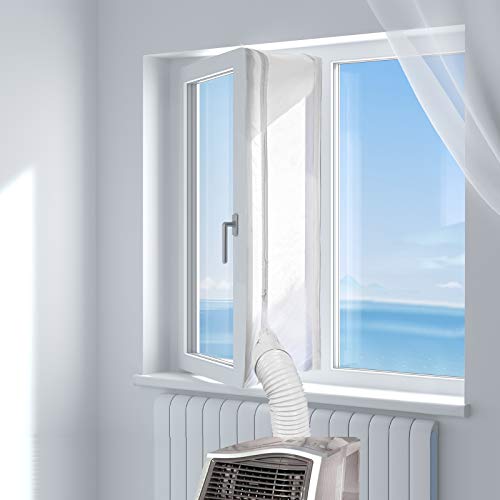
Portable Air Conditioner with Casement Window
Everything you need to know about venting a portable AC through a casement window — from choosing the right kit to installation tips and recommended models.
EXPLORE THE GUIDEQuick Summary: Casement windows crank outward, so standard sliding window kits will not work. You need a specialized casement window vent kit that seals around the open sash and connects to your portable AC's exhaust hose. This guide explains how to choose the right kit, install it properly, and pick a portable AC that works well with casement windows.
Why Casement Windows Need Special Attention
Casement windows are popular in many homes because they provide excellent ventilation and a tight seal when closed. However, they present a unique challenge for portable air conditioners. Unlike sliding windows that move horizontally or vertically within a track, casement windows crank outward on hinges. This means you cannot simply insert a rigid window panel into a track.
The exhaust hose from a portable AC must vent hot air outside. With a casement window, the opening is vertical and the sash swings outward, creating an irregular shape that standard kits cannot seal. Without a proper seal, hot outdoor air leaks back in, and the unit works harder than necessary. That is why a dedicated casement window vent kit is essential.
If you are still exploring whether a portable AC is right for your space, our guide on what to look for in a portable air conditioner covers the basics of sizing, efficiency, and features.
How Casement Window Vent Kits Work
A casement window vent kit typically consists of three components:
- Flexible seal or panel: A fabric sleeve or semi-rigid panel that wraps around the open window sash and seals the gap between the sash and the frame.
- Hose connector: A port or adapter where the portable AC's exhaust hose attaches to the seal.
- Fastening system: Zippers, hook-and-loop strips, or snap buttons that secure the seal to the window frame.
The seal creates a barrier so that hot exhaust air goes out and outdoor air stays out. The exhaust hose connects through a dedicated opening, usually with a threaded or twist-lock connector. Some kits include a rain cover or flap to prevent water from entering during light rain.
For a closer look at how different window types affect portable AC setup, see our guides on portable AC for vertical windows and portable AC for sliding glass windows.
Types of Casement Window Kits
There are two main categories of casement window kits: fabric seals and rigid panel kits.
Fabric Seal Kits
Fabric seal kits are the most common and versatile option. They use a durable, weather-resistant fabric sleeve that wraps around the open sash and secures with zippers or hook-and-loop fasteners. The exhaust hose connects through a port in the fabric. These kits are lightweight, easy to install, and fit a wide range of window sizes. They are also easy to remove when you need to close the window.
Rigid Panel Kits
Rigid panel kits use a plastic or metal panel that fits into the window opening. The panel has a cutout for the exhaust hose and is sealed with weatherstripping or foam tape. These kits provide a more permanent seal but are less flexible for different window sizes. They work best when the window opening is a consistent size and you plan to keep the AC installed for an extended period.
For a comparison of single-hose and dual-hose portable ACs, which affects how you vent through a casement window, read our article on single-hose portable air conditioners.
What to Look For in a Casement Window Kit
When choosing a casement window kit, consider the following factors:
| Feature | What to Check | Why It Matters |
|---|---|---|
| Hose diameter compatibility | Match the kit's hose port to your portable AC's exhaust hose diameter (typically 5 to 6 inches) | Prevents air leaks and ensures a secure connection |
| Window size range | Check the minimum and maximum window height the kit supports | Ensures the seal fits your specific casement window |
| Seal material | Look for weather-resistant fabric or UV-stabilized plastic | Durable construction that lasts through multiple seasons |
| Installation method | Zipper, hook-and-loop, or snap-on | Easier installation and removal for seasonal use |
| Rain protection | Flap or cover over the hose port | Prevents water from entering during light rain |
| Compatibility with your AC brand | Check if the kit works with your specific portable AC model | Avoids the need for adapters or makeshift solutions |
How to Install a Portable AC with a Casement Window
Installing a portable air conditioner with a casement window is straightforward if you have the right kit. Follow these steps:
- Unbox and inspect the kit: Lay out all components and check that the seal, hose connector, and fasteners are included.
- Attach the hose connector to the seal: If the kit requires assembly, attach the hose port to the fabric seal according to the manufacturer's instructions.
- Open the casement window: Crank the window open wide enough to accommodate the seal and the exhaust hose.
- Position the seal: Wrap the fabric seal around the open sash and window frame. Make sure the hose port faces inward toward the room.
- Secure the seal: Zip or fasten the seal tightly. The goal is a snug fit with no gaps.
- Connect the exhaust hose: Attach one end of the hose to the portable AC and the other end to the port on the window seal.
- Check for leaks: Run the AC and feel around the seal for escaping air. Use weatherstripping or foam tape to close any gaps.
- Seal the window frame: If there are gaps between the sash and the frame, add weatherstripping or foam tape to improve efficiency.
For more detailed guidance on venting configurations, see our article on portable AC intake and exhaust.
Common Problems and How to Solve Them
1. The AC is not cooling enough
If your portable AC is running but not cooling effectively, the most common cause is a poor seal around the window. Hot outdoor air may be leaking in, or exhaust air may be recirculating. Check the seal and tighten any loose fasteners. Also, make sure the exhaust hose is not kinked or blocked. For troubleshooting tips, read our guide on portable AC not cooling enough.
2. The window does not close properly
Some casement window kits are designed to allow the window to close when the AC is not in use. If your kit does not allow this, you may need to remove the seal and store it when the AC is off. Choose a kit with a quick-release fastener for easier removal.
3. Rainwater enters through the window
If rain is a concern, look for a kit with a rain cover or flap over the hose port. You can also angle the hose slightly downward so that water runs out rather than in.
4. The hose connector does not fit
Portable AC exhaust hoses come in different diameters and connector types. If the kit's connector does not match your hose, you may need an adapter. Check the hose diameter and connector shape before purchasing a kit.
Features to Look for in a Portable AC for Casement Windows
Not all portable air conditioners are equally suited to casement window setups. Consider these features:
- Single-hose or dual-hose design: Dual-hose units are more efficient because they draw in outdoor air for cooling the condenser and exhaust it separately. However, they require a larger window opening. Single-hose units are simpler to vent but less efficient. Learn more in our guide on single-hose portable ACs.
- Self-evaporating system: This feature reduces or eliminates the need to drain condensate water. Look for a model with a self-evaporating system to minimize maintenance.
- Condensate pump: If you live in a humid climate, a condensate pump helps remove water automatically.
- Inverter compressor: An inverter compressor provides more precise temperature control and quieter operation.
- Dehumidifier mode: A dehumidifier mode is useful in humid climates, especially if you use the unit in a basement or small apartment.
- Heater combination: If you need year-round comfort, consider a portable AC heater combination.
For small spaces, see our recommendations for portable AC for small bedrooms and portable AC for small apartments.
Alternatives to Consider
If a casement window kit does not work for your situation, there are other options:
- Windowless portable AC: Some portable ACs are designed to operate without venting, using evaporative cooling or a built-in water reservoir. These are less effective in humid climates but work in dry environments. Learn more in our guide on portable AC with no window required.
- Through-the-wall AC: If you have a suitable wall, a through-the-wall unit provides permanent cooling without window complications.
- Mini-split system: A ductless mini-split is more efficient and does not require a window opening, but installation is more involved.
If you are dealing with a room that has no windows at all, read our guide on portable AC for rooms with no window.
Maintenance Tips for Casement Window Setups
To keep your portable AC running efficiently with a casement window kit:
- Clean or replace the air filter every two to four weeks during heavy use.
- Check the window seal for wear and tear at the start of each cooling season.
- Inspect the exhaust hose for cracks or kinks.
- Drain the condensate tank regularly unless your unit has a self-evaporating system.
- Remove the window kit and store it properly when the AC is not in use.
For a complete seasonal checklist, see our seasonal AC checklist.
Frequently Asked Questions
Ready to Choose the Right Portable AC for Your Casement Window?
Browse our curated selection of portable air conditioners that work well with casement window vent kits. Compare features, capacity, and efficiency to find the right fit for your space.
View Recommended Models