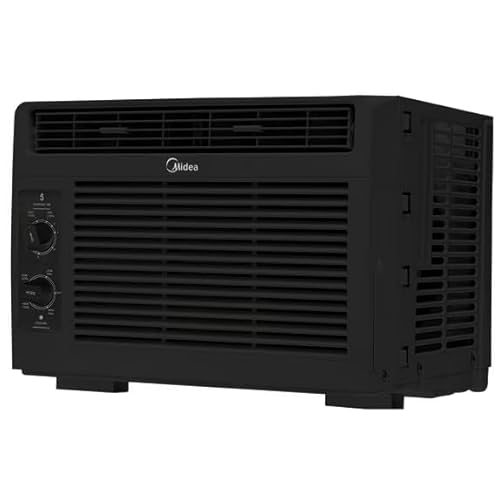
Small but Powerful Window Air Conditioner: The Complete Guide
A compact window air conditioner does not have to mean weak cooling. This guide explains how small but powerful window units deliver strong output from limited cabinet space, how to size them correctly, and what to check before you buy.
Explore Recommended UnitsWhat Makes a Small Window Air Conditioner Powerful?
"Small but powerful" describes a unit that delivers a strong cooling output from a compact physical footprint. The chassis may be narrow or low-profile, but the internal components are sized to move more air and reject more heat than a typical entry-level model of the same exterior size. That combination matters when the window opening is tight but the room still needs meaningful cooling.
Several factors define real-world power in a compact unit:
- High BTU density: More cooling capacity packed into a smaller cabinet.
- Airflow volume: Strong CFM ratings move conditioned air farther into the room.
- Efficient compressor: Better efficiency converts electrical input into cooling more effectively.
- Coil design: Larger or more efficient evaporator and condenser coils improve heat exchange inside the same footprint.
- Solid sealing and installation: A powerful unit leaks its advantage if the window kit is not sealed properly.
If the room is small, the general guidance on small air conditioners for small rooms applies. For bedrooms where noise matters, the small air conditioners for bedrooms overview covers comfort factors that interact with power and airflow.
Capacity vs Physical Size: Understanding BTU Density
A common assumption is that a bigger cabinet always means more cooling. In practice, BTU density varies significantly across the market. Two units with similar width and height can differ by several thousand BTU. The powerful compact segment is defined by models where the output is high relative to the enclosure.
| Category | Typical Capacity | Best For |
|---|---|---|
| Compact high-output | 8,000 – 10,000 BTU in a small chassis | Small rooms that need serious cooling, tight window openings |
| Compact standard | 5,000 – 6,000 BTU | Very small rooms, bedrooms, offices |
| Mid-size powerful | 10,000 – 12,000 BTU | Larger rooms where the window opening is still modest |
| Full-size powerful | 12,000 – 15,000 BTU | Large rooms; may not fit small windows |
The takeaway is to check capacity alongside dimensions rather than assuming one follows the other. If you are searching specifically for high output in a small body, the small window air conditioner with high BTU overview is a direct companion read. The smallest most powerful window air conditioner reference focuses on the extreme end of the category.
Sizing: Power Where It Counts
A powerful unit is only useful if it is correctly matched to the room. Oversized capacity short-cycles, removes less humidity, and can feel less comfortable than a smaller, well-matched unit. Undersized capacity runs constantly and never fully satisfies the room. The right answer is the capacity that matches the load, delivered by a unit that fits the window.
| Room Area (approx.) | Typical BTU Range | Best For |
|---|---|---|
| Up to 150 sq ft | 5,000 – 6,000 BTU | Bedrooms, offices, small studios |
| 150 – 250 sq ft | 8,000 – 10,000 BTU | Living rooms, guest rooms, larger bedrooms |
| 250 – 400 sq ft | 12,000 – 14,000 BTU | Open living areas, lofts |
| 400 sq ft and above | 15,000 BTU and higher | Large spaces; consider mini-split or central |
Adjust the range upward for high ceilings, direct sun, poor insulation, or kitchens. Adjust downward for shaded, well-insulated rooms. For a deeper method, the how to size an air conditioner guide covers load factors in detail, and the room size for a 5,000 BTU air conditioner reference is a useful benchmark.
Window Fit and Chassis Design
The physical dimensions of the unit decide whether "small but powerful" is even possible in your window. Measure the clear opening width and height, and check the unit's published range. Small high-output models often fit openings around 21 to 25 inches wide and 12 to 15 inches high, but ranges vary.
Chassis considerations
- Width: Many compact powerful units are designed around narrow window widths. Check the guide on a small window air conditioner at 21 inches wide and the 20 inches wide reference if your opening is narrow.
- Height: Low-profile designs matter for shorter windows. The 10 inch height unit guide is useful for very short openings.
- Depth and weight: A denser unit is often heavier. Confirm the window frame and support bracket can carry it safely.
- Slide-out chassis: Useful for maintenance and for installations where the full unit cannot be removed easily.
For side-opening windows, a standard vertical chassis may not be the right fit. The small air conditioner for side sliding window overview and the side to side window air conditioner guide cover the horizontal alternatives. For very small units in general, the smallest window air conditioner you can buy reference is useful context.
Efficiency, Airflow, and Comfort Features
Power without efficiency is wasted energy. A compact unit with strong output and a high CEER rating delivers more useful cooling per unit of electricity than a similarly sized unit with weaker efficiency. That matters most in rooms where the AC runs for long stretches.
Efficiency indicators
- CEER: The current efficiency metric for room air conditioners. Higher is better within the same capacity class.
- ENERGY STAR listing: Indicates performance above the baseline. Our ENERGY STAR certified AC explainer covers what the certification means.
- Inverter or variable-speed operation: Less common in compact window units, but available in some models. Smoother modulation improves comfort and humidity control.
Comfort features worth prioritizing
- Strong airflow with adjustable louvers: Direct air where it matters and avoid blasting one spot.
- Programmable thermostat or timer: Align runtime with actual use. The small air conditioner with thermostat overview explains how these controls behave in compact units.
- Remote control: Useful when the unit is mounted low or high. See the small window air conditioner with remote control guide.
- Eco mode: Cycles the compressor and fan to trim consumption once the room reaches setpoint.
- Washable filter: Keeps airflow strong over time, which directly affects perceived power.
- ENERGY STAR models: For additional efficiency guidance, see the small window air conditioner ENERGY STAR overview.
Installation Tips for Compact High-Output Units
A powerful compact unit places meaningful weight on the window and moves a lot of air. Installation quality affects noise, vibration, sealing, and how much of that cooling actually stays in the room.
Before installation
- Confirm the clear opening width and height match the unit's published range.
- Verify the unit's weight against the window frame and choose a support bracket accordingly.
- Check the outlet and circuit. Larger capacity units may draw more current; avoid extension cords.
- Plan the outdoor side: clearance, drainage, and access for future maintenance.
Support and sealing
- Use a support bracket or a level platform. A heavy compact unit can strain a window frame without proper support.
- Set the recommended outdoor tilt for condensate drainage.
- Seal the window kit fully. Gaps let cooled air escape and humid air enter.
- Secure the sash so it cannot be opened from outside.
If you prefer professional help, the someone to install window air conditioner guide explains what to ask. For tight spaces, the space-saving window air conditioner overview and the slim window air conditioning unit guide cover compact mounting approaches.
Buying and Installation Checklist
- Capacity matched to room load
- Unit dimensions match window opening
- Weight and support bracket confirmed
- Circuit and outlet checked
- Window kit and weather seal in place
- Outdoor tilt set for drainage
- Sash secured and gap-free
- Test run with no vibration or leaks
Frequently Asked Questions
What makes a small window air conditioner powerful?
Power in a compact window AC comes from high BTU density for the unit's physical size, strong airflow, an efficient compressor, and good sealing at the window. A small unit with a well-matched capacity and a high CEER rating often feels more powerful than a larger unit that is poorly installed.
How many BTU does a small but powerful window AC deliver?
Compact powerful models typically range from around 8,000 to 12,000 BTU while keeping a narrow or low-profile chassis. Some high-output units push 10,000 BTU or more in a body only slightly larger than a standard 5,000 BTU unit. Always confirm capacity, dimensions, and the window opening range.
Is a high BTU small window AC always better?
No. Oversizing leads to short cycling, weaker humidity removal, and less consistent comfort. Match capacity to the room's load first, then choose the best tier that fits the window. A powerful compact unit earns its place when the room needs the capacity or the opening is too small for a larger chassis.
What window size do I need for a small but powerful window AC?
Measure the clear opening width and height and compare with the unit's published range. Compact high-output models often fit openings around 21 to 25 inches wide and 12 to 15 inches high, but ranges vary by model. Check the spec sheet before purchase.
Do powerful small window ACs use more electricity?
Power draw scales with capacity and runtime. A powerful compact unit with a strong CEER rating can be efficient for the cooling it delivers. Matching the unit to the room and using eco mode or timers helps keep consumption in check.
Can a powerful small window AC cool a larger room?
It can if the capacity matches the room's load, but compact high-output units are limited by their maximum BTU rating. If the room is significantly larger than the unit is designed for, a larger chassis or a different system type is usually the better choice.