Thermostat Window Fan: Complete Guide to Automated Cooling & Ventilation
Discover how a thermostat-controlled window fan can automatically regulate indoor temperature, improve airflow, and reduce reliance on full air conditioning systems — plus how to choose and set up the right model.
EXPLORE THE GUIDEWhy a thermostat window fan matters: A standard window fan runs continuously until you switch it off. A thermostat window fan, on the other hand, monitors room temperature and activates or deactivates automatically. This means consistent comfort, less manual effort, and smarter energy use — especially during shoulder seasons when full air conditioning is unnecessary.
What Is a Thermostat Window Fan?
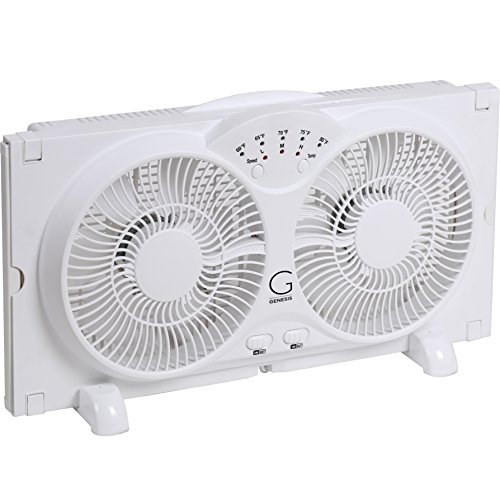
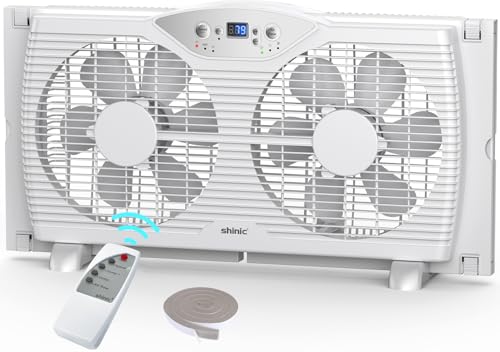
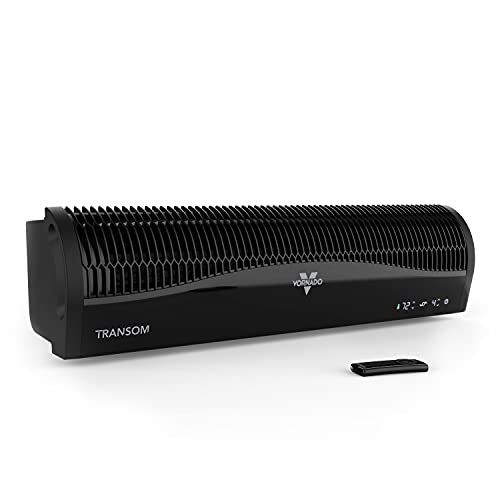
A thermostat window fan is a window-mounted ventilation fan equipped with a built-in thermostat or temperature sensor. Instead of running at a fixed speed indefinitely, the fan responds to the actual room temperature: it turns on when the room reaches a set threshold and turns off once the target temperature is reached.
This automated behavior makes it a practical middle ground between a basic window fan and a full air conditioning system. It is particularly useful for:
- Night-time cooling — pulling in cooler outdoor air once the sun goes down.
- Shoulder-season comfort — spring and autumn days when outdoor air is pleasant but indoor air feels stale.
- Ventilation and air exchange — exhausting odors, humidity, and stale indoor air.
- Supplementing AC — reducing the load on a central system by circulating cooler air early in the morning.
Unlike a thermostat for a window AC unit, which controls a refrigerant-based cooling system, a thermostat window fan relies entirely on outdoor air movement. That distinction is important: a fan cannot lower the temperature below the outdoor air temperature, but it can move a significant volume of air efficiently.
How a Thermostat Window Fan Works
The core mechanism is straightforward. A temperature sensor — either a mechanical bimetallic strip or a digital thermistor — continuously samples the room air. You set a target temperature on a dial or digital panel. When the sensor reads a temperature above the threshold (in cooling mode), the fan powers on. When the room cools to the set point, the fan either shuts off or drops to a lower speed, depending on the model.
Most thermostat window fans support two airflow directions:
- Intake (inward) — draws fresh outdoor air into the room. Best for cooling and ventilation when outdoor air is cooler than indoor air.
- Exhaust (outward) — pushes stale indoor air outside. Best for removing heat, humidity, and odors.
Higher-tier models add reversible airflow, multi-speed operation, programmable schedules, and remote control. A few premium models include a digital display showing the current room temperature, which makes verification and adjustment much easier.
Automatic Temperature Response
The fan activates and deactivates based on real room temperature, eliminating the need to monitor and switch it manually throughout the day.
Reversible Airflow
Switch between intake and exhaust to either draw in cooler outdoor air or push hot, stale indoor air outside.
Multi-Speed Control
Low, medium, and high settings let you balance noise against airflow. Thermostat logic can also step down speed as the target is approached.
Expandable Panels
Adjustable side panels fit most double-hung and sliding windows securely, keeping the unit stable and minimizing air gaps.
Programmable Timers
Mid-range and premium models allow scheduled operation, so the fan runs during specific hours regardless of temperature.
Low Power Draw
Compared to compressor-based cooling, a window fan consumes a fraction of the electricity, making it efficient for targeted ventilation.
Key Features to Evaluate Before You Buy
Not every thermostat window fan is built the same. The features below have the greatest impact on day-to-day usability and long-term satisfaction.
| Feature | What It Does | Who It Suits |
|---|---|---|
| Thermostat Type | Mechanical dial vs. digital sensor. Digital is more precise and easier to read. | Digital for consistent comfort; mechanical for simple set-and-forget use. |
| Airflow Direction | Single-direction (intake or exhaust) vs. reversible dual-direction. | Reversible models for year-round flexibility. |
| Number of Fans | Single-fan vs. dual-fan (twin blade) configurations. | Dual-fan for larger rooms and higher air exchange rates. |
| Noise Level | Measured in decibels. Lower is better for bedrooms and home offices. | Quiet operation for sleeping areas and work-from-home spaces. |
| Window Fit | Adjustable expandable panels accommodate different window widths. | Measure your window opening before ordering — this is the most common mistake. |
| Controls | Manual panel, remote control, or app-based smart control. | Remote and app control for hard-to-reach installations. |
| Safety Certification | UL or ETL listing confirms the unit meets electrical safety standards. | Essential for every buyer — never skip this check. |
Entry-Level, Mid-Range, and Premium Tiers Compared
Thermostat window fans fall into three broad market tiers. Understanding what each tier offers helps you match the product to your actual needs rather than over- or under-specifying.
| Tier | Typical Characteristics | Best For |
|---|---|---|
| Entry-Level | Single fan, mechanical thermostat dial, two or three speeds, basic expandable panels, manual controls only. | Budget-conscious buyers, occasional use, small rooms, renters who need a simple solution. |
| Mid-Range | Dual fans, digital thermostat with display, reversible airflow, remote control, programmable timer, quieter operation. | Bedrooms, home offices, daily use, buyers who want automation without smart-home integration. |
| Premium | High-precision digital thermostat, app or Wi-Fi control, scheduling, whisper-quiet operation, premium materials, advanced safety features. | Smart-home users, light sleepers, large rooms, buyers who want long-term reliability and fine-grained control. |
In general, mid-range models offer the most balanced combination of features and usability for typical residential use. Entry-level units are perfectly capable for occasional ventilation, while premium models justify their position through precision, quietness, and smart controls. For broader context on automated temperature control across different cooling systems, see our guide to thermostats for home heating and cooling.
How to Set Up and Use a Thermostat Window Fan
Proper installation and configuration determine whether the fan performs as intended. Follow these steps for reliable operation.
- Choose the right window. Pick a window that receives cross-breeze potential from another open window or door. Ventilation works best when air has a path to enter and exit.
- Measure and mount securely. Extend the side panels until they press firmly against the window frame. Lower the sash to lock the unit in place. On double-hung windows, the sash should rest on top of the fan housing.
- Set the thermostat threshold. For cooling, set the target a few degrees below the current room temperature. For ventilation, set it near the current room temperature so the fan activates when the room warms slightly.
- Select airflow direction. Use intake when outdoor air is cooler than indoor air. Use exhaust when you want to remove heat, humidity, or odors.
- Coordinate with other openings. Open a second window or interior door slightly to create a pressure path. Without an outlet, the fan's effectiveness drops sharply.
- Test the cycle. Observe one full on/off cycle to confirm the thermostat responds correctly and the fan is not short-cycling.
If your setup involves a full cooling system rather than a window fan, the configuration principles differ — our thermostat for split system guide covers that scenario in detail.
Benefits of Automated Window Fan Cooling
The appeal of a thermostat window fan lies in a combination of simplicity, automation, and targeted performance.
- Hands-free operation: The fan manages itself based on temperature, so you do not need to switch it on and off manually.
- Efficient ventilation: Moving outdoor air is far less energy-intensive than running a compressor-based cooling system.
- Improved indoor air quality: Regular air exchange reduces stale air, cooking odors, and accumulated humidity.
- Targeted comfort: Ideal for single rooms where ductwork or central cooling does not reach effectively.
- Seasonal flexibility: Reversible models provide intake cooling in summer and exhaust ventilation in cooler months.
- Simple installation: No refrigerant lines, no electrical panel work, no permits in most cases.
For a broader perspective on spot cooling strategies that complement window fans, explore our spot cooling overview and our guide to stand-alone air conditioner units for scenarios where fan-based ventilation is insufficient.
Limitations You Should Understand
A thermostat window fan is not a replacement for air conditioning in all situations. Being realistic about its limits ensures you are not disappointed.
- Cannot cool below outdoor temperature: A fan moves air; it does not refrigerate it. On a 95°F day, a window fan will not provide meaningful cooling.
- Depends on outdoor conditions: Effectiveness drops when outdoor air is hot, humid, or smoky.
- Window obstruction: The unit occupies part of the window opening, which may affect security and light.
- Noise: Even quiet models produce some airflow noise, especially at higher speeds.
- Weather exposure: Most units are not designed to remain installed during heavy rain or storms.
If your climate regularly exceeds comfortable outdoor temperatures, a highly efficient window air conditioner or a portable air conditioner may be a more appropriate primary cooling solution, with the window fan serving as a supplement during milder periods.
Common Problems and Quick Fixes
Most thermostat window fan issues are straightforward to diagnose. The table below covers the most frequent complaints.
| Problem | Likely Cause | Solution |
|---|---|---|
| Fan does not turn on | Thermostat set incorrectly or power not connected | Verify the set point is below room temperature in cooling mode; check the power outlet and cord. |
| Fan runs constantly | Set point too low or thermostat in manual mode | Raise the set point or switch to thermostat/auto mode. |
| Weak airflow | Blocked intake, closed second window, or clogged grille | Open a second window, remove obstructions, and clean the grille and blades. |
| Excessive noise or vibration | Loose mounting or debris on blades | Re-seat the unit in the window frame, tighten panels, and clean the blades. |
| Thermostat display blank | Power interruption or failed sensor | Check the outlet and cord; if the display remains blank, the sensor or control board may need replacement. |
For issues involving thermostat behavior in other system types — such as a thermostat that is on but not cooling — our thermostat on but not cooling guide provides additional diagnostic steps.
Buying Guide: How to Choose the Right Thermostat Window Fan
Use the following decision framework to narrow your options efficiently.
- Measure your window. Confirm the width and height of the opening. Check the manufacturer's minimum and maximum width specification.
- Decide on single vs. dual fan. Single-fan units suit small rooms; dual-fan units move more air and suit larger rooms or spaces that need faster air exchange.
- Choose your thermostat type. Mechanical dials are simple and reliable; digital thermostats offer precision and easier reading.
- Confirm reversible airflow if you want it. This is one of the most useful features and is not universal across models.
- Check noise ratings. If the fan is for a bedroom, prioritize lower decibel ratings and multi-speed operation.
- Look for safety certification. UL or ETL listing is a non-negotiable baseline.
- Consider controls. Remote control and programmable timers add convenience; app control suits smart-home integration.
- Read verified reviews. Focus on long-term durability comments and thermostat accuracy feedback.
If your needs extend beyond window ventilation, our spot coolers and stand-up air conditioners guides cover more powerful targeted cooling options.
Maintenance for Long-Term Performance
Thermostat window fans require minimal upkeep, but regular attention extends service life and maintains airflow efficiency.
- Clean the grille and blades monthly during active use. Dust accumulation reduces airflow and can cause imbalance and vibration.
- Wipe the thermostat sensor area. Dust on the sensor can cause inaccurate readings and poor cycling behavior.
- Inspect the power cord for wear. Replace any cord with visible damage — never attempt to repair it.
- Remove the unit during off-season or severe weather. Store it indoors to prevent weather damage and extend lifespan.
- Check mounting hardware each season. Tighten expandable panels and confirm the window sash locks properly.
Consistent cleaning and seasonal storage are the two most impactful habits for keeping a thermostat window fan working correctly year after year.
Frequently Asked Questions
Can a thermostat window fan replace an air conditioner?
Not in most cases. A window fan moves outdoor air but cannot cool it below the outdoor temperature. It is best used as a supplement during mild weather or at night. For sustained cooling in hot climates, a dedicated air conditioning system is necessary.
How do I set the thermostat on a window fan?
Set the target temperature a few degrees below the current room temperature for cooling, or near the current temperature for ventilation. The fan will activate when the room exceeds the set point and turn off when the room cools to it.
Should the fan blow air in or out?
Use intake when outdoor air is cooler than indoor air — this brings fresh, cooler air inside. Use exhaust when you want to remove heat, humidity, or odors. Reversible models let you switch as conditions change.
Do I need to open another window for the fan to work?
Yes, in most cases. For effective air exchange, a second opening allows air to enter or escape. Without an outlet, the fan creates pressure resistance and moves significantly less air.
How loud is a thermostat window fan?
Noise levels vary by model. Entry-level units are noticeably louder at high speed; mid-range and premium models often operate at lower decibel levels and offer more speed settings for quieter operation. Check the rated decibels if the fan is for a bedroom.
Can I leave a window fan installed during rain?
Most standard window fans are not designed for rain exposure. Unless the model explicitly states weather resistance, remove the unit or protect it during storms.
Is a thermostat window fan worth it compared to a manual window fan?
If you want automated operation and consistent comfort without remembering to switch the fan on and off, the thermostat feature adds meaningful convenience. For occasional manual use, a standard fan may suffice.
Final Thoughts
A thermostat window fan is a practical, low-complexity tool for automated ventilation and seasonal comfort. It shines in mild weather, at night, and in rooms where central cooling is impractical or unnecessary. The key is to set realistic expectations: it moves air, it does not refrigerate. Pair it with a clear understanding of your climate, your window dimensions, and your daily routine, and it becomes a reliable part of a balanced home cooling strategy.
For related topics, explore our guides on thermostats for AC and heat, summer heating and cooling, and AC outlets to round out your understanding of home comfort systems.