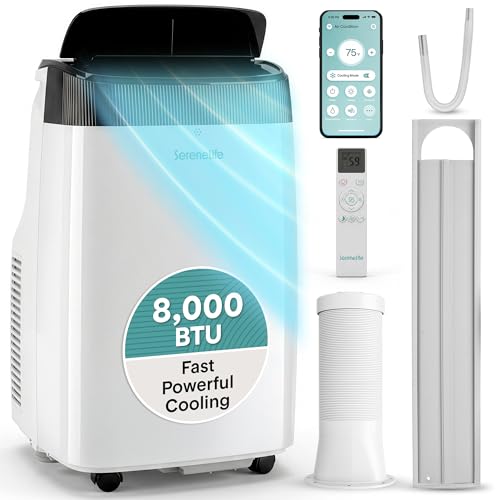
Top Rated 8000 BTU Portable Air Conditioner
Your complete guide to finding the best 8000 BTU portable AC for medium-sized rooms. Compare top-tier models, understand key features, and make an informed purchase decision.
VIEW TOP PICKSWhy 8000 BTU? An 8000 BTU portable air conditioner is the sweet spot for cooling medium-sized rooms between 150 and 350 square feet. It offers a balanced combination of cooling power, energy efficiency, and portability — making it one of the most popular capacity tiers for bedrooms, home offices, and small living areas. This guide breaks down what separates top-rated models from the rest so you can choose with confidence.
What Makes an 8000 BTU Portable AC "Top Rated"?
Not all 8000 BTU portable air conditioners are created equal. The highest-rated models consistently excel across several performance and design dimensions. When evaluating portable AC units in this capacity class, focus on these critical factors:
Cooling Efficiency
Top-tier 8000 BTU units deliver consistent cooling without excessive cycling. Look for models with strong EER ratings and reliable compressor performance.
Noise Level
The best portable ACs operate quietly — often under 55 dB on low settings. Premium models use vibration isolation and optimized fan blade design.
Build Quality
Durable construction, reinforced casters, and solid housing separate top-rated units from entry-level alternatives that may rattle or degrade over time.
Dual-Hose Design
Models with dual-hose configurations are generally more efficient than single-hose units, maintaining better pressure balance and cooling performance.
Smart Features
Wi-Fi control, programmable timers, and remote operation are hallmarks of high-end tier units. These add real convenience for daily use.
Dehumidification
Strong dehumidifying capability (often 50–70 pints per day) is a key differentiator. It improves comfort in humid climates beyond just temperature control.
Who Should Choose an 8000 BTU Portable Air Conditioner?
An 8000 BTU portable AC is ideal for specific scenarios. Understanding whether it matches your situation will save you from over- or under-sizing your unit.
Ideal Use Cases
- Bedrooms (150–250 sq ft): Enough cooling power for restful sleep without excessive noise or energy draw.
- Home Offices (150–300 sq ft): Keeps you comfortable during work hours with programmable scheduling features.
- Studio Apartments: A single 8000 BTU unit can handle a compact living space efficiently.
- Renters: No permanent installation required — ideal for temporary or lease-restricted living situations.
- Rooms Without Ductwork: Perfect for older homes or additions where central air is impractical.
When to Consider a Different Capacity
If your room exceeds 350 square feet, or if it has high ceilings, large windows, or poor insulation, you may need a higher-capacity unit. Conversely, for very small spaces under 150 square feet, a lower BTU model may be more appropriate. You can explore related capacity guides such as the top rated 10000 BTU portable air conditioner or top rated 14000 BTU portable air conditioner if your space falls outside the 8000 BTU sweet spot.
8000 BTU Portable AC: Tier Comparison
To help you navigate the market, here is how 8000 BTU portable air conditioners typically segment across quality tiers. Use this framework to match your needs and expectations.
| Tier | Best For | Typical Features | Build Quality |
|---|---|---|---|
| Entry-Level | Basic cooling needs, occasional use | Single-hose, manual controls, basic timer | Standard housing, lighter duty casters |
| Mid-Range | Daily use in bedrooms and offices | Single or dual-hose, remote control, digital display | Solid build, improved insulation, quieter operation |
| Premium | Frequent use, demanding environments | Dual-hose, Wi-Fi, app control, advanced dehumidification | Reinforced construction, premium materials, low noise |
| Top-Tier | Maximum comfort and efficiency | Dual-hose, smart home integration, auto-restart, air purification | Heavy-duty components, precision engineering, near-silent |
Top-rated models generally fall in the premium to top-tier categories, as they combine superior cooling efficiency with durable construction and advanced features. Entry-level units can still perform well for light use, but they typically lack the refinement and longevity of higher-tier alternatives.
Key Features That Separate Top-Rated Models
1. Dual-Hose vs. Single-Hose Configuration
Dual-hose portable ACs draw in outside air for condenser cooling and exhaust hot air separately. This maintains neutral room pressure and improves cooling efficiency. Single-hose units, while simpler, create negative pressure that can pull in warm air from adjacent spaces. For top-rated performance, dual-hose is the preferred configuration in the 8000 BTU class.
2. Energy Efficiency Ratio (EER)
Higher EER values indicate more efficient cooling. In the 8000 BTU range, top-tier models often achieve EER ratings above 10. This translates to lower energy consumption over the cooling season — an important consideration for long-term use. Learn more about efficiency metrics in our guide to the most energy efficient portable air conditioner.
3. Noise Output
Portable ACs inherently produce more noise than window or mini-split units because the compressor is indoors. The best 8000 BTU models mitigate this with sound-dampening materials and optimized airflow. If noise is a priority, explore our list of top 10 quietest portable air conditioners.
4. Dehumidification Capacity
In humid climates, dehumidification is as important as cooling. Top-rated 8000 BTU units often remove 50–70 pints of moisture per day, improving comfort significantly. Some models operate in dedicated dehumidify mode without cooling, adding versatility.
5. Smart Controls and Programmability
Wi-Fi connectivity, smartphone apps, and voice assistant compatibility are increasingly common in premium models. Programmable timers and adjustable thermostats allow precise comfort management and energy savings. For related reading, see our guide on the most efficient portable air conditioner.
6. Installation and Exhaust Kit Quality
The quality of the window exhaust kit matters more than many buyers realize. Top-tier models include adjustable window seals, durable exhaust hoses, and secure mounting hardware. Poorly designed kits leak hot air back into the room and undermine cooling performance.
How to Evaluate Top Rated 8000 BTU Portable AC Models
When comparing models, prioritize these evaluation criteria to identify the best fit for your needs:
- Check the hose configuration: Dual-hose models generally outperform single-hose units in cooling efficiency and pressure balance.
- Review the EER rating: Aim for the highest EER available within your preferred tier. Higher efficiency means better long-term performance.
- Assess noise specifications: Look for published dB ratings. Models under 55 dB on low are considered quiet for this class.
- Examine build materials: Premium materials and reinforced construction indicate a unit designed for durability and long-term use.
- Evaluate smart features: Wi-Fi, app control, and programmable scheduling add convenience and can improve energy management.
- Read verified customer reviews: Focus on long-term reviews (6+ months) that comment on reliability, noise, and cooling consistency.
- Confirm warranty coverage: A strong warranty reflects manufacturer confidence and protects your investment.
For buyers exploring alternative form factors, you may also want to compare portable units with stand-alone air conditioner units or standing air conditioners to understand the full range of options available.
Maintaining Your 8000 BTU Portable AC for Peak Performance
Even the top-rated unit will underperform if not maintained properly. Follow these maintenance practices to ensure consistent cooling and extend the lifespan of your portable AC:
- Clean or replace the air filter every 2–4 weeks during heavy use. Clogged filters reduce airflow and strain the compressor.
- Empty the water tank regularly. Most 8000 BTU units collect condensate; some offer continuous drainage options for unattended operation.
- Inspect the exhaust hose and window kit for leaks or disconnections. A secure seal is essential for efficient cooling.
- Clean the condenser coils annually (or more often in dusty environments) to maintain heat exchange efficiency.
- Store the unit properly during off-season. Cover it and keep it in a dry location to prevent dust accumulation and internal damage.
For a broader maintenance overview, consult our resource on troubleshooting air conditioning or explore summer heating and cooling strategies to optimize year-round comfort.
Common Mistakes to Avoid When Buying an 8000 BTU Portable AC
1. Oversizing or Undersizing the Unit
An 8000 BTU unit is designed for rooms up to roughly 350 square feet, depending on ceiling height, insulation, and sun exposure. Buying too large wastes energy and causes short-cycling; buying too small leads to inadequate cooling and constant operation.
2. Ignoring the Hose Configuration
Many buyers overlook whether a unit is single-hose or dual-hose. Dual-hose models are generally superior for efficiency and comfort, but they require a slightly larger window opening. Verify compatibility with your window type before purchasing.
3. Underestimating Noise
Portable ACs are noisier than other cooling types because the compressor is in the same room. If you plan to use the unit in a bedroom, prioritize models with published low noise ratings. Check our quietest portable AC list for guidance.
4. Skipping the Window Kit Check
Not all window kits fit all windows. Casement windows, sliding windows, and large picture windows may require specialized kits or adapters. Confirm compatibility before finalizing your choice.
5. Neglecting Energy Efficiency
Portable ACs consume significant electricity. Choosing a model with a strong EER rating reduces energy use over the cooling season. For additional efficiency insights, see the most energy efficient portable air conditioner.
If you are also considering alternative cooling methods, you might explore spot coolers for targeted cooling or stand-alone air conditioner without window vent options for ventless configurations.
Ready to Find Your Top Rated 8000 BTU Portable AC?
Browse our curated selection of highly rated 8000 BTU portable air conditioners. Compare features, read reviews, and choose the perfect unit for your space.
VIEW RECOMMENDED MODELSFrequently Asked Questions
What size room can an 8000 BTU portable air conditioner cool?
An 8000 BTU portable AC is generally suitable for rooms between 150 and 350 square feet. Factors such as ceiling height, insulation quality, window area, and sun exposure can shift this range. For rooms with high ceilings or large windows, consider a slightly higher capacity.
Is a dual-hose 8000 BTU portable AC better than a single-hose model?
Yes, in most cases. Dual-hose models maintain neutral room pressure and cool more efficiently because they draw in outside air for the condenser and exhaust hot air separately. Single-hose units are simpler but less efficient. Top-rated 8000 BTU units are often dual-hose designs.
How noisy is an 8000 BTU portable air conditioner?
Noise levels vary by model. Entry-level units may operate around 56–60 dB, while premium and top-tier models can run as low as 50–54 dB on low settings. For bedroom use, prioritize models with published low noise ratings.
Can an 8000 BTU portable AC cool multiple rooms?
Portable ACs are designed for single-room cooling. While some air circulation may reach adjacent spaces, the cooling effect diminishes significantly outside the primary room. For multi-room cooling, consider a mini-split system or multiple units.
What is the difference between entry-level and premium 8000 BTU portable ACs?
Entry-level models typically offer basic cooling, manual controls, and simpler construction. Premium and top-tier models include dual-hose design, smart controls, quieter operation, durable materials, and advanced dehumidification. The best choice depends on your usage frequency and feature priorities.
Do I need to drain an 8000 BTU portable air conditioner?
Most portable ACs collect condensate in a tank that must be emptied periodically. Some models offer continuous drainage via a hose connection, which is convenient for unattended operation. The frequency of draining depends on humidity levels and usage intensity.
Related Guides
Expand your knowledge with these related resources from AC Units Guide:
- Top Rated 10000 BTU Portable Air Conditioner
- Top Rated 14000 BTU Portable Air Conditioner
- Top Rated Dual Hose Portable Air Conditioner
- Top 10 Quietest Portable Air Conditioners
- The Most Energy Efficient Portable Air Conditioner
- The Most Efficient Portable Air Conditioner
- Top Rated Portable Air Conditioner Without Hose
- Stand Alone Portable Air Conditioning Units