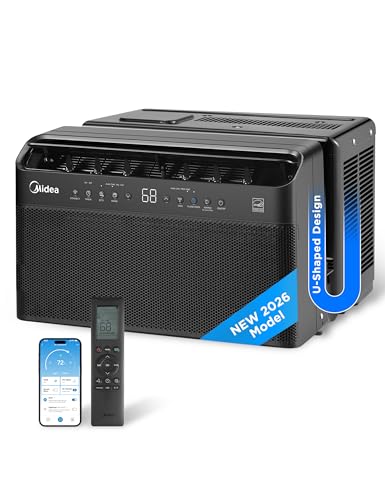
Energy Star Window Unit: Efficient Cooling Guide
Everything you need to know before choosing an Energy Star window unit — how the certification works, which capacity fits your room, what features matter, and how to keep it running efficiently for years.
START READINGBuying an Energy Star window unit is a smart move — but only if it matches your room. This guide walks you through certification standards, sizing, efficiency ratings, installation, and maintenance so you can choose with confidence and avoid the most common mistakes.
What Is an Energy Star Window Unit?
An Energy Star window unit is a window-mounted air conditioner that has earned the Energy Star certification from the U.S. Environmental Protection Agency. The label is not marketing language — it is awarded only to models that meet strict efficiency benchmarks for cooling output relative to electricity consumed.
In practical terms, an Energy Star window unit delivers the same cooling comfort as a conventional window AC while drawing less power. That difference comes from better compressors, improved coil design, tighter cabinet insulation, and smarter fan and thermostat control. For anyone cooling a bedroom, apartment, or home office, this is the category worth focusing on.
If you want a broader view of how certification applies across product families, our overview of Energy Star qualified air conditioners explains the program and how it evaluates different unit types.
Why Energy Star Certification Matters for a Window AC
Window air conditioners are among the most common cooling appliances in American homes, and they are often the ones left running the longest. Because a window unit typically cools one room at a time, it may run continuously through the hottest weeks. That makes efficiency at the unit level especially meaningful.
An Energy Star window unit is engineered around three pillars:
Lower Energy Draw
Certified models must exceed minimum federal efficiency thresholds, which translates to less electricity for the same cooling.
Smarter Compressor Control
Many certified units use variable-speed or inverter compressors that adjust output instead of cycling on and off abruptly.
Better Temperature Stability
Modulated cooling keeps the room closer to the set temperature, reducing the swings that waste energy.
For a deeper comparison of how certification affects the most efficient models on the market, see our roundup of the most efficient Energy Star window air conditioner options.
How the Energy Star Standard Works for Window Units
Energy Star certification for room air conditioners is based on efficiency ratios that compare cooling output to power input. The two numbers you will encounter most often are CEER and EER. Both measure efficiency, but they account for different parts of the operating cycle.
- EER (Energy Efficiency Ratio): Cooling output divided by power input at a specific test condition. Higher is better.
- CEER (Combined Energy Efficiency Ratio): A newer metric that includes standby and off-mode power use, giving a more realistic picture of seasonal performance.
- ENERGY STAR threshold: Certified window units must exceed the federal minimum by a meaningful margin, which is why the label is a reliable shortcut for efficiency.
When you compare models, look at the CEER or EER figure on the yellow EnergyGuide label. A higher number indicates a more efficient unit within the same capacity class. Our guide to the Energy Star rated window air conditioners breaks down how to read these ratings in practice.
Sizing an Energy Star Window Unit Correctly
Efficiency only pays off when the unit is the right size. An oversized unit cools the room too quickly, shuts off before it removes humidity, and then restarts — a pattern called short cycling that wastes energy and wears the compressor. An undersized unit runs constantly and never quite reaches the set point.
Use this capacity guide as a starting point, then adjust for sun exposure, ceiling height, and occupancy:
| Room Size | Recommended Capacity | Typical Use Case |
|---|---|---|
| Up to 150 sq ft | 5,000 – 6,000 BTU | Bedroom, small office, dorm room |
| 150 – 250 sq ft | 8,000 – 10,000 BTU | Living room, studio apartment |
| 250 – 400 sq ft | 12,000 – 14,000 BTU | Large bedroom, open-plan living area |
| 400 – 550 sq ft | 15,000 – 18,000 BTU | Master suite, combined living and dining space |
If your room is heavily sunlit or has poor insulation, size up slightly. If it is shaded and well sealed, stay within the range. For a more detailed calculation method, read our guide on how to size an air conditioner.
Efficiency Tiers: Entry-Level, Mid-Range, and Premium
Not every Energy Star window unit is built the same. Within the certified category, models fall into recognizable tiers based on build quality, compressor type, and feature set. Use this classification when comparing options — it is more useful than trying to rank models by any single specification.
| Tier | What to Expect | Best For |
|---|---|---|
| Entry-level | Meets Energy Star requirements, single-speed compressor, basic mechanical controls, straightforward installation kit. | Guest rooms, occasional-use spaces, first-time buyers. |
| Mid-range | Higher CEER, digital thermostat, remote control, sleep mode, washable filter with reminder, quieter fan settings. | Bedrooms, home offices, daily-use living areas. |
| Premium | Inverter compressor, Wi-Fi and app control, voice assistant support, multi-speed fan, enhanced filtration, quieter operation. | Primary bedrooms, smart homes, rooms where noise matters. |
For connected models, see our guide to an Energy Star window air conditioner with Wi-Fi control. If you want both connectivity and a remote, the Energy Star window air conditioner with remote and Wi-Fi control category covers units that bundle both.
Features That Matter in an Energy Star Window Unit
Once capacity and certification are settled, the remaining decisions are about features. These are the ones that consistently affect day-to-day satisfaction:
- Inverter or variable-speed compressor: Smooths output and reduces cycling, which improves both comfort and efficiency. Compare with a standard single-speed design before deciding.
- Digital thermostat and timer: Precise set points and scheduled operation prevent unnecessary runtime.
- Sleep mode: Gradually raises the temperature overnight to reduce energy use without waking you up.
- Washable filter with reminder: A clean filter is the single biggest maintenance factor for efficiency. A reminder light makes it easy to stay on schedule.
- Quiet operation: Look for decibel ratings and multi-speed fans if the unit will be in a bedroom.
- Installation kit: Side panels, window brackets, and foam seals should be included and fit standard double-hung windows.
If you also need heating capability, an Energy Star window air conditioner with heat adds a heat pump or electric heat element for year-round use.
When a Window Heat Pump Makes Sense
A window heat pump is a reversible Energy Star window unit that can cool in summer and heat in mild weather. It is a practical choice for rooms that lack ductwork and need both functions from a single appliance. An Energy Star window heat pump is most effective in climates with moderate winters; in very cold regions, a dedicated heating system is still necessary.
For a whole-home alternative, our overview of an Energy Star mini-split heat pump explains how ductless systems compare.
Installation Checklist for an Energy Star Window Unit
Proper installation protects both efficiency and safety. Before you begin, confirm the following:
- Measure the window opening and confirm the unit's minimum and maximum window width.
- Check the electrical requirement — smaller units run on standard 110V outlets, while larger units may need a dedicated 240V circuit.
- Verify the window frame is sound and can support the unit's weight, or use a support bracket.
- Seal gaps around the unit with the included foam insulation to prevent cool air from escaping.
- Ensure a slight downward tilt toward the outside so condensate drains properly.
- Plug the unit directly into a grounded outlet — avoid extension cords.
For a more general walkthrough, see our article on what to expect in the first week after AC installation.
Maintenance Habits That Preserve Efficiency
An Energy Star window unit stays efficient only if it is maintained. These habits make the biggest difference:
- Clean or replace the filter every two to four weeks during heavy use. A clogged filter forces the compressor to work harder.
- Inspect and clean the evaporator and condenser coils at the start of each cooling season.
- Check the seal around the window and replace worn foam strips.
- Store the unit properly in the off-season, or cover it if it stays installed, to prevent dust buildup.
- Schedule professional service every few years for refrigerant checks and deep cleaning.
If your unit stops cooling efficiently despite maintenance, our troubleshooting guide on why an AC is not cooling covers the most common causes.
Common Mistakes to Avoid
- Buying by room size alone. Sun exposure, ceiling height, and occupancy all shift the right capacity.
- Ignoring the CEER figure. Two Energy Star units can differ meaningfully in efficiency — the label tells you which is better.
- Skipping the window seal. Poor sealing lets cool air escape and undermines efficiency gains.
- Using an extension cord. It is a fire risk and can reduce performance.
- Never cleaning the filter. This is the fastest way to lose the efficiency you paid for.
Explore Related Guides
If you are comparing window units with other cooling options, these guides are useful next steps:
- Energy Star window air conditioner — a broader look at certified window models.
- Most efficient Energy Star air conditioner — how window units compare with other formats.
- Energy Star portable air conditioner — for rooms where window installation is not possible.
- Energy Star through-the-wall air conditioner — a permanent-installation alternative.
- Energy Star wall air conditioner — for wall-mounted configurations.
Frequently Asked Questions
What makes an Energy Star window unit different from a standard window AC?
An Energy Star window unit meets strict efficiency guidelines set by the U.S. Environmental Protection Agency. It typically uses an inverter compressor, improved insulation, and smarter fan control to deliver the same cooling while drawing less power than a standard model.
How do I choose the right BTU size for an Energy Star window unit?
Match BTU to room square footage: roughly 5,000–6,000 BTU for up to 150 sq ft, 8,000–10,000 BTU for 150–250 sq ft, and 12,000–14,000 BTU for 250–400 sq ft. Oversizing wastes energy and causes short cycling, so measure carefully before buying.
Can an Energy Star window unit lower my electricity consumption?
Yes. Because an Energy Star window unit is engineered to run more efficiently, it generally consumes less electricity for the same cooling output. Combined with proper sizing and regular filter cleaning, the savings add up over the cooling season.
Is an Energy Star window unit noisy?
Noise varies by tier. Entry-level units are louder, while mid-range and premium Energy Star window units often include variable-speed fans and vibration-dampening mounts. Look for models advertising quiet operation if the unit will sit in a bedroom.
Do I need a special outlet for an Energy Star window unit?
Smaller units (up to about 10,000 BTU) usually run on a standard 110V household outlet. Larger units (12,000 BTU and above) often require a 240V circuit. Always check the product specification and your home's electrical panel before installation.
Ready to Choose Your Energy Star Window Unit?
You now have the sizing chart, efficiency ratings, feature checklist, and maintenance plan you need. Review the recommended models below to compare options that match your room and priorities.
VIEW RECOMMENDED MODELS