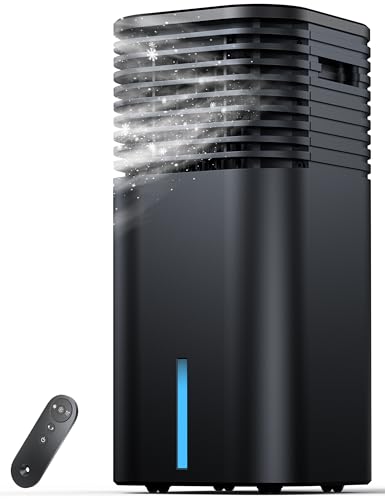
Evaporative Air Cooler: The Complete Guide
Discover how evaporative air coolers work, which types suit your climate and space, and how to maintain one for reliable, energy-conscious cooling season after season.
START LEARNINGAC Units Guide Philosophy: Well-informed buyers make confident decisions. This guide walks you through the science, the configurations, and the practical maintenance of evaporative cooling so you can choose the right unit for your home or workspace — before you buy.
What You Will Learn on This Page
How an Evaporative Air Cooler Works
An evaporative air cooler — often called a swamp cooler — cools air through the natural process of water evaporation. A fan draws warm, dry outside air through water-saturated pads. As the water evaporates, it absorbs heat from the air, lowering the temperature of the airflow that enters your space. The result is cooler, slightly more humid air delivered continuously.
Unlike a refrigerated air conditioner, an evaporative cooler does not use a compressor or chemical refrigerant. Its core components are a fan, a pump, water distribution tubing, and evaporative media (pads). This simpler mechanical design is why an evaporative cooling system uses considerably less electricity than a comparable refrigerated unit.
The cooling effect depends heavily on outdoor humidity. In dry climates, the temperature drop across the pads can be substantial. In humid climates, the air is already near saturation, so evaporation slows and the cooling effect diminishes. This is the single most important consideration when deciding whether evaporative cooling is right for you.
The Core Components
- Fan and motor: Moves a large volume of air through the unit and into your space.
- Water pump: Circulates water from the reservoir to the distribution system above the pads.
- Evaporative pads: The media where water meets air; the quality and condition of these pads determine cooling performance.
- Water reservoir and bleed system: Holds water and periodically flushes mineral buildup to keep the unit efficient.
- Ducting or direct discharge: Whole-house units distribute air through ducts, while portable units discharge directly into a room.
Because the process adds moisture to the air, evaporative coolers also act as a mild humidifier — an advantage in arid regions but a drawback in already-humid ones. Understanding this trade-off is central to choosing the right cooling approach for your home.
Evaporative Cooler vs Refrigerated Air Conditioner
Both approaches cool your space, but they operate on entirely different principles and suit different conditions. The table below summarizes the practical differences.
| Factor | Evaporative Air Cooler | Refrigerated Air Conditioner |
|---|---|---|
| Cooling principle | Water evaporation absorbs heat | Refrigerant cycle transfers heat outdoors |
| Best climate | Hot and dry (low humidity) | Any climate, including humid regions |
| Humidity effect | Adds moisture to indoor air | Dehumidifies indoor air |
| Electrical demand | Lower; no compressor | Higher; compressor-driven |
| Ventilation | Requires open windows or relief vents | Recirculates indoor air in a closed space |
| Installation | Simpler; portable or rooftop configurations | More involved; refrigerant lines and electrical work |
| Maintenance focus | Pads, water quality, seasonal cleaning | Filters, coils, refrigerant charge |
For households in dry regions, an evaporative cooler can be a compelling alternative to a traditional system. Readers comparing options often explore an evaporative cooler alternative to understand where each technology fits. If you are weighing a whole-house installation, reviewing an estimate to install central air conditioning alongside evaporative options helps frame the decision in terms of long-term investment rather than short-term outlay.
Types of Evaporative Coolers
Evaporative coolers come in several configurations, each suited to different spaces and installation constraints. Choosing the right type is as important as choosing the right size.
Rooftop Evaporative Cooler
Mounted on the roof and connected to ductwork, a rooftop evaporative cooler distributes cooled air throughout the home. It is the most common whole-house configuration in dry climates and requires a relief vent or open windows to exhaust air.
Window and Wall Units
Installed in a window or wall opening, these units cool a single room and discharge air directly. They are a practical middle ground between whole-house systems and portable units.
Portable Evaporative Cooler
A freestanding unit on casters that can move from room to room. A fully evaporative portable air conditioner is ideal for renters and temporary setups, though it cools a smaller area than ducted systems.
Evaporative Cooler and Fan Combos
An evaporative air cooler and fan combination offers fan-only operation for milder days and evaporative cooling for hotter ones, giving flexibility across seasons.
Windowless 3-in-1 Models
An evaporative air cooler 3-in-1 windowless portable air conditioner combines cooling, humidifying, and fan functions without requiring a window exhaust — useful in spaces where venting is impractical.
Vehicle and Personal Coolers
A compact evaporative cooler for car use brings personal cooling to vehicles and small enclosed spaces during dry-weather travel.
Beyond form factor, evaporative coolers can also be categorized by air delivery method: direct cooling (air passes through the pads into the space) and indirect cooling (air is cooled via a heat exchanger without adding moisture). Direct units are the most common for residential use, while indirect and combined systems are found in commercial and swamp cooler applications where humidity control matters.
Which Climate Suits Evaporative Cooling
Evaporative cooling performs best where the air is hot and dry. The drier the outside air, the greater the temperature drop the unit can achieve. In regions with low relative humidity — typical of the American Southwest, parts of Australia, and the Middle East — evaporative coolers are a mainstay of residential cooling.
In humid climates, the air already holds substantial moisture, so evaporation is slow and the cooling effect is limited. In these conditions, a refrigerated air conditioner or a dehumidifier is a better fit. A useful rule of thumb: if summer afternoons feel sticky and sweat does not evaporate quickly from your skin, evaporative cooling will struggle to deliver comfort.
It is also worth noting that evaporative coolers work best with cross-ventilation. Because they continuously introduce outside air, they need an escape path — an open window, a relief vent, or dedicated ducting. A sealed, closed room will become humid and uncomfortable rather than cool. Planning airflow is part of planning the installation.
For readers comparing cooling technologies more broadly, our guide to environmentally friendly heating and cooling systems places evaporative cooling in the context of sustainable home comfort options. Those considering a hybrid approach sometimes pair evaporative cooling with fans and air coolers to extend comfort across shoulder seasons.
Sizing and Airflow Basics
Evaporative coolers are rated by airflow — typically in cubic feet per minute (CFM) — rather than by BTU like refrigerated air conditioners. Proper sizing ensures the unit can move enough air to cool the space without running continuously at maximum output.
A common starting point is to calculate the cubic volume of the space (length × width × ceiling height) and then apply a climate-based multiplier. In dry climates, a higher air-exchange rate is appropriate; in more moderate dry climates, a lower rate suffices. Manufacturers publish CFM recommendations by square footage, and these charts are a reliable starting reference.
Several factors adjust the baseline:
- Ceiling height: Taller ceilings increase the volume of air to be cooled.
- Insulation and shading: A well-insulated, shaded room holds cool air longer and may need less airflow.
- Occupancy and heat-generating appliances: Kitchens, home offices, and crowded rooms benefit from additional capacity.
- Window area and sun exposure: Large, sun-facing windows add heat load.
Oversizing a unit is not automatically better — it can create excessive airflow and noise, and in humid conditions it may add more moisture than necessary. Undersizing leaves the space warm during peak hours. Matching the unit to the space, and to your climate, is the balanced approach. If you are also comparing a refrigerated system for the same room, our estimate for AC replacement resource can help you frame the scope of either path.
Maintenance and Pads
Evaporative coolers are mechanically simple, but they reward regular care. Because they handle water continuously, mineral scale, algae, and pad degradation are the main long-term concerns. A consistent maintenance routine keeps cooling performance strong and extends the life of the unit.
Routine Maintenance Checklist
- Inspect and replace pads seasonally. Evaporative cooler pads clog with mineral deposits and lose their ability to absorb water. Replacing them at the start of the cooling season restores performance.
- Clean the water reservoir. Drain and scrub the pan to remove sediment and prevent algae growth. A evaporative cooler maintenance routine should include this step at least once per season, more often in hard-water areas.
- Check the water distribution system. Ensure the pump, tubing, and spreaders deliver water evenly across the pads. Dry patches on the pads signal a distribution problem.
- Inspect the fan and motor. Listen for unusual noise or vibration and lubricate the motor if the manufacturer recommends it.
- Winterize the unit. Before cold weather, drain water lines, cover the unit, and disconnect the water supply to prevent freeze damage.
Water quality matters more than many owners expect. Hard water accelerates scale buildup on pads and in the reservoir, while very soft water can be more corrosive to certain components. Many units include a bleed-off system that continuously flushes a small amount of water to reduce mineral concentration — keeping this system functional is part of good maintenance.
For a broader look at caring for cooling equipment, our guides on fans and air conditioners and on fixing an air conditioner cover related troubleshooting principles that apply to evaporative systems as well.
Pros and Cons at a Glance
Advantages
- Lower electrical demand than refrigerated cooling
- Simple mechanical design with fewer failure points
- Continuous fresh-air ventilation rather than recirculation
- Adds helpful humidity in dry climates
- Straightforward installation for portable and window units
- No chemical refrigerant involved in operation
Limitations
- Effectiveness drops sharply as humidity rises
- Requires open windows or relief vents for airflow
- Adds moisture, which can be unwelcome in humid regions
- Regular pad replacement and water-system cleaning required
- Cooling output varies with outdoor conditions
Weighing these factors against your local climate and how you use each room is the key to a satisfying outcome. In dry regions, the advantages are substantial and the limitations manageable. In humid regions, the reverse is true, and a refrigerated system is usually the better fit.
Ready to Compare Evaporative Coolers?
Explore the curated selection of evaporative air coolers below, chosen for solid build quality, reliable airflow, and sensible features for dry-climate cooling.
VIEW RECOMMENDED MODELSFrequently Asked Questions
Is an evaporative air cooler the same as a swamp cooler?
Yes. "Swamp cooler" is a common colloquial term for an evaporative cooler, referring to the humidified air it produces. Both terms describe the same evaporation-based cooling technology.
Can an evaporative cooler replace my air conditioner?
In dry climates, yes — many households rely on evaporative cooling as their primary cooling method. In humid climates, it is generally not a substitute for refrigerated air conditioning because the cooling effect is limited when the air is already moist.
Do evaporative coolers need an open window?
Yes, in most configurations. Because they continuously introduce outside air, they need a path for that air to escape. Opening a window or using a relief vent prevents humidity buildup and keeps airflow moving through the space.
How often should evaporative cooler pads be replaced?
Typically once per cooling season, though hard-water areas may require mid-season replacement. Pads that are clogged with scale, sagging, or no longer absorbing water evenly should be replaced promptly.
Are evaporative coolers energy-efficient?
They use significantly less electricity than refrigerated air conditioners because they rely on a fan and water pump rather than a compressor. This lower electrical demand is one of their main practical advantages in suitable climates.
What is the difference between a direct and an indirect evaporative cooler?
A direct evaporative cooler passes air through wet pads, adding moisture to the cooled air. An indirect evaporative cooler cools air via a heat exchanger without adding moisture, which suits applications where humidity control matters. Residential units are most often direct type.