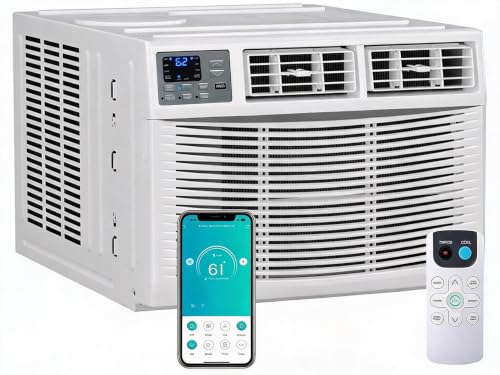
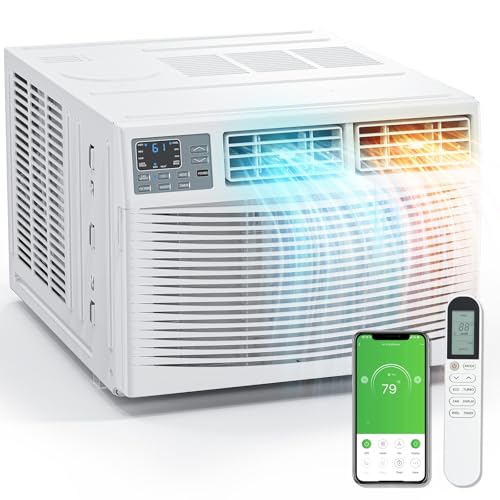
Heat and Air Unit for Window: Year-Round Comfort in One Appliance
A window-mounted heat and air unit combines cooling and supplemental heating in a single chassis. This guide explains how these dual-purpose systems work, how to size and install one correctly, and how to choose a model that fits your room, climate, and electrical setup.
Explore Buying GuideWhy this matters: A traditional window air conditioner only solves half the problem. A heat and air window unit adds a heating function, so the same appliance can bridge shoulder seasons, warm a chilly room, or provide backup heat when the main system is offline. Understanding the difference between heat pump heating and electric resistance heating is the key decision most buyers face.
What This Guide Covers
- What Is a Heat and Air Unit for Window?
- How Window Heat-and-Air Units Work
- Types of Window Units with Heating
- Sizing and BTU Requirements
- Electrical Requirements and Safety
- Installation Considerations
- Maintenance for Dual-Purpose Units
- Buying Guide: Features That Matter
- Pros and Cons
- Frequently Asked Questions
What Is a Heat and Air Unit for Window?
A heat and air unit for window is a single appliance that installs in a window frame and provides both cooled air and heated air. Unlike a standard window air conditioner, which only cools, these dual-purpose units include a heating function. That heating function can come from a heat pump (which reverses the refrigeration cycle to move heat from outside to inside) or from an electric resistance element (which converts electricity directly into heat).
These units are sometimes marketed as window-mounted air conditioner and heater combos, window heat pumps, or dual-purpose window units. They are most useful in rooms where the central HVAC system struggles, in homes without ductwork, in older houses where adding ducting is impractical, and in climates with mild to moderate heating needs. For a broader look at how these fit into a home, see our guide to in-wall air conditioning and heating units, which covers similar dual-purpose concepts for wall-mounted installations.
It is important to set expectations correctly. Most window heat-and-air units are supplemental heating devices, not whole-home furnaces. They are designed to condition the room they are installed in, and possibly adjacent open spaces. If your goal is to replace a central heating system, you would need a different approach—our overview of HVAC replacement explains the options and decision framework.
How Window Heat-and-Air Units Work
Understanding the two heating technologies helps you choose the right model and set realistic expectations for performance and energy use.
Heat Pump Heating (Reverse Cycle)
A heat pump window unit uses the same refrigerant loop for both cooling and heating. In cooling mode, it absorbs heat from indoor air and releases it outdoors. In heating mode, a reversing valve changes the direction of refrigerant flow so the unit absorbs heat from outdoor air and releases it indoors. Because it moves heat rather than generating it, heat pump heating is generally more efficient per unit of delivered warmth. However, heat pump capacity decreases as outdoor temperatures drop, and many window heat pumps are designed for mild climates rather than deep freezes.
Electric Resistance Heating
Some window units pair a conventional air conditioner with an electric heating coil. The coil converts electricity directly into heat, similar to a space heater. This method works regardless of outdoor temperature but uses more electricity for the same amount of delivered heat compared with a heat pump. Models with electric resistance heating are often simpler in construction and may be more consistent in very cold conditions, but they tend to have higher operating energy demand.
Shared Components
Both designs share a compressor, condenser coil, evaporator coil, fan, and air filter. The unit draws indoor air through a filter, conditions it, and returns it to the room. In cooling mode, condensate water drains either outside or into a drain pan. In heating mode, the indoor coil becomes the condenser and the outdoor coil becomes the evaporator. For a deeper explanation of the refrigeration cycle, see our article on how an air conditioner works through the installation guide resources, which cover system fundamentals alongside installation steps.
Types of Window Units with Heating
Not all heat and air window units are built the same. The main distinctions are the heating mechanism, the chassis size, and the control features.
| Type | Heating Method | Best For | Tier Positioning |
|---|---|---|---|
| Heat pump window unit | Reverse-cycle refrigerant loop | Mild winters, efficient year-round operation | Mid-range to premium |
| Electric resistance window unit | Heating coil element | Cold snaps, consistent supplemental heat | Entry-level to mid-range |
| Cooling-only window AC | None (cooling only) | Warm climates, cooling-focused rooms | Starter tier to premium |
| Through-the-wall heat-and-air unit | Heat pump or electric coil | Permanent wall installation, less window blockage | Mid-tier to professional-grade |
If you are considering a permanent wall installation instead of a window frame, our article on mounting a window AC unit in the wall explains the structural and permitting considerations. For very small wall openings, the smallest through-the-wall air conditioner guide discusses compact options and how they compare with window units.
Sizing and BTU Requirements
Correct sizing is the single most important factor in satisfaction with any window air conditioner, and it matters just as much for heat-and-air units. An undersized unit runs constantly and never fully conditions the room. An oversized unit cools too quickly, cycles on and off frequently, and leaves the room feeling clammy because it does not run long enough to remove humidity.
The Basic BTU Rule
A common starting point is roughly 20 BTU of cooling capacity per square foot of floor area for a standard room with 8-foot ceilings and average sun exposure. This is a starting estimate, not a final answer.
- A 150 sq ft room typically needs about 5,000–6,000 BTU.
- A 250 sq ft room typically needs about 8,000–10,000 BTU.
- A 400 sq ft room typically needs about 12,000–14,000 BTU.
Adjust upward for sunny south- or west-facing windows, high ceilings, kitchens with appliances, rooms with many occupants, or poor insulation. Adjust downward for heavily shaded rooms, basements, or rooms that share conditioned air with adjacent spaces. For a detailed walkthrough, see our guide on how to size an air conditioner.
Heating Capacity Matters Too
For the heating side, check the unit's heating BTU rating or heating capacity specification. Heat pump units often list a heating capacity that differs from cooling capacity, and that number can drop at lower outdoor temperatures. If heating performance is your priority, compare the heating capacity ratings directly rather than assuming they match the cooling rating.
Window Width and Chassis Size
Before buying, measure the width and height of the window opening and the depth of the window sill. Window units are designed to fit standard double-hung windows within a specified width range. Casement and slider windows usually require a special installation kit or a different product category. Our guide to window air conditioner for casement window installation covers the adapter approach for non-standard windows.
Electrical Requirements and Safety
Heating adds electrical load, so the circuit requirements for a heat-and-air window unit deserve careful attention. Cooling-only units in the 5,000–8,000 BTU range often run on a standard 115V household circuit. Larger cooling units and many heat pump models require a dedicated 230/240V circuit with a specific breaker size.
Check the unit's nameplate for amperage and voltage, and compare that with the circuit you intend to use. A dedicated circuit is strongly recommended for any unit that runs a compressor and a heating element. Avoid sharing a circuit with other high-draw appliances. If no suitable circuit exists, a licensed electrician should evaluate your panel and install a dedicated line.
Additional safety considerations:
- Use a properly rated outlet and never use extension cords or power strips with a window AC or heat pump unit.
- Confirm the unit is rated for the voltage available at the outlet.
- Ensure the window frame and mounting bracket can support the unit's weight, especially larger dual-purpose models.
- Keep the area around the unit clear of curtains, bedding, and flammable materials.
For context on how heating and cooling appliances are combined in other formats, our overview of air conditioners and heaters combination units explains the broader product landscape. If you are weighing a window unit against a portable heat pump option, the portable air conditioning unit with heat pump guide is a useful comparison.
Installation Considerations
Installing a heat-and-air window unit is similar to installing a cooling-only window AC, with a few extra points to check.
- Choose the right window. A double-hung window with a sturdy sill is ideal. Avoid windows that receive direct, intense afternoon sun if possible, since that increases cooling load. For heating performance, a window that is somewhat protected from prevailing winter wind is preferable.
- Check the mounting support. Use the manufacturer's included bracket or a support bracket rated for the unit's weight. Larger units should not rely on the window sash alone.
- Seal the perimeter. Use the included foam insulation panels and weather stripping to close gaps around the unit. Air leaks undermine both cooling and heating performance. Our guide on how to seal air ducts covers related air-sealing principles that apply to window installations as well.
- Provide slight outward tilt. Most units are designed to tilt slightly toward the outside so condensate drains properly. Follow the manufacturer's instructions rather than guessing.
- Confirm the drain path. In cooling mode, condensate must drain away from the unit and away from the house foundation. In heating mode, some heat pump units produce condensate outdoors that can freeze; check whether the model includes a base pan heater or defrost feature.
- Follow local rules. Some neighborhoods or buildings restrict window-mounted appliances, and some installations require a permit. Our article on how to get an AC permit explains when a permit is typically needed.
For a step-by-step process, see the full installation guide. If you are installing in an older home with limited electrical capacity, our guide on installing air conditioning in an old house addresses common retrofit challenges.
Maintenance for Dual-Purpose Units
Because a heat-and-air unit runs in more seasons than a cooling-only unit, maintenance discipline pays off. A clean unit delivers better airflow, lower energy demand, and fewer service calls.
- Clean or replace the air filter every 2–4 weeks during heavy use. A clogged filter is the most common cause of reduced performance. Our guide on how to clean an AC filter walks through the process.
- Inspect and clean the outdoor coil seasonally. Dust, pollen, and cottonwood fluff reduce heat transfer. Our article on clean AC condenser coils explains safe cleaning methods.
- Check the drain path. Clear any debris from the drain pan and drain holes, especially before cooling season.
- Test heating mode before cold weather arrives. Run the unit in heating mode for a few minutes in early autumn to confirm it operates correctly and does not emit unusual odors.
- Schedule professional service periodically. A technician can check refrigerant charge, electrical connections, and the reversing valve on heat pump models. Our overview of HVAC tune-up describes what a professional service visit typically includes.
If the unit stops cooling or heating, basic troubleshooting may resolve the issue. Our guide on my air conditioner is not blowing out cold air covers the most common causes for the cooling side. For heating-side issues, check the thermostat setting, filter condition, and outdoor coil condition first.
Buying Guide: Features That Matter
When comparing heat and air window units, focus on the specifications that affect daily experience rather than marketing language. The table below summarizes the features worth evaluating.
| Feature | Why It Matters | What to Look For |
|---|---|---|
| Heating type | Affects efficiency and cold-weather performance | Heat pump for mild climates; electric coil for consistent supplemental heat |
| Cooling BTU and heating capacity | Determines room coverage | Match cooling BTU to room size; compare heating capacity ratings directly |
| Energy efficiency ratio | Affects long-term energy use | Higher efficiency ratings for units used frequently; look for ENERGY STAR where available |
| Voltage and amperage | Determines circuit requirements | Confirm your outlet and breaker can support the unit |
| Controls and scheduling | Convenience and energy management | Digital thermostat, remote control, programmable timer, Wi-Fi where useful |
| Noise level | Comfort in bedrooms and living spaces | Compare decibel ratings; quieter units are a meaningful upgrade for sleeping areas |
| Installation kit and bracket | Safety and fit | Included support bracket, foam seals, and clear instructions |
| Warranty and service network | Long-term peace of mind | Sealed-system and compressor coverage; accessible service in your area |
Smart controls are increasingly common. If you want scheduling and remote adjustment, look at models described in our guides on smart window air conditioner options and the U-shaped smart inverter window air conditioner format, which reduces window blockage and often runs more quietly. For smaller rooms, the 6,000 BTU air conditioner overview is a good starting point for capacity context.
If your room is a bedroom or home office, the most efficient small window air conditioner guide focuses on compact, efficient models. For larger rooms, compare the 8,000 BTU ENERGY STAR window air conditioner category and the 10,000 BTU window air conditioner with remote options.
Matching the Unit to Your Climate
If winters are mild and you mainly want to take the chill off a room, a heat pump window unit is usually the more efficient choice. If winters are severe and you need reliable heat regardless of outdoor temperature, an electric resistance model may be more predictable, though it uses more energy. In many homes, the best approach is a heat pump unit for shoulder seasons combined with the existing central heating system for deep winter.
Where It Fits in Your Home
These units work well in bedrooms, home offices, sunrooms, and converted porches. They are less suitable for large open-plan spaces, where a single window unit cannot distribute air effectively. If your goal is whole-home comfort, our guide on HVAC replacement and the overview of installing an air conditioning unit provide the bigger picture. For homes where ductwork is a barrier, the split ductless air conditioning systems overview explains the ductless alternative.
Pros and Cons of Heat and Air Window Units
Advantages
- One appliance provides both cooling and heating
- No ductwork required, making it suitable for older homes
- Zone control for individual rooms
- Installation is simpler than central system changes
- Useful as backup heat if the primary system fails
- Heat pump versions can be efficient in mild climates
Limitations
- Conditions one room, not a whole house
- Blocks part of the window view and light
- Heat pump heating capacity drops in very cold weather
- Electric resistance heating uses more energy
- Larger units may require a dedicated 230/240V circuit
- Some buildings restrict window-mounted appliances
The right decision depends on your room, climate, and existing HVAC setup. If you are comparing against a portable option, our guide on portable air conditioning unit for office spaces discusses the trade-offs in mobility, window requirements, and heating capability.
Ready to Compare Models?
Review the recommended heat and air window units below, or continue reading the FAQ section for answers to common buyer questions.
View RecommendationsFrequently Asked Questions
What is a heat and air unit for window?
A heat and air unit for window is a dual-purpose appliance that installs in a window frame and provides both cooling and heating. It is an air conditioner with an added heating function, either a heat pump or an electric heating element.
How does a window air conditioner with heat work?
In cooling mode it removes heat from the room and releases it outdoors. In heating mode, a heat pump reverses the refrigerant cycle to move outdoor heat indoors, while an electric resistance model uses a heating coil to generate warmth.
Can a heat and air window unit replace a furnace?
No. Most window heat-and-air units are designed for supplemental or single-room heating. They are not a substitute for a whole-home heating system, especially in very cold climates.
What size heat and air window unit do I need?
Start with roughly 20 BTU per square foot of room area, then adjust for ceiling height, sun exposure, occupancy, and insulation. Confirm the heating capacity separately if heating performance is a priority.
Do heat and air window units require special electrical wiring?
Smaller units may run on a standard 115V outlet, but many larger and heat pump models require a dedicated 230/240V circuit. Check the nameplate and consult a licensed electrician if a dedicated circuit is needed.
Can I install a heat-and-air window unit myself?
Many units are designed for do-it-yourself installation in a double-hung window. However, larger units, units requiring new electrical circuits, and installations in unusual window types may need professional help. Follow the manufacturer's instructions and local codes.
How do I maintain a heat-and-air window unit?
Clean or replace the filter regularly, clean the coils seasonally, keep the drain path clear, and test heating mode before cold weather. Periodic professional service extends the unit's life and maintains efficiency.
Is a heat pump window unit better than an electric resistance unit?
Heat pump units are generally more efficient in mild climates, while electric resistance units provide consistent heat regardless of outdoor temperature. The best choice depends on your climate and how you plan to use the unit.
For more background on installation and costs across HVAC categories, explore our broader resources on HVAC cost and installation and HVAC maintenance plans to see how window units compare with whole-home systems.