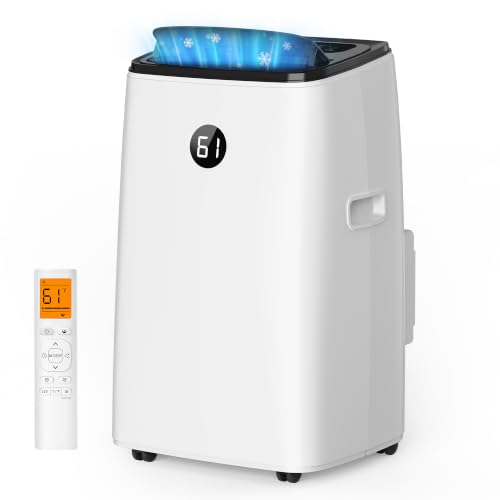
Portable Air Conditioner Without Electricity: What Actually Works
Searching for a portable air conditioner without electricity usually leads to a mix of battery-powered compressor units, solar-assisted systems, evaporative coolers, and passive cooling devices. This guide explains what each option can realistically achieve, where each one performs best, and how to choose a cooling strategy for off-grid living, power outages, camping, or rooms where running a mains-powered AC is not practical.
The Reality of "No Electricity" Cooling
A compressor-based air conditioner needs electricity to run the compressor, condenser fan, evaporator fan, and control board. There is no commercially available portable air conditioner that cools like a conventional AC without any electricity at all. Products marketed with that phrasing are almost always one of four things: a battery-powered compressor unit, a solar-assisted system with battery storage, an evaporative cooler, or a passive cooling device.
Understanding which category a product belongs to is the most important step before buying. A battery-powered unit is still an air conditioner, but it runs for a limited time per charge. An evaporative cooler is not an air conditioner in the refrigeration sense, and it only works in dry climates. A passive device does not cool air actively at all; it reduces heat gain or moves air.
For readers exploring the broader off-grid category, the guides to off-grid cooling and off-grid solar AC provide useful context on how power supply shapes the choice of cooling system.
Main Options Compared
Each approach trades off cooling power, runtime, portability, and climate suitability differently. The table below summarizes the practical differences.
| Option | How It Cools | Power Source | Best For |
|---|---|---|---|
| Battery-powered portable AC | Compressor cycle | Internal battery or power station | Short outages, tents, small rooms |
| Solar-assisted portable AC | Compressor cycle | Solar panels plus battery bank | Off-grid cabins, day-long daylight use |
| Evaporative cooler | Water evaporation | Battery fan or mains | Dry climates with low humidity |
| Passive cooling | Airflow and heat rejection | None or minimal | Any climate as a support strategy |
The choice between these options depends on how long cooling is needed, how hot the environment is, how humid the air is, and whether sunlight is available. A battery unit that runs for a few hours is ideal for overnight outages but not for continuous day-long use. A solar system works best when the panels can charge the battery during the day. An evaporative cooler is the lightest and simplest option but only in dry air.
Readers comparing against traditional configurations may find the overview of portable AC that uses batteries and the article on portable AC with a solar panel useful for deeper detail.
Battery-Powered Portable Air Conditioners
A battery-powered portable AC contains the same compressor and refrigeration circuit as a conventional unit, paired with an internal battery or designed to run from an external power station. These units deliver genuine cooling for a limited runtime, and they are the closest thing to an air conditioner that does not depend on a wall outlet.
What to expect
- Genuine cooling: the compressor cycle lowers air temperature and removes humidity, unlike evaporative devices.
- Limited runtime: higher cooling settings reduce runtime, while eco modes extend it.
- Compact capacity: battery units tend to be sized for small rooms, tents, and personal spaces.
- Charging requirements: recharging needs mains power, a power station, or solar panels.
- Tier variation: entry-level and mid-range models dominate this category, with premium options offering larger batteries and better efficiency.
Battery-powered units are a strong fit for power outages in small apartments, for camping where a tent needs genuine cooling, and for small off-grid cabins. They are less suitable for cooling a large living area or for continuous multi-day operation without recharging.
The dedicated article on portable air conditioning units for camping covers the practical considerations for tent and RV use, and the overview of portable AC for commercial use explains how duty cycle affects runtime in professional settings.
Solar-Powered Portable Air Conditioners
A solar portable AC combines a high-efficiency DC compressor unit with solar panels and a battery bank. During daylight, the panels charge the battery while the unit draws from it; at night, the unit runs from stored energy. This configuration is the most self-sufficient option for off-grid cooling, but it depends on correct sizing of panels, battery, and unit capacity.
Sizing considerations
- Panel wattage: must cover the unit's draw plus charging losses on cloudy days.
- Battery capacity: determines how long the unit runs after sunset.
- Unit efficiency: DC-native units use less power than units that convert AC to DC internally.
- Climate: performance drops in very hot climates where the compressor works harder.
- Deployment: panels need direct sun, which may conflict with shading strategies for the room.
Solar setups are most practical for cabins, sheds, and workshops where the unit runs primarily during daylight. For readers planning a solar installation around a cooling appliance, the article on off-grid solar AC is a useful starting point, and the guide to portable AC with solar panel covers the consumer product landscape.
Evaporative Coolers as a Low-Power Alternative
An evaporative cooler uses a fan to pull air through a wet pad, and the evaporation of water lowers the air temperature. Power consumption is far lower than a compressor AC, so a small battery or solar setup can run an evaporative cooler for much longer. The trade-off is climate dependence: evaporative cooling works well in dry air and poorly in humid air.
Where evaporative cooling performs well
- Dry climates: low humidity allows significant temperature drop across the pad.
- Well-ventilated rooms: evaporative coolers require an exhaust path for the humidified air.
- Outdoor and semi-outdoor spaces: patios and garages benefit from directed airflow.
Where it underperforms
- Humid climates: evaporation slows and cooling becomes minimal.
- Sealed rooms: the added humidity must escape, or it builds up.
- Cooling a hot room quickly: the effect is gradual and airflow-dependent.
Readers comparing evaporative options should review the overview of portable AC with evaporative technology and the dedicated guide to portable evaporative air coolers. The broader category of portable cooler air conditioning explains where these products sit relative to true air conditioners.
For readers in humid climates, the evaporative approach is generally not a substitute for a compressor unit. The guides to portable AC for high humidity and humid climate operation explain why compressor-based cooling remains the reliable option in those conditions.
Passive Cooling Methods That Need No Power
Passive cooling does not actively lower air temperature the way a compressor does, but it reduces heat gain and improves comfort. Combined with a battery or solar unit, passive measures stretch runtime by reducing the load on the cooling device.
Effective passive techniques
- Night flushing: open windows at night to bring in cooler outdoor air, then close them in the morning.
- Shading: exterior blinds, awnings, and shade cloth keep direct sun off glass.
- Reflective window film: reduces solar heat gain without blocking light.
- Thermal mass: masonry and tile floors absorb daytime heat and release it at night.
- Cross-ventilation: aligning openings on opposite sides of a room encourages airflow.
- Solar fans: small PV-powered fans move air through a room or attic without mains power.
The overview of portable cooling devices and the article on portable cooling fans cover the products that support these techniques. For a wider framing of low-power cooling, the guide to portable cooling systems and the discussion of personal and room cooling devices are useful starting points.
Readers interested in personal cooling rather than room cooling may find the overview of personal wearable portable air conditioners relevant, particularly for outdoor work and commuting.
Power Stations and Runtime Planning
For many buyers, the practical path is to pair a small portable AC with a lithium power station rather than buy a unit with an integrated battery. This approach separates the appliance from the energy source and allows either component to be upgraded independently.
Runtime planning steps
- Check the unit's rated power draw in watts, including startup surge.
- Confirm the power station's continuous output and surge rating exceed the unit's draw.
- Estimate runtime by dividing usable battery capacity by average power draw.
- Reduce runtime estimates by roughly 15 to 20 percent for conversion losses and heat.
- Plan a recharging method: mains, solar, or vehicle charging.
For outage preparedness, a battery-powered unit sized for one room plus a power station with enough capacity for a few hours of operation covers the most common scenario. For longer outages, solar recharging becomes the deciding factor.
Best Use Cases for Off-Grid and No-Power Cooling
Where low-power and off-grid options shine
- Power outages: a battery-powered unit plus a charged power station keeps one room comfortable for several hours.
- Camping and RV trips: covered in the camping guide, with attention to tent insulation and hose routing.
- Off-grid cabins and sheds: a solar-assisted unit sized to the structure and the panel array.
- Rentals with limited electrical capacity: the article on portable air conditioning units for rent explains how to match loads to available circuits.
- Dry-climate garages and patios: evaporative coolers deliver useful relief with modest power draw.
- Emergency preparedness: passive measures plus a small battery fan cover the first hours of an outage.
Where a conventional AC remains the better choice
- Whole-home comfort: off-grid cooling cannot match central air. The guide to the most energy efficient central air conditioner covers the conventional alternative.
- Rooms without any exhaust or venting path: the article on portable AC units for rooms without windows explores the limited options.
- Humid climates with high heat: compressor-based units remain the reliable solution; see portable AC not cooling enough for troubleshooting context.
- Large open spaces: the guide to portable AC for 1,000 square feet explains the practical limits of portable cooling.
Buying Checklist for No-Power Cooling
Use this checklist to compare options on the factors that matter most when electricity is limited or unavailable.
| Factor | What to Look For | Why It Matters |
|---|---|---|
| Cooling method | Compressor, evaporative, or passive | Determines actual cooling capability |
| Power draw | Rated watts and startup surge | Matches the unit to battery or solar capacity |
| Battery capacity | Usable watt-hours and recharge time | Defines runtime between charges |
| Solar compatibility | Panel input voltage and charge controller | Enables recharging away from mains power |
| Climate suitability | Humidity rating for evaporative units | Prevents buying a unit that cannot work in your air |
| Noise | Decibel rating at low and high speed | Critical for bedrooms and shared spaces |
| Portability | Weight, handle, and wheel design | Affects ease of movement between rooms or sites |
| Build tier | Entry-level, mid-range, or premium construction | Signals expected durability in demanding use |
Readers comparing product categories should also review portable cooling systems and the specific guide to portable AC without an outdoor unit for additional context on configurations that do not require a conventional external installation.
Maintenance and Safety for Off-Grid Cooling
Routine maintenance
- Clean or replace air filters every two to four weeks during heavy use.
- Inspect battery connections and charge contacts for corrosion.
- Store batteries at moderate temperatures; extreme heat shortens life.
- Clean evaporative cooler pads and refill water reservoirs regularly.
- Check solar panel surfaces for dust and shading; clean them periodically.
- Inspect the power station for firmware updates and error codes.
Safety notes
- Do not run a fuel generator indoors; carbon monoxide is a serious hazard.
- Keep batteries away from flammable materials and out of direct sun.
- Use only the manufacturer's charger and approved solar charge controller.
- Ensure the power station's continuous output exceeds the AC's running draw and surge.
- Do not chain multiple power strips onto a single station output.
Common problems and where to read more
- Unit runs but air is not cold: the diagnostics in my AC is off but still blowing air and my AC is turning on but not blowing air help isolate fan versus compressor issues.
- Compressor not starting: the checklist in my AC compressor is not running applies to battery-powered compressor units as well.
- Cooling below expectations: see portable AC not cooling enough for load, airflow, and sealing checks.
- Battery drains faster than expected: reduce fan speed, raise the thermostat setting, and check for conversion losses in the power station.
- Evaporative cooler performs poorly: check humidity and airflow; evaporative cooling weakens quickly as humidity rises.
If a compressor unit repeatedly trips a protective breaker, shows an error code that persists after a full recharge and reset, or produces no cold air in a cool room, service by a qualified technician is the appropriate next step rather than continued operation on battery power.
Ready to Choose a No-Power Cooling Solution?
You now understand which products genuinely cool without mains electricity, how battery and solar systems differ, where evaporative coolers fit, and what passive measures add. Compare the recommended devices below, match runtime and climate suitability to your situation, and choose the option that fits your space.
Compare Recommended DevicesFrequently Asked Questions
Does a true portable air conditioner without electricity exist?
Compressor-based air conditioners require electricity to run the compressor and fans. Products marketed as portable air conditioners without electricity are usually battery-powered compressor units, solar-assisted systems, evaporative coolers, or passive cooling devices. Each has different performance limits compared with a mains-powered air conditioner.
Can a portable AC run on a battery?
Yes, battery-powered portable air conditioners exist and use an internal battery or an external power station. Runtime depends on capacity and cooling load, typically ranging from a few hours on higher settings to longer sessions on eco modes. These units are most useful for small rooms, tents, and short outages.
How does a solar portable air conditioner work?
A solar portable air conditioner pairs a high-efficiency DC unit with solar panels and a battery bank. Panels charge the battery during daylight, and the unit draws from the battery. Without sufficient panel area or battery capacity, performance is limited, so sizing the solar array and storage correctly is essential.
Are evaporative coolers a substitute for an air conditioner without power?
Evaporative coolers use a fan and water to lower air temperature through evaporation. They work well in dry climates with low humidity but become ineffective in humid conditions. Many evaporative coolers still require electricity for the fan, though some passive designs rely on natural airflow.
What passive cooling methods work without electricity?
Passive methods include cross-ventilation at night, shading windows during the day, thermal mass that absorbs daytime heat, reflective window films, and ceiling or floor fans powered by small solar panels. These techniques reduce heat gain and improve comfort but cannot match the cooling output of a compressor-based unit.
Can I use a portable AC without electricity during a power outage?
During an outage, a battery-powered unit or one connected to a charged power station can provide cooling for a limited time. Evaporative coolers with battery-powered fans and passive cooling methods are also useful. Plan runtime carefully, prioritize the smallest room, and keep doors and windows closed to conserve cooling.