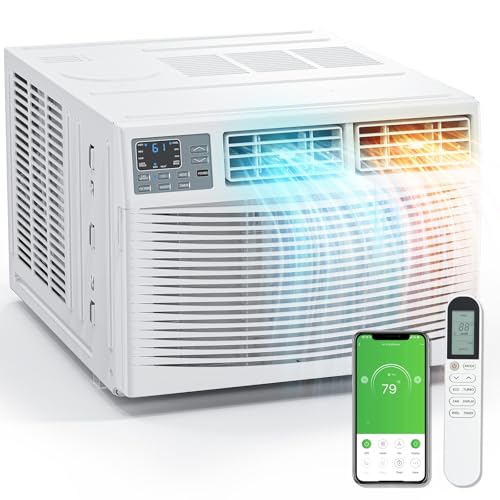
Small Window Air Conditioner with High BTU: Powerful Cooling in a Compact Frame
Discover how compact window units with high BTU output can cool medium-to-large rooms without occupying valuable wall or floor space. Learn sizing rules, efficiency metrics, installation constraints, and which product tiers deliver the best balance of power and footprint.
START THE GUIDEWhat “Small Window AC with High BTU” Really Means
The phrase combines two characteristics that historically pulled in opposite directions: a compact physical footprint and a high cooling capacity. In practice, a small window air conditioner with high BTU refers to a unit that fits narrow or shallow window openings while still delivering roughly 10,000 BTU or more. Manufacturers achieve this through denser condenser coils, more efficient rotary compressors, and tighter internal packaging.
Buyers searching for this category usually face one of three scenarios:
- Narrow window openings: Older homes and apartments often have window widths under 22 inches, which excludes many standard high-capacity units.
- Limited wall space: Renters and condo owners cannot cut new openings, so the unit must fit the existing window frame.
- Desire for minimal visual intrusion: A compact chassis protrudes less into the room and blocks less daylight.
Understanding which scenario applies to you determines whether BTU density, physical dimensions, or installation kit compatibility should drive your decision. For related compact options, explore small but powerful window air conditioners and space-saving window AC designs.
How to Size BTU Correctly for a Compact Unit
High BTU is only useful if it matches the room’s actual cooling load. Oversizing a compact unit is a common mistake: the compressor cools the air quickly, then cycles off before removing enough humidity, leaving the room feeling clammy. Undersizing, on the other hand, runs the compressor continuously and never reaches the set temperature on hot days.
Use the following baseline ranges as a starting point, then adjust upward for sun exposure, kitchen heat, or poor insulation:
| Room Size (sq ft) | Baseline BTU | Compact High-BTU Fit? | Typical Use Case |
|---|---|---|---|
| 150 – 250 | 6,000 – 8,000 | Yes — many narrow units available | Bedroom, home office |
| 250 – 350 | 8,000 – 10,000 | Yes — compact 10K units common | Studio, small living room |
| 350 – 450 | 10,000 – 12,000 | Yes — 12K in sub-20-inch widths | Open-plan living area |
| 450 – 550 | 12,000 – 14,000 | Limited — verify dimensions | Large bedroom, loft |
| 550+ | 14,000+ | Rare — consider other types | Whole-floor cooling |
For a deeper calculation method, see the guide on how to size an air conditioner and the reference for room sizing at 5,000 BTU. If your room is small but sun-baked, a slightly higher BTU compact unit is justified; if it is shaded and well insulated, stay at the lower end of the range.
Physical Constraints: Width, Height, and Window Type
The “small” in this category usually refers to chassis width or height. Before comparing BTU figures, confirm that the unit will physically fit your window. Key measurements include:
- Window width range: Most compact units specify a minimum and maximum window width. A narrow chassis may require a filler panel for wider windows.
- Window height: Low-profile units are designed for shorter window openings; verify the minimum height requirement.
- Chassis depth: Shallow chassis reduce interior protrusion but may require specific window sill depths.
- Window type: Double-hung windows are the most compatible. Sliding and casement windows require dedicated kits or specific unit designs.
If your opening is unusually narrow, review the measurements for 14-inch wide units, 15-inch wide units, and 20-inch wide units. For vertical or sliding frames, the vertical window guide and side-sliding window guide explain compatibility in detail.
For height-restricted openings, see the reference on 10-inch height window ACs and the slim window air conditioning unit overview.
Efficiency Metrics That Matter in Compact High-BTU Units
A high BTU rating tells you how much heat the unit removes, not how efficiently it does so. Two units with identical BTU output can differ substantially in electricity draw. Evaluate these metrics:
- CEER (Combined Energy Efficiency Ratio): The current standard for window ACs. Higher values indicate better efficiency across a range of operating conditions.
- EER: Measures efficiency at a single peak-load condition. Useful for comparing units in hot climates.
- ENERGY STAR certification: Indicates the unit meets or exceeds federal efficiency thresholds. See the ENERGY STAR window AC guide for qualifying models.
- Inverter compressors: Some compact high BTU units now use variable-speed compressors, which modulate output instead of cycling on and off. This improves humidity control and reduces temperature swings.
Compact chassis can limit coil size, which sometimes constrains efficiency. For that reason, a small window air conditioner with high BTU should be judged on its CEER value as much as its capacity. The most efficient small window AC guide compares efficiency leaders across compact form factors.
Evaluating Product Tiers Without Price Figures
To help you compare models objectively, this guide uses tier descriptors instead of any monetary figures. Each tier reflects relative market position and feature depth:
Entry-Level Tier
Basic mechanical controls, standard efficiency, and straightforward installation. Suitable for occasional use in bedrooms or guest rooms where advanced features are unnecessary.
Mid-Tier
Electronic controls, programmable timers, and improved CEER ratings. Often includes remote control and better humidity management. A solid choice for daily use in living areas.
High-End Tier
Inverter compressors, smart-home connectivity, quieter operation, and top-tier efficiency within the compact category. Built for long-term use and consistent comfort.
Professional-Grade
Commercial-duty components, enhanced corrosion protection, and extended serviceability. Typically specified for rental properties, light commercial spaces, or harsh environments.
When comparing units across tiers, remember that a mid-tier model often delivers the best balance of durability and features for residential use, while high-end tier units justify their position through inverter technology and smart controls. For related feature comparisons, see compact window ACs with remote control and models with built-in thermostats.
Installation Considerations for Compact High-BTU Units
High BTU units are heavier than their lower-capacity counterparts, even when the chassis is compact. Weight distribution matters for safe installation, especially in upper-floor windows.
- Support brackets: Many manufacturers require an exterior support bracket for units above a certain weight. Check the installation manual before mounting.
- Electrical circuit: Higher BTU units may draw more current. Verify that the dedicated circuit and breaker can handle the rated amperage. See the amps and breaker size guide.
- Window frame integrity: Older wooden frames may need reinforcement to handle the unit’s weight and vibration.
- Sealing: Proper insulation around the unit prevents cool air loss and keeps pests out. Installation kits usually include foam seals and side panels.
If you prefer not to install the unit yourself, the guide on finding someone to install a window air conditioner covers what to look for in a qualified technician.
Matching Compact High-BTU Units to Room Scenarios
The right BTU density depends on how the room is used. Consider these common scenarios:
Open-Plan Studio or Loft
Open layouts have fewer interior walls to block airflow, so cooling must travel farther. A 10,000–12,000 BTU compact unit placed centrally can handle a 400–500 sq ft studio if the ceiling is standard height. Use a fan to circulate air into corners. For related guidance, see small air conditioning system planning.
Large Bedroom with Afternoon Sun
West- or south-facing bedrooms gain significant heat through windows. A 10,000 BTU compact unit is often appropriate for a 300–350 sq ft bedroom with heavy sun exposure. Blackout curtains and exterior shading reduce the load further. The bedroom AC guide expands on this scenario.
Home Office with Equipment Heat
Computers, monitors, and lighting add heat that standard square-footage tables ignore. Add 500–1,000 BTU to the baseline for a home office with multiple devices. The office cooling guide discusses alternatives if window installation is not feasible.
Small Apartment Living Room
Apartments often have narrow windows and limited exterior access. A compact 10,000 BTU unit can cool a 350–400 sq ft living room while fitting a 22-inch opening. Review small room AC options and small room window units for additional context.
When a Compact High-BTU Window Unit Is Not the Best Fit
Window units are not always feasible. If your window type, lease terms, or building regulations prevent installation, consider these alternatives:
- Through-the-wall AC: Installed permanently through an exterior wall, preserving window space. See the through-the-wall AC guide.
- Ductless mini-split: A wall-mounted indoor unit connected to an outdoor compressor. More installation work but quieter and more efficient. The smallest mini-split guide covers compact options.
- Portable AC: Freestanding units that vent through a window kit. Less efficient than window units but renter-friendly. Compare small portable ACs for small rooms.
- No-window solutions: Evaporative coolers and specialized units for spaces without operable windows. See small AC units that don’t need a window.
Maintenance Habits That Preserve High-BTU Performance
Compact high-BTU units work harder per cubic inch of chassis, so maintenance matters more than with lower-capacity models:
- Clean the filter every two weeks during peak season. Restricted airflow forces the compressor to work longer and reduces effective BTU output.
- Inspect the condenser coils annually. Dust and pollen buildup on exterior coils reduces heat rejection and efficiency.
- Check the drain path. Compact units can develop standing water if the drain pan or weep holes clog.
- Listen for unusual compressor sounds. High BTU compressors are robust, but rattling or grinding may indicate mounting wear.
For step-by-step cleaning instructions, see the AC filter cleaning guide and the condenser coil cleaning guide. Seasonal preparation is covered in the seasonal AC checklist.
Quick Buyer Checklist for Compact High-BTU Window Units
- Calculate the room’s cooling load and confirm that 10,000–12,000 BTU is appropriate.
- Measure window width, height, and sill depth; compare against the unit’s specification sheet.
- Verify window type compatibility (double-hung, sliding, casement) and whether a kit is required.
- Check CEER or EER ratings; prioritize ENERGY STAR certification where available.
- Confirm the electrical circuit can handle the rated amperage; consult an electrician if uncertain.
- Decide whether mechanical controls, electronic controls, or smart connectivity best suit your routine.
- Plan for an exterior support bracket if required by the manufacturer or local code.
- Review warranty terms covering the compressor and sealed system.
With this checklist complete, you are ready to compare specific models using the product section below. The recommendations are organized to reflect the tier descriptors explained earlier, so you can match features and build quality to your intended use.
Frequently Asked Questions
Can a small window air conditioner have a high BTU rating?
Yes. Advances in compressor design and heat exchanger density allow manufacturers to pack high BTU output into compact chassis. Units in the 10,000 to 12,000 BTU range are commonly available in widths under 20 inches, making them suitable for narrow window openings.
What size room can a small high BTU window AC cool?
A compact high BTU window unit typically cools rooms between 350 and 550 square feet, depending on insulation, ceiling height, sun exposure, and occupancy. Always verify the manufacturer’s square footage rating and adjust for your specific room conditions.
Does high BTU in a small window unit mean higher energy consumption?
Not necessarily. A high BTU unit with a strong CEER or EER rating can be more efficient than a lower BTU unit with poor efficiency. Look for ENERGY STAR certification and compare CEER values to ensure the unit delivers cooling without excessive power draw.
Will a high BTU window AC short-cycle in a small room?
Oversizing is a real risk. If the BTU rating significantly exceeds the room’s cooling load, the compressor may short-cycle, leading to inconsistent comfort, higher humidity, and added wear. Match BTU to the calculated load rather than choosing the highest available number.
Can I install a high BTU small window AC in a sliding window?
Some compact high BTU units are designed for double-hung windows, while others work with sliding windows using an appropriate installation kit. Verify the unit’s window compatibility and the maximum window width before purchase.