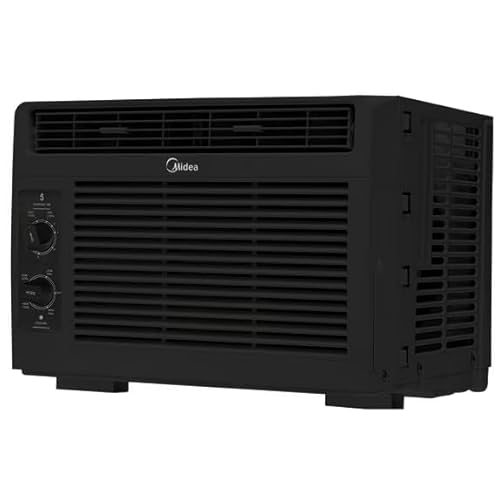
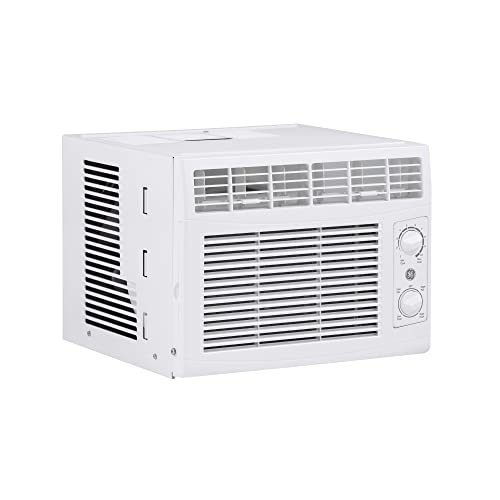
Smallest Most Efficient Window Air Conditioner: Complete Research Guide
Compact dimensions meet high efficiency. Learn how to identify the smallest window AC units that deliver maximum cooling performance per unit of electricity.
Start Your ResearchWhy this guide matters: If you are searching for the smallest most efficient window air conditioner, you likely have two priorities: fitting a compact space and keeping energy consumption low. This guide explains how compact form factors interact with efficiency ratings, which metrics matter, and how to evaluate trade-offs so you can select a unit that fits both your window and your efficiency goals.
What "Smallest" and "Most Efficient" Really Mean
In the window air conditioner market, "smallest" typically refers to physical dimensions — particularly width and height — rather than cooling capacity. Compact units are designed for narrow windows, tight wall openings, or spaces where a standard unit would protrude excessively. Meanwhile, "most efficient" refers to the Combined Energy Efficiency Ratio (CEER), where a higher number indicates more cooling delivered per unit of electricity consumed.
These two priorities can sometimes pull in opposite directions. Ultra-compact units may prioritize size over efficiency, while the most efficient models may use larger chassis to accommodate better heat exchangers and compressor components. The ideal unit for your space strikes a balance that meets your dimensional constraints while delivering solid efficiency for its tier.
Understanding Window AC Dimensions
Before comparing efficiency, it helps to understand how small window ACs are measured. Three dimensions matter most:
- Unit width: The horizontal dimension of the chassis. Narrow units fit into smaller window openings.
- Unit height: The vertical dimension. Low-profile units are important for windows with restricted vertical clearance.
- Unit depth: How far the unit protrudes into the room and extends outdoors. Shallower units are less obtrusive.
Minimum and maximum window opening widths are usually listed in the product specifications. If your window is narrower than standard, explore options for a 14-inch wide small window AC or a 15-inch wide small window AC. For unusually short window openings, a 10-inch height small window AC may be necessary.
Efficiency Metrics That Matter
CEER Rating
The Combined Energy Efficiency Ratio is the primary efficiency metric for window ACs. Higher values indicate more cooling per unit of electricity. This is the number to compare across models.
Energy Star Certification
Indicates the unit meets or exceeds EPA efficiency guidelines. Certified models are independently verified. Learn more in our Energy Star small window AC guide.
Inverter Compressor
Some higher-tier compact units use inverter technology to modulate compressor speed rather than cycling on and off, improving efficiency and temperature stability.
Standby Power Draw
Modern efficient units are designed to draw minimal power when idle, reducing wasted electricity during periods when cooling is not active.
How Compact Size Affects Efficiency
Physical size influences efficiency in several ways. A smaller chassis has less surface area for the condenser and evaporator coils, which can limit heat exchange capability. However, manufacturers use several strategies to maintain efficiency in compact units: more efficient compressors, improved coil designs, and better airflow management.
Entry-level compact units often prioritize size and may carry baseline efficiency. Mid-range models frequently add improved coil designs and better insulation. High-end tier and premium compact units may incorporate inverter compressors and advanced fan designs that achieve efficiency levels comparable to larger units. When comparing, focus on the CEER rating rather than assuming that smaller always means less efficient.
Sizing for Efficiency: The Right BTU for Your Space
Efficiency is not only about the unit's rating — it is also about matching capacity to your room. An oversized unit cools too quickly and cycles frequently, which wastes energy and provides poor humidity control. An undersized unit runs continuously and may never reach the set temperature. The table below provides a general reference for compact window units.
| Cooling Capacity | Typical Room Size | Best For |
|---|---|---|
| 5,000 BTU | Up to 150 sq ft | Small bedrooms, dorm rooms, compact offices |
| 6,000 BTU | 150 – 250 sq ft | Studio apartments, guest rooms, small living areas |
| 8,000 BTU | 250 – 350 sq ft | Larger bedrooms, open-plan studio layouts |
For a deeper breakdown, explore our guide to small air conditioners for small rooms and the room size guide for 5,000 BTU units.
Features That Combine Compactness with Efficiency
- Programmable or smart thermostat controls: Reduce runtime during unoccupied hours. See our guide to small air conditioners with thermostats.
- Remote control and Wi-Fi connectivity: Convenient adjustments without reaching the unit. Explore small window ACs with remote control.
- Sleep mode and eco mode: Gradually adjust temperature and fan speed to balance comfort and efficiency overnight.
- Washable filter access: Easy-access filters encourage regular cleaning, which preserves airflow and efficiency.
- Quiet operation: Especially important in bedrooms and home offices. Look for models with low decibel ratings.
- Compact depth: Shallow units protrude less into the room, preserving floor space and reducing visual bulk.
Installation and Window Compatibility
Most compact window ACs are designed for double-hung windows, but exact compatibility varies. Before selecting a model, measure the width and height of your window opening and compare against the unit's minimum and maximum window width specifications. A 12-inch wide small window AC or a 20-inch wide model may be appropriate depending on your opening.
For sliding or side-to-side windows, special considerations apply. Review our guide to a small air conditioner for a side sliding window or a side-to-side window air conditioner. For vertical windows, a vertical window air conditioner may be required.
Proper installation includes supporting the unit securely and ensuring a slight downward tilt toward the exterior so condensate drains correctly. If you are not comfortable with the installation, consider hiring a professional — our guide on finding someone to install a window air conditioner can help.
Maintenance for Sustained Efficiency
Even the most efficient compact window AC will lose performance if neglected. Regular maintenance preserves airflow, reduces strain on the compressor, and keeps energy consumption closer to the rated efficiency. Key tasks include:
- Cleaning or replacing the air filter every two to four weeks during heavy use.
- Checking and clearing the condensate drain path to prevent water backup.
- Inspecting the exterior grille and coils for debris, leaves, or pollen buildup.
- Sealing gaps around the installed unit to prevent cooled air from escaping.
- Having the unit professionally serviced periodically if it runs year after year.
For a broader maintenance routine, refer to our resources on single-room heating and air conditioning units.
Common Questions About Compact Efficient Window ACs
Can a small window AC be highly efficient?
Yes, provided the model carries a competitive CEER rating for its capacity. Compact units can achieve strong efficiency through improved compressor design, better coil layouts, and inverter technology in higher tiers.
Does a smaller unit always use less electricity?
Not necessarily. Electricity consumption depends on capacity, efficiency rating, and runtime. A small unit with a poor CEER rating may consume more over time than a slightly larger unit with a higher CEER rating, especially if the smaller unit runs continuously to keep up.
What is the smallest window AC available?
Ultra-compact units exist for very narrow windows, some with widths as low as 12 inches. Explore our guide to the smallest window air conditioner you can buy for more detail.
Are inverter window ACs more efficient than traditional models?
Inverter compressors modulate speed rather than cycling on and off, which typically improves efficiency and temperature stability. However, inverter technology is more common in higher-tier models and mini-splits than in entry-level window units.
Can I use a compact window AC in a room without a traditional window?
Window units require a compatible window opening. For rooms without suitable windows, alternative solutions like portable units or through-the-wall installations may be necessary. Explore options for a single-room AC unit without a window.
Narrowing Down Your Options
When comparing compact window air conditioners for efficiency, organize your evaluation around four criteria: physical dimensions relative to your window, CEER rating, capacity match for your room, and the feature set that matters most for your daily use. Entry-level compact models cover the essentials, while mid-range and premium tiers add inverter compressors, quieter operation, and smarter controls.
If your priority is maximum cooling power in a compact frame, review our roundup of the smallest most powerful window air conditioner options. For spaces where size is the absolute constraint, consider a small but powerful window air conditioner.
Ready to Compare Compact Efficient Window ACs?
Explore our curated selection of small, efficient window air conditioners and find the right fit for your window and your efficiency goals.
View Recommended Models