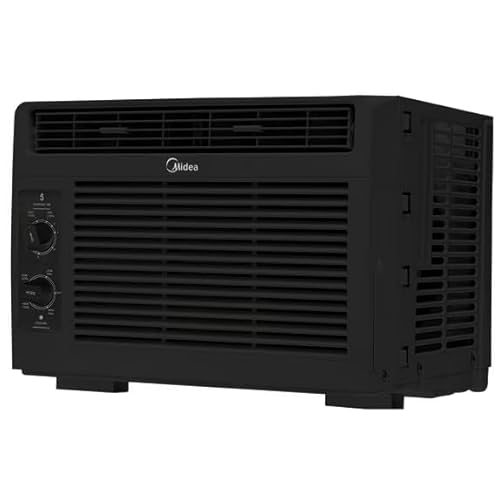
Small Window Air Conditioner 10 Inch Height: Complete Guide
Some windows simply do not have much vertical clearance. Older homes, basement windows, and certain casement-style frames often offer only a narrow opening that standard window air conditioners cannot fit. A small window air conditioner with 10 inch height is designed exactly for these low-profile openings, delivering reliable cooling without requiring a window replacement.
This guide explains what a 10-inch height window AC actually means, how to measure your window correctly, what capacity to choose for your room, and which features to prioritize. By the end, you will know whether a compact 10-inch unit will fit your window and how to install one safely.
Key takeaway: A 10-inch height window AC refers to the vertical height of the unit's chassis, not the window opening. Your window still needs slightly more clearance than the unit itself for the mounting frame and sealing. Always measure both the unit dimensions and your window opening before purchasing.
What "10 Inch Height" Actually Means
When a product is described as a 10-inch height window air conditioner, the number refers to the height of the unit's main body. This is the dimension that determines whether the AC can fit vertically within your window opening. The unit's width and depth matter too, but height is usually the limiting factor in short windows.
Key dimensions to understand:
- Unit height: The vertical dimension of the chassis. A 10-inch unit is roughly 10 inches tall at its tallest point.
- Minimum window height: Usually slightly more than the unit height to allow for the mounting bracket and sealing panels. A 10-inch unit often requires a window opening of at least 12 to 13 inches.
- Unit width: Typically 15 to 19 inches for compact models. Check that your window opening is wide enough.
- Unit depth: How far the unit extends into the room and outdoors. Compact units are usually shallower, which helps in tight spaces.
If your window opening is between roughly 12 and 14 inches tall, a 10-inch height AC is a strong candidate. If your opening is even smaller, you may need a specialized narrow unit or a non-window alternative.
Measuring Your Window Correctly
Accurate measurement is the most important step before buying any window AC. Follow this process:
- Measure the clear opening height: Open the window fully and measure from the sill to the bottom of the upper sash. This is the usable vertical space.
- Measure the clear opening width: Measure the distance between the left and right window jambs at the widest point.
- Measure the sill depth: Measure how deep the windowsill is from front to back. The unit needs to rest securely on the sill.
- Check the window type: Double-hung windows are the most compatible. Sliding and casement windows require specialized units.
- Note any obstructions: Window cranks, locks, and storm window frames can reduce usable space.
Compare your measurements against the unit's minimum and maximum window dimensions in the product specifications. Always leave a small margin — a unit that fits exactly with no clearance is difficult to install and may not seal properly.
Is a 10-Inch Unit Right for Your Window?
A 10-inch height window AC is a good fit when:
- Your window opening is between 12 and 15 inches tall.
- You have a standard double-hung window with adequate sill depth.
- You need a compact unit for a small room.
- You want a low-profile installation that does not block much of the window.
It may not be suitable when:
- Your opening is under 12 inches tall. In that case, look for the smallest window air conditioner you can buy or consider a portable or mini-split alternative.
- Your window is a slider or casement type. A slider casement window air conditioner or a small air conditioner for a side-sliding window is the correct category.
- You need to cool a large room. A 10-inch unit is typically 5,000 to 8,000 BTU and best suited to small spaces.
Sizing the Cooling Capacity
Compact 10-inch height units are usually available in capacities from about 5,000 to 8,000 BTU. Match capacity to room size and heat load:
- Up to 150 sq ft: 5,000 to 6,000 BTU
- 150 to 250 sq ft: 8,000 BTU
For a detailed breakdown of the smallest capacity tier, see the guide on room size for a 5,000 BTU air conditioner. For a full sizing walkthrough, read how to size an air conditioner.
Increase capacity by roughly 10 to 20 percent if the room faces south or west, has large unshaded windows, or contains heat-generating electronics. Decrease capacity for shaded rooms and basements. Avoid oversizing, which causes short cycling and leaves the room humid.
Other Compact Window Sizes to Consider
If a 10-inch unit does not quite fit, other narrow window AC categories may work:
- 12 inches wide — for narrow horizontal openings
- 14 inches wide — slightly wider compact units
- 15 inches wide — common compact width
- 20 inches wide — mid-size compact units
- 21 inches wide — wider compact options
If your window is tall but narrow (vertical slider), a small window air conditioner for a vertical window or a small vertical air conditioner window unit is the correct category. For general compact cooling, the small room air conditioner window guide covers the basics.
Features to Prioritize in a 10-Inch Unit
Adjustable Thermostat and Remote
A digital thermostat keeps the room at a stable temperature and prevents constant cycling. A remote control is convenient in a compact room where the unit may sit low or partially blocked. See the small window air conditioner with thermostat and small window air conditioner with remote control categories.
Energy Efficiency
Check the unit's EER or CEER rating. Higher ratings indicate more efficient cooling per unit of electricity. For a room that will be cooled daily through summer, efficiency matters over the long run. Energy Star certified models are a solid starting point; see the small window air conditioner Energy Star category.
Noise Level
Window units are generally louder than mini-splits. In a bedroom or home office, a unit with a low-speed setting and a decibel rating under about 55 dB is preferable. For bedroom-specific guidance, see the small air conditioners for bedrooms category.
Installation Hardware
Look for a unit with a clear installation manual, included support brackets, and a washable filter that is easy to remove. A well-designed mounting kit is especially important for a compact unit, since a secure fit prevents vibration and air leaks.
Higher BTU in a Small Chassis
Some compact units pack more cooling capacity into a small body. If your room is at the upper end of a capacity tier, look at the small window air conditioner with higher BTU category. If you want the most powerful compact unit available, the smallest most powerful window air conditioner guide covers the strongest options.
Installation Overview
- Confirm the fit: Re-measure the window opening and compare against the unit's minimum window height and width.
- Check the electrical circuit: Most compact units run on a standard 115V grounded outlet and draw under 6 amps. Avoid sharing the circuit with high-draw appliances.
- Install the support bracket: Follow the manufacturer's instructions and secure the bracket to the window frame and sill.
- Lift the unit into place: Have a second person help if the unit is heavy. Ensure it rests level on the bracket and sill.
- Close the window sash: The sash should rest against the unit's top seal.
- Install the sealing panels: Fill any gaps on the sides with the included accordion panels.
- Seal gaps: Use foam or weather stripping where needed to prevent air leaks.
- Test the unit: Confirm cooling, drainage, and that the unit is stable.
If you are not comfortable lifting the unit or securing the bracket, professional installation is worthwhile. See someone to install a window air conditioner for guidance on hiring help.
Maintenance and Troubleshooting
A compact window AC needs the same routine care as any window unit. Clean the filter every two to four weeks during heavy use. Inspect the outdoor side of the unit for debris and clear any blockages. Check the bracket and seals each season.
Common issues include:
- Weak cooling: Often a dirty filter or blocked outdoor coil. See the AC not cooling solution guide.
- Water leakage: Usually a blocked drain or improper slope. See the AC leaking water solution guide.
- Vibration or noise: Loose brackets or debris in the fan. Check mounting hardware first.
- Short cycling: Often caused by an oversized unit or a faulty thermostat.
For seasonal upkeep, the seasonal AC checklist covers the tasks that keep a compact unit running efficiently year after year.
When a Window AC Is Not Feasible
If your window opening is too small even for a 10-inch unit, or if you cannot modify the window at all, consider these alternatives:
- Portable AC with a vent kit: Works with sliding doors and many window types. See the sliding window portable air conditioner kit and the small portable air conditioner for small room guide.
- Ductless mini-split: The best long-term solution for a room without a suitable window. A single-zone mini-split delivers quiet, efficient cooling without window space.
- Evaporative cooler: In dry climates, a small evaporative air cooler provides low-power cooling without venting.
- Freestanding unit: A single room free-standing air conditioner offers flexibility if you move between rooms.
For rooms with no suitable opening at all, the small air conditioner that doesn't need a window guide covers the full range of windowless options.
Frequently Asked Questions
Ready to Choose Your 10-Inch Height Window AC?
Compare top-rated compact window air conditioners selected for short window openings and small rooms.
View Recommended Units