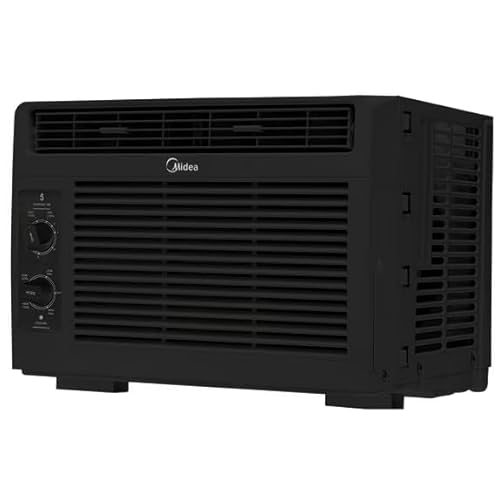
Smallest Window Air Conditioner You Can Buy
A focused research guide to the most compact window air conditioners on the market — real dimensions, BTU ranges, window requirements, and the features that matter in a tiny unit.
Why this guide exists: If you are searching for the smallest window air conditioner you can buy, you likely have a narrow window, a tight space, or a specific installation challenge. This guide gives you the practical details — dimensions, capacity, and installation constraints — so you can shortlist the right compact unit with confidence.
How Small Can a Window Air Conditioner Get?
The smallest window air conditioners available today are typically 5,000 BTU units. These compact models generally measure around 16 to 18 inches in width, 12 to 14 inches in height, and 13 to 16 inches in depth. A handful of specialized designs push the width down to roughly 15 inches, though these often trade capacity or feature set for the smaller footprint.
Physical size is driven by the compressor, condenser coil, and evaporator coil. A lower BTU rating allows a smaller compressor and smaller coils, which is why 5,000 BTU units are the most compact. As you move up in capacity, the chassis grows accordingly.
Smallest Width
Around 15–16 inches on select compact models, suitable for narrow window openings that larger units cannot fit.
Smallest Height
Roughly 12 inches on low-profile designs, useful for windows with limited vertical clearance.
Lowest Weight
Compact 5,000 BTU units can weigh as little as 35–45 pounds, making installation a one-person task.
Minimum Window Opening
Most compact units need at least 21–23 inches of window width and 12–14 inches of height for safe installation.
Compact Window AC Dimensions Compared
The table below summarizes typical physical dimensions across the smallest capacity classes. Actual measurements vary by brand and model, so always verify the exact specifications for any unit you consider.
| Capacity | Typical Width | Typical Height | Typical Depth | Best For | Market Tier |
|---|---|---|---|---|---|
| 5,000 BTU | 15 – 18 in | 12 – 14 in | 13 – 16 in | Rooms up to ~150 sq ft; narrow windows | Entry-level |
| 6,000 BTU | 16 – 19 in | 13 – 15 in | 14 – 17 in | Slightly larger rooms; similar window needs | Entry-level |
| 8,000 BTU | 18 – 21 in | 13 – 16 in | 15 – 19 in | Rooms 150–250 sq ft; standard windows | Mid-range |
| 10,000 BTU | 19 – 23 in | 14 – 17 in | 16 – 21 in | Larger rooms; wider window required | Top-tier |
Measurement tip: Measure your window's clear opening width and height, not the frame. The unit must fit through the opening and be supported securely. Account for the side panels that expand to fill gaps — they add a few inches to the effective width requirement.
What to Check Before Buying the Smallest Option
Choosing the absolute smallest unit is not always the right call. Balance physical size against cooling capacity, efficiency, and features.
Smallest vs Most Powerful: Finding the Balance
There is a trade-off between physical size and cooling output. The smallest units cap out around 5,000–6,000 BTU. If your room needs more cooling but your window is narrow, you have a few paths:
| Scenario | Recommended Direction | Why |
|---|---|---|
| Small room, narrow window | 5,000 BTU compact window AC | Fits the opening and matches the cooling load |
| Medium room, narrow window | Higher-BTU compact or AC unit that doesn't need a window | Standard window ACs may not fit; alternatives offer more capacity |
| Small room, need high output | Small but powerful window AC | Compact chassis with higher BTU density |
| Small room, want max efficiency | Smallest most efficient window AC | Balances compact size with strong CEER ratings |
If portability matters more than permanent installation, a smallest portable AC for camping or lightweight portable unit may be a better fit than a window unit.
Key Features in the Smallest Window ACs
Even the smallest units differ meaningfully in features. Focus on the ones that affect daily comfort and long-term reliability.
Digital Thermostat
More precise temperature control than mechanical dials, often with timer and sleep mode. Common on mid-range compact units.
Remote Control
Convenient for wall-mounted or high-installation positions. Available on many remote-control models.
Energy-Saver Mode
Cycles the fan with the compressor to reduce energy use when the set temperature is reached.
Washable Filter
Slide-out access makes routine maintenance simple and keeps airflow strong in a compact chassis.
Auto-Restart
Resumes operation at the previous settings after a power interruption — useful in areas with unstable power.
Sleep Mode
Gradually raises the set temperature overnight for comfort and energy savings; common on digital thermostat models.
Installation Tips for Compact Window Units
A small unit is easier to handle, but installation still requires care. Follow these practices to ensure safe, stable, and efficient operation.
If you are unsure about installation, consider professional help. See someone to install a window air conditioner for guidance on finding qualified assistance.
Maintenance for Long-Term Performance
Compact units have less internal space, so maintenance matters even more. A clogged filter or dirty coil in a small chassis quickly reduces cooling performance and strains the compressor.
For deeper maintenance guidance, review the small air conditioning system overview and seasonal checklist resources.
Frequently Asked Questions
The smallest window air conditioners on the market are typically 5,000 BTU units with physical dimensions around 16 to 18 inches wide, 12 to 14 inches high, and 13 to 16 inches deep. Some compact models measure as little as 15 inches wide, making them suitable for narrow window openings.
Most compact window air conditioners require a window opening at least 21 to 23 inches wide and 12 to 14 inches high. For very narrow windows, look for models specifically designed for 12-inch or 14-inch wide openings. Always measure your window before purchasing.
A small window AC in the 5,000 to 6,000 BTU range is designed for rooms up to about 150 square feet. For larger rooms, you need higher BTU capacity, which usually means a physically larger unit. Choosing an undersized unit for a medium room results in continuous operation without adequate cooling.
Compact window ACs can be quite efficient for their size. Look for models with a high Combined Energy Efficiency Ratio (CEER) and ENERGY STAR certification. Digital thermostats and energy-saver modes on mid-range and top-tier units further improve efficiency by reducing unnecessary compressor cycling.
Standard window ACs are designed for double-hung windows. For sliding windows, you need a unit designed for horizontal installation or a compatible window kit. See small air conditioner for side sliding window and slider casement window air conditioner for options.
Making Your Final Choice
The smallest window air conditioner you can buy is a 5,000 BTU compact model, typically 15 to 18 inches wide. It works best in rooms up to 150 square feet with a standard double-hung window. Before committing, confirm three things: the window opening dimensions, the room's cooling load, and the feature set you want (digital thermostat, remote control, energy-saver mode).
If your window is especially narrow, explore 15-inch wide options and 20-inch wide models. If you need more cooling without a larger chassis, review the smallest most powerful window air conditioner. And if you want the absolute minimum footprint with maximum efficiency, see the smallest most efficient window air conditioner.