
240 Volt Through the Wall Air Conditioner: The Complete Guide
Everything you need to know before choosing a 240 volt through the wall unit — sizing, wiring, efficiency, heating options, installation considerations, and how to match the right model to your room.
START THE BUYING GUIDEWhy 240 volt matters: A 240 volt through the wall air conditioner delivers higher cooling capacity with lower current draw than a comparable 110 volt unit. That makes it the preferred choice for larger rooms, open-plan spaces, and any installation where you need robust, steady cooling without overloading a standard branch circuit. This guide explains how to select, plan, and install one with confidence.
What Is a 240 Volt Through the Wall Air Conditioner?
A through the wall air conditioner is a self-contained cooling unit that is installed permanently through an exterior wall, usually inside a metal sleeve. The 240 volt variant uses a dedicated high-voltage circuit rather than a standard 110 volt household outlet. This design allows the compressor and fan motor to run with greater capacity and usually with better electrical efficiency at the circuit level.
Unlike a window unit that can be removed seasonally, a through the wall unit is a fixed installation. It frees up window space, reduces noise transmission into the room, and is generally more secure. When you combine that with the higher capacity available in 240 volt models, you get a solution that suits bedrooms, living rooms, home offices, and even light commercial spaces such as small waiting areas and studio apartments.
If you are still exploring the broader category, our through the wall AC overview explains how these units compare with window and mini-split systems. For a direct comparison across voltages, the 110 volt through the wall guide covers the lower-capacity alternative.
Why Choose a 240 Volt Model?
Higher Cooling Capacity
240 volt units typically span roughly 10,000 to 24,000 BTU, making them suitable for medium to large rooms and open living areas.
Lower Current Draw
Doubling the voltage roughly halves the current for the same power output, which reduces resistive losses and eases the load on wiring.
Dedicated Circuit Reliability
A dedicated 240 volt circuit keeps the AC isolated from other household loads, reducing nuisance breaker trips during peak summer demand.
Heating and Cooling Options
Many 240 volt models are available as heat-and-cool combos, including efficient heat pump versions for year-round comfort.
Permanent, Secure Install
The unit sits in a wall sleeve and is not easily removed from outside, which improves security and keeps the window area clear.
Quieter Operation
Fixed wall installation reduces vibration and rattling compared with loosely fitted window units, especially in premium and flagship tier models.
How to Size a 240 Volt Through the Wall Unit
Correct sizing is the single most important decision in the buying process. An oversized unit cools too quickly, cycles on and off frequently, and leaves the room feeling clammy because it does not run long enough to remove humidity. An undersized unit runs continuously, struggles on the hottest days, and wears out prematurely.
Use the table below as a starting reference, then refine it with a proper room-by-room load calculation. Factors such as ceiling height, insulation quality, window area, sun exposure, occupancy, and appliance heat all shift the final number.
| Cooling Capacity (BTU) | Typical Room Size | Best For | Voltage Class |
|---|---|---|---|
| 10,000 BTU | Up to 300 sq ft | Bedrooms, small living rooms, home offices | 240 volt |
| 12,000 BTU | 300 – 450 sq ft | Medium living rooms, studio apartments | 240 volt |
| 14,000 – 15,000 BTU | 450 – 700 sq ft | Large bedrooms, open-plan living spaces | 240 volt |
| 18,000 BTU | 700 – 1,000 sq ft | Large living areas, small commercial rooms | 240 volt |
| 24,000 BTU | 1,000 – 1,200 sq ft | Open-plan areas, light commercial spaces | 240 volt |
For a more precise estimate, use our 10,000 BTU through the wall guide or the 18,000 BTU through the wall guide to see how capacity maps to real-world room scenarios. If you are comparing against other form factors, the 14,000 BTU through the wall reference is a useful benchmark for mid-size rooms.
Efficiency Ratings Explained: SEER, SEER2, and CEER
Efficiency is where long-term operating value is decided. Modern through the wall units are rated under the SEER2 framework, which uses updated test conditions that better reflect real-world duct and installation losses. Room air conditioners, including through the wall models, are often rated with CEER or a comparable combined metric.
- SEER2: Seasonal efficiency for central-style and split systems; higher numbers indicate greater seasonal efficiency.
- CEER: Combined energy efficiency ratio for room air conditioners; a practical indicator for through the wall and window units.
- EER: Instantaneous efficiency at a fixed test condition; useful for comparing units in hot climates where peak load dominates.
A higher-rated unit usually sits in the premium or high-end tier, but the difference in annual energy use can be meaningful over a decade of service. That is why it is worth treating efficiency as a long-term investment rather than a secondary spec. Our heat pump through the wall guide explains how heating efficiency compounds the benefit in mixed climates.
Voltage, Amperage, and Circuit Requirements
A 240 volt through the wall air conditioner cannot be plugged into a standard 110 volt receptacle. It requires a dedicated circuit sized to the unit's nameplate amperage, typically between 15 and 30 amps depending on capacity. The circuit must include the correct breaker, conductor size, and receptacle type, and it must be installed in accordance with local electrical codes.
| Typical Capacity | Circuit Amperage | Receptacle Type | Notes |
|---|---|---|---|
| 10,000 – 12,000 BTU | 15 – 20 A | 6-15R or 6-20R | Often the simplest 240 volt upgrade |
| 14,000 – 18,000 BTU | 20 – 25 A | 6-20R or 6-30R | Verify panel capacity before ordering |
| 24,000 BTU | 25 – 30 A | 6-30R | Professional electrician strongly advised |
Always confirm the exact nameplate rating of the specific model you plan to buy. The table above is a planning reference, not a substitute for the manufacturer's installation manual. If your panel is already near capacity, a load calculation by a licensed electrician will tell you whether an upgrade or a different unit size is the safer path.
Installation Considerations for 240 Volt Units
Installation is more involved than a window unit because the wall opening must be framed, the sleeve must be level and properly flashed, and the electrical circuit must be run to the correct location. A clean installation protects the wall cavity from moisture and ensures the unit drains condensate correctly.
- Wall opening and sleeve: The rough opening must match the sleeve dimensions, and the sleeve must slope slightly outward for drainage.
- Framing and support: Larger 240 volt units are heavier and need solid framing or a support bracket rated for the weight.
- Electrical rough-in: Run the dedicated circuit before the wall is closed up where possible; surface conduit is an option for retrofits.
- Weather sealing: Use flashing, sealant, and an exterior trim kit to prevent air and water infiltration.
- Clearances: Respect the manufacturer's minimum clearances on the exterior for airflow and service access.
If you are replacing an existing unit, the through the wall replacement guide walks through sleeve compatibility and measurement checks. For new installations, the installer guide explains how to vet a qualified contractor and what to expect during the job.
Common Sleeve Sizes and Fitment
Through the wall units are built around standard sleeve dimensions, but the exact size varies by brand and capacity. Measuring the existing sleeve before you shop is essential, especially for replacement projects. The most common dimensions are listed below, with dedicated guides for each.
| Sleeve Size | Typical Use | Reference Guide |
|---|---|---|
| 26 x 16 inches | Common mid-capacity units | 26 x 16 guide |
| 26 x 17 inches | Mid-to-large capacity units | 26 x 17 guide |
| 26 x 18 inches | Larger capacity and heat pump models | 26 x 18 guide |
| 27 x 17 inches | Selected premium models | 27 x 17 guide |
| 19 x 14 inches | Compact and smaller-room units | 19 x 14 guide |
If the sleeve does not match, a trim kit or adapter may bridge small differences, but the unit must never be forced into an undersized opening. For a broader look at fitment across brands, the through the wall air conditioning units overview covers the categories in more detail.
Features Worth Prioritizing
Heat Pump or Electric Heat
Heat pump models move heat rather than generating it, which makes them efficient in the long run for mixed climates.
Inverter Compressor
Variable-speed operation improves temperature stability and reduces on-off cycling, especially in premium tier units.
Wi-Fi and Smart Control
Remote scheduling and app control add convenience; see the Wi-Fi through the wall guide.
Dehumidification Mode
Useful in humid climates where moisture control matters as much as temperature; see the dehumidifier guide.
Sleep Mode and Timers
Gradual temperature shifts overnight improve comfort and reduce energy use without compromising sleep quality.
Washable Filters
Easy-access filters lower maintenance effort and help the unit sustain efficiency between professional service visits.
Maintenance That Protects Your Investment
A through the wall unit is exposed to outdoor conditions year-round, so routine maintenance matters more than with a seasonal window unit. A simple schedule keeps efficiency stable and extends service life.
- Monthly: Rinse or vacuum the indoor air filter; a clogged filter forces the compressor to work harder.
- Seasonally: Inspect the exterior coil for debris, leaves, and pollen buildup; clean gently with coil cleaner and water.
- Annually: Check the condensate drain path, verify the seal around the sleeve, and have a technician inspect refrigerant charge and electrical connections.
- Before summer: Confirm the breaker and receptacle are in good condition, and test the unit on a warm day before peak demand arrives.
General maintenance habits carry over from other formats; the same discipline that keeps a standing air conditioner running efficiently applies to a fixed wall unit, just with more attention to the exterior coil and sleeve seal.
Common Buying Mistakes to Avoid
- Choosing capacity by room size alone: Insulation, windows, and climate can shift the right number by a wide margin.
- Ignoring the electrical panel: A 240 volt circuit may require a panel upgrade if capacity is tight.
- Skipping the sleeve measurement: A unit that does not fit the existing sleeve turns a simple replacement into a construction project.
- Overlooking heating needs: If you need year-round comfort, a heat pump combo is more efficient in the long run than adding a separate heater.
- Chasing the lowest efficiency tier: Entry-level units can be fine for occasional use, but a mid-tier or premium unit often delivers better long-term value for daily cooling.
For a broader comparison across the category, the top-rated through the wall air conditioner roundup summarizes the leading options by tier and use case.
Quick Buying Checklist
| Decision | What to Confirm | Why It Matters |
|---|---|---|
| Capacity | Load calculation result in BTU | Prevents short cycling and humidity problems |
| Voltage | 240 volt dedicated circuit availability | Ensures safe, code-compliant operation |
| Sleeve size | Exact wall opening dimensions | Avoids fitment surprises on installation day |
| Efficiency | SEER2 or CEER rating | Determines long-term energy use |
| Heating | Heat pump vs electric resistance | Impacts year-round comfort and efficiency |
| Smart features | Wi-Fi, scheduling, app control | Convenience and better energy management |
Frequently Asked Questions
What size room can a 240 volt through the wall air conditioner cool?
A 240 volt through the wall air conditioner typically ranges from 10,000 to 24,000 BTU, which can cool rooms from roughly 300 to 1,200 square feet depending on insulation, ceiling height, sun exposure, and climate zone. Always perform a proper load calculation before selecting a capacity.
Do I need a dedicated circuit for a 240 volt through the wall AC?
Yes. A 240 volt through the wall air conditioner requires a dedicated circuit with the correct amperage, usually between 15 and 30 amps depending on the model. A qualified electrician should verify your panel capacity and install the proper breaker, wiring, and receptacle.
Can a 240 volt through the wall AC provide heating as well?
Many 240 volt through the wall units are available as heating and cooling combos with either electric resistance heat or a heat pump. Heat pump models are generally more efficient in the long run because they move heat rather than generating it.
Is a 240 volt through the wall unit more efficient than a 110 volt model?
240 volt models are not automatically more efficient, but they are capable of higher capacities with lower current draw, which reduces wiring losses and allows larger compressors to operate on standard residential circuits. Efficiency is determined by the SEER or CEER rating, not voltage alone.
How long does installation of a through the wall 240 volt AC take?
A straightforward replacement in an existing sleeve can take a few hours, while a new installation that requires cutting a wall opening, framing, and running a dedicated 240 volt circuit may take a full day or more, especially if an electrician is involved.
Final Thoughts
A 240 volt through the wall air conditioner is a serious, permanent comfort solution for rooms that need more cooling capacity than a standard window unit can reliably provide. The key is to treat the purchase as a system decision: capacity from a real load calculation, a dedicated electrical circuit installed to code, a correctly sized sleeve, and an efficiency tier that matches how often you will run the unit.
Once those fundamentals are in place, the rest of the selection — heating option, smart controls, filter access, and noise level — becomes straightforward. Use the guides linked throughout this page to compare specific capacities, sleeve sizes, and feature sets, and you will be ready to choose with confidence.
Recommended 240 Volt Through the Wall Air Conditioners
⚠️ AFFILIATE DISCLOSURE: This website contains affiliate links. As an Amazon Associate, we earn from qualifying purchases. If you make a purchase through these links, we may receive a small commission at no additional cost to you. Read our full affiliate policy.

ROVSUN Smart 12000 BTU Through the Wall Air Conditioner with Heat, Wall AC Unit & Heater Combo with Remote, APP & Voice Control & Timer Function, Compatible with Alexa/Google Assistant, 230V/60Hz
Check price on Amazon
LG 11,800 BTU Through the Wall Air Conditioner, 115V, Cools up to 530 Sq. Ft. for Bedroom, Living Room, Apartment, with Remote, 3 Cool & Fan Speeds, Universal design fits most sleeves, White
Check price on Amazon
Durastar 12,000 BTU Through the Wall 208/230V Air Conditioner and Remote | 10600 BTU Supplemental Heating, Coverage area 550 square feet
Check price on Amazon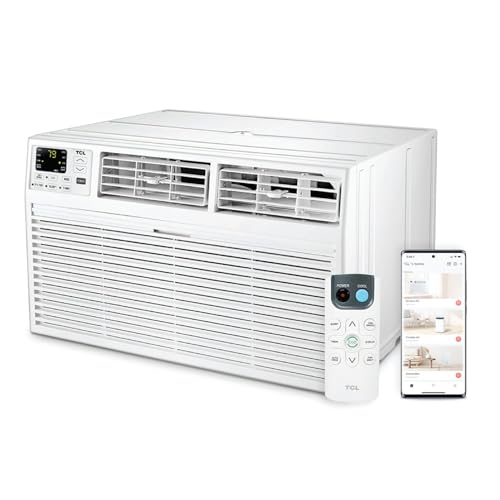
TCL 8,000 BTU Smart Through-the-Wall Air Conditioner with Heater,115V WiFi | 115V, Wall Mounted, Heater, Dehumidifier, Remote Control, Works with Alexa and Google Assistant, Rooms up to 450 Sq.Ft.
Check price on Amazon
ROVSUN Smart 10000 BTU Through the Wall Air Conditioner with Heat, Wall AC Unit & Heater Combo with Remote, APP & Voice Control & Timer Function, Compatible with Alexa/Google Assistant, 230V/60Hz
Check price on Amazon