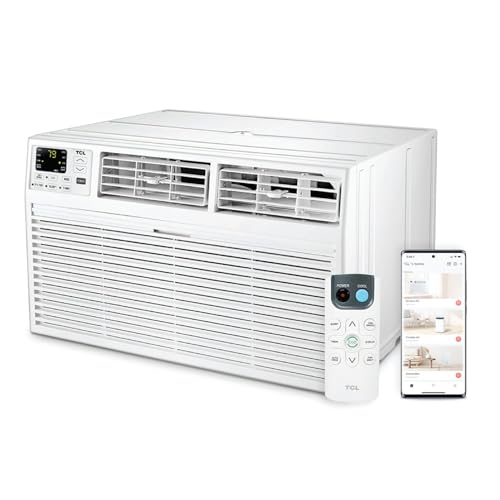
Through the Wall Air Conditioner 110 Volt: The Complete Buyer's Guide
A 110 volt through the wall air conditioner delivers dedicated, flush-mounted cooling without blocking your window. This guide explains how these units work, how to size one correctly, what to check before installation, and which models deserve a closer look.
View Recommended UnitsQuick Summary: A 110 volt through the wall air conditioner is a permanently installed unit that fits into a wall sleeve on an exterior wall. Because it runs on standard household voltage, it is the practical choice for rooms where a dedicated 240 volt circuit is not available. Most 110V models top out around 12,000 BTU and cool rooms up to roughly 550 square feet.
What Is a 110 Volt Through the Wall Air Conditioner?
A through the wall air conditioner is a self-contained cooling unit mounted inside a sleeve that is built into an exterior wall. Unlike a window unit, which hangs in a window opening and can be removed at the end of the season, a through the wall unit sits flush with the interior wall and is designed to stay in place year-round. The "110 volt" specification refers to the electrical supply: these units plug into a standard 110–120 volt circuit, the same voltage used by ordinary household outlets.
This voltage detail matters more than most buyers realize. Larger through the wall units — typically those above 12,000 BTU — usually require a 240 volt circuit, which often means hiring an electrician to run a new line. A 110 volt unit avoids that added complexity in many homes, provided the existing circuit can handle the load. If you are still comparing form factors, our overview of through the wall AC systems explains how they differ from window and portable alternatives.
Because the unit is anchored in the wall, it also frees the window for natural light and views, reduces the security concerns of a removable window unit, and can be sealed more effectively against drafts. These practical advantages are why many homeowners and property managers prefer the through-wall format for bedrooms, home offices, and rental units.
Types of 110 Volt Through the Wall Units
Not every 110 volt through wall air conditioner is built the same way. The main distinctions come down to cooling-only versus heating-and-cooling capability, and to the compressor technology inside.
| Type | Best For | Key Characteristic |
|---|---|---|
| Cooling-only | Bedrooms and offices in mild climates | Simpler design, fewer components to service |
| Heat pump combo | Year-round comfort in one unit | Provides both cooling and efficient heating |
| Electric heat combo | Cold snaps where a heat pump is less effective | Supplemental heating element for lower temperatures |
| Inverter-driven | Quiet, steady temperature control | Variable-speed compressor modulates output |
If you need warmth as well as cooling, explore our guide to through the wall air conditioner with heat pump options before deciding. For buyers focused on quiet operation and smoother temperature swings, the through the wall inverter air conditioner category is worth reviewing. And if you are replacing an existing sleeve-mounted unit rather than starting from scratch, the through the wall air conditioner replacement guide covers sleeve matching and compatibility.
How to Size a 110 Volt Through the Wall AC
Sizing is the single most important decision in the buying process. An undersized unit runs constantly and never quite reaches the set temperature; an oversized unit cools too quickly, cycles on and off, and struggles to remove humidity. Both outcomes waste energy and shorten the equipment's service life.
| Room Area | Recommended BTU | 110V Feasibility |
|---|---|---|
| Up to 150 sq ft | 5,000 – 6,000 BTU | Excellent — widely available |
| 150 – 250 sq ft | 8,000 – 10,000 BTU | Excellent — common configuration |
| 250 – 400 sq ft | 10,000 – 12,000 BTU | Good — verify circuit capacity |
| 400 – 550 sq ft | 12,000 BTU | Borderline — 240V often preferred |
| Above 550 sq ft | 14,000 BTU+ | Not practical on 110V — move to 240V |
These figures assume a standard 8-foot ceiling and average insulation. Adjust upward for rooms with large sun-facing windows, poor insulation, or high occupancy, and downward for shaded, well-insulated spaces. For a more detailed walkthrough of the calculation, see our guide on how to size an air conditioner. If your room falls in the 5,000 BTU range, the through the wall 5000 BTU air conditioner page lists suitable models, while mid-size rooms are covered by the through the wall air conditioner 10000 BTU overview.
Installation and Electrical Requirements
A 110 volt through the wall unit is simpler to install than a 240 volt model, but "simpler" does not mean "plug-and-play." The installation involves cutting or using an existing wall opening, fitting a sleeve, ensuring proper drainage slope, sealing the perimeter against air and water intrusion, and confirming the electrical circuit can carry the load.
- Dedicated circuit: Most 110V through-wall units draw 10–12 amps and should be on a dedicated 15 or 20 amp circuit. Sharing a circuit with other appliances invites nuisance tripping.
- Sleeve dimensions: Measure the wall opening and match it to the manufacturer's rough-in specification. Sleeve sizes are not universal.
- Drainage: The sleeve must slope slightly toward the exterior so condensate drains away from the wall cavity.
- Sealing: Insulate and seal around the sleeve to prevent drafts, moisture, and pest entry.
- Clearance: Keep the outdoor side free of obstructions so the condenser can reject heat efficiently.
If you are not comfortable working with wall openings and electrical circuits, hiring a qualified installer is the safer route. Our directory of through the wall air conditioner installers can help you find local professionals. For projects where the wall opening is a non-standard size, the through the wall air conditioner 26 x 16 and through the wall air conditioner 26 x 17 pages cover common sleeve dimensions in detail.
Efficiency, Noise, and Long-Term Operation
Efficiency for through the wall units is expressed through SEER (and the newer SEER2 standard), EER, and — for heat pump models — HSPF. Higher ratings mean less electricity consumed per unit of cooling delivered. Because a through-wall unit is installed permanently, efficiency differences compound over years of use, making a higher-rated model a worthwhile long-term investment even when the upfront outlay is greater.
Noise is the other factor buyers consistently underestimate. Compressor and fan noise vary significantly between entry-level and premium tiers. In a bedroom or home office, a mid-range or top-tier model with a variable-speed compressor and sound-isolation features is usually the better fit. If quiet operation is your priority, our roundup of the quietest portable air conditioners offers useful comparison context, even though those units differ in form factor.
Maintenance keeps efficiency from degrading. Clean or replace the filter every two to four weeks during heavy use, inspect the outdoor coil annually, and keep the condensate path clear. A professional service visit every one to two years preserves performance and catches small issues before they become repairs. If you are shopping for a whole-home solution rather than a single-room unit, the top rated through the wall air conditioner list is a good starting point for comparing models across tiers.
Common Mistakes to Avoid
- Ignoring circuit capacity: Assuming any 110V outlet will work is the most frequent error. Verify the amperage and whether the circuit is shared.
- Buying before measuring the sleeve: Sleeve dimensions vary by brand and model. Measure the existing opening before ordering.
- Oversizing for the room: A larger unit is not automatically better. Correct sizing controls humidity and temperature more effectively.
- Skipping the seal: Poor sealing around the sleeve lets in hot air, moisture, and insects, undermining the unit's performance.
- Neglecting the filter: A clogged filter forces the compressor to work harder and reduces cooling output.
Related Guides for Further Research
Before finalizing a purchase, these related pages can help you compare form factors, sleeve sizes, and feature sets:
Frequently Asked Questions
Can a through the wall air conditioner 110 volt cool a large room?
A 110 volt through the wall air conditioner typically delivers cooling capacity up to 12,000 BTU, which is suitable for rooms up to approximately 550 square feet. For larger spaces, a 240 volt unit is usually required because the higher voltage supports the greater amperage draw of larger compressors.
Do I need a dedicated circuit for a 110 volt through the wall AC?
Yes. Most 110 volt through the wall air conditioners draw between 10 and 12 amps and should be connected to a dedicated 15 or 20 amp circuit. Sharing a circuit with other appliances can cause nuisance breaker trips and poses an overload risk during peak summer demand.
What is the difference between a through the wall AC and a window AC?
A through the wall air conditioner is permanently installed into an exterior wall sleeve, freeing up the window and providing a more secure, flush fit. A window AC sits in a window opening and can be removed seasonally. Through-wall units generally offer a cleaner look and better sealing, but require cutting into the wall.
Can I replace a window AC with a through the wall 110 volt unit?
In many cases yes, but you must verify the wall sleeve dimensions, the electrical circuit capacity, and whether the existing opening meets the manufacturer's rough-in requirements. A dedicated 110 volt circuit is essential. If no wall opening exists, the project involves cutting and framing, which is best handled by a qualified installer.
How do I maintain a through the wall air conditioner?
Clean or replace the air filter every two to four weeks during heavy use, inspect and clean the outdoor coils annually, keep the drain passages clear, and schedule a professional check every one to two years. Regular maintenance preserves efficiency, reduces noise, and extends the unit's service life.