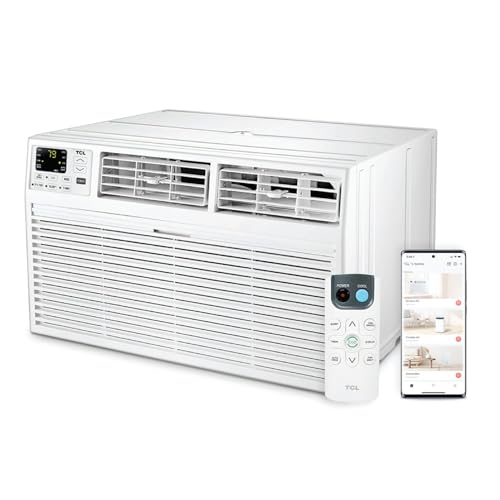
Top Rated Through the Wall Air Conditioner: Complete Buying Guide
Everything you need to know before choosing a through the wall air conditioner — sizing, efficiency ratings, installation requirements, and the features that separate a top-tier unit from an entry-level one.
Why a Through the Wall Air Conditioner Deserves Your Attention
A through the wall air conditioner sits inside a permanent sleeve built into an exterior wall. Unlike a window unit that blocks part of the window and can be removed by anyone with a screwdriver, a through the wall model is installed once and stays put. That permanent installation brings real advantages: it frees up window space, improves security, reduces vibration noise, and often lasts longer because the chassis is protected by the sleeve and the wall itself.
For homeowners who are tired of seasonal window-unit installation — lifting a heavy box into place every summer and sealing gaps with foam — a through the wall setup is a worthwhile long-term investment. It is also a practical solution for rooms where windows are small, oddly shaped, or needed for ventilation and daylight.
This guide walks you through the decision points that matter most: room sizing, cooling capacity, energy efficiency, voltage, sleeve dimensions, and the features that distinguish a top rated through the wall air conditioner from a basic one. If you are still comparing form factors, our overview of through the wall AC units is a good companion read.
How a Through the Wall Air Conditioner Works
Inside the unit, the cooling cycle is the same as any other room air conditioner. Refrigerant absorbs heat from indoor air across the evaporator coil, the compressor raises the refrigerant pressure and temperature, and the condenser coil releases that heat outdoors. A fan pushes cooled air back into the room while a second fan exhausts hot air through the rear of the sleeve.
What makes the through the wall design different is the enclosure. The wall sleeve isolates the unit from the interior wall surface, which dampens vibration and helps keep operating noise lower than a loosely fitted window unit. The rear grille is exposed to the outdoors, so weather resistance and a proper seal around the sleeve matter a great deal for both efficiency and durability.
Types of Through the Wall Air Conditioners
Cooling-Only Units
These are the simplest configuration: they cool and dehumidify but do not heat. They suit mild climates or rooms that already have a separate heating source. If you only need summer comfort, a cooling-only model keeps the design simpler and the feature set focused.
Heating and Cooling Units
Many through the wall models include a heating element or a reverse-cycle heat pump. A through the wall air conditioner with heat pump can warm a room efficiently in shoulder seasons, while electric-resistance heat models are simpler but use more energy. A combined through the wall heating and cooling unit is the right choice when the room has no other reliable heat source.
Inverter Models
Inverter-driven compressors vary their speed instead of cycling on and off at full power. The result is steadier temperature, lower humidity swings, and quieter operation. A through the wall inverter air conditioner sits at the top-tier end of the category and is the strongest option for bedrooms, home offices, and any space where comfort consistency matters.
Smart and Wi-Fi Models
Wi-Fi connectivity lets you schedule cooling, adjust setpoints remotely, and integrate the unit with a broader smart-home routine. A through the wall air conditioner with Wi-Fi is a practical upgrade for rentals, vacation properties, or anyone who wants to cool a room before arriving home.
Sizing: The Most Important Decision
An undersized unit runs constantly and never fully satisfies the thermostat. An oversized unit cools the air quickly but leaves the room humid and cycles noisily. Both outcomes waste energy and shorten the unit's life. Use the room's square footage as a starting point, then adjust for sun exposure, ceiling height, occupancy, and kitchen heat.
| Room Size | Cooling Capacity | Typical Use |
|---|---|---|
| Up to 150 sq ft | 5,000 – 6,000 BTU | Bedroom, small office |
| 150 – 250 sq ft | 8,000 – 10,000 BTU | Living room, studio |
| 250 – 400 sq ft | 12,000 – 14,000 BTU | Large bedroom, open living area |
| 400 – 550 sq ft | 18,000 BTU | Open-plan space, small apartment |
| 550 – 700 sq ft | 24,000 BTU | Large living area, loft |
These figures assume an 8-foot ceiling and average insulation. Add roughly 10 percent for a sunny south-facing wall, a kitchen area, or a room with several occupants. Subtract a little for a shaded room with few windows. For a more detailed calculation, see our guide on how to size an air conditioner.
Capacity-specific models are worth understanding before you shop. A 5,000 BTU through the wall air conditioner suits a small bedroom, while a 10,000 BTU through the wall air conditioner handles a mid-size living room. Larger spaces may call for an 18,000 BTU through the wall air conditioner or a 24,000 BTU unit.
Energy Efficiency: SEER, EER, and What They Mean
Room air conditioners are rated with EER and the newer SEER2 scale. Higher numbers mean more cooling delivered per unit of electricity, which translates into lower operating impact over the unit's life. Because a through the wall unit is installed permanently, efficiency compounds: a modest efficiency difference between two models can matter for a decade or more.
Look for an ENERGY STAR designation when it is available for the capacity you need. Check our explainer on what a SEER rating is for the full picture, and compare the newer standards in our SEER vs SEER2 guide. For a broader look at efficient options across categories, see the most energy efficient AC units.
Voltage, Circuitry, and Electrical Planning
Through the wall air conditioners come in two electrical families. Small and mid-capacity units typically run on a standard 115-volt circuit, while larger units usually require a dedicated 230/240-volt circuit. Matching the unit to the circuit available in your wall is essential — you cannot simply plug a 240-volt unit into a standard outlet.
If the room already has a dedicated circuit from a previous wall unit, confirm the amperage and breaker size before ordering. If not, an electrician will need to run a new circuit. Our guides on a 110-volt through the wall air conditioner and a 240-volt through the wall air conditioner walk through the implications of each. For a refresher on the underlying wiring, see 110V vs 240V air conditioner and amps and breaker size for AC.
Sleeve Dimensions and Wall Openings
Sleeve size is the detail that trips up the most buyers. Through the wall units are built to fit standard sleeve dimensions, but not all manufacturers use the same opening. Common nominal sizes include 26 x 16, 26 x 17, 26 x 18, 27 x 17, and 19 x 14 inches. Measure the existing sleeve carefully before ordering a replacement, and check whether the new chassis matches both the opening and the mounting rails.
If you are cutting a new opening, confirm the required rough opening with the manufacturer's installation manual and have the wall structure evaluated by a contractor. Specific dimension guides can help you compare options: 26 x 16 through the wall air conditioner, 26 x 17 through the wall air conditioner, 26 x 18 through the wall air conditioner, 27 x 17 through the wall air conditioner, and 19 x 14 through the wall air conditioner.
Features That Separate Top-Tier Units From Entry-Level Models
Once capacity and voltage are settled, the remaining differences are about comfort, control, and durability. Here is how the market tiers typically compare:
| Feature Area | Entry-Level Tier | Mid-Range Tier | Top-Tier |
|---|---|---|---|
| Compressor control | Single-speed cycling | Two-stage or basic inverter | Full inverter, variable speed |
| Noise | Noticeable fan and compressor hum | Improved fan and vibration damping | Quiet operation, insulated chassis |
| Dehumidification | Basic dry mode | Adjustable humidity control | Dedicated dehumidification modes |
| Controls | Mechanical or basic remote | Digital remote, timer | Wi-Fi, app scheduling, smart-home integration |
| Filtration | Standard washable filter | Washable filter with dust indicator | Multi-stage filtration or air-purifying options |
| Build quality | Standard steel chassis | Reinforced chassis, weather-resistant coating | Heavy-duty build, rust-proof finish, long warranty |
For rooms with humidity problems, a through the wall air conditioner with dehumidifier capability is worth prioritizing. For year-round comfort, a through the wall air conditioner and heater combo covers both seasons from a single sleeve. If air quality is a concern, look at models that support enhanced filtration.
Installation: What to Expect
Replacing an existing through the wall unit is usually a manageable job for a competent DIYer: remove the old chassis, inspect and clean the sleeve, check the seal and flashing, and slide in the new unit. Installing a new opening is a different scale of work that involves cutting the wall, framing, flashing, electrical, and finishing.
For a new opening, hire a qualified installer. Our guide to through the wall air conditioner installers explains what to ask and how to vet a contractor. If you are replacing an existing unit, see through the wall air conditioner replacement for the step-by-step process and common pitfalls.
Maintenance That Keeps a Through the Wall Unit Performing
- Clean or replace the filter every two to four weeks during heavy use. A clogged filter reduces airflow and forces the compressor to work harder.
- Inspect the outdoor grille each season for leaves, pollen, and debris. Blocked airflow is the most common cause of reduced cooling.
- Check the sleeve seal for cracks or gaps. Re-caulk as needed to keep hot air and moisture out.
- Clean the condenser and evaporator coils annually or have a technician do it as part of a seasonal service.
- Listen for changes in sound — new rattles or grinding often signal a mounting or compressor issue worth addressing early.
For a broader maintenance routine, see our AC maintenance guide and the seasonal AC checklist. If the unit stops cooling, our troubleshooting article on AC not cooling covers the most common causes.
Through the Wall vs Other Room AC Types
Understanding the trade-offs helps confirm that a through the wall unit is the right fit for your space.
| Type | Best For | Considerations |
|---|---|---|
| Through the wall | Permanent room cooling, window preservation, security | Requires wall opening or existing sleeve; installation planning |
| Window unit | Renters, seasonal use, simple installation | Blocks window, removable, can be noisy |
| Portable AC | Rooms without suitable windows or walls | Floor space, hose venting, generally lower efficiency |
| Mini-split | Whole-room comfort, quiet operation, efficiency | Professional installation, higher upfront investment |
| Central AC | Whole-home cooling | Ductwork required, major installation project |
If you are still deciding between permanent wall installation and a movable solution, our comparison of through the wall air conditioning units and the guide to stand-alone air conditioner units may help. For rooms where ductwork is impossible, a ductless mini-split AC is the other major permanent option.
What Makes a Through the Wall Air Conditioner "Top Rated"
Ratings and reviews are useful, but they are not all equal. A top rated through the wall air conditioner typically earns that reputation through a combination of factors that hold up over years of use:
- Consistent cooling performance across a range of outdoor temperatures, not just mild summer days.
- Efficient operation for its capacity class, verified by EER or SEER2 figures.
- Durable construction — a solid chassis, weather-resistant coating, and a sleeve that seals properly.
- Quiet operation relative to its size, especially on low and medium fan speeds.
- Reliable controls — a responsive thermostat, intuitive remote, and stable scheduling.
- Strong warranty support on the sealed system and compressor.
- Easy serviceability — filters that come out without tools, accessible coils, and a chassis that slides cleanly from the sleeve.
Reviews from buyers in climates similar to yours are more informative than generic ratings. Pay attention to comments about noise at night, cooling speed on hot afternoons, and how the unit performs in its second or third summer.
Frequently Asked Questions
Can I replace a window unit with a through the wall air conditioner?
Not directly. A through the wall unit needs a sleeve built into the wall. You can install a new opening, but that is a construction project. If you want a permanent solution without cutting a wall, a mini-split is the usual alternative. If you already have a sleeve, replacement is straightforward.
Do through the wall air conditioners need a dedicated circuit?
Larger units almost always require a dedicated circuit, often 230/240 volts at 15 to 30 amps depending on capacity. Smaller 115-volt units may share a circuit only if the total load stays within the breaker rating. Always confirm with a licensed electrician.
Are through the wall units quieter than window units?
Generally yes, because the sleeve and wall dampen vibration and the chassis is more rigidly mounted. The difference is most noticeable on low fan speeds, but the specific model matters more than the category alone.
Can a through the wall air conditioner heat a room in winter?
Only if the model includes a heating element or a heat pump. A heat pump model is more efficient for mild winters, while electric-resistance heat works in colder conditions but uses more energy. Choose based on your climate and how often the room is used in cold months.
How long does a through the wall air conditioner last?
With regular filter cleaning and seasonal coil maintenance, a well-built unit commonly serves 10 to 15 years. Permanent installation protects the chassis from handling damage, which is one reason these units tend to outlast window models.
What size through the wall air conditioner do I need for a bedroom?
Most bedrooms under 250 square feet are well served by an 8,000 to 10,000 BTU unit. Add capacity for a sunny wall or a room that heats up quickly in the afternoon. Use a sizing chart and adjust for your specific conditions.
Continue Your Research
Use these focused guides to narrow down the right configuration for your home: