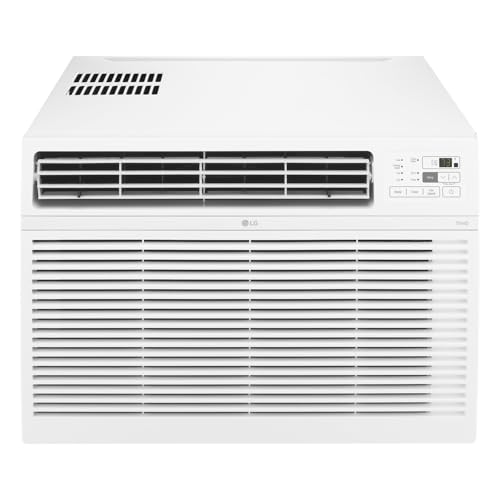
Window Unit Air Conditioner 220V: The Complete Guide
Understand dedicated-circuit cooling, BTU sizing for large rooms, safe installation, and how to choose a high-capacity 220V window unit that performs reliably season after season.
START THE GUIDEWhy 220V window air conditioners matter: If you are cooling a large bedroom, a finished basement, a garage workspace, or an open-plan living area, a standard 110V window unit often runs at its maximum limit and struggles to keep up. A 220V window unit air conditioner draws power from a dedicated 220–240V circuit, enabling higher BTU capacity, more stable compressor operation, and better performance during peak heat. This guide explains what a 220V window AC is, how to size it, how to install it safely, and which tier of unit fits your situation — so you can buy with confidence.
What Is a 220V Window Air Conditioner?
A 220V window air conditioner is a window-mounted cooling unit designed to operate on a 220–240 volt circuit rather than the standard 110–120 volt household circuit. In the United States, most 220V window units are larger-capacity models — typically starting around 12,000 BTU and extending up to 24,000 BTU or more — because higher voltage allows the compressor to draw fewer amps while delivering more cooling power.
These units are commonly used in regions with hot, humid summers, in large rooms that a single 110V unit cannot cool effectively, and in homes where a dedicated circuit is already available or can be installed. If you are comparing options across the category, the broader window air conditioner guide covers form factors, sizing principles, and maintenance fundamentals that apply to both voltages.
How 220V Differs From 110V Window Units
The practical differences go beyond the plug shape. A 220V unit typically:
- Delivers higher cooling capacity (BTU) for larger spaces.
- Uses a dedicated circuit with a NEMA 6-15P or 6-20P plug, not a standard 5-15P household plug.
- Draws fewer amps per BTU, which can reduce stress on wiring when sized correctly.
- Weighs more and requires a sturdier window mount or support bracket.
- Is more commonly available with features like inverter compressors, remote thermostats, and multi-speed fans in the mid-range and premium tiers.
⚠️ Electrical Safety First
A 220V window air conditioner must be connected to a dedicated 220–240V circuit protected by an appropriately sized breaker. Never use an adapter, extension cord, or plug converter to force a 220V unit into a 110V outlet. If your home does not have a suitable circuit near the installation window, consult a licensed electrician before purchasing the unit. Proper circuit sizing protects both the appliance and your household wiring.
How to Size a 220V Window AC for Your Room
Sizing is the single most important decision before buying any window air conditioner. A unit that is too small will run continuously and fail to reach the set temperature; a unit that is too large will short-cycle, leaving the room feeling clammy and wasting energy. For 220V units, the stakes are higher because these units are designed for larger spaces and cost more to install correctly.
| Room Size (sq ft) | Suggested BTU Range | Typical Voltage | Best For |
|---|---|---|---|
| Up to 150 | 5,000 – 6,000 BTU | 110V | Small bedrooms, studios |
| 150 – 250 | 8,000 – 10,000 BTU | 110V | Medium bedrooms, home offices |
| 250 – 400 | 12,000 – 14,000 BTU | 110V or 220V | Large bedrooms, small living rooms |
| 400 – 700 | 15,000 – 18,000 BTU | 220V | Open living areas, master suites |
| 700 – 1,100 | 20,000 – 24,000 BTU | 220V | Large living rooms, finished basements |
The table above is a starting point. Adjust upward for south- or west-facing windows, poor insulation, vaulted ceilings, or kitchens with heat-generating appliances. Adjust downward for heavily shaded rooms, mild climates, or well-sealed modern construction. For a deeper walkthrough of the calculation, the BTU calculator by room size and the guide on how to size an air conditioner provide room-by-room formulas.
💡 Pro Tip: Match the Circuit, Not Just the Room
Before settling on a BTU rating, confirm what circuit your home can support. A 220V unit typically requires a 15-amp or 20-amp dedicated circuit. If your electrical panel cannot accommodate the circuit, a slightly smaller 220V unit or a high-efficiency 110V model may be the smarter practical choice.
Key Factors When Choosing a 220V Window Unit
Beyond BTU and voltage, several factors separate an entry-level 220V unit from a top-tier one. Use the checklist below to evaluate models within your target tier.
Efficiency Rating (EER / CEER)
Higher EER means more cooling per unit of electricity. Mid-range and premium 220V units often carry noticeably better efficiency ratings than entry-level models. Look for ENERGY STAR certification where available.
Inverter vs. Fixed-Speed Compressor
Inverter technology lets the compressor modulate speed instead of cycling on and off. It typically delivers more stable temperatures and lower energy use over long cooling seasons. See the guide to window AC with inverter technology.
Noise Level
Larger 220V units can be louder than small window units. Check decibel ratings and choose a model with a quiet fan setting if the unit will be in a bedroom or living area. The quiet AC guide explains what dB ranges to expect.
Installation Hardware
Heavier units need proper support. A dedicated window AC bracket support or a window air conditioner support system prevents sagging, vibration, and unsafe mounting.
Smart Controls & Thermostat
Many mid-range and high-end 220V units include remote thermostats or Wi-Fi control. See options for a window AC with thermostat and remote control.
Heating Function
Some 220V units double as heat pumps. If you need year-round comfort from a single window installation, explore window air conditioners with heat.
Installation and Electrical Requirements
A 220V window unit is not a plug-and-play replacement for a standard 110V unit. Installation involves both physical mounting and electrical planning. Here is what to expect.
Electrical Circuit Requirements
- Dedicated circuit: The unit should have its own breaker, not shared with other appliances.
- Voltage: 220–240V single-phase, typically with a NEMA 6-15P (15A) or 6-20P (20A) plug.
- Breaker size: Match the breaker to the unit's nameplate amperage — usually 15A or 20A. Do not oversize the breaker.
- Wire gauge: The circuit wiring must be sized for the amperage and run length. An electrician will verify this against local codes.
- No extension cords: 220V window ACs should be plugged directly into the dedicated outlet.
If your home lacks a suitable circuit, a licensed electrician can install one. The cost and complexity depend on panel capacity, wire run length, and local permitting rules. Planning this step before buying prevents the frustration of owning a unit you cannot safely power.
Physical Mounting Considerations
A 220V window unit is typically heavier and larger than a 110V model. Check the unit's dimensions and weight against your window opening, and confirm the window frame can bear the load. Key considerations:
- Use a support bracket rated for the unit's weight. For no-drill options, see window AC bracket without drilling.
- Ensure the unit slopes slightly outward for proper condensate drainage, or use a model designed to manage water without dripping, such as a window AC unit that doesn't drip water.
- Seal gaps around the unit with the included insulation panels or a window AC installation kit to prevent hot air infiltration.
- For non-standard windows — sliding, casement, or crank-out — confirm compatibility before purchase. The guides on sliding window installation and casement window installation cover adapter options.
💡 Professional Installation vs. DIY
Mechanical mounting of a window unit can often be done by a confident DIYer, but the electrical circuit for a 220V unit should always be installed by a licensed electrician. If you need help locating a qualified installer, see who sells and installs window air conditioners.
Efficiency, Operation, and Long-Term Performance
A 220V window unit is a long-term investment in comfort for a large space. Getting the most from it means understanding how efficiency ratings work and how to operate the unit to avoid unnecessary energy use.
Reading Efficiency Ratings
EER (Energy Efficiency Ratio) measures cooling output per watt of electricity at a specific test condition. CEER is a seasonally adjusted version used for window units in the US. Higher numbers indicate better efficiency. Premium-tier 220V units frequently achieve higher EER values than entry-level models, which can matter significantly over a long cooling season. For a full explanation, read what is an EER rating and what is a SEER rating.
Operating Tips for Large Rooms
- Set the thermostat to the highest comfortable temperature — each degree of extra cooling increases energy use.
- Use the fan-only mode or a ceiling fan to circulate air when full cooling is not needed.
- Clean or replace the air filter every two to four weeks during heavy use. A clogged filter reduces airflow and efficiency.
- Seal window gaps and check the unit's outdoor seal each season.
- Schedule an annual coil cleaning and inspection to maintain performance. The AC maintenance guide walks through the steps.
Common 220V Window AC Problems and Quick Checks
Even well-installed units can develop issues. Most problems have simple diagnostic steps before you call a technician.
| Symptom | Possible Cause | First Check |
|---|---|---|
| Unit runs but does not cool | Dirty filter, low refrigerant, or compressor issue | Clean filter; inspect coils; see not blowing cold air |
| Water leaking inside | Improper slope, clogged drain, or frozen coil | Check tilt and drain path; see leaking water troubleshooting |
| Unit trips the breaker | Circuit overload, failing compressor, or wiring fault | Confirm dedicated circuit; do not reset repeatedly — call an electrician |
| Fan runs but no cold air | Compressor not engaging, thermostat fault, or low charge | Check thermostat setting and power; see fan running but no cooling |
For persistent electrical or refrigerant issues, do not attempt DIY repairs beyond filter cleaning and basic checks. Refrigerant handling requires certification, and circuit faults require a licensed electrician. If the unit needs service, see window unit repair guidance for when to repair versus replace.
Entry-Level, Mid-Range, and Premium 220V Window Units
220V window units fall into recognizable market tiers. Understanding what each tier typically offers helps you decide where to focus your purchase.
| Tier | Typical Characteristics | Best For |
|---|---|---|
| Entry-Level | Fixed-speed compressor, mechanical or basic digital controls, standard fan speeds, basic filter access | Secondary rooms, garages, or seasonal use where simplicity matters |
| Mid-Range | Better EER ratings, digital thermostat, remote control, washable filter, quieter operation, sometimes inverter compressor | Primary bedrooms and living areas with daily use |
| Premium | High EER, inverter compressor, Wi-Fi or smart thermostat compatibility, multi-speed fan, enhanced filtration, quieter operation | Large open-plan spaces, long cooling seasons, and buyers prioritizing efficiency and control |
If you value convenience and lower long-term energy use, a mid-range or premium tier unit is usually the better fit for a primary living space. If the unit will run only occasionally in a workspace or guest room, an entry-level 220V model can be a solid choice for the tier. To compare specific model types, browse the window unit category and the broader window air units overview.
When a 220V Window Unit Might Not Be the Right Choice
A 220V window unit is an excellent solution for many large-room cooling needs, but it is not the only option. Consider alternatives if any of the following apply:
- You cannot install a dedicated circuit: A high-efficiency 110V unit or a portable air conditioner may be more practical.
- You need multi-room cooling: A ductless mini-split system or central air conditioning may be more efficient across an entire home.
- Your windows are not window-AC friendly: A through-the-wall AC or mini-split could be a better fit. For non-standard window types, see the guides on casement windows and vertical windows.
- You want whole-home humidity control: A window unit cools but is not a substitute for a whole-house dehumidifier in consistently humid climates.
Frequently Asked Questions
Can I plug a 220V window air conditioner into a regular outlet?
What size room can a 220V window AC cool?
Is a 220V window AC more efficient than a 110V unit?
Do 220V window air conditioners require a special installation kit?
Can a 220V window unit be installed in a sliding or casement window?
What should I do if my 220V window unit trips the breaker?
Can a 220V window unit be used in a garage or basement?
Final Thoughts: Choosing Your 220V Window Unit
A 220V window unit air conditioner is a powerful, practical solution for cooling large rooms — but it rewards planning. Confirm your circuit situation before buying, size the unit to the room rather than guessing, and invest in proper mounting hardware. Within the category, choose the tier that matches how often the unit will run and how much control and efficiency you value.
If you are still comparing window AC types, the full window air conditioner guide covers sizing, efficiency, and maintenance across all voltages. If you have decided on a 220V unit, review the remote control window AC and inverter window AC guides to narrow down features. For rooms where a 220V unit is not feasible, the small room window AC guide and the overview of window air conditioning units can help you compare alternatives.