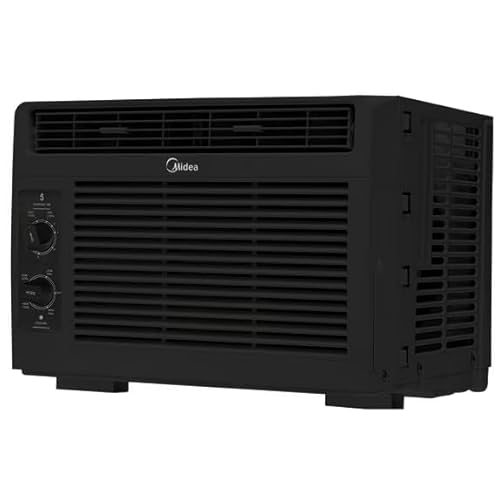
5000 BTU Window Air Conditioner with Thermostat: Complete Buying Guide
Everything you need to know about choosing, installing, and maximizing a 5000 BTU window AC with thermostat for small rooms and efficient cooling.
Why a 5000 BTU window air conditioner with thermostat? For rooms up to 150 square feet, a 5000 BTU window AC delivers targeted cooling without the complexity of ductwork or the footprint of a portable unit. When paired with a built-in thermostat, it automatically maintains your set temperature, cycling the compressor on and off to avoid unnecessary energy use. This guide covers capacity matching, thermostat types, efficiency ratings, installation, and tier-based recommendations to help you make an informed decision.
What Is a 5000 BTU Window Air Conditioner?
A 5000 BTU window air conditioner is a compact cooling unit designed for small spaces. BTU (British Thermal Unit) measures cooling capacity — 5000 BTU is the entry point for window units and is ideal for rooms up to roughly 150 square feet. These units mount directly in a window frame, pulling indoor air through a filter, cooling it via refrigerant coils, and expelling heat outdoors through the back of the unit.
The "with thermostat" specification is critical. It means the unit has a temperature sensor and control mechanism that lets you set a target temperature. Once the room reaches that setpoint, the compressor disengages, saving energy and preventing overcooling. This is a meaningful upgrade over units that only offer fan-speed control or basic on/off operation.
If you are exploring the broader category of small-capacity cooling, see our 5000-6000 BTU AC guide for context on how these units compare to slightly larger options. For a direct product-focused look, the 5000 BTU air conditioner with thermostat page offers additional comparisons.
Room Size and Cooling Capacity: Is 5000 BTU Enough?
Matching cooling capacity to room size is the single most important decision in window AC selection. An oversized unit cools too quickly without dehumidifying properly, leaving the room feeling cold and clammy. An undersized unit runs continuously and never reaches the setpoint. The table below shows the practical range for a 5000 BTU unit.
| Room Type | Typical Area | 5000 BTU Suitability |
|---|---|---|
| Small bedroom | 100–150 sq ft | Excellent match |
| Home office / study | 100–150 sq ft | Excellent match |
| Studio apartment | Up to 150 sq ft | Good match |
| Dorm room | 100–130 sq ft | Excellent match |
| Living room | 200+ sq ft | Likely insufficient |
Several factors reduce effective cooling capacity: direct sunlight on the window, poor insulation, kitchen heat nearby, and multiple occupants. If your room has any of these, consider a slightly larger unit. The 8000-10000 BTU range may be more appropriate for rooms with significant heat gain. Our guide on how to size an air conditioner walks through the manual calculation in detail.
Thermostat Types on 5000 BTU Window ACs
The thermostat is what separates a comfortable, efficient cooling experience from a unit that runs blindly. On 5000 BTU window air conditioners, you will encounter three main thermostat configurations:
Mechanical Thermostat
A rotary dial or slider that sets a relative temperature range. Simple and durable, but imprecise — you adjust based on feel rather than an exact degree readout. Common on entry-level units.
Digital Thermostat
An electronic control with a display showing the set temperature and often the current room temperature. Offers precise setpoints, usually in 1°F increments, and is the standard for mid-range units.
Programmable / Smart Thermostat
Digital control plus scheduling and sometimes Wi-Fi connectivity. You can set different temperatures for different times of day or control the unit remotely. Found on premium-tier models.
For most buyers, a digital thermostat is the sweet spot — precise enough to maintain comfort, without the complexity of programming. If you want app control and scheduling, look for models with Wi-Fi, similar to what you would find in our AC with Wi-Fi and smart control guide. For a broader comparison of thermostat capabilities, the 5000 BTU with thermostat resource covers additional models.
Energy Efficiency: What to Look For
Window air conditioners carry an EER (Energy Efficiency Ratio) or CEER (Combined Energy Efficiency Ratio) rating. Higher is better. For 5000 BTU units, CEER ratings typically range from around 11.0 on essential-tier models to 12.0+ on premium units. A unit with a higher CEER uses fewer watts per BTU of cooling, which matters if you run the AC for several hours daily.
A thermostat contributes directly to real-world efficiency. A unit with a precise digital thermostat and an energy-saving mode will cycle the compressor appropriately rather than running flat-out. Look for models that are ENERGY STAR certified if efficiency is a priority — our ENERGY STAR window AC with remote page lists options that meet those standards. For a deeper explanation of ratings, see window AC energy efficiency rating and energy efficiency ratings explained.
Key Features to Evaluate
Beyond the thermostat, several features affect day-to-day usability and long-term satisfaction with a 5000 BTU window unit:
- Noise level: Compact window units are not silent. Look for models with a "quiet" or "sleep" mode and check decibel ratings if the unit will be in a bedroom. Our quiet air conditioner guide covers this in depth.
- Remote control: A remote lets you adjust temperature and mode without reaching the unit. Many digital-thermostat models include one. See 5000 BTU window AC with remote control for examples.
- Filter access: A washable, slide-out filter makes maintenance easy. Mesh filters capture dust and should be cleaned every two to four weeks during peak season.
- Installation kit: Most 5000 BTU units include window mounting brackets and side panels. Check that the kit fits your window type and width before purchasing.
- Voltage: Nearly all 5000 BTU window ACs run on 115V and plug into a standard outlet. Confirm the circuit can handle the amperage — typically 4–5 amps running, higher on startup.
- Energy saver mode: Cycles the fan with the compressor so the fan does not run continuously, reducing electricity use.
- Auto restart: After a power outage, the unit resumes its previous settings automatically — useful for unoccupied rooms.
Installation Considerations
A 5000 BTU window AC is one of the easier cooling appliances to install, but a few points matter for safety and performance:
Window type: Double-hung windows are the most compatible. Casement and slider windows require specialized units or adapters. If your window setup is unusual, review casement window AC options for reference on how different form factors work.
Support: A 5000 BTU unit weighs roughly 40–50 pounds. Most include a support bracket, but for upper-floor windows or loose frames, an additional L-bracket or window AC support bracket is a wise safety measure. Some municipalities or building managers require professional installation — see companies that install window air conditioners if you prefer to delegate.
Sealing: Gaps around the unit let hot air in and cooled air out. Use the included foam insulation and side panels, and consider weather stripping for older windows. Proper sealing improves efficiency more than most people expect.
Electrical: Plug the unit directly into a wall outlet. Avoid extension cords — they can overheat. If the circuit also powers other heavy appliances, consider a dedicated circuit. Our 110V vs 240V AC guide explains voltage considerations for window units.
Tier-Based Recommendations: Finding the Right Fit
Rather than focusing on specific brands or fluctuating market factors, it is more useful to think in terms of product tiers. The classification below reflects where a 5000 BTU window AC with thermostat sits in the market and what you can expect at each level.
| Tier | Best For | Typical Characteristics |
|---|---|---|
| Essential Tier | Occasional use, guest rooms, tight installation spaces | Mechanical or basic digital thermostat, 2-way airflow, washable filter, standard installation kit. Solid choice for the category. |
| Balanced Tier | Daily use in bedrooms or home offices | Precise digital thermostat, remote control, energy-saver mode, sleep mode, quieter operation, better CEER. Well-specified for its class. |
| Premium Tier | Primary cooling for a small apartment or studio, users who want automation | Programmable or smart thermostat, Wi-Fi/app control, auto-restart, higher CEER, premium materials in the fascia and controls, often quieter still. |
Entry-level units get the job done but may require more manual adjustment. Mid-range models offer the most sensible balance for most households — the thermostat is precise, the remote adds convenience, and efficiency is meaningfully better. Premium-tier units are a long-term investment for users who value automation and the lowest ongoing energy draw. Our 5000 BTU ENERGY STAR window AC page highlights models that combine efficiency with premium features.
Maintenance for Long-Term Performance
A 5000 BTU window AC with thermostat will serve reliably for years if maintained properly. The essentials:
- Clean or replace the air filter every 2–4 weeks during cooling season. A clogged filter restricts airflow, forcing the unit to work harder and reducing cooling effectiveness. Most filters are washable — rinse, dry fully, and reinstall.
- Inspect the outdoor coils annually. Dust and debris on the condenser coils reduce heat rejection. Gently brush or vacuum them at the start of the season.
- Check the thermostat calibration. If the unit seems to run too long or short-cycle, verify the thermostat is reading accurately. Digital models are generally stable, but mechanical dials can drift.
- Store or cover the unit in the off-season. If you remove the AC for winter, clean it first and store it upright. If it stays in the window, use a weather cover to keep out drafts and moisture.
- Listen for changes. New rattles, grinding, or reduced cooling often signal a problem that is simpler to address early. Our AC making noise and AC not cooling guides can help diagnose common issues.
5000 BTU Window AC vs. Other Small-Space Cooling Options
A 5000 BTU window unit is not the only choice for small rooms. Here is how it compares to alternatives:
vs. Portable AC: A 5000 BTU portable air conditioner is easier to move between rooms but requires venting through a window and typically has lower efficiency. Window units cool more effectively per BTU and do not consume floor space.
vs. Larger window AC: An 8000 BTU window AC cools a larger area but may short-cycle in a 120 sq ft room. Match capacity to the space. If your room is borderline, review small room window AC reviews for real-world sizing experiences.
vs. Mini-split: A mini-split with thermostat is far quieter and more efficient but requires professional installation and a higher upfront outlay. For a single small room, a window unit is a pragmatic choice.
Bottom Line
A 5000 BTU window air conditioner with a built-in thermostat is the right solution for cooling a small bedroom, office, or studio efficiently and without installation complexity. Prioritize a precise digital thermostat, a CEER rating that reflects the efficiency you need, and an installation kit that matches your window. Choose the balanced tier for daily use and the premium tier if you want scheduling or smart control. If you are still comparing options, our 150 sq ft window AC guide and 5000 BTU air conditioner overview provide further context. For a wider view of what is available, see the top-rated window ACs for slightly larger rooms.