5000 BTU Air Conditioning Unit: The Complete Small-Space Cooling Guide
Everything you need to know about 5000 BTU air conditioners — room sizing, efficiency, installation, maintenance, and how to choose the right model for bedrooms, offices, dorms, and compact apartments.
Quick Summary: A 5000 BTU air conditioning unit is the entry point of the cooling market and the sweet spot for single small rooms. It delivers steady comfort without over-cooling, runs on a standard household outlet, and installs in a window or rolls into place. This guide walks through sizing, efficiency, installation, and maintenance so you can buy with confidence — then use the product picks below to explore real options.
What a 5000 BTU Unit Is and Who It Fits
BTU, or British Thermal Unit, measures how much heat an air conditioner can remove from a space in one hour. A 5000 BTU air conditioning unit removes 5,000 BTUs of heat per hour — enough to keep a compact, well-insulated room comfortable on hot days without cycling aggressively.
This capacity class sits at the bottom of the residential range, and that is exactly its strength. Small units are simpler, lighter, and easier to install than larger systems. They also reach their target temperature quickly, which means less wear on the compressor and more predictable energy use.
The 5000 BTU category is a natural fit for:
- Bedrooms up to roughly 150 square feet
- Home offices and study rooms
- Studio apartments and efficiency units
- Dorm rooms and guest rooms
- Small living rooms, nurseries, and converted attics
If your room is larger, has poor insulation, or faces intense afternoon sun, the next step up is usually a 8000 BTU air conditioning unit, which covers roughly 250 to 350 square feet. For whole-home cooling, compare against a full air conditioning unit overview to see how capacity classes ladder together.
Room Sizing: How Many Square Feet a 5000 BTU Unit Cools
The standard rule of thumb assigns about 20 BTU per square foot of living space. At 5000 BTU, that works out to approximately 250 square feet in a perfectly average room. In practice, real rooms are not average, so the working range for this capacity class is 100 to 150 square feet for reliable comfort, stretching to about 200 square feet in mild climates with excellent insulation.
Capacity Reference Table
| Room Type | Typical Size | 5000 BTU Suitability |
|---|---|---|
| Small bedroom | 80 – 120 sq ft | Excellent fit |
| Home office | 100 – 150 sq ft | Excellent fit |
| Studio apartment | 120 – 180 sq ft | Good fit with moderate sun |
| Dorm room | 90 – 140 sq ft | Excellent fit |
| Small living room | 140 – 200 sq ft | Adequate in mild climates |
| Converted attic bedroom | 100 – 150 sq ft | Check insulation first |
Sizes are general guidance. Adjust upward for heavy sun exposure, top-floor rooms, unshaded windows, and poor insulation.
When to Move Up a Capacity Class
Consider stepping up to a larger unit if any of the following apply:
- The room exceeds 150 square feet with average sun exposure
- Windows face west or south with no shading
- The room sits directly under an uninsulated roof
- The kitchen or laundry area opens into the room
- Multiple occupants use the room at the same time
- Outdoor temperatures routinely exceed 95°F
Oversizing has its own cost: a unit that is too large cools too fast, cycles on and off frequently, and struggles to remove humidity. Sticking with a 5000 BTU unit for a genuinely small room is usually the more efficient decision.
Types of 5000 BTU Air Conditioners
Three form factors dominate this capacity class. Each serves a different installation reality, and the right one depends on your window situation, portability needs, and how permanent you want the setup to be.
Window Units
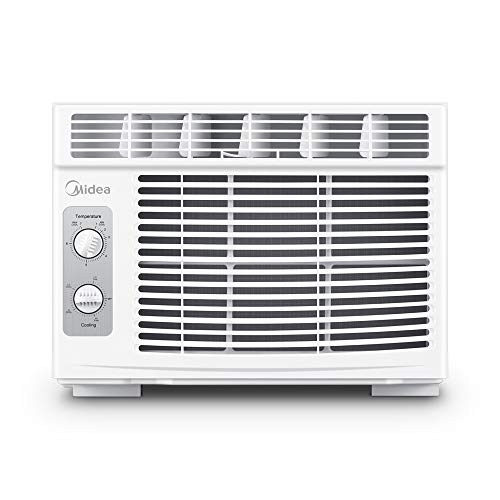
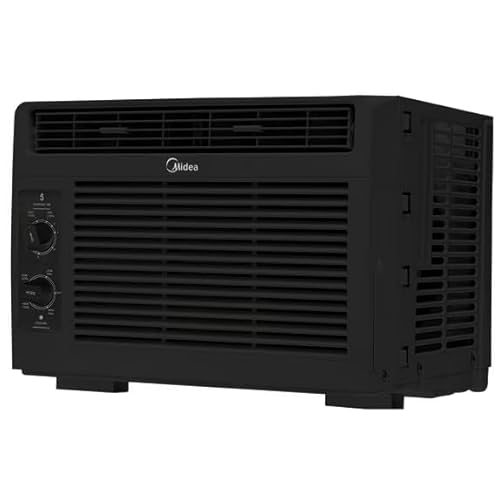
The most common format. A 5000 BTU window unit sits in a double-hung or slider window frame and vents hot air directly outside. Installation takes 15 to 30 minutes with basic tools. It offers the strongest cooling-per-watt performance in this class because there is no hose heat loss. If your window is unusual, review options for air conditioning units for casement windows and units designed for window installation.
Portable Units
A 5000 BTU portable air conditioner rolls between rooms and exhausts through a window hose kit. It trades a bit of efficiency for flexibility. Portable units suit renters, rooms without suitable windows, and spaces where a permanent window install is not practical. If your room has no usable window, explore air conditioning units that do not need a window.
Mini-Split Units
Ductless mini-splits with 5000 BTU indoor heads deliver the quietest, most efficient operation in this class. They require professional installation and a wall-mounted outdoor condenser, but they are the long-term choice for a dedicated bedroom or office where comfort and low noise matter most. See wall-mounted split air conditioning units for a deeper comparison.
| Type | Installation | Best For | Noise Level |
|---|---|---|---|
| Window unit | DIY, 15–30 min | Bedrooms, offices with standard windows | Moderate |
| Portable unit | Minimal, hose kit | Renters, rooms without suitable windows | Moderate to higher |
| Mini-split | Professional | Dedicated rooms, long-term comfort | Very low |
Efficiency Ratings and Energy Use
Efficiency in this capacity class is measured primarily by CEER (Combined Energy Efficiency Ratio) for window and portable units and SEER2 for mini-splits. Higher ratings mean more cooling per unit of electricity, which matters most during long summer runtimes.
A typical 5000 BTU window unit draws around 450 to 550 watts at full load and uses roughly 4 to 5 amps on a 115V circuit. Efficient models with better CEER ratings deliver the same cooling with noticeably less power draw over a season.
What to Look For
- CEER above 11.0 for window units in this capacity class marks a solid efficiency tier
- ENERGY STAR certification indicates the model meets current federal efficiency thresholds
- Inverter compressors in mini-splits modulate output instead of cycling on and off, improving efficiency and humidity control
- Eco mode and programmable timers reduce unnecessary runtime in window and portable units
- Sleep mode gradually raises the setpoint overnight, cutting energy use without sacrificing comfort
For a broader explanation of efficiency metrics, see what a SEER rating means and how modern standards compare. If your goal is minimizing electricity use, explore the most energy-efficient AC options and low-wattage air conditioners that suit small rooms.
Installation and Electrical Requirements
Most 5000 BTU units are the easiest air conditioners to install in the entire market. Window models need a level window sill, a secure support bracket, and a standard 115V outlet. Portable models need a window for the exhaust hose and roughly 12 to 18 inches of clearance around the unit. Mini-splits require a licensed technician for refrigerant line work.
Electrical Checklist
- Circuit: A dedicated 15-amp, 115V circuit is ideal; many 5000 BTU units can share a circuit if nothing else draws heavily
- Outlet: Use a grounded three-prong outlet; never use an adapter plug
- Extension cords: Avoid them; if unavoidable, use a heavy-gauge cord rated for the unit's amperage
- Surge protection: A surge protector extends compressor life in areas with unstable power
Installation Tips
- Tilt a window unit slightly outward so condensation drains outside
- Seal gaps around the window frame with foam insulation to prevent hot air infiltration
- Keep the outdoor side of the unit clear of obstructions for proper heat rejection
- For portable units, keep the exhaust hose as short and straight as possible
If you are unsure about electrical capacity or window suitability, consult a professional. You can compare installation considerations and review service cost expectations before committing to a setup.
Key Buying Factors
Shopping in this capacity class is refreshingly simple once you know what matters. Use this checklist to compare models on equal footing. Note that value tiers below describe market positioning, not numeric figures.
| Factor | What to Look For | Why It Matters |
|---|---|---|
| Capacity match | 5000 BTU for 100–150 sq ft | Prevents short cycling and humidity issues |
| Efficiency | CEER 11.0+ or ENERGY STAR | Lower seasonal energy use |
| Noise level | Below 55 dB on low | Better sleep and focus |
| Installation type | Window, portable, or mini-split | Matches your window and portability needs |
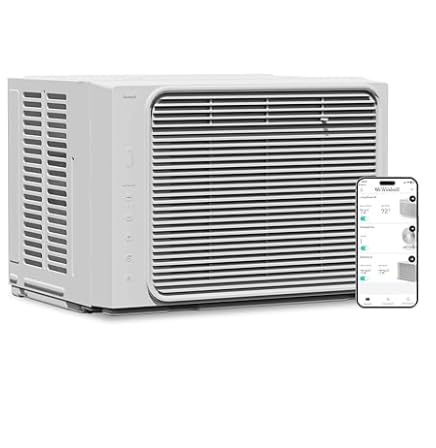
| Smart features | Wi-Fi, timers, app control | Convenience and scheduling |
| Filter access | Washable, front-accessible filter | Easier routine maintenance |
| Market tier | Entry, mid-range, or premium | Aligns features and build quality with expectations |
Value Tiers Explained
Within the 5000 BTU class, market tiers are consistent and easy to read:
- Entry-level — Basic mechanical controls, solid cooling, straightforward installation. A practical starter tier for occasional use.
- Mid-range — Digital controls, timers, better efficiency, quieter operation, and more durable construction. The balanced tier for daily use.
- Premium — Wi-Fi control, inverter compressors (mini-splits), advanced filtration, and the lowest noise in the class. The top-tier choice for a dedicated room.
For rooms with limited window access, see air conditioning units without a window or units without external ventilation. For narrow spaces, air conditioning units for small spaces offers further guidance.
Maintenance and Troubleshooting
A 5000 BTU unit is mechanically simple, and that simplicity makes maintenance easy. A few consistent habits keep cooling performance steady and extend service life.
Routine Maintenance Schedule
- Every 2–4 weeks during heavy use: Clean or replace the air filter
- Monthly: Wipe down the front grille and check the drain path
- Seasonally: Inspect and clean the condenser coils on window units
- Annually: Schedule a professional tune-up for mini-splits and deep-clean window and portable units
For detailed cleaning steps, see air conditioning unit cleaning and service and maintenance guides.
Common Problems
- Not cooling properly: Usually a clogged filter, dirty coils, or low refrigerant. See not cooling properly.
- Blowing warm air: Check the mode setting and compressor startup. See blowing hot air.
- Leaking water: Often a blocked drain or improper tilt on window units. See leaking water.
- Refrigerant leak: Requires a professional. See leaking freon.
Advantages of 5000 BTU Units
- Efficient for single small rooms
- Simple DIY installation
- Runs on standard household power
- Compact and easy to store
- Fast time-to-comfort
Limitations to Consider
- Limited to roughly 150 sq ft
- Not suited to whole-home cooling
- Portable models lose some efficiency
- Window units block part of the view
- Mini-splits require professional install
If a problem persists after basic troubleshooting, consult an air conditioning technician or explore repair companies for professional diagnosis.
Frequently Asked Questions
What size room does a 5000 BTU air conditioner cool?
A 5000 BTU unit comfortably cools rooms of roughly 100 to 150 square feet. It can stretch to about 200 square feet in mild climates with good insulation, but it is not the right choice for larger living areas or open floor plans.
Is 5000 BTU enough for a bedroom?
For most standard bedrooms up to about 150 square feet, yes. If the bedroom gets heavy afternoon sun, sits on a top floor, or has large unshaded windows, a slightly larger capacity may deliver more consistent comfort.
How many amps does a 5000 BTU air conditioner use?
Most models draw 4 to 5 amps on a 115V circuit. Check the nameplate for the exact figure, and avoid sharing the circuit with high-draw appliances like microwaves or space heaters.
What is the difference between 5000 BTU and 6000 BTU?
The extra 1000 BTU adds roughly 10 to 20 square feet of coverage and provides more headroom for heat gain. For a compact, well-shaded room, a 5000 BTU unit is the more precisely matched choice.
Can a 5000 BTU unit run on solar power?
At roughly 450 to 550 watts, it is within reach of a mid-sized solar setup with battery storage, but startup surge and continuous runtime require a properly sized inverter and battery bank. Verify the unit's rated wattage before planning an off-grid installation.
How often should I clean the filter?
Every two to four weeks during heavy cooling season, and at least monthly during light use. A clean filter preserves airflow, cooling performance, and indoor air quality.
Do 5000 BTU units work without a window?
Portable models still need a window or vent for the exhaust hose. Truly windowless options rely on through-wall installation or mini-split systems. See the guide on air conditioning units without a window for alternatives.
Ready to Compare 5000 BTU Units?
You now have the sizing, efficiency, and installation knowledge to choose with confidence. Explore real models in the recommended section below and match a unit to your room.
Explore Recommended UnitsFinal tip: measure your room before you shop, note the window type and outlet location, and decide whether portability matters more than peak efficiency. That three-minute assessment points you to the right form factor immediately. If your space grows beyond the 5000 BTU range, the 8000 BTU class is the natural next step, followed by the 10000 BTU class for larger rooms and open layouts.
For broader context on how this category fits into the wider market, revisit the air conditioning unit guide or compare with single-room cooling options.