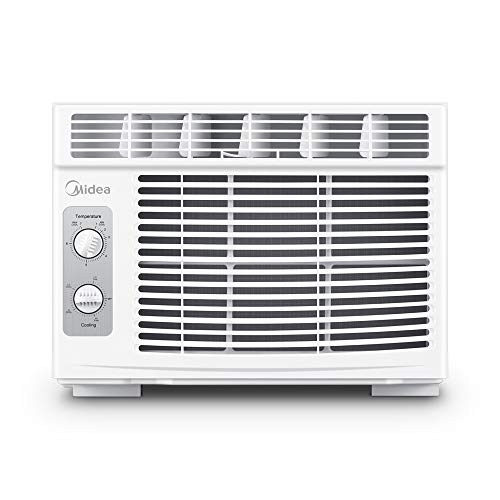
Air Conditioning Units for the Window: The Complete Buyer's Guide
Everything you need to know about window air conditioning units — sizing, efficiency, installation, maintenance, and the features that actually matter before you decide.
START WITH SIZINGWhy this guide exists: Window air conditioning units remain one of the most practical cooling solutions for rooms without ductwork, renters, and homeowners who need targeted cooling without a whole-house system. If you already know you want a window-mounted unit, this guide helps you understand the specifications, installation requirements, and long-term maintenance so your purchase decision is informed and confident.
What Is a Window Air Conditioning Unit?
A window air conditioning unit is a self-contained cooling system designed to sit in a window frame or a specialized wall sleeve. All the key components — compressor, condenser coil, evaporator coil, and fan — are housed in a single chassis. The unit draws indoor air in, cools it, and blows it back into the room while expelling heat outdoors through the back of the chassis. Because everything is integrated, there is no outdoor condenser unit and no refrigerant line set to run through walls.
This makes window units a compelling option for spaces where central air or a ductless mini-split is impractical. They are common in apartments, older homes, bedrooms, home offices, and single-room retrofits. However, they depend on a compatible window opening and a properly supported installation. If your window type is unusual, you may need to explore air conditioning units for casement windows or alternative mounting approaches.
How to Choose the Right Cooling Capacity
Cooling capacity for window units is measured in British Thermal Units (BTU) per hour. Choosing the correct capacity is the single most important decision you will make. An undersized unit runs constantly and never reaches the set temperature. An oversized unit cools the air too quickly, cycles off before it can dehumidify, and leaves the room feeling cold and clammy.
As a general reference, match the unit's BTU rating to the room's square footage, then adjust upward for sun exposure, high ceilings, kitchen heat, or multiple occupants. The table below provides a practical starting point.
| Room Size (sq ft) | Recommended BTU Range | Typical Use Case |
|---|---|---|
| Up to 150 | 5,000 – 6,000 BTU | Small bedroom, studio, office nook |
| 150 – 250 | 8,000 – 10,000 BTU | Standard bedroom, small living room |
| 250 – 400 | 12,000 – 14,000 BTU | Large bedroom, living room, open-plan studio |
| 400 – 600 | 18,000 – 24,000 BTU | Large living area, open-plan space, loft |
| 600+ | 24,000 BTU and above | Multi-room open layouts (consider multiple units) |
If you want a more precise calculation, factor in ceiling height, window orientation, insulation quality, and the number of heat-producing appliances in the room. For a detailed walkthrough, see the how to size an air conditioner guide. For specific capacity brackets, you can also explore 5,000 BTU window units, 8,000 BTU models, 10,000 BTU options, and 18,000 BTU units.
Window AC Tiers: Entry-Level, Mid-Range, and Premium
Window units are not a single category. They span a wide range of build quality, efficiency, and feature sets. Rather than focusing on numeric pricing, it helps to understand the market tiers and what each tier typically delivers.
Essential Tier
Basic mechanical controls or simple digital displays, single-speed compressors, standard washable filters, and straightforward cooling. A solid choice for occasional use in a bedroom or guest room where advanced features are not a priority.
Balanced Tier
Digital thermostats, remote controls, sleep modes, energy-saver functions, and better insulation around the chassis. Mid-range units often run quieter and hold temperature more steadily than entry-level models.
High-End Tier
Inverter-driven compressors, Wi-Fi connectivity, voice assistant support, multi-speed fans, higher efficiency ratings, and refined airflow design. These models are aimed at users who want consistent comfort and lower long-term energy use.
Tier positioning is relative, not absolute. A well-specified mid-range unit can outperform an entry-level unit from a different brand, and a premium model's advantages are most noticeable in rooms where the unit runs for many hours per day. When comparing options, look at efficiency ratings, noise levels, and airflow direction rather than assuming a higher tier automatically means better performance for your specific room.
Efficiency Ratings Explained
Window air conditioners are rated using the Combined Energy Efficiency Ratio (CEER) and, in newer standards, the SEER2 framework. A higher rating means the unit converts more electricity into cooling. Because window units often run for extended periods, the difference between a low-efficiency and a high-efficiency model becomes noticeable over a full cooling season.
- CEER — The standard efficiency metric for window units, combining standby power and seasonal operation.
- ENERGY STAR certification — Indicates the unit meets or exceeds federal efficiency thresholds for its capacity class.
- Inverter compressors — Modulate speed instead of cycling on and off, improving temperature stability and efficiency.
- Energy-saver mode — Turns off the fan when the compressor cycles, reducing unnecessary airflow and power draw.
If efficiency is your priority, review the SEER rating guide and the ENERGY STAR certification overview. For buyers who want the most efficient options available, the most energy efficient AC roundup is a useful next step.
Installation Requirements and Window Compatibility
Before choosing a model, confirm that your window can accommodate it. Most window units are designed for double-hung windows, but many modern kits include adjustable panels for sliding windows and wider openings. Key checks include:
- Window width and height — Match the unit's minimum and maximum window opening dimensions.
- Window sill depth — The unit needs a stable base and proper support brackets.
- Electrical circuit — Larger units often require a dedicated circuit; verify the plug type and amperage.
- Outdoor clearance — The back of the unit needs unobstructed airflow for heat rejection.
- Security and support — Use the manufacturer's bracket or a purpose-built support to prevent sagging and vibration.
If your window is not suitable, you may want to consider a unit that does not need a window or a model without an external unit. For homes where window mounting is not possible at all, the room without window cooling guide covers alternatives. If you prefer professional installation, the installation cost overview explains what to expect from the process.
Features That Matter in Daily Use
Window unit specifications can look similar on paper, but the day-to-day experience varies significantly based on a handful of features. Prioritize the ones that align with how you actually use the room.
| Feature | What It Does | Best For |
|---|---|---|
| Digital thermostat | Sets a precise target temperature and maintains it | Bedrooms and home offices |
| Sleep mode | Gradually adjusts temperature and lowers fan noise overnight | Light sleepers |
| Energy-saver mode | Cycles the fan with the compressor to reduce power draw | Extended daytime use |
| Inverter compressor | Modulates cooling output for stable temperature and efficiency | Rooms used for many hours daily |
| Wi-Fi and smart controls | Remote control via app or voice assistant | Renters and smart-home setups |
| Washable filter access | Front-access filter for quick cleaning | Anyone prioritizing maintenance ease |
| Four-way airflow | Adjustable louvers direct air horizontally and vertically | Rooms with awkward layouts |
Smart features are increasingly common in mid-range and premium units. If remote control matters to you, explore AC with Wi-Fi and smart control. If quiet operation is your top priority, the quiet air conditioner guide covers noise ratings and design differences.
Pros and Cons of Window Air Conditioning Units
Advantages
- Simple installation with no refrigerant lines or outdoor condenser
- Lower upfront outlay compared with central or ductless systems
- Targeted cooling for a single room
- Easy to replace or move between rooms
- No ductwork required
- Widely available in many capacity classes
Limitations
- Blocks part of the window and reduces natural light
- Can be noisy, especially entry-level models
- Requires a compatible window type and secure support
- Cools only one room at a time
- May need a dedicated electrical circuit for larger capacities
- Seasonal removal and storage may be necessary in cold climates
Maintenance and Longevity
A window unit that is maintained properly will cool more effectively, run more quietly, and last longer. The core maintenance tasks are straightforward and do not require special tools.
- Clean or replace the filter every two to four weeks during peak cooling season — a clogged filter restricts airflow and strains the compressor.
- Inspect the exterior coil for leaves, pollen, and debris; a soft brush or coil cleaner restores airflow.
- Check the drain path — window units typically drain condensate through a rear weep hole. Keep it clear to avoid water pooling indoors.
- Tighten mounting hardware at the start of each season to prevent vibration and sagging.
- Remove and store the unit before freezing weather if your window is not rated for year-round installation.
For a complete seasonal routine, see the seasonal AC checklist and the AC filter cleaning guide. If you notice water inside the room, the leaking water troubleshooting guide walks through the likely causes. For professional servicing, explore air conditioning service and maintenance options.
Common Window Unit Problems and What They Mean
Most window unit issues fall into a few predictable categories. Understanding them early can save you from unnecessary service calls or, conversely, help you recognize when professional help is warranted.
The unit runs but does not cool
The unit blows warm air
Water drips into the room
The unit is unusually loud
Who Should Choose a Window Unit?
Window air conditioning units are a strong fit for renters who cannot modify the building's HVAC infrastructure, homeowners with one or two problem rooms, and anyone cooling a single space where extending ductwork is impractical. They are also common in small apartments, single-room cooling setups, and manufactured homes where alternative systems may be difficult to retrofit.
Conversely, if you need to cool an entire house consistently, a window unit is not the right primary system. In that case, explore whole-home air conditioning units or a split system. If you are weighing window units against other single-room options, the small-space cooling guide compares the trade-offs.
A Simple Decision Framework
- Measure the room and confirm the BTU range using the sizing table above.
- Measure the window opening and confirm compatibility with your preferred model.
- Check the electrical requirements — plug type, circuit capacity, and whether a dedicated circuit is needed.
- Decide which features matter for your use case: sleep mode, smart controls, inverter compressor, or quiet operation.
- Compare efficiency ratings within your chosen capacity class.
- Plan for installation support and seasonal maintenance before the unit arrives.
Ready to Compare Window Units?
Use the recommendations below to explore models that match your capacity, efficiency, and feature priorities.
VIEW RECOMMENDED MODELS