ENERGY STAR Air Conditioners on Sale: Your Smart Cooling Guide
Learn how to identify genuinely efficient cooling systems, understand certification standards, and choose the right ENERGY STAR model for your space — before you buy.
START THE GUIDEWhy this guide matters: Not every listing labeled "efficient" is ENERGY STAR certified. This page explains what certification actually means, how efficiency tiers compare across product categories, and which features deserve your attention. You'll leave with the knowledge to evaluate any ENERGY STAR air conditioner on sale with confidence — whether it's a window unit, a portable model, or a whole-home system.
What You'll Learn
What ENERGY STAR Certification Really Means
ENERGY STAR is a voluntary labeling program backed by the U.S. Environmental Protection Agency and the Department of Energy. For air conditioners, certification is not a marketing slogan — it is a measurable benchmark. A unit must meet or exceed specific efficiency thresholds to carry the label, and those thresholds are updated periodically to reflect technological progress.
When you encounter an ENERGY STAR air conditioner unit on sale, the certification tells you that the model has passed independent performance testing. It does not automatically mean the unit is the best fit for your room, however. Efficiency and sizing are separate concerns: an oversized certified unit can still waste energy and cool unevenly.
To understand the broader efficiency landscape, it helps to compare certification with other rating systems. Our guide on ENERGY STAR rated air conditioners explains how the label interacts with SEER, SEER2, and EER metrics. If you want to go deeper into efficiency concepts, the energy efficiency of an air conditioner breakdown covers the technical foundations.
How to Evaluate an ENERGY STAR AC Listing
Sales listings often lead with the certification badge and a headline feature. A careful buyer should look past the badge and verify a few core details. The framework below is designed to help you screen listings quickly and focus on the specifications that actually affect long-term performance.
The Five-Point Screening Framework
- Verify the certification model number. Cross-check the exact model against the official ENERGY STAR product database. Certification is model-specific, not brand-wide.
- Confirm the capacity matches your room. Use a room-size calculation rather than guesswork. Our how to size an air conditioner guide walks through the method step by step.
- Check the efficiency metrics. Look for SEER2 (or CEER for room units) values. Higher numbers indicate greater efficiency within the same product category.
- Understand the technology. Inverter-driven compressors typically modulate more smoothly than fixed-speed units. Our explainer on energy efficient inverter air conditioner technology covers the practical differences.
- Review the installation requirements. Window units, portable units, and mini-splits each have different installation needs. Permits may be required in some jurisdictions — see do I need a permit for AC for guidance.
If you are comparing a central system against room-level options, the broader category pages on energy efficient central air conditioners and ENERGY STAR central air conditioners provide context on how whole-home efficiency is evaluated. For ductless installations, the ENERGY STAR mini split air conditioner guide and the ENERGY STAR ducted mini split overview are useful references.
Efficiency Tiers Explained Without the Hype
Rather than chase headline numbers, think in tiers. The classification below groups ENERGY STAR certified air conditioners by their relative position in the market. It uses a consistent descriptor system so you can compare products across categories without relying on transient figures.
Entry-Level Certification
These models meet the current ENERGY STAR threshold and are typically the most straightforward certified options. They are a solid choice for buyers who want verified efficiency without advanced modulation features. Well-specified for the category and a dependable starting point for small rooms.
Mid-Range Efficiency
Mid-range certified units often add inverter compressors, improved airflow design, and quieter operation. They balance verified efficiency with comfort features that matter in daily use. For many households, this is the sweet spot where feature set and efficiency align.
High-End Efficiency
Top-tier certified models push efficiency further with advanced variable-speed technology, smart controls, and premium build quality. They are a long-term investment for buyers who prioritize low operating energy use and refined comfort. Feature-rich for their class.
Whole-Home & Commercial Systems
At the flagship end, certified central and ducted systems deliver the highest efficiency ratings available for whole-home cooling. Professional-grade installation is essential to realize the rated performance. Competitive within its class for large-scale applications.
| Tier | Typical Technology | Best For | Efficiency Position |
|---|---|---|---|
| Essential Tier | Single-speed or basic two-speed compressor | Small bedrooms, studios, occasional-use rooms | Meets certification threshold |
| Balanced Tier | Inverter compressor, multi-fan speed | Living rooms, primary bedrooms, home offices | Above threshold, strong daily-use balance |
| Top-Tier | Advanced variable-speed, smart controls | Large rooms, open-plan spaces, efficiency-focused homes | High efficiency within category |
| Flagship / Professional | Variable-speed central, zoned ducted systems | Whole-home, multi-room, commercial-grade applications | Highest efficiency for large-scale cooling |
For portable options, the energy efficient air conditioner portable guide explains how tier differences play out in mobile units. Window-unit buyers should review the energy efficient air conditioner window unit comparison and the highest SEER rating window air conditioner overview. If wall-mounted installation is your preference, the energy efficient through the wall air conditioner page covers that category.
Matching the Right Product Type to Your Space
The most efficient air conditioner on sale is the one that fits your installation reality. A certified mini-split will outperform a portable unit in a room with a suitable wall — but the portable unit is the better choice for a renter who cannot modify the property. The table below maps common scenarios to product categories.
| Scenario | Recommended Category | Why It Fits |
|---|---|---|
| Renter, single room, no permanent installation | ENERGY STAR portable AC | Moves between rooms; no structural changes |
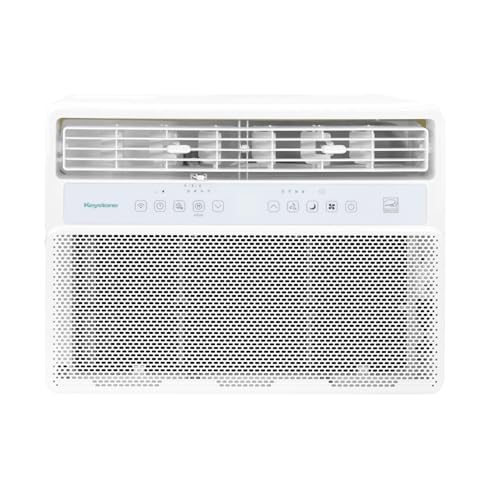
| Standard double-hung window, bedroom | ENERGY STAR window AC | Direct installation; mature certified product range |
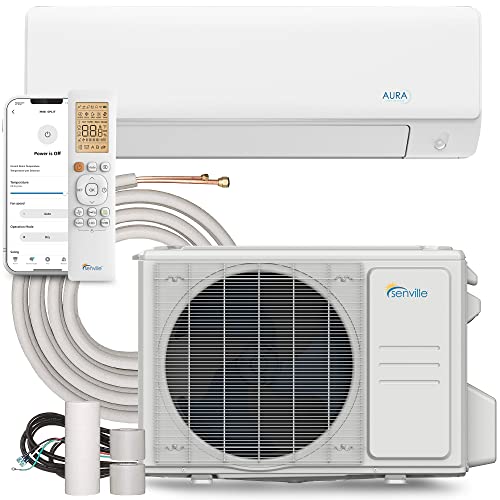
| Home without ductwork, multiple rooms | ENERGY STAR mini-split | Ductless distribution; high efficiency per zone |
| Existing ductwork, whole-home cooling | ENERGY STAR central AC | Integrates with HVAC system; top-tier efficiency options |
| Through-the-wall sleeve already present | ENERGY STAR through-the-wall AC | Uses existing opening; certified options available |
Before committing, confirm that the electrical circuit can support the unit. Our energy saving air conditioner overview includes notes on load planning, and the digital air conditioner thermostat guide explains how smarter control settings can complement certified hardware. For homes with existing forced-air infrastructure, the ENERGY STAR HVAC systems page is a useful next read.
Pre-Purchase Checklist
Use this checklist before finalizing any decision. It is deliberately short — these are the points that most often lead to buyer regret when overlooked.
Confirm Before You Choose
- Room dimensions and heat load. Measure the space and account for sun exposure, occupancy, and appliance heat. Do not rely on a generic square-footage rule alone.
- Certification verification. Confirm the exact model appears in the ENERGY STAR database. The ENERGY STAR rated air conditioners reference explains how to check.
- Electrical compatibility. Match the unit's voltage and amperage requirements to your home's circuits. Larger units typically require dedicated circuits.
- Installation logistics. Decide who will install the unit and whether any permits or landlord approvals are needed. See do I need a permit for AC for a jurisdiction-by-jurisdiction overview.
- Long-term maintenance access. Filter cleaning and coil access should be practical. Maintenance requirements differ by product type; the energy efficient AC guide covers routine upkeep expectations.
- Warranty terms. Review the warranty period and the labor coverage separately. Certified units often carry longer compressor warranties, but terms vary by manufacturer.
Frequently Asked Questions
Is every air conditioner labeled "efficient" ENERGY STAR certified?
No. "Efficient" is a broad marketing term, while ENERGY STAR is a specific certification with independent testing requirements. Always verify the model number against the official ENERGY STAR database rather than relying on the label used in a listing.
Does a certified unit always use less energy than a non-certified one?
Within the same product category and capacity class, a certified unit is designed to meet a higher efficiency threshold. However, proper sizing and installation matter enormously. An oversized certified unit can consume more energy in practice than a correctly sized non-certified unit. Sizing and certification should be evaluated together.
How do I compare certification across window, portable, and mini-split units?
Each category uses its own efficiency metric: room air conditioners use CEER, while central and split systems use SEER2 and EER2. Compare within categories rather than across them. The ENERGY STAR air conditioner units overview explains the metric differences in more detail.
Do certified units qualify for utility rebates or tax incentives?
Certification is often a prerequisite for utility rebate programs and federal tax incentives, but eligibility rules vary by region and change over time. Check with your local utility and a qualified tax professional for current program details. Our high efficiency HVAC page summarizes common incentive structures.
Is an inverter compressor necessary for certification?
Not necessarily. Inverter technology is common in higher-efficiency tiers because it modulates compressor speed smoothly, but some fixed-speed units also meet certification thresholds. The energy efficient inverter air conditioner guide explains when inverter technology delivers the most practical benefit.
Ready to Compare Certified Options?
Review the recommended models below, then use the checklist above to confirm each unit matches your room size, electrical setup, and installation constraints. Certification is the starting point — fit is the deciding factor.