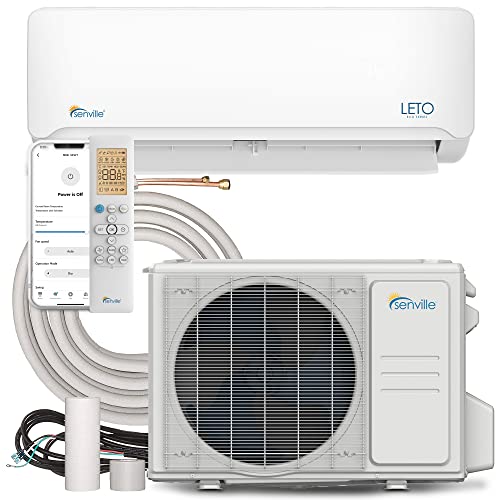
Mini Split Air Conditioner with Heat Pump: The Complete Guide
Discover how ductless heat pump systems deliver year-round comfort, exceptional efficiency, and flexible zoning for your home. Learn sizing, efficiency ratings, installation basics, and how to choose the right system tier.
START LEARNINGWhy a Mini Split Heat Pump? A mini split air conditioner with a heat pump does more than cool your home — it also heats it efficiently by reversing the refrigerant cycle. This dual-function capability, combined with ductless installation and high SEER2/HSPF2 ratings, makes it one of the most practical HVAC choices for modern homes, additions, and spaces without ductwork.
What Is a Mini Split Air Conditioner with a Heat Pump?
A mini split air conditioner with a heat pump is a ductless HVAC system composed of two main components: an outdoor compressor/condenser unit and one or more indoor air handlers. Instead of distributing conditioned air through ductwork, refrigerant lines connect the outdoor unit to each indoor head, allowing precise temperature control room by room.
The "heat pump" designation means the system can reverse its refrigerant flow. In cooling mode, it extracts heat from indoor air and releases it outdoors. In heating mode, it captures ambient heat from outdoor air and transfers it indoors — even in cold climates. This makes a mini split air conditioning and heating system a true year-round solution.
Unlike traditional central systems, mini splits avoid energy losses associated with ductwork, which can account for a significant portion of a home's heating and cooling energy use. This is why ductless heat pumps are often the preferred choice for installing air conditioning in a house without ducts.
Key Features That Matter
Dual Cooling & Heating
One system handles both summer cooling and winter heating through reversible refrigerant flow, eliminating the need for separate heating equipment.
High Efficiency Ratings
Premium mini split heat pumps reach SEER2 ratings above 20 and HSPF2 ratings above 10, delivering substantial energy savings over conventional systems.
Zone-by-Zone Control
Each indoor air handler operates independently, allowing you to condition only the rooms in use and reduce waste in unoccupied spaces.
No Ductwork Required
Installation only needs a small wall penetration for refrigerant lines, making mini splits ideal for retrofits, additions, and older homes.
Quiet Operation
Indoor units typically operate at low sound levels, often quieter than a whisper, which makes them suitable for bedrooms and living areas.
Inverter Technology
Most modern mini split heat pumps use inverter technology to modulate compressor speed, maintaining stable temperatures with less cycling.
How a Ductless Heat Pump Works
Understanding the operation helps you evaluate system performance and efficiency claims. In cooling mode, the indoor air handler absorbs heat from room air and transfers it to refrigerant. The outdoor unit releases that heat into the atmosphere. In heating mode, the process reverses: the outdoor unit absorbs ambient heat from the air and moves it indoors through the refrigerant circuit.
Because the system moves heat rather than generating it through combustion, it can achieve efficiency levels well above 100% in heating mode. This is a defining advantage of heat pump technology over resistance heating or combustion-based systems.
For a deeper technical explanation of the components and cycle, see our guide on mini split AC systems.
Sizing Your Mini Split Heat Pump
Correct sizing is critical. An undersized system struggles to maintain comfort during peak conditions, while an oversized system short-cycles, reducing efficiency and humidity control. Use the following general guidance as a starting point, then confirm with a Manual J load calculation for accuracy.
| Cooling Capacity | Typical Coverage | Best For |
|---|---|---|
| 9,000 BTU | 350 – 450 sq ft | Bedrooms, home offices, small studios |
| 12,000 BTU | 450 – 550 sq ft | Living rooms, medium bedrooms |
| 18,000 BTU | 700 – 1,000 sq ft | Open-plan areas, small apartments |
| 24,000 BTU | 1,000 – 1,200 sq ft | Large living spaces, multi-zone setups |
Factors that can shift the recommended capacity include ceiling height, window area, insulation quality, sun exposure, and local climate. For a more detailed sizing walkthrough, refer to our guides on mini split AC units for 500 square feet and mini split AC units for 1000 sq ft.
Efficiency Ratings Explained
Two ratings dominate the mini split market: SEER2 for cooling efficiency and HSPF2 for heating efficiency. Higher numbers indicate greater efficiency. Current DOE standards require minimum SEER2 ratings that vary by region, and premium models substantially exceed those baselines.
- SEER2: Seasonal Energy Efficiency Ratio 2 — measures cooling efficiency over a typical season. Values above 20 are considered high-efficiency for mini splits.
- HSPF2: Heating Seasonal Performance Factor 2 — measures heating efficiency. Values above 10 indicate strong cold-weather performance.
- ENERGY STAR: Certified models meet or exceed federal efficiency guidelines and often qualify for utility rebates.
For a deeper look at what these ratings mean in practice, see our articles on what a SEER rating is and ENERGY STAR certified AC units. If you are comparing high-efficiency ductless options, our page on energy-efficient mini split air conditioners provides further context.
Market Tiers: Finding the Right Fit
Mini split heat pumps are available across several market tiers. Rather than focusing on numerical figures, consider which tier aligns with your performance expectations, feature needs, and long-term plans.
When comparing tiers, remember that higher-tier models often deliver better cold-weather heating performance and more precise temperature control. For cold-climate applications, see our guide on low ambient mini splits.
Installation Considerations
Professional installation is strongly recommended for mini split heat pumps. The process involves mounting indoor and outdoor units, routing refrigerant lines, electrical connections, and evacuating the system with a vacuum pump. Improper installation can void warranties and compromise performance.
Key installation decisions include indoor unit placement, outdoor unit location, line set routing, and condensate drainage. Our guide on installing a mini split walks through the process in detail. For aesthetic concerns, line hide options are covered in our article on line hide for mini splits.
If you are converting from a ducted system or building new, compare installation approaches with our resources on installing central air in a house without ducts and installing air conditioning in a house without ducts.
Variations to Consider
Mini split heat pumps come in several form factors. Wall-mounted units are the most common, but ceiling cassettes and recessed ceiling models offer design flexibility for specific room layouts. Explore our guides on ceiling cassette mini split air conditioners and recessed ceiling mini split air conditioners.
If humidity control is a priority in your climate, a mini split air conditioner with a dehumidifier function may be worth considering. For smaller spaces, our page on mini split air conditioners for small rooms offers targeted guidance.
Frequently Asked Questions
What is a mini split air conditioner with a heat pump?
It is a ductless system that provides both cooling and heating by reversing the refrigerant cycle. It consists of an outdoor compressor unit and one or more indoor air handlers connected by refrigerant lines.
How efficient is a mini split heat pump compared to a traditional AC?
Mini split heat pumps are among the most efficient HVAC systems available. Many models achieve SEER2 ratings above 20 and HSPF2 ratings above 10, significantly outperforming traditional central AC systems and window units.
Do I need a professional to install a mini split heat pump?
Yes. Installation involves refrigerant handling, electrical connections, and vacuum procedures that require EPA-certified technicians. Professional installation ensures safety, warranty validity, and optimal performance.
How do I size a mini split heat pump for my room?
Sizing depends on room area, ceiling height, insulation, windows, and climate zone. As a rough guide, 9,000 BTU suits 350–450 sq ft, 12,000 BTU suits 450–550 sq ft, and 18,000 BTU suits 700–1,000 sq ft. A Manual J load calculation provides the most accurate sizing.
Can a mini split heat pump heat my home in cold weather?
Yes, modern cold-climate mini split heat pumps can operate effectively in temperatures well below freezing. Look for models rated for low ambient operation if you live in a cold climate.
Explore Related Guides
- Mini Split Air Conditioner Heat Pump 9000 BTU
- Mini Split Air Conditioning and Heating Units
- Mini Split Air Conditioning Heating Units
- Mini Split 12,000 BTU
- Mini Split AC Unit for 1200 Sq Ft
- Mini Split Air Conditioner for 600 Square Feet
- Mini Split Air Conditioner for 1000 Sq Ft
- Mini Split Air Conditioning Unit
- Mini Split Air Handler
- Mini Split Attic Air Handler
- Inverter Heater and Air Conditioner
- Low Ambient Mini Splits