
Portable Air Conditioner for Pickup Truck: Complete Cooling Guide
Everything you need to know about cooling a pickup truck cab, sleeper, or camper setup with a portable AC — power sources, venting solutions, BTU sizing, and the features that matter most.
VIEW TOP PICKSWhy this guide matters: A pickup truck cab heats up fast. Glass surface area, limited insulation, and direct sun exposure can push interior temperatures well above outside ambient levels within minutes. A portable air conditioner gives you a practical way to bring that heat down — but only if the unit matches your power setup, venting situation, and cab volume. This guide walks you through each decision so you can buy with confidence.
What This Guide Covers
Why Use a Portable AC in a Pickup Truck?
Pickup trucks are not designed for stationary cooling. When the engine is off, the factory air conditioning stops working. That leaves drivers, campers, and work crews exposed to heat during rest stops, job site breaks, or overnight stays. A portable air conditioner solves this by providing independent cooling without idling the engine.
Common use cases include:
Overnight Sleeper Cooling
Drivers who rest in the cab or sleeper section benefit from steady cooling without running the engine all night. A portable unit paired with a power station keeps the cab comfortable while saving fuel and reducing engine wear.
Work Site Heat Relief
Construction crews, utility workers, and delivery drivers who spend breaks in the truck can cool the cab quickly during short stops. A mid-range portable unit brings down cab temperature in minutes.
Camping and Overlanding
Overlanding setups often use the truck bed or cab as sleeping quarters. A portable AC with a vent kit for the rear window turns the cab into a comfortable sleeping space during warm-weather trips.
Pet and Cargo Comfort
When parked with pets or heat-sensitive cargo, a portable AC maintains a safer interior temperature. Units with a dehumidifier function also prevent condensation buildup inside the cab.
Portable AC Types for Truck Use
Not all portable cooling devices work the same way. For a pickup truck, the three main categories are compressor-based portable AC units, evaporative coolers, and 12V battery-powered coolers. Each has a distinct role.
Compressor-Based Portable AC
Uses refrigerant and a compressor to deliver true air conditioning. These units provide the strongest cooling per cubic foot and work in any climate. They require a 110V or 240V power source and an exhaust vent. Best for extended use and humid conditions.
Evaporative Cooler
Draws air through a water-soaked pad and blows cooled, humidified air. Works well in dry climates and uses far less power than a compressor unit. Not effective in high humidity and adds moisture to the cab. A good fit for short cooling sessions in arid regions.
Battery-Powered Cooler
Runs on 12V DC or built-in batteries. Offers portability without an inverter but delivers limited cooling capacity. Suitable for small cabs and mild heat. Units with a solar panel option extend runtime during off-grid trips.
Power Sources and Wattage Planning
The single biggest constraint for truck-based portable AC use is power. Most compressor-based portable units draw between 800W and 1,500W while running, with a startup surge that can briefly exceed that figure. Plan your power source around the surge, not just the running draw.
| Power Source | Best For | Key Consideration |
|---|---|---|
| Truck battery + pure sine wave inverter | Short cooling sessions, work breaks | Inverter must handle startup surge; idling the engine is often needed to avoid battery drain |
| Portable power station | Overnight sleeper cooling, camping | Choose a station with enough capacity for several hours of runtime; lithium models are lighter |
| Shore power hookup | Campsites, RV parks, job sites with outlets | Most straightforward option; requires access to a standard outlet |
| 12V DC direct connection | Battery-powered coolers and small evaporative units | Lower cooling output; best for small cabs and mild conditions |
| Solar panel + battery bank | Off-grid overlanding | Panel wattage must exceed daily AC consumption; plan for cloudy days |
For a deeper look at inverter-driven cooling and how compressor speed affects power draw, see our guide to a portable air conditioner with an inverter compressor. If you are building an off-grid setup, the solar panel compatible portable AC overview explains how to size panels and batteries together.
BTU Sizing for Truck Cabs
BTU (British Thermal Units) measures cooling capacity. Undersizing leaves the cab warm; oversizing cycles the compressor on and off and struggles to remove humidity. For pickup trucks, cab volume and glass area matter more than square footage alone.
| Truck Configuration | Suggested BTU Range | Notes |
|---|---|---|
| Regular cab, standard windows | 5,000 – 6,000 BTU | Smallest cooling load; a compact unit is sufficient |
| Extended cab / crew cab | 6,000 – 8,000 BTU | More interior volume; consider sun exposure and tint |
| Sleeper cab or truck bed camper | 8,000 – 10,000 BTU | Larger volume and longer runtime; pair with a power station sized for overnight use |
| Direct sun, dark interior, no tint | Add 10–20% capacity | Solar gain through glass is the dominant heat load in a parked truck |
If you are cooling a bed-mounted camper rather than the cab itself, the sizing logic shifts toward the camper's volume and insulation. Our portable AC for camper guide covers that scenario in detail. For pop-up truck campers, see the pop-up camper cooling guide.
Venting Options for Truck Windows
Every compressor-based portable AC must exhaust hot air outside. In a truck, the vent path depends on your window style. Here are the practical options:
Sliding Rear Window
The most vent-friendly configuration. A fabric or rigid window seal with a hose opening fits into the sliding track. Many portable AC kits include a universal sliding window panel. See our sliding glass window venting guide for panel sizing tips.
Pop-Out / Crank-Out Window
Common on older trucks and some rear cab windows. These require a custom insert or a flexible seal that wraps around the open frame. Our crank-out window solution and crank window vent kit guide walk through the options.
Vertical Sliding Window
Found on some truck caps and camper shells. A vertical window kit with an adjustable panel secures the hose while keeping the opening sealed. The vertical sliding window guide covers fitment.
No Suitable Window
If the cab has no window that accepts a vent kit, a hose can route through a partially open door with a sealing panel, or you can explore ventless alternatives. Our no-vent-required overview explains the trade-offs honestly.
Features That Matter in a Truck
Truck use puts specific demands on a portable AC. These are the features worth prioritizing:
Priority Features
- Condensate pump or self-evaporating system: Prevents water from pooling in the cab. A condensate pump model or a self-evaporating system reduces manual draining.
- Dehumidifier function: Humid cabs feel warmer and fog windows. A unit with dehumidifier capability improves comfort and visibility.
- Compact footprint and casters: Cab space is limited. Look for a narrow body and smooth-rolling wheels so the unit can be moved between cab and bed. The portable AC on wheels guide covers mobility features.
- Remote control and timer: Lets you adjust settings from the driver's seat or sleeping position without climbing over the unit.
- Quiet operation: Overnight sleeper use demands low noise. Compressor noise is the main source; inverter-driven units typically run quieter at partial load.
- Dual-hose intake and exhaust: A dual-hose design draws outside air for the condenser, which slightly improves efficiency and reduces negative pressure in a sealed cab.
- Heat pump option: If you use the truck across seasons, a unit with a heat pump function adds warming capability for cold mornings.
For a broader feature comparison framework, see our what to look for in a portable AC checklist.
Product Tiers at a Glance
To compare options without getting lost in spec sheets, group portable AC units by tier. The tier reflects build quality, feature depth, and expected duty cycle — not a specific figure.
| Tier | Best For | Typical Traits |
|---|---|---|
| Entry-level | Occasional work-break cooling in a regular cab | Basic mechanical controls, manual drain, single-hose exhaust, lighter build |
| Mid-range | Regular crew cab use and weekend camping | Digital controls, timer, self-evaporating or pump-assisted drainage, quieter compressor |
| Premium | Overnight sleeper cooling and frequent overlanding | Inverter compressor, dual-hose option, heat pump mode, low-noise operation, robust casters |
| Commercial-grade | Fleet use, job site trailers, extended daily runtime | Heavy-duty housing, serviceable components, high-duty compressor, reinforced vent hardware |
For work-site and fleet scenarios, the commercial-use portable AC guide expands on duty-cycle and durability considerations. If you are cooling a truck-based office or workspace without standard windows, the office without windows guide is relevant.
Setup Checklist
Before You Power On
- Measure cab volume and confirm the unit's BTU rating matches your truck configuration.
- Verify your power source can handle the unit's running wattage and startup surge. Test the inverter or power station with the AC before relying on it.
- Choose a window that accepts your vent kit. Dry-fit the seal or panel before the unit is running.
- Position the unit on a flat, stable surface. Lock the casters if the truck is parked on a slope.
- Route the exhaust hose with the fewest bends possible. Long, kinked hoses reduce airflow and cooling performance.
- Check the drain option: if the unit is not self-evaporating, confirm the drain plug is accessible and plan for a container or hose.
- If using the truck battery and inverter, start the engine or monitor voltage to avoid a no-start condition.
- Close the cab as much as possible. Cooling an open cab wastes capacity.
If you are using the portable AC to supplement the truck's factory air conditioning rather than replace it, our supplemental cooling guide explains how to balance the two systems.
Recommended Portable Air Conditioners for Pickup Trucks
⚠️ AFFILIATE DISCLOSURE: This website contains affiliate links. As an Amazon Associate, we earn from qualifying purchases. If you make a purchase through these links, we may receive a small commission at no additional cost to you. Read our full affiliate policy.
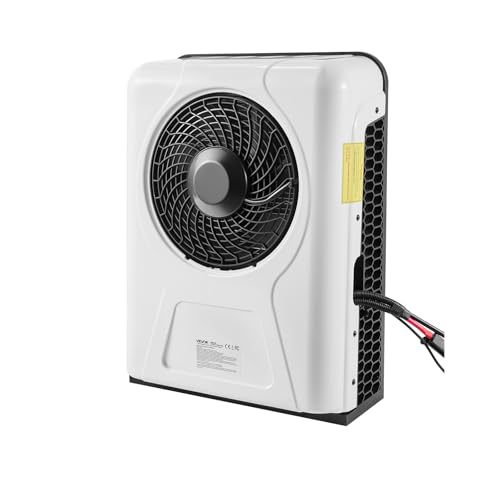
VEVOR Truck Air Conditioner 10000 BTU Mini Split AC Unit 400 m³/h Airflow | 12V Cab Air Conditioner, Fast Cooling Low Noise for Semi Truck, Camper, Construction Vehicle, Crane, Tractor, Excavator
Check price on Amazon
DC 24V Mini Split RV Air Conditioner, Fast Cooling AC unit for camper van
Check price on Amazon
Portable Camping Air Conditioner 5200 BTU Tent AC Unit | 400W Low power 4-in-1 portable AC for indoor & outdoor,fast cooling for RV, truck,van,car,small warehouse and pet house
Check price on Amazon
12V Universal Electric RV Truck Air Conditioner Camper A/C Unit, 12000 BTU Split AC Quiet Van A/C for RV Caravan, Semi-Truck, Tractor, Crane, Pickup, Excavators
Check price on Amazon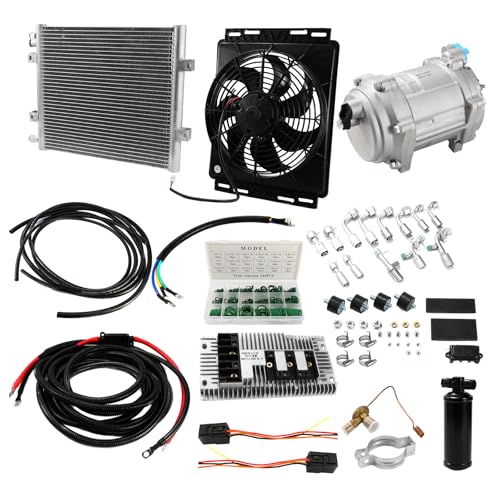
ZFQPTO Automobile A/C Air Conditioner Electric Compressor 12V Fits for Classic Cars, Trucks, RVs, Farm Vehicles, Excavators, Pickup Trucks, Construction Vehicles, Vans, etc.
Check price on Amazon
GETUHAND Portable Tent Air Conditioner for Camping, 5200BTU Fast Cooling Quiet Small Light Air conditoning 400W Low Power for RV, Truck, Van
Check price on Amazon
Aspligo 12v Rooftop RV Air Conditioner 9000BTU 12v dc air conditioner with heat 12 volt ac unit Fit for Rv Motorhome Truck Trailer Portable Electric Parking ac Fuel Saving Fast Cooling
Check price on Amazon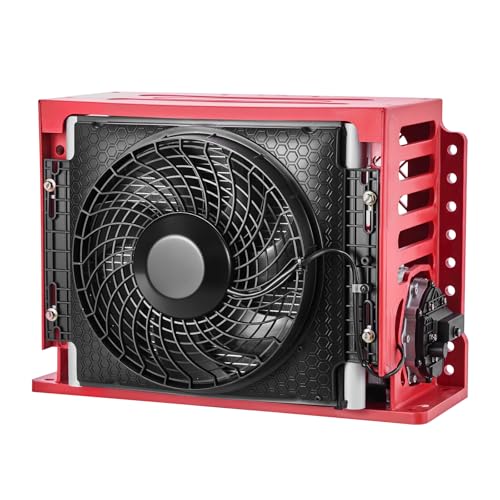
VEVOR Truck Air Conditioner 10000 BTU Mini Split AC Unit 400 m³/h Airflow | 12V Cab Air Conditioner, Quiet A/C Unit Fast Cooling for Semi Truck, Camper, Construction Vehicle, Crane, Tractor, Excavator
Check price on AmazonFrequently Asked Questions
Can a portable air conditioner run in a pickup truck?
How many BTU does a portable AC need for a truck cab?
Can you vent a portable AC out of a truck window?
What power source works for a portable AC in a pickup truck?
Is a portable AC or a 12V truck cooler better for a pickup truck?
Can a portable AC cool a truck bed camper?
Ready to Cool Your Truck Cab?
You now have the framework: match BTU to cab volume, confirm your power source can handle the startup surge, pick a vent solution that seals properly, and prioritize a drain system that fits how you park. Use the product section above to compare feature sets across tiers, then check availability for the model that fits your setup.
Compare Portable AC Options