Portable Air Conditioner for Vertical Sliding Windows: The Complete Guide
Everything you need to know before buying a portable AC for a vertical sliding window — sizing, vent kits, hose setup, sealing tips, and the features that actually matter.
Vertical sliding windows are common in homes, apartments, and older buildings across North America. Unlike single-hung or casement windows, a vertical slider opens by moving one sash up or down within the frame — and that geometry changes how a portable air conditioner must be vented. If you have been searching for a reliable portable air conditioner for vertical sliding windows, this guide walks you through the practical decisions: which BTU size fits your room, how the vent kit works, and how to seal the opening so hot outdoor air stays outside.
A portable AC is a self-contained cooling unit that sits on the floor and exhausts hot air through a flexible hose. The hose must terminate outdoors — and with a vertical slider, that means using a vent kit built for a vertical opening. The good news: most portable AC brands include or sell a vertical window kit, and installation takes minutes once you understand the parts involved. The better news: choosing the right unit the first time avoids the common frustration of a hose that kinks, a panel that does not fit, or a unit that cycles too often in a sunny room.
Why Vertical Sliding Windows Need a Different Approach
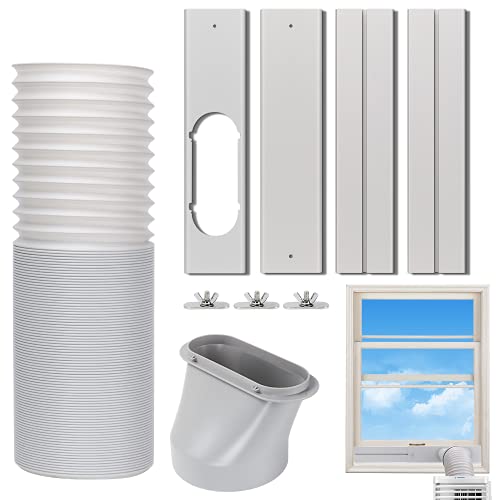
A portable AC's exhaust hose has to leave the room. In a horizontal sliding window, the kit panel spans the width of the opening and the sash slides against it. In a vertical slider, the opening is tall and narrow, and the sash moves vertically. A horizontal kit placed sideways often leaves gaps, wobbles, or prevents the window from locking. A dedicated vertical window kit solves this with stacked adjustable panels and a hose port positioned to line up with the unit.
There is also an airflow consideration. In a vertical slider, the gap above the lower sash is usually taller than it is wide, so the vent panel sits in a narrow column. That makes sealing the top and bottom edges especially important — a small leak there lets hot humid air pour back into the room and undermines cooling performance. Using weatherstripping, foam tape, or a sash lock helps hold the assembly steady.
How to Size a Portable AC for Your Room
BTU (British Thermal Units) measures cooling capacity. Undersizing leaves the room warm; oversizing causes short cycling, which wastes energy and removes humidity poorly. Use the table below as a starting point, then adjust for sun exposure, ceiling height, and occupancy.
| Room Area | Suggested BTU Range | Typical Space | Market Position |
|---|---|---|---|
| Up to 150 sq ft | 5,000 – 6,000 BTU | Small bedroom, home office | Entry-level tier |
| 150 – 250 sq ft | 8,000 – 10,000 BTU | Standard bedroom, studio | Mid-tier |
| 250 – 400 sq ft | 12,000 – 14,000 BTU | Living room, open plan | Balanced tier |
| 400 – 600 sq ft | 14,000 – 18,000 BTU | Large living area | High-end tier |
| 600+ sq ft | 18,000+ BTU | Multi-room or commercial | Professional-grade |
Adjust upward if the room faces direct afternoon sun, has ceilings above 8 feet, or regularly holds several people. If the space is a small bedroom, the entry-level tier is usually sufficient. For a studio apartment, step up to the mid-tier to cover the combined living and sleeping area.
Anatomy of a Vertical Sliding Window Vent Kit
A vertical window kit typically contains three parts: adjustable panels that stack to fill the opening height, a hose connector plate with a circular port, and sealing foam or weatherstripping. Some kits include a sash lock to keep the window from being opened from outside. The hose snaps or screws into the connector, and the panels slide into the window track.
Adjustable Panels
Sliding panels extend to cover the height of the opening. Check the kit's minimum and maximum range against your window measurement before ordering.
Hose Connector Plate
The plate holds the exhaust hose port. It should align with the unit's hose outlet so the hose runs with a gentle curve rather than a sharp bend.
Sealing Foam
Foam strips fill gaps between panels and the window frame. This is the difference between a cool room and a unit that runs constantly without results.
Sash Lock
A small lock or pin prevents the sash from being lifted. Many renters skip this, but it is a basic safety and security item.
Some kits are universal and fit most vertical sliders within a stated range; others are model-specific. If your window is unusually tall or narrow, look for an adjustable sliding window kit with a wide panel range. For very small openings, a portable AC for small window openings guide can help you avoid a kit that is too large to seat properly.
Step-by-Step Installation in a Vertical Sliding Window
The process is straightforward. Allow 20–30 minutes for a first install, most of which is measuring and sealing.
- Measure the opening. Record the height and width of the gap where the window sash meets the frame. Compare with the vent kit's adjustable range.
- Assemble the panels. Slide the adjustable panels together to match the opening height. Most kits use a friction fit or small screws to lock the panels.
- Fit the hose connector. Attach the hose connector plate to the panel assembly, then connect the exhaust hose to the unit and the plate.
- Seat the kit in the track. Place the bottom of the panel assembly into the window track. Lower the sash until it rests against the top of the kit.
- Seal the edges. Apply foam weatherstripping along the top, bottom, and sides of the panel assembly. Fill any remaining gaps with foam insulation.
- Lock the sash. Install the sash lock or a dowel in the track to prevent the window from being opened.
- Test the airflow. Turn the unit on and check that warm air is leaving through the hose and that no air is leaking back around the panels.
Keep the hose as short and straight as possible. A hose that loops or kinks traps hot air and reduces cooling. If the unit is far from the window, consider a configuration for long windows or reposition the unit closer to the opening.
Features That Matter for a Vertical Window Setup
Not every feature is equally useful in a vertical slider. These are the ones that directly affect daily use.
Single-Hose vs. Dual-Hose Design
A single-hose portable AC pulls room air in, cools it, and exhausts hot air through one hose. It is simpler and lighter. A dual-hose design uses one hose for intake and one for exhaust, which reduces negative pressure and is more efficient in sealed rooms. For a bedroom with a closed door, dual-hose is often the better choice.
Self-Evaporating and Drain Options
Portable ACs produce condensate. A self-evaporating system reuses the moisture to cool the condenser and reduces how often you drain the tank. In humid climates, even self-evaporating units may need occasional draining. A model with a condensate pump can move water out continuously, which is useful for overnight operation.
Inverter Compressor
An inverter compressor varies its speed instead of switching on and off. The result is steadier temperature, less noise, and better efficiency over long runs. This is a premium-tier feature but a meaningful one for bedrooms and home offices.
Noise Level and Wheels
Portable units are louder than window units because the compressor sits in the room. Check the decibel rating and place the unit on a hard, level surface. Wheels make it easier to move between rooms, which is one of the main advantages of the format.
Dehumidification and Air Quality
Many portable ACs include a dehumidifier mode, useful in humid climates. Some add a basic air filter or an air purifier stage. These are secondary to cooling capacity but help with comfort in damp or dusty rooms.
Common Problems and How to Fix Them
Most issues with a portable AC in a vertical window trace back to sealing or airflow. If the unit is not cooling enough, check the vent kit first. If the hose is not vented to the outside, the room will heat up rather than cool down. If the unit runs but blows warm air, confirm the hose is connected and the window kit is sealed.
- Gaps around the panels: add foam weatherstripping and check that the sash sits flush against the kit.
- Hose kinks: shorten the run or use a hose support; a kinked hose traps heat.
- Water pooling: check the drain plug and consider a unit with a pump if humidity is high.
- Window will not lock: install a sash lock or a dowel cut to the track width.
Portable AC vs. Other Options for Vertical Windows
| Option | Best For | Considerations |
|---|---|---|
| Portable AC with vertical kit | Renters, rooms without permanent installation | Mobility, no bracket required, compressor noise indoors |
| Window AC unit | Dedicated rooms with a stable sash | Requires support bracket; may not fit narrow vertical sliders |
| Mini-split system | Long-term whole-room cooling | Professional install, higher upfront investment |
| Central air | Whole-home comfort | Ductwork required; not practical for single-room needs |
For a single room, a portable unit is the most flexible choice. For a permanent solution, a portable AC can supplement central air in a hot upstairs room without altering the home's ductwork.
Ready to Compare Models?
Browse portable air conditioners with vertical window kits and check availability for your room size.
View Recommended UnitsFrequently Asked Questions
Can a portable air conditioner work with a vertical sliding window?
Yes. Use a vent kit designed for vertical openings. The kit's adjustable panels fill the opening, the hose connector routes exhaust outdoors, and weatherstripping seals the remaining gaps. Avoid forcing a horizontal kit into a vertical frame — it rarely seats securely.
What size portable AC do I need for a room with a vertical sliding window?
Size by area: up to 150 sq ft needs about 5,000–6,000 BTU, 150–250 sq ft needs 8,000–10,000 BTU, and 250–400 sq ft needs 12,000–14,000 BTU. Increase capacity for sunny exposures, high ceilings, or multiple occupants.
How do I seal a vertical sliding window for a portable AC?
Fit the vent kit into the track, lower the sash against it, and apply foam weatherstripping along all four edges of the panel assembly. Fill any remaining gaps with foam insulation and install a sash lock so the window cannot be lifted.
Can I use a horizontal window kit in a vertical sliding window?
It is not recommended. Horizontal kits are sized for side-to-side openings and often cannot span the height of a vertical slider. Use a kit explicitly labeled for vertical windows to ensure a stable fit and a proper seal.
Does a portable AC for a vertical sliding window need draining?
Many units use self-evaporating systems that reduce condensate, but in humid conditions you may still need to drain manually. A model with a built-in condensate pump is more convenient for continuous overnight use.
Where should the portable AC sit relative to the window?
Place the unit on a level surface within hose reach of the window, with the hose running as straight and short as possible. Keep at least 12–18 inches of clearance around the unit for air intake and avoid blocking the exhaust hose with furniture.
Final Thoughts
A portable air conditioner is a practical cooling solution for a room with a vertical sliding window, provided the vent kit matches the opening and the BTU rating matches the room. Measure first, seal carefully, and choose features that fit how you actually use the room — quiet operation for a bedroom, a condensate pump for humid climates, and an inverter compressor if you want steadier cooling. With those pieces in place, a portable AC delivers reliable comfort without permanent installation or structural changes.