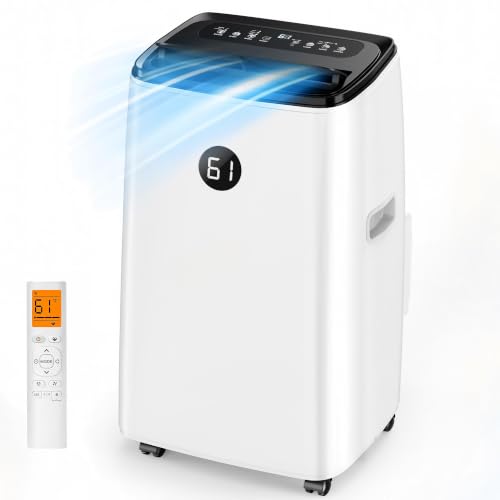
Portable Air Conditioner Not Vented to Outside: What You Need to Know
Understand how a portable AC without an outside exhaust behaves, why venting matters, and which cooling options actually work for windowless rooms, basements, and temporary spaces.
Jump to Common QuestionsQuick answer: A compressor-based portable air conditioner cannot cool effectively without venting its exhaust to the outside. The heat it removes from your room has to go somewhere. If it stays indoors, the room warms back up, humidity rises, and the unit may overheat. However, there are vent-free alternatives — evaporative coolers, split spot coolers, and specific engineering approaches — that may fit your situation. This guide explains the physics, the real limitations, and the practical paths forward.
Why a Portable AC Needs to Be Vented
A portable air conditioner works on the same refrigeration cycle as any other AC. It absorbs heat from the indoor air using an evaporator coil, then rejects that heat through a condenser coil. In a split system or window unit, the condenser sits outside. In a portable unit, the condenser is inside the same cabinet — which means the heat has to be pushed out through an exhaust hose. If that hose isn't connected to the outdoors, the machine is simply moving heat from one part of the room to another.
The physics are unavoidable: cooling is not a process that destroys heat, it relocates it. Without a path for that heat to leave the building envelope, the net effect of running the compressor is a warmer room, higher humidity from condensation, and a struggling motor. This is why manufacturers universally require venting for compressor-based portable ACs.
What Happens If You Don't Vent a Portable AC
Running a compressor-based portable AC without an outside exhaust produces predictable, measurable problems:
- Net warming: The heat removed from the air is re-released into the same room. The space may feel slightly cooler right at the supply grille, but the overall room temperature rises.
- Humidity increase: Condensate forms on the evaporator coil, and much of it re-evaporates into the room rather than draining away. Elevated humidity makes the air feel warmer and can encourage mold growth.
- Compressor strain and shutdown: The unit senses rising return-air temperature and runs continuously, which can trigger thermal protection and shorten the compressor's service life.
- Condensate overflow: Many units rely on partial evaporation of condensate in the exhaust air stream. Without exhaust flow, water accumulates faster and the drain tank fills quickly.
- Pressure imbalance: A single-hose portable AC pulls indoor air into the unit and pushes it outside, which creates negative pressure that draws hot outdoor air back in through gaps. This is why dual-hose models exist — they separate intake and exhaust paths.
In short, "not vented" isn't a mode of operation — it's a failure condition that manufacturers explicitly warn against. If you're curious about the specific configurations people try, our guide on a portable air conditioner with no exhaust hose needed covers the niche cases where this is technically possible.
Which Portable Cooling Options Actually Work Without Venting?
If you genuinely cannot vent to the outside — no window, no wall penetration, no suitable door gap — you are not out of options. You just need to choose the right technology for the space. Here is how the main categories compare:
| Option | Venting Required? | Best Climate | Best For |
|---|---|---|---|
| Compressor Portable AC (single or dual hose) | Yes — mandatory | Any | Rooms with a window, sliding door, or wall sleeve |
| Evaporative Cooler (Swamp Cooler) | No — but needs airflow | Dry, low-humidity climates | Garages, workshops, dry-climate living rooms |
| Split Spot Cooler (with remote condenser) | Yes — condenser goes outside | Any | Server rooms, offices, spaces needing targeted cooling |
| Personal / Desktop Cooler | No | Any (limited range) | Desk-level cooling for one person |
| Ceiling Fan or Air Circulator | No | Any | Air movement for comfort, not true cooling |
Each of these has trade-offs. Evaporative coolers add humidity, which is a benefit in dry climates and a serious drawback in humid ones. If you're in a humid climate, our discussion of a portable air conditioner for humid climates explains why compressor-based units remain the better choice there — as long as you can vent them.
How to Cool a Room With No Venting Path
When there's truly no way to route an exhaust hose outdoors, the practical strategy is to stop treating a compressor portable AC as the solution and instead match the technology to the constraint. Here are the most reliable approaches:
1. Use an Evaporative Cooler in Dry Climates
In arid regions — the Southwest United States, high-desert areas, and similar climates — evaporative cooling is genuinely effective. It draws dry outdoor air across wetted media, cools it by evaporation, and blows it indoors. The air must be able to leave the room (through an open door or vent), but no dedicated exhaust hose is needed. The trade-off is that it raises indoor humidity, so it's a poor fit for already-humid environments.
2. Consider a Split Spot Cooler
Split spot coolers separate the evaporator from the condenser. The evaporator sits inside the room, but the condenser — the hot part — is connected by refrigerant lines to a remote unit placed outdoors or in a service corridor. This is the professional approach for portable air conditioning for a server closet or an office without exterior windows, because it delivers real compressor-based cooling without requiring a window hose on the indoor unit itself.
3. Vent Through a Wall Sleeve or Door Gap
"Not vented to outside" sometimes really means "no window available." A wall sleeve, a pet door, a drop-ceiling plenum leading to a service space, or a partially open door with a hose adapter can all serve as legal exhaust paths. Our guide on portable air conditioners for rooms without windows walks through these workarounds in detail. If you have a sliding door, a portable air conditioner sliding window kit is often the simplest compliant solution.
4. Accept a Smaller Cooling Envelope
Personal coolers and desk fans don't cool a room, but they can make a workstation tolerable. This is a comfort strategy, not a thermal solution — and it's worth being honest about that before purchasing.
What to Look For When Buying a Vent-Free Solution
If venting is off the table, your purchasing criteria shift. Instead of compressor capacity and SEER, focus on these factors:
Entry-Level Tier
Basic evaporative coolers and personal air coolers. Suitable for spot comfort in dry climates and well-ventilated spaces. Limited capacity; expect to move the unit close to you.
Mid-Range Tier
Larger evaporative coolers with multi-speed fans and better water reservoirs, or compact split spot coolers for small technical spaces. Competitive within their class for targeted cooling.
High-End Tier
Professional split spot coolers with remote condensers, built for continuous duty in server rooms and commercial spaces. Feature-rich for their category, with genuine compressor-based cooling and no indoor exhaust requirement on the evaporator side.
When evaluating a specific model, check the product documentation for the phrase "exhaust required" or "venting required." If it appears, the unit is a compressor AC and needs an outside path. If instead you see "no venting required" alongside a water tank and cooling pad, you're looking at an evaporative cooler. For a deeper walkthrough of selection criteria, see our guide on a portable air conditioner: what to look for.
Single-Hose vs Dual-Hose: Why It Matters Without Venting
If you do find a way to vent — even partially — the hose configuration matters. A single-hose portable AC pulls room air into the unit to cool the condenser, then pushes that air (plus the heat) outside. This creates negative pressure in the room, drawing hot outdoor air back in through every crack. A dual-hose unit uses one hose for condenser intake and one for exhaust, which is more efficient and avoids the pressure imbalance. Our comparison of single-hose portable air conditioners explains when each design makes sense. If you're cooling a larger space, the extra efficiency of a dual-hose model is usually worthwhile — provided you have a vent path.
Special Situations: Campers, Basements, and Screen Rooms
Some of the most common searches for vent-free cooling come from people dealing with specific spaces. The right approach varies:
- Campers and RVs: A portable air conditioner for a camper usually vents through a window or roof vent. In a pop-up, the fabric walls limit options, so our guide on a portable air conditioner for a pop-up camper covers the alternatives.
- Basements: Basement windows are often small. A portable air conditioner for a small basement window explains the kit options. If there's no window at all, evaporative cooling is usually the only realistic path in dry climates.
- Screen rooms and porches: These are semi-outdoor spaces, so venting is less of an issue — the exhaust hose can simply exit through the screen. See our notes on a portable air conditioner for a screened porch.
- Offices without windows: A portable air conditioner for an office without windows generally means a split spot cooler or a building-approved wall penetration. Evaporative coolers are risky in office environments because of humidity.
Maintenance Considerations for Vent-Free Setups
If you choose an evaporative cooler, maintenance is different from a compressor AC. Water reservoirs need regular cleaning to prevent scale and bacterial growth, cooling pads need periodic replacement, and the unit must be dried out before storage. For compressor units used with a vent kit, the standard maintenance applies: filter cleaning, condensate draining, and coil inspection. Our overview of a portable air conditioner with no drain required explains the self-evaporative systems that reduce manual draining — a useful feature if the unit will be installed in a spot where emptying a tank is inconvenient.
Frequently Asked Questions
Can a portable air conditioner run without being vented to the outside?
A true compressor-based portable air conditioner cannot run effectively without venting to the outside. It must exhaust hot air somewhere; otherwise, heat accumulates in the room and the unit stops cooling. Only evaporative coolers and some specialized spot coolers function without an outside vent. If you're wondering about a portable air conditioner that doesn't need to be vented, check whether the product is actually an evaporative cooler.
What happens if I don't vent my portable AC?
If you don't vent a portable AC, the hot exhaust air stays in the room. The compressor works harder, the space warms up, and the unit may overheat and shut down. You also risk elevated humidity and condensate issues. The unit will not deliver net cooling — it will only move heat around within the same room.
Are there portable ACs that don't need a window?
Some models can vent through a wall sleeve, a door gap, or a dedicated exhaust port. Truly windowless compressor ACs don't exist, but evaporative coolers and split spot coolers offer vent-free alternatives. If you have a casement window, a portable air conditioner with a casement window setup uses a specialized panel that fits the vertical opening.
Is an evaporative cooler the same as a portable air conditioner?
No. An evaporative cooler adds moisture to the air and works best in dry climates. A compressor-based portable AC removes heat and humidity through an exhaust hose. They are different technologies with different use cases. If you're specifically looking for a portable air conditioner with evaporative technology, that product is an evaporative cooler, not a compressor AC.
Can I use a portable AC in a room with no windows at all?
Only if you can route the exhaust through a wall, ceiling, or door — or if you choose a split spot cooler. A compressor portable AC in a sealed windowless room will simply heat the room. For genuine windowless spaces, our guide on a portable air conditioner for a room with no window covers the practical solutions.
Bottom Line
A portable air conditioner that isn't vented to the outside is not a viable cooling strategy if the unit has a compressor. The heat must leave the building. If venting is impossible, the realistic options are an evaporative cooler in a dry climate, a split spot cooler with a remote condenser, or a creative exhaust path through a wall sleeve or door gap. Choose the technology that matches your climate and your space — and be skeptical of any product claiming a compressor AC can cool without exhausting heat somewhere. For a broader look at how vent-free units are marketed, see our page on the portable air conditioner with no outside venting category.