
Portable Air Conditioner Stand Up Room Cooler: The Complete Buyer's Guide
Everything you need to know about freestanding portable air conditioners — how they work, how to size them, which features matter, and how to keep them running efficiently for years of reliable spot cooling.
Start LearningWhy This Guide Exists: A portable air conditioner stand up room cooler is one of the most flexible cooling solutions available — no permanent installation, no major renovation, and the ability to move cooling where it is needed most. But the category is also crowded with models that differ significantly in efficiency, build quality, and real-world performance. This guide is written for buyers who have already decided a freestanding unit fits their situation and now need a clear, trustworthy reference before committing. Read first, understand your needs, then choose with confidence.
What Is a Portable Air Conditioner Stand Up Room Cooler?
A portable air conditioner stand up room cooler is a freestanding, wheel-mounted cooling appliance that conditions a single room or a defined area rather than an entire home. Unlike a window unit, it does not need to be permanently mounted in a window frame, and unlike a central system, it requires no ductwork or professional installation. The unit is rolled into place, plugged into a standard outlet, and connected to a window or opening via an exhaust hose and window kit.
Internally, the device operates on the same refrigeration cycle as any other air conditioner: a compressor circulates refrigerant through evaporator and condenser coils, absorbing heat from indoor air and rejecting it outdoors through the exhaust hose. The cooled, dehumidified air is then blown back into the room by a fan. This makes a stand up room cooler fundamentally different from an evaporative cooler, which adds moisture to the air rather than removing it — an important distinction for humid climates.
How a Freestanding Portable AC Works
Understanding the airflow path helps you get the most from your unit and troubleshoot problems later. A typical portable air conditioner operates in three stages:
- Intake: The unit draws warm, humid room air through a rear grille and filter.
- Cooling: The air passes over the evaporator coil, where refrigerant absorbs heat. Moisture condenses out of the air and is collected in a tank or evaporated automatically in self-evaporating models.
- Exhaust: The absorbed heat, plus a portion of the processed air, is pushed through the exhaust hose and out the window. Cooled air is returned to the room through the front louvers.
This is why venting is essential: without a path for the hot exhaust air to escape, the unit cannot reject heat and will underperform or shut down. If you have an unusual window configuration, specialized kits exist for setups such as a casement window, a sliding glass window, or a crank-out window. For rooms with limited openings, some buyers explore units that operate with no window required, though these are typically evaporative designs rather than true refrigerated air conditioners.
Key Features to Evaluate Before Buying
Not all stand up room coolers are built to the same standard. The list below covers the features that most directly affect comfort, longevity, and day-to-day usability.
BTU Capacity
Cooling power is rated in BTU. Match it to room size and heat load rather than buying the largest number available.
Single vs Dual Hose
Dual-hose designs separate intake and exhaust air, reducing negative pressure and generally cooling more efficiently.
Inverter Compressor
Units with an inverter compressor modulate speed instead of cycling on and off, improving efficiency and noise.
Self-Evaporating System
A self-evaporating system reduces how often you must empty the condensate tank.
Dehumidification Mode
Useful in humid regions; models with a dedicated dehumidifier mode remove moisture without overcooling.
Noise Level
Entry-level units are typically louder. Mid-range and premium models emphasize quieter operation for bedrooms.
Heat Pump Option
A heat pump adds shoulder-season warming, extending the unit's usefulness beyond summer.
Smart Controls
Remote scheduling and Wi-Fi control are increasingly common in the mid-tier and above.
Sizing: Matching BTU to Your Room
Sizing is the single most common mistake in portable AC purchases. An undersized unit runs continuously without reaching the set point; an oversized unit cools quickly but short-cycles, leaving the room clammy and wasting energy. Use the table below as a starting reference, then adjust upward for high ceilings, west-facing windows, poor insulation, or multiple occupants.
| Room Area | Suggested BTU Range | Typical Use Case | Market Position |
|---|---|---|---|
| Up to 150 sq ft | 5,000 – 6,000 BTU | Small bedroom, home office | entry-level |
| 150 – 250 sq ft | 8,000 – 10,000 BTU | Standard bedroom, studio | mid-range |
| 250 – 400 sq ft | 12,000 – 14,000 BTU | Living area, large bedroom | mid-tier |
| 400 – 600 sq ft | 14,000 – 18,000 BTU | Open-plan space, loft | high-end tier |
For tighter spaces, a unit sized for a very small room avoids the cycling problem entirely. Those cooling a single room or a small apartment should prioritize accurate sizing over raw capacity. If you plan to move the unit between spaces, review guidance on cooling multiple rooms to understand the practical limits of a single freestanding unit.
Single-Hose vs Dual-Hose Designs
The hose configuration has a measurable effect on efficiency. A single-hose unit pulls room air in, conditions it, and exhausts a portion outdoors — which creates slight negative pressure and draws warm outside air back in through gaps. A dual-hose design separates intake and exhaust, maintaining neutral pressure and delivering more consistent cooling. For a deeper technical explanation, see the guide on intake and exhaust airflow.
Dual-hose models are generally positioned in the mid-range and above, while single-hose units dominate the entry-level tier. If efficiency and comfort consistency matter more than portability, dual-hose is the better long-term investment.
Installation and Venting Considerations
Proper venting is what separates a well-performing stand up room cooler from a frustrating one. The exhaust hose should be as short and straight as possible; every bend reduces airflow. The window kit must seal the opening tightly — a loose fit lets hot outside air back in and undermines the unit's work.
- Ensure the hose can reach the window without kinking or sagging.
- Use the window kit supplied with the unit; improvising with cardboard or tape rarely seals well.
- For unusual window styles, look for dedicated kits such as a vertical window kit or a sliding window kit.
- Insulating the hose with a wrapped exhaust hose reduces heat radiated back into the room.
- If the condensate tank fills quickly, a model with a condensate pump can drain continuously.
Some buyers in tricky rooms explore units that require no venting or models without an exhaust hose. Be aware these are usually evaporative coolers and perform differently — they suit dry climates and well-ventilated spaces, not sealed humid rooms.
Real-World Performance and Limitations
Honest expectations matter. A portable air conditioner is a spot-cooling device, not a whole-home solution. It performs best in a closed, reasonably insulated room where the unit can condition a defined volume of air. In a very open plan or a room with constant traffic, performance will be diluted.
Common real-world issues include:
- A unit that is not cooling enough — usually undersizing, poor venting, or a dirty filter.
- A unit that is running but not blowing cold air — often low refrigerant or a blocked intake.
- Condensation management: models described as no drain required use self-evaporation, but very humid conditions may still exceed their capacity.
For a broader troubleshooting context, the guide on what to look for in a portable AC covers pre-purchase checks that prevent most of these issues.
Where a Stand Up Room Cooler Excels
Freestanding units shine in specific situations where other cooling types are impractical:
- Rental properties: No permanent modification required; just a window kit.
- Rooms without ducts: Ideal for rooms with limited window access where a window unit is not possible.
- Supplementing central air: A unit can supplement central air in a hot room that the main system struggles to reach.
- Offices without windows: A windowless office can still be cooled if a venting path exists through a wall or drop ceiling.
- Specialty spaces: Server closets, small basements, and temporary setups benefit from server closet cooling or basement window configurations.
Maintenance for Long-Term Reliability
A portable AC is a long-term investment if maintained properly. The essentials are simple:
- Clean the filter every two weeks during heavy use — a clogged filter is the most common cause of reduced cooling.
- Empty or drain the condensate tank before it overflows; models with self-evaporation still need periodic checks in humid weather.
- Inspect the exhaust hose for kinks, cracks, or disconnection at the window kit.
- Clean the coils annually with a soft brush or coil cleaner to maintain heat transfer efficiency.
- Store the unit upright during off-season and cover it to prevent dust ingress.
Owners in damp regions should also consider humid climate operation and high humidity performance, since excess moisture accelerates filter and coil fouling.
Tier Comparison: Entry-Level to Flagship
Because the portable AC market spans a wide range of build quality, the table below maps the tiers to the features you can reasonably expect. The descriptors are relative to the category and do not reference any currency.
| Tier | Typical Build | Best For | Notable Trade-Off |
|---|---|---|---|
| starter tier | Single hose, mechanical controls, plastic housing | Occasional spot cooling in small rooms | Higher noise; manual condensate draining |
| essential tier | Single hose, digital controls, timer, remote | Bedrooms and home offices | Moderate efficiency; filter maintenance frequent |
| balanced tier | Dual hose, self-evaporating, sleep mode | Living areas and longer runtime | Larger footprint; heavier to move |
| top-tier | Inverter compressor, heat pump option, smart controls | Year-round comfort, quiet operation | Higher initial outlay relative to starter tier |
| professional-grade | Heavy-duty housing, continuous drain, commercial duty cycle | Small business, server rooms, workshops | Bulkier form factor; less residential styling |
Specialty Configurations Worth Knowing
Beyond the standard freestanding format, several variants address specific needs:
- Combination units: A portable air conditioner heater combination or a dedicated heater and humidifier model extends usability into cooler months.
- Air quality add-ons: Models with a built-in air purifier or humidity control suit allergy-sensitive users.
- Windowless operation: A windowless stand up configuration or a unit that does not require a window is available but usually relies on evaporative technology or a wall vent.
- Mobility: A wheeled portable unit is standard, but check caster quality on heavier models.
- Off-grid: A battery-powered option exists for camping and tailgating, though cooling capacity is limited.
For outdoor and semi-outdoor uses, buyers often look at a screened porch setup, sporting events, or camper use. These environments are demanding, and expectations should be set accordingly.
Frequently Asked Questions
How does a portable air conditioner stand up room cooler work?
It draws warm indoor air across a cold evaporator coil, removes heat and moisture through a refrigeration cycle, and exhausts the heat outdoors via a hose and window kit. Cooled air returns to the room through the front louvers.
Do portable air conditioners need to be vented?
Yes, refrigerated portable ACs require venting through a window or opening. Evaporative coolers operate without venting but work on a different principle and suit dry, well-ventilated climates.
What size portable AC do I need for a bedroom?
For a typical bedroom up to 300 square feet, 8,000 to 10,000 BTU is a reasonable starting point. Increase the rating for high ceilings, direct sun, or multiple occupants.
Are stand up room coolers noisy?
Noise varies by tier. Starter-tier units are noticeably louder; mid-range and top-tier models with inverter compressors and sound dampening often run quietly enough for bedrooms.
Can a portable AC cool a whole apartment?
No. A portable unit is a spot-cooling device. Cooling multiple rooms requires either multiple units or a central system; portable ACs are best for a single defined space.
How often should I drain the condensate tank?
Frequency depends on humidity. In humid conditions, check daily. Self-evaporating models reduce the need, but still require periodic inspection to prevent overflow.
Related Portable AC Topics
Explore more specific scenarios and configurations to find guidance that matches your exact situation:
Best Portable Air Conditioner Stand Up Room Coolers
⚠️ AFFILIATE DISCLOSURE: This website contains affiliate links. As an Amazon Associate, we earn from qualifying purchases. If you make a purchase through these links, we may receive a small commission at no additional cost to you. Read our full affiliate policy.
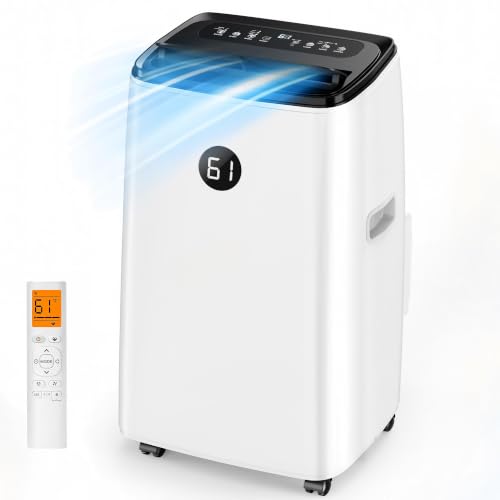
14000 BTU Portable Air Conditioners, 3-in-1 Floor Stand Up Portable AC Unit | Cools Up to 700 Sq.Ft, with Dehumidifier, Fan, Self-Evaporating, Quiet Sleep Mode, Auto Swing, for Large Rooms Bedrooms
Check price on Amazon
Humhold 14000BTU Portable Air Conditioners, Floor Stand Portable AC Unit | 3 in 1 AC Unit w/t Dehumidifier & Fan, Free Stand up Portable AC for Room up to 700 sq.ft, Sleep,Timer & Remote Control
Check price on Amazon
SereneLife 8000 BTU Portable Air Conditioner with Heat, Compact 4-in-1 Portable AC & Heater for Room Up to 350 Sq Ft with Dehumidifier & Fan Function, Remote Control, Window Mount Kit, 13" x 11" x 26"
Check price on Amazon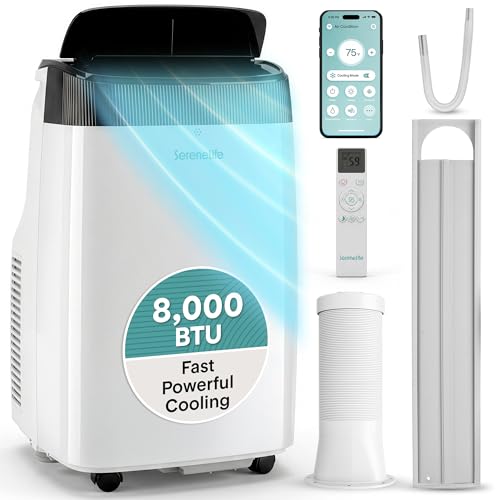
SereneLife Portable Air Conditioner 8000 BTU With WIFI | 3-in-1 Cooling, Fan and Dehumidifier | 24-H Timer up to 350 sq ft Coverage | AC Unit for Bedroom, Home & Office | Window Kit & Remote
Check price on Amazon
Shinco 8,000 BTU Portable Air Conditioner - 3-in-1 Cool/Dehumidifier/Fan for Rooms Up to 350 sq.ft, Remote Control & 24H Timer, Compact AC Unit for Bedroom/Office
Check price on Amazon
BLACK+DECKER Portable Air Conditioner, 10,000 BTU, BPACT10WT, White | 5,500 BTU SACC for Rooms up to 450 Sq. Ft., 3-in-1 Portable AC, Fan and Dehum with Follow Me Remote Control
Check price on Amazon
Midea 10,000 BTU ASHRAE Portable Air Conditioner, Cools up to 300 Sq. Ft. | 7,100 BTU SACC Portable AC, Smart APP & Remote Control, with Dehumidifier & Fan mode, Window Kit, Easy-to-use and Install
Check price on Amazon
SereneLife Portable Swamp Cooler Air Conditioner - 2500 CFM Airflow, 8 Gallon Water Tank Portable Evaporative Air Cooler for Room & Outdoors, WiFi, Humidifier & Fan Modes, Ice Packs & Remote Included
Check price on AmazonDisclaimer
Some of the content on this site uses AI assistance. Information is provided for educational purposes only. We are not responsible for any losses resulting from the use of this information. By using this site, you waive any right to bring legal claims against us arising from your use of the information provided. If you do not agree, please do not use this site. Read the full disclaimer.