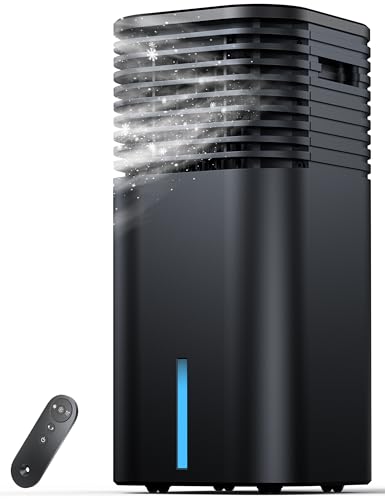
Can a Portable Air Conditioner Really Cool a Room?
Yes — but only when three conditions are met. First, the unit must be correctly sized in BTU for the room's square footage and heat load. Second, hot exhaust air must be routed outdoors through a properly sealed hose and window kit. Third, the room should be reasonably enclosed so cooled air is not lost through open doors or leaks.
A portable air conditioner works differently from a window or central system. It pulls in room air, cools it, and releases warm air and moisture through a single or dual hose that must be vented outside. If that exhaust path is blocked or poorly sealed, the unit recirculates warm air and the room never reaches the target temperature. This is the most common reason people report that a portable AC "doesn't cool enough" — and it is almost always a venting or sizing issue rather than a defective unit.
Understanding how these units move heat is useful before comparing models. Our broader guide on portable AC intake and exhaust airflow explains the single-hose and dual-hose designs that determine cooling efficiency.
How Portable AC Sizing Works: BTU and Room Area
The starting point for any room-cooling decision is BTU capacity. A widely used baseline is roughly 20 BTU per square foot for a typical room with standard 8-foot ceilings. That baseline then needs adjustment for real-world factors that add heat load.
| Room Size (sq ft) | Suggested BTU Range | Typical Use Case |
|---|---|---|
| Up to 150 | 5,000 – 8,000 BTU | Very small room, den, or home office |
| 150 – 250 | 8,000 – 10,000 BTU | Bedroom or studio |
| 250 – 400 | 10,000 – 14,000 BTU | Living room or larger bedroom |
| 400 – 600 | 14,000 – 18,000 BTU | Open-plan living area |
| 600+ | 18,000 BTU+ | Large open space; consider multiple units |
These ranges are a starting framework, not a rigid rule. Adjust upward for west-facing windows, high ceilings, kitchen heat, or multiple occupants. Adjust downward for shaded rooms with few heat sources. For a focused walkthrough of matching capacity to a single room, see our guide on portable AC for a single room.
Heat Load Factors That Change the Math
- Sun exposure: West- and south-facing rooms gain significantly more heat in the afternoon.
- Ceiling height: Rooms above standard height hold more air volume to cool.
- Occupancy: Each person adds body heat; a crowded room needs more capacity.
- Electronics: Home offices with servers, monitors, and equipment add persistent heat.
- Insulation quality: Poorly insulated walls and single-pane windows increase load.
Venting: The Factor Most Buyers Underestimate
A portable AC cannot cool a room without a path for hot air to leave. Every model ships with an exhaust hose and a window kit, but the type of window matters. Sliding windows, casement windows, and crank-out windows each require different adapters.
If your room has a non-standard opening, check the matching kit guide before buying: portable AC for casement windows, portable AC for sliding glass windows, and portable AC for vertical windows. For rooms with unusually narrow openings, see portable AC for small window openings.
Single-Hose vs Dual-Hose Designs
Single-hose units are simpler and common at entry-level and mid-range tiers. Dual-hose units draw in outside air for the condenser and exhaust it back out, which reduces the negative pressure that pulls warm air in from other rooms. Dual-hose models tend to cool more consistently in enclosed spaces, which is why they are common in higher-end tiers.
If you want to compare the trade-offs in detail, read our breakdown of single-hose portable AC performance and how hose insulation can improve results: insulated exhaust hose for portable AC.
What About Rooms Without a Standard Window?
This is one of the most common research questions. The short answer: most portable ACs still need some opening for the exhaust hose. A window is the typical solution, but a sliding door, a wall vent, or a specialized kit can work. Rooms with no opening at all require a different strategy.
Explore the relevant options here: portable AC for a room without windows, portable AC for a windowless room, and portable AC options when no window is available. For spaces where venting is genuinely impossible, the honest answer is that a compressor-based portable AC will underperform and an evaporative cooler may be a better fit — see evaporative portable cooling technology for that alternative.
Humidity, Drainage, and Condensate Management
Portable ACs dehumidify as they cool. In humid climates, the internal tank fills quickly and the unit shuts off when full — which is why drainage planning matters as much as BTU. Self-evaporating models use the condensate to cool the condenser coils and reduce manual draining, but they are not maintenance-free in high humidity.
If you live in a humid region, review our guidance on portable AC for high humidity and portable AC for humid climates. For lower-maintenance options, compare self-evaporating portable AC systems and models equipped with a condensate pump. Units that rarely need draining are covered in portable AC that does not need draining.
Features Worth Comparing Across Tiers
Rather than listing models by cost, it helps to compare portable ACs by market tier. The descriptors below describe relative position in the market — not a specific figure.
| Tier | Typical Characteristics | Best For |
|---|---|---|
| Entry-level | Single-hose design, basic mechanical or simple digital controls, manual drainage, standard window kit | Occasional use in a small room with a standard sliding window |
| Mid-range | Improved airflow, remote control, 24-hour timer, self-evaporating condensate handling, multiple fan speeds | Daily cooling in a bedroom or living room |
| Premium | Dual-hose or inverter compressor, quieter operation, Wi-Fi or smart controls, better sealing window kits | Enclosed rooms where consistent temperature and lower noise matter |
| Flagship tier | Inverter technology, heat pump or heater function, air purification, advanced humidity control, top-tier build quality | Year-round comfort and buyers who want the most capable unit in the category |
Two features deserve special attention during research. Inverter compressors modulate speed instead of cycling on and off, which produces steadier temperatures and quieter operation — covered in portable AC with an inverter compressor. And if you want the unit to work in cooler months as well, compare portable AC with a heat pump and portable AC and heater combination units.
Noise, Wheels, and Practicality
Portable ACs are generally louder than window units because the compressor sits inside the room. If the unit will run at night, prioritize models with a low-noise sleep mode and smooth fan curves. A portable AC on wheels with locking casters makes repositioning practical, especially in multi-use rooms.
For buyers who need cooling for multiple spaces during the day, our guide on portable AC for multiple rooms explains how to plan movement between rooms without losing efficiency.
Matching the Unit to Your Specific Space
Generic sizing advice only goes so far. The most reliable approach is to match the model to the exact room type you intend to cool. For compact living situations, start with portable AC for a small bedroom, portable AC for a studio apartment, and portable AC for a small apartment. Very tight spaces are addressed in portable AC for a very small room.
Office environments without exterior walls need separate planning — see portable AC for an office without windows. Specialty spaces such as a server closet or a screened porch have different heat and enclosure dynamics that change the recommendation.
Common Problems and How to Prevent Them
Even a correctly sized unit can underperform if installation is rushed. Two issues dominate owner reports. The first is a unit that runs but produces weak cooling — usually caused by an unsealed window kit or a kinked hose. See portable AC running but not blowing cold air for diagnostics. The second is a unit that simply cannot keep up with the room's heat load, covered in portable AC not cooling enough.
Installation mistakes are also common when the exhaust is not routed outdoors at all — a surprisingly frequent problem explained in portable AC not vented to outside. A correctly sealed window kit resolves most of these cases.
Buying Checklist Before You Choose
- Confirm the room's square footage and note ceiling height and sun exposure.
- Calculate the BTU range needed, then round up if the room has heavy heat load.
- Identify your window type and confirm a compatible window kit is included.
- Decide whether single-hose or dual-hose airflow suits your enclosure.
- Plan drainage based on local humidity, or choose a self-evaporating model.
- Check noise specifications if the unit will run overnight.
- Prefer models with clear warranty terms and accessible filter cleaning.
Frequently Asked Questions
Can a portable air conditioner cool a room on its own?
Yes. A correctly sized portable AC with a sealed exhaust path can cool a single enclosed room effectively. It will not cool an entire home, and it works best in rooms where doors and windows stay closed.
How many BTU do I need for a typical bedroom?
A bedroom of roughly 150 to 250 square feet usually needs 8,000 to 10,000 BTU. Add capacity for west-facing windows, upper floors, or multiple occupants.
Do I have to vent a portable AC outside?
Yes for compressor-based units. Without outdoor venting, hot air is released back into the room and cooling is ineffective. Rooms without a window need alternative venting solutions.
Are dual-hose portable ACs better than single-hose?
Dual-hose models generally maintain more consistent cooling in enclosed rooms because they avoid pulling warm air in from other spaces. Single-hose units are simpler and often found at entry-level and mid-range tiers.
How often do portable ACs need draining?
In humid conditions, check the tank daily. Self-evaporating and condensate-pump models reduce the frequency, but periodic drainage is still normal in high humidity.
Ready to Compare Portable AC Options?
Use the checklist above to shortlist units by BTU, venting compatibility, and tier. The recommended models below are grouped for room-cooling use, so you can compare specifications side by side and select the right fit for your space.