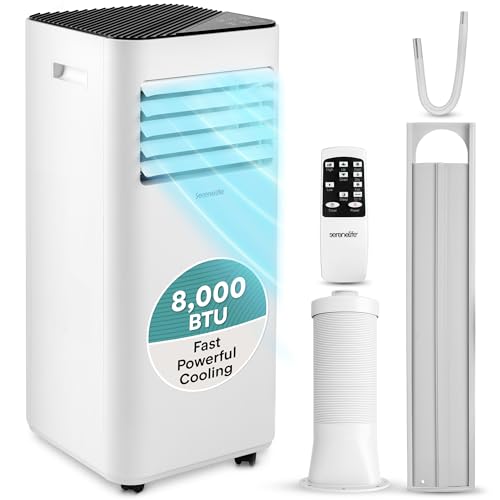
Portable Air Conditioner That Doesn't Need To Be Drained
A complete research guide to self-evaporating portable AC units: how they work, when draining is still required, what features to prioritize, and how to match a drain-free model to your room, climate, and lifestyle.
Updated for readers researching before purchaseWhy Drain-Free Portable AC Units Matter
Portable air conditioners are a practical answer for rooms that cannot accommodate a window unit, for renters who cannot modify the building envelope, and for spaces where a ducted or mini-split system is not feasible. The most common frustration reported by owners, however, is not cooling performance but the chore of emptying a condensate tank every few hours during peak summer.
A portable air conditioner that doesn't need to be drained addresses exactly this pain point. Self-evaporating technology uses the heat rejected by the condenser to evaporate the moisture collected from the air, then expels it through the exhaust hose as water vapor. Under moderate conditions, this can eliminate manual draining almost entirely. Under demanding conditions, the tank will still fill, and understanding that boundary is the key to a satisfying purchase.
The honest truth about drain-free claims: no portable AC is 100% drain-free in every climate and every mode. The technology reduces the frequency of draining dramatically, but physics still applies. This guide explains precisely when you can expect zero draining and when you should keep a drain hose handy.
How a Drain-Free Portable Air Conditioner Works
Every portable air conditioner produces condensation. Warm, humid indoor air passes over the cold evaporator coil, moisture condenses on the coil, and the water drips into a collection tray. In a conventional unit, that tray must be emptied manually. A self-evaporating system changes what happens next:
- Collection: condensation drips from the evaporator coil into the bottom tank or a small reservoir.
- Recycling: a slinger ring or spray mechanism lifts the collected water onto the hot condenser coil.
- Evaporation: the heat of the condenser, combined with airflow from the exhaust fan, turns the water into vapor.
- Exhaust: the vapor leaves the room through the exhaust hose along with the hot air from the condenser.
The net effect is that most of the water never accumulates in the tank. The ratio of evaporation to condensation depends on ambient humidity and the temperature difference across the coils. In dry, moderate climates, a self-evaporating unit can run for days or weeks without a manual drain. In humid climates, the tank still fills, but far more slowly than on a conventional model.
Some units also include a condensate pump that actively moves water to the condenser or to a nearby drain line, which is a different and more reliable mechanism. That distinction is covered in a dedicated section below.
When a "No Drain" Portable AC Will Still Need Draining
Marketing language often overstates the drain-free capability. To set realistic expectations, here are the conditions under which even a well-designed self-evaporating unit will require manual draining or a gravity drain hose:
- High-humidity climates: when relative humidity stays above roughly 70–80%, condensation outpaces evaporation capacity, and the tank fills. Readers in coastal or tropical regions should read the guide on portable air conditioners for humid climates before choosing a model.
- Dehumidify-only mode: by definition, this mode is designed to remove moisture from the air, so water accumulates rapidly and must be drained.
- Continuous operation in hot weather: running the unit non-stop for many hours in high heat produces more condensate than the system can evaporate in real time.
- Oversized or undersized units: an oversized unit short-cycles and may not run the condenser long enough to evaporate collected water efficiently, while an undersized unit runs continuously and accumulates water. Correct sizing matters, and the guidance on what to look for in a portable air conditioner explains how to size correctly.
- Cool, humid evenings: when the condenser does not get hot enough, evaporation slows while condensation continues.
Practical rule of thumb: in a moderately humid room (40–60% RH) with the unit in cooling mode, expect to drain once every several days to a few weeks. In a humid room (70%+ RH), expect to drain daily or use the continuous gravity drain hose. Neither outcome is a defect; both are physics.
Self-Evaporating System vs. Condensate Pump: Which Is More Reliable?
Buyers often conflate these two technologies. They are related but distinct, and the difference matters for how much manual draining you will actually do.
| Aspect | Self-Evaporating System | Condensate Pump |
|---|---|---|
| Mechanism | Recycles water onto the condenser via a slinger ring or spray; evaporation happens passively with heat and airflow. | An electric pump actively moves water to the condenser or to an external drain line. |
| Manual draining frequency | Low in moderate humidity; higher in humid conditions. | Very low to zero when plumbed to a drain; still requires a tank in some configurations. |
| Humidity tolerance | Moderate. | High, including continuous operation in humid climates. |
| Complexity and upkeep | Simple, fewer moving parts, easier to maintain. | More components; the pump can clog or fail and needs periodic inspection. |
| Best for | Bedrooms, home offices, and rooms in moderate climates. | Basements, server rooms, commercial spaces, and high-humidity regions. |
If your priority is genuinely minimal intervention, a unit that combines self-evaporation with a condensate pump and a continuous drain option is the most robust configuration. Readers cooling moisture-sensitive spaces should also see the guide on portable air conditioners with a condensate pump. For a broader technical comparison of the two systems, the article on self-evaporating portable air conditioners goes deeper.
Key Features to Prioritize in a Drain-Free Portable AC
Beyond the evaporation system itself, several features determine how close a unit comes to true set-and-forget operation. When comparing models, evaluate these attributes:
Cooling and Airflow
- BTU capacity matched to room size: the single most important specification. Oversizing and undersizing both hurt performance and increase condensate accumulation.
- Inverter compressor: variable-speed compressors modulate output, maintain temperature more evenly, and reduce short cycling, which helps the self-evaporation process stay in balance. See portable air conditioners with inverter compressors for models that use this technology.
- Airflow volume and multi-speed fans: higher airflow across the condenser improves evaporation, and adjustable fan speeds let you tune the unit to the room.
Moisture Management
- Self-evaporating system: the core feature this guide is about. Confirm it is explicitly stated in the specifications, not merely implied.
- Continuous gravity drain option: a hose connection that lets water flow out by gravity. This is the fallback for humid periods and for dehumidify mode.
- Full-tank alert and auto-shutoff: essential safety features that prevent overflow and water damage.
- Condensate pump (optional but valuable): removes the last manual step for spaces where gravity drainage is not possible.
Practical Usability
- Casters and handles: portability is the entire point. Look for smooth-rolling casters and molded handles; the guide on portable air conditioners on wheels covers mobility in detail.
- Window kit quality: a well-sealed exhaust kit is critical to efficiency. If your window is not a standard double-hung, consult the resources on sliding glass windows and casement windows.
- Noise level: for bedrooms and home offices, decibel ratings matter as much as BTU. The small bedroom guide discusses quiet operation alongside capacity.
- Remote control and programmable timer: convenience features that let the unit run on a schedule, reducing continuous runtime and thus condensate production.
Tier Comparison: What Each Segment Offers
Rather than anchoring recommendations to a currency figure, this guide classifies drain-free portable AC units by their position in the market. Each tier delivers a different balance of evaporation reliability, build quality, and convenience features. Use this table to identify which tier aligns with your expectations.
| Tier | Evaporation Approach | Best For | Trade-Offs |
|---|---|---|---|
| Entry-Level | Basic self-evaporating tray with gravity drain hose included. | Single rooms in moderate climates; occasional summer use; buyers who want simple mechanics. | Less precise humidity handling; tank fills faster in humid weather; simpler controls. |
| Mid-Range | Improved self-evaporating system with larger condenser surface and a dedicated continuous drain port. | Bedrooms, home offices, and small apartments used daily through the cooling season. | Occasional draining still required in humid spells; fan noise is average. |
| Premium | Inverter compressor paired with self-evaporation and optional condensate pump; stronger airflow across the condenser. | Multi-season use, humid climates, and rooms where temperature stability matters. | Higher initial investment and more components to maintain. |
| Flagship | Inverter compressor, integrated condensate pump, smart controls, and a well-sealed exhaust kit. | Continuous operation, moisture-sensitive spaces, and buyers who want the closest thing to set-and-forget. | Largest footprint and weight; requires proper setup to justify the capability. |
Tier assignments reflect relative market positioning and feature depth, not any currency figure. A mid-range model with a well-designed self-evaporating system can outperform a premium unit in moderate climates when sized correctly.
Matching Capacity to Your Room
Even the best drain-free system cannot compensate for the wrong BTU capacity. As a starting framework, portable AC units are commonly grouped into the following capacity ranges and approximate room sizes:
| Capacity Range | Approximate Room Size | Typical Use Case |
|---|---|---|
| 5,000 – 6,000 BTU | Up to about 150 sq ft | Tiny bedrooms, very small rooms, and studio apartments. |
| 8,000 – 10,000 BTU | About 150 – 250 sq ft | Small bedrooms, home offices, and single-room cooling. |
| 12,000 – 14,000 BTU | About 250 – 400 sq ft | Living rooms, single-room cooling, and small apartments. |
| 14,000 BTU and above | About 400 – 600+ sq ft | Open-plan spaces, multi-room setups with doorways open, and commercial use. |
These ranges assume standard ceiling height, average insulation, and a room that is not exposed to extreme solar gain. For a more precise estimate, adjust upward for west-facing windows, vaulted ceilings, kitchens, and rooms with many occupants. Adjust downward for heavily shaded rooms and basements. For rooms without conventional windows, the guide on portable air conditioners for rooms without windows explains venting alternatives that still allow a portable unit to operate.
Climate and Humidity: The Deciding Factor
The performance of a drain-free portable AC is fundamentally climate-dependent. This is the factor most buyers underestimate, and it determines whether the unit behaves as advertised or becomes a daily chore.
Dry and Moderate Climates
In regions with relative humidity below roughly 60%, a self-evaporating system operates close to the marketing ideal. Condensation is modest, the condenser coil stays hot enough to evaporate it, and manual draining may be needed only a few times per season. These are the conditions in which the technology shines.
Humid and Coastal Climates
In regions where humidity routinely exceeds 70%, a self-evaporating unit will still fill its tank. It may fill it more slowly than a conventional model, but it will fill it. Buyers in these regions should prioritize units with a condensate pump, a continuous gravity drain hose, and an explicit dehumidify mode. The dedicated guides on high-humidity operation and humidity control cover how to configure the unit for these conditions.
Mixed and Seasonal Climates
In climates with distinct dry and humid seasons, a self-evaporating unit with a gravity drain option is the most flexible choice. Use the self-evaporating mode during dry months and attach the gravity hose during humid months. The article on portable air conditioners with a dehumidifier function explains the mode transitions and expectations.
Before you buy: check the average summer relative humidity for your location. If it consistently sits above 70%, treat self-evaporation as a convenience feature rather than a guarantee, and confirm that the unit includes a pump or a continuous drain option.
Maintenance for Reliable Drain-Free Operation
A self-evaporating system reduces one chore but introduces another: it requires airflow and heat exchange to work. If the condenser coil is clogged with dust, evaporation slows, the tank fills faster, and the unit cycles less efficiently. Simple maintenance preserves the drain-free behavior:
- Clean the air filter every two weeks during the cooling season. A clogged filter reduces airflow across both coils, directly impairing evaporation. The guide on cleaning AC filters covers the process for portable units.
- Inspect the condenser coil seasonally and remove dust and lint with a soft brush or vacuum. A clean condenser runs hotter, which is exactly what the evaporation mechanism needs.
- Check the drain port and hose for mineral buildup or debris, especially in hard-water areas. A partially blocked gravity drain behaves like a full tank.
- Verify the exhaust hose seal. Leaks around the window kit reduce cooling efficiency and can draw humid outdoor air back into the room. The resource on insulated exhaust hoses explains how to minimize this.
- Store the unit upright during the off-season, and let it sit upright for several hours before first use each year so the compressor oil settles.
If the unit stops cooling while running, or the tank fills unusually fast, consult the troubleshooting guide for portable air conditioners not cooling enough before assuming the evaporation system has failed.
Still Deciding Whether You Can Avoid Draining Entirely?
Read the dedicated deep-dive on the exact search phrasing you may be using — including models marketed as requiring no draining at all — and compare it against your climate and room.
Explore Drain-Free Portable AC OptionsFrequently Asked Questions
Do portable air conditioners that don't need to be drained really exist?
Yes, they exist, but with important caveats. These units use a self-evaporating system that recycles condensation to cool the condenser coils and exhausts moisture as vapor. However, in high-humidity conditions or when running in dehumidify mode, most still require occasional manual draining. Truly drain-free operation is only guaranteed in moderate humidity with the unit in cooling mode.
How does a self-evaporating portable air conditioner work?
A self-evaporating system collects condensation from the evaporator coil and uses it to cool the condenser coil before it is expelled as vapor through the exhaust hose. This process evaporates most of the water, reducing the frequency of manual draining. Some models also use a condensate pump to spray water onto the condenser for faster evaporation.
When will a drain-free portable AC still need draining?
Draining is still needed in high-humidity environments where condensation exceeds evaporation capacity, during dehumidify-only mode where the goal is to remove moisture from the air, in very hot and humid climates, or when the unit operates continuously for extended periods. Always check the water tank indicator light on your unit.
What is the difference between self-evaporating and condensate pump systems?
A self-evaporating system uses heat from the condenser coil and airflow to evaporate condensation naturally. A condensate pump actively moves water to the condenser or a drain location, allowing continuous operation without tank emptying. Pump-equipped units are more reliable in high-humidity conditions, while self-evaporating units are simpler but may still need periodic draining.
Can I use a no-drain portable AC in a room without windows?
Portable air conditioners require an exhaust path for hot air. Without a window or vent, you need an alternative exhaust solution such as a sliding door kit, a wall vent, or a drop-ceiling return. Units marketed as no-window-required typically refer to flexible venting options rather than true operation without exhaust. For specific setups, see the guide on portable AC for rooms with no window.
Final Buying Checklist
Before you choose a drain-free portable AC, confirm each of the following. This checklist is written to be used while comparing product pages, so you can evaluate claims against real specifications.
- Self-evaporating system explicitly listed in the specifications, not just implied by marketing language.
- Continuous gravity drain port present for high-humidity periods and dehumidify mode.
- Condensate pump or pump-ready design if you live in a humid climate or plan to run the unit continuously.
- BTU capacity matched to your room size using the ranges in this guide, adjusted for sun exposure and ceiling height.
- Full-tank alert and auto-shutoff to protect floors and prevent overflow.
- Window kit compatible with your window type — double-hung, sliding, casement, or crank-out. See the relevant window-specific guides for sealing options.
- Inverter compressor or multi-speed fan for stable temperature and better evaporation balance, especially for daily use.
- Noise rating acceptable for the room — critical for bedrooms and home offices. The office without windows guide discusses this trade-off.
- Realistic expectations set: accept that in high humidity, some draining is normal. The unit is not defective; it is working within physical limits.
- Maintenance plan in place: filter cleaning every two weeks and seasonal coil inspection, both of which directly protect the drain-free behavior.
With these checks complete, you are prepared to compare models using the recommended product section below. Each unit in that section is presented with its tier and use case so you can align your selection with the conditions you actually have, not the conditions in a showroom.