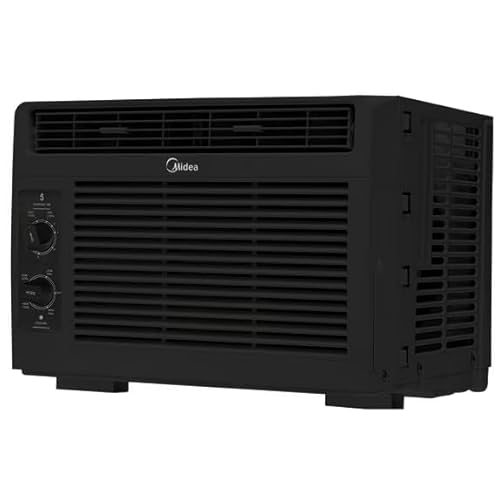
Small Room Air Conditioner Window
Everything you need to know about choosing, sizing, and installing a window air conditioner for a small room — from BTU calculations to window fit and efficiency.
EXPLORE WINDOW AC OPTIONSWhy a window unit is often the right answer for a small room: Window air conditioners are the most straightforward way to cool a single room. They install in a standard double-hung window, require no outdoor compressor, and are easy to service. For rooms under 250 square feet, a compact window unit delivers reliable cooling with minimal installation effort. This guide helps you choose the right capacity, verify your window fits, and avoid the most common mistakes.
In This Guide
Window AC Types for Small Rooms
Not every window unit is the same. For a small room, the differences between standard, compact, and narrow-profile units matter most.
Standard Window AC (5,000–8,000 BTU)
The classic compact window air conditioner. Fits most double-hung windows with a clear opening of 16 inches or more. Best entry point for cooling a bedroom or small office.
Best for: standard double-hung windows in rooms up to 250 sq ft.
Compact Chassis Window AC
A slimmed-down unit in the same capacity class as a standard model. Reduced width or depth helps in tighter window openings and small floor plans.
Best for: narrow windows and rooms where furniture sits close to the sill.
Window AC with Heat Function
Adds a heat strip or reverse-cycle mechanism for supplemental heating in mild winters. A true year-round single-room solution.
Best for: bedrooms and home offices in mild climates needing both cooling and light heating.
Inverter Window AC
Uses a variable-speed compressor to hold a steady temperature with less cycling. Quieter and more efficient over long runs. Less common in the window category but increasingly available.
Best for: rooms where the unit runs daily and quiet operation matters.
If you are working with a particularly narrow opening, see our guide to slim window air conditioning units. For side-sliding windows, the side-to-side window AC guide covers the specific types that fit.
Capacity Comparison
The table below groups small-room window units by cooling capacity and the room size they serve. Use it as a starting point, then adjust for your specific conditions.
| Capacity | Room Size | Typical Width | Best For |
|---|---|---|---|
| 5,000–6,000 BTU | Up to 150 sq ft | ~15–16 inches | Small bedrooms, home offices, studios |
| 8,000 BTU | 150–250 sq ft | ~18–20 inches | Larger bedrooms, small living rooms |
| 10,000 BTU | 250–350 sq ft | ~20–22 inches | Master bedrooms, small apartments |
| 12,000 BTU | 350–450 sq ft | ~22–25 inches | Combined living-dining spaces, large bedrooms |
How to Size Your Window AC
Sizing is the single most important decision for a small room window unit. Use these steps to get the calculation right.
- Measure square footage first. Length × width gives the base number. A 100–150 sq ft room typically needs 5,000–6,000 BTU. A 150–250 sq ft room needs about 8,000 BTU. Our detailed 5,000 BTU room reference walks through the calculation.
- Adjust for ceiling height. Standard 8-foot ceilings are assumed. Add roughly 10% capacity for every foot above 8 feet.
- Consider sun exposure. A south- or west-facing room with large unshaded windows gains significant heat. Shade the windows before upsizing the unit.
- Count heat sources. Home offices with multiple monitors, kitchens, and rooms with gaming rigs or servers need extra capacity. Each regular occupant adds a small load.
- Do not oversize. For a small room, a slightly undersized unit running longer controls humidity better than an oversized unit cycling on and off. Our guide on what happens when AC is too big or too small explains the consequences in detail.
For a broader walkthrough of the calculation, read our guide on how to size an air conditioner. If you want a range of capacities in the small-room class, our small room AC guide compares the options.
Checking Window Fit
Window compatibility is where most window AC purchases go wrong. Confirm these dimensions before ordering.
- Measure the clear opening width. With the sash raised, measure the narrowest point side to side. Standard window units need 16 inches or more. Narrower openings require a slim window unit or a model in the 12- to 15-inch range. Our guide to 15-inch wide window ACs covers those options.
- Measure the clear opening height. From the sill to the bottom of the raised sash. The unit must sit on the sill and the sash must close above it with the frame kit installed.
- Check the sill depth and exterior clearance. The outdoor portion of the unit extends past the window. You need a secure support bracket and adequate exterior space.
- Identify your window type. Double-hung windows accept most window units. Casement and awning windows do not open vertically and require a different approach. For side-sliding windows, see the side-sliding window AC guide.
- Verify the electrical outlet. Check the unit's amperage rating against the circuit. Our amps and breaker sizing guide explains how to do this safely.
Efficiency and Features
In a small room, you likely run the unit for long hours during the cooling season. Efficiency and control features pay off over time.
- CEER rating. The combined energy efficiency ratio for window units. Higher is better. Look for models that are competitive within their capacity class. Our EER rating guide explains how the rating is calculated.
- ENERGY STAR certification. A useful shorthand for efficiency in the window category. See our guide to ENERGY STAR small window units for what the label guarantees.
- Programmable thermostat and timer. Reduces waste by scheduling off-hours. Our guide to small ACs with thermostats covers the options.
- Remote control. A practical convenience in a bedroom or office. See small window ACs with remote control.
- Noise level. Window units are not silent. Look for models with a quiet mode or a decibel rating below 55 dB on low. For rooms where quiet matters most, a high-efficiency small window unit is worth considering.
For a broader explanation of the efficiency metrics, read what SEER means and how HSPF affects heating performance if the unit includes a heat function.
Installation and Safety
A window AC installation is straightforward, but safety and sealing details make the difference between reliable comfort and problems later.
- Use the manufacturer's support bracket. Window units cantilever outside the window. A proper bracket prevents sagging, reduces vibration, and prevents the unit from falling.
- Seal the window frame kit carefully. Gaps around the unit let hot air in and cool air out. Foam insulation strips included with most kits are essential.
- Secure the sash. A sash lock or wooden block above the unit prevents the window from being opened from outside.
- Plan for seasonal removal. If you remove the unit in winter, store it upright and cover the outdoor portion to prevent debris buildup.
- Consider professional installation if the window is unusually high, if the unit is heavy, or if the electrical circuit needs upgrading. Our guide on finding someone to install a window AC covers the options.
For space-saving alternatives when a standard window unit is not ideal, see our space-saving window AC guide. If you want to compare a window unit against a portable option, our guide to small portable AC for small rooms covers the trade-offs.
Ready to Compare Window Units?
Browse our curated selection of small room window air conditioners below, filtered for compact capacity and small-room cooling.
View Recommended UnitsFrequently Asked Questions
What size window AC do I need for a small room?
A 100–150 sq ft room typically needs 5,000–6,000 BTU. A 150–250 sq ft room needs about 8,000 BTU. Adjust upward for high ceilings, strong sun exposure, and heat-producing equipment. Our 5,000 BTU sizing reference walks through the calculation.
Can a window AC fit in any window?
No. Most window units require a double-hung window with a clear opening of 16 inches or more. Narrower openings require a slim model in the 12- to 15-inch range. Side-sliding windows and casement windows need different solutions. Our guide to side-sliding window ACs covers that case.
Is a window unit or a mini-split better for a small room?
A window unit is simpler and does not require professional installation. A single-zone mini-split is quieter and more efficient but costs more to install and needs a licensed technician. For a small room where the window is suitable, a window unit is usually the practical choice. For long-term efficiency and quiet operation, a mini-split is the better investment.
Do window AC units use a lot of electricity?
A 5,000–8,000 BTU window unit typically draws 450–700 watts. That is comparable to a small space heater. Over a full cooling season, the electricity use adds up, so efficiency ratings matter. Our EER guide explains how to compare models.
Can I install a window AC in an apartment?
Many apartments allow window units, but some leases prohibit them or require specific installation methods. Check your lease and any building rules first. If a window unit is not allowed, a portable AC or a ductless mini-split may be the alternative. Our guide to small AC units that don't need a window covers the options.
How long do window AC units last?
A well-maintained window unit typically lasts 8–12 years. Regular filter cleaning, seasonal coil rinsing, and proper off-season storage are the biggest factors in longevity. Our AC maintenance guide covers the full seasonal checklist.
For related reading, explore our guides on air conditioners for bedrooms and small window units with high BTU if you need maximum cooling in a compact chassis.